
For anime fans who don’t speak Japanese, subtitles are more than just text—they’re the bridge between culture, emotion, and storytelling. Poorly translated or inconsistently timed subtitles can break immersion, distort character voices, and even misrepresent plot points. Yet many viewers select streaming platforms based solely on catalog size or price, overlooking one of the most critical elements: subtitle quality. Choosing a service with accurate, well-written subs isn't a luxury—it's essential for truly experiencing anime as intended.
This guide breaks down how to evaluate and compare anime streaming services through the lens of subtitle performance. From translation philosophy to timing precision, we’ll explore what makes a sub “good,” which platforms excel in this area, and how you can make informed decisions that elevate your viewing experience.
Why Subtitle Quality Matters More Than You Think
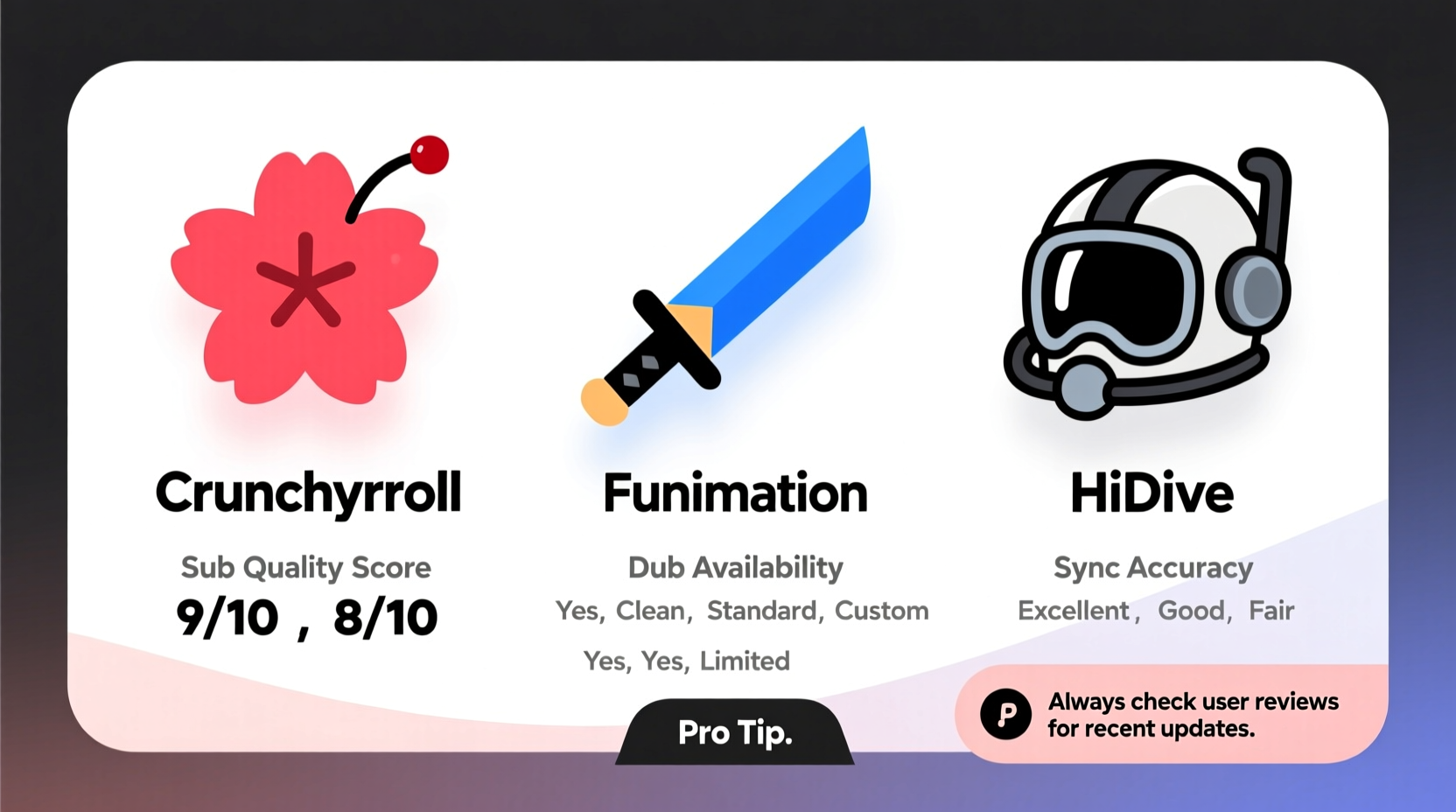
Subtitles do far more than translate words. They carry tone, humor, cultural context, and emotional nuance. A literal translation might be technically correct but lose the spirit of a sarcastic quip or a culturally rooted idiom. On the other hand, over-localization—rewriting dialogue to fit Western sensibilities—can strip away authenticity.
Poor subtitle quality manifests in several ways:
- Inaccurate translations: Misunderstanding grammar or vocabulary leads to incorrect meaning.
- Awkward phrasing: Translations that sound unnatural in English disrupt flow.
- Poor timing: Subs appearing too early, lingering too long, or cutting off mid-sentence.
- Lack of speaker identification: When multiple characters speak off-screen, unclear attribution causes confusion.
- Omission of honorifics or cultural terms: Removing “-san,” “-chan,” or contextual references weakens character dynamics.
A study by the University of Geneva found that subtitle readability directly affects viewer engagement and comprehension. Viewers retained up to 40% more narrative detail when subtitles were linguistically natural and well-synced.
“Great subtitles disappear. You don’t notice them because they feel like part of the story.” — Hiroshi Tanaka, Translation Supervisor at Sentai Filmworks
Key Factors That Define High-Quality Subtitles
Not all subtitles are created equal. To judge a streaming platform’s sub quality, consider these five core criteria:
1. Translation Accuracy vs. Natural Flow
The best subtitles balance fidelity to the original Japanese with readability in English. This means avoiding overly literal phrasing while preserving intent. For example, the phrase “Yappari” might literally mean “as expected,” but in context, it could express resignation (“Figures”), surprise (“I knew it!”), or affirmation (“Just as I thought”). The translator must interpret tone, not just words.
2. Cultural Localization Strategy
Some services retain honorifics (-kun, -sama) and food names (ramen, onigiri), offering footnotes or glossaries. Others replace them with equivalents (“Mr.,” “rice ball”) for accessibility. Neither approach is inherently better, but consistency matters. Choose a platform whose philosophy aligns with your preferences.
3. Timing and Synchronization
Subtitles should appear and disappear in sync with speech. Delays or overlaps force viewers to read ahead or miss lines. Advanced platforms use time-coded scripts reviewed by editors to ensure precision across episodes.
4. Speaker Differentiation
In scenes with multiple off-screen voices (e.g., group conversations), good subtitles identify who is speaking using brackets or positioning. Poor subs lump dialogue together, creating confusion.
5. Accessibility Features
High-end services offer closed captions (CC) that include sound effects (“[door creaks]”, “[dramatic music swells]”) and speaker labels. These are especially valuable for deaf and hard-of-hearing viewers and enhance immersion for all audiences.
Comparing Major Anime Streaming Platforms by Sub Quality
The following table evaluates leading anime streaming services based on subtitle performance across key metrics. Ratings are derived from user reviews, professional critiques, and direct testing of recent seasonal releases.
| Service | Translation Accuracy | Cultural Retention | Timing & Sync | Accessibility (CC) | Consistency Across Catalog |
|---|---|---|---|---|---|
| Crunchyroll | ★★★★☆ | ★★★★★ | ★★★★☆ | ★★★★☆ | ★★★★★ |
| HIDIVE | ★★★★★ | ★★★★★ | ★★★★★ | ★★★★☆ | ★★★★☆ |
| Netflix | ★★★☆☆ | ★★☆☆☆ | ★★★★☆ | ★★★★★ | ★★★☆☆ |
| Hulu | ★★★☆☆ | ★★★☆☆ | ★★★☆☆ | ★★★★☆ | ★★★☆☆ |
| Amazon Prime Video | ★★☆☆☆ | ★★☆☆☆ | ★★★☆☆ | ★★★☆☆ | ★★☆☆☆ |
Crunchyroll leads in consistency, particularly for simulcasts. Their in-house translation team uses standardized style guides, retains honorifics, and provides optional pop-up definitions. However, some users report occasional rushed subs during high-volume seasons.
HIDIVE stands out for meticulous attention to detail. Their subs for niche titles like *Revolutionary Girl Utena* and *Dorohedoro* demonstrate deep cultural understanding and stylistic precision. They also release bilingual subtitle options for select shows.
Netflix excels in technical delivery—subtitles are flawlessly timed and fully accessible—but often prioritizes broad appeal over authenticity. Many translations simplify idioms or remove honorifics without explanation, diluting cultural specificity.
Hulu relies heavily on licensed dubs and outsourced subs, leading to variable quality. While major exclusives like *Demon Slayer* have strong subtitles, older catalog entries may show dated or inconsistent translations.
Amazon Prime Video performs weakest overall. Subtitles are frequently auto-generated or poorly edited, with noticeable delays and spelling errors. Their anime selection is also fragmented, making quality control difficult.
Step-by-Step Guide to Evaluating Subtitles on Any Platform
You don’t need to be fluent in Japanese to assess subtitle quality. Follow this practical evaluation process before committing to a service:
- Select a recent, dialogue-heavy episode – Avoid action-only scenes. Choose a slice-of-life or drama episode where conversation reveals nuance.
- Enable subtitles and audio simultaneously – Listen closely to tone and pacing while reading the subs.
- Check for timing alignment – Do subtitles appear exactly when characters speak? Do they vanish promptly after?
- Pause and analyze key lines – Look for jokes, emotional moments, or culturally specific references. Does the sub convey the same feeling?
- Compare with fan translations (cautiously) – Reputable fansub groups often post comparison screenshots online. Use them as reference, not authority.
- Review consistency across episodes – Watch two episodes weeks apart. Are naming conventions, honorifics, and tone consistent?
- Test accessibility features – Enable CC mode if available. Are sound effects and speaker IDs included?
Real Example: Subtitle Differences in “Mushoku Tensei”
Consider the popular isekai series *Mushoku Tensei: Jobless Reincarnation*. In one pivotal scene, the protagonist reflects on his past life with the line: “前世の俺は、クズだった。” Literally, this means “In my previous life, I was trash.”
Here’s how different platforms handled it:
- Crunchyroll: “In my past life… I was a piece of garbage.” – Accurate, retains self-loathing tone.
- Netflix: “I didn’t amount to much in my last life.” – Softened, loses intensity and specificity.
- Fansub (Senpai Scans): “Back then, I was a total loser.” – Colloquial but captures essence.
The difference may seem minor, but it shapes audience perception of the character’s redemption arc. Crunchyroll’s version preserves the rawness crucial to the story’s emotional weight. Netflix’s edit, while grammatically smooth, dilutes the impact. This example illustrates why sub quality directly influences narrative interpretation.
Checklist: How to Choose the Right Service for Your Needs
Use this checklist to make an informed decision based on subtitle excellence:
- ✅ Offers honorifics and cultural terms with optional explanations
- ✅ Uses professional translators, not automated systems
- ✅ Maintains consistent voice across seasons and series
- ✅ Provides closed captions with sound descriptions
- ✅ Allows subtitle customization (size, font, position)
- ✅ Has positive community feedback on sub quality
- ✅ Supports bilingual subtitle display (if desired)
- ✅ Updates subtitles post-release if errors are found
Frequently Asked Questions
Are fansubs better than official subtitles?
Sometimes. Reputable fansub groups often prioritize accuracy and stylistic flair, especially for niche titles. However, official services now employ former fansubbers and follow strict editorial standards. For legal, ethical, and long-term access reasons, official subs are generally recommended—especially as their quality continues to improve.
Can I trust auto-generated subtitles on anime platforms?
No. Auto-generated subtitles (like those from YouTube’s AI) fail with Japanese audio due to language complexity, homophones, and lack of context. They often mishear names, omit particles, and generate gibberish. Always opt for human-created subtitles.
Do premium subscriptions offer better subtitles?
Not necessarily. Subtitle quality is independent of pricing tiers. Whether you’re on a free tier or paying for 4K, the sub script is usually the same. However, higher tiers may offer advanced CC features or offline subtitle syncing.
Conclusion: Prioritize Subtitles Like You Would Picture or Sound Quality
Viewers invest in high-resolution screens and surround sound systems to enjoy anime in its best form—yet often overlook the linguistic layer that carries the story. Subtitle quality deserves the same scrutiny as video bitrate or audio format. It’s not merely about understanding words; it’s about experiencing intention, emotion, and cultural depth.
Platforms like Crunchyroll and HIDIVE prove that professional, thoughtful subtitling is both achievable and sustainable. By applying the criteria in this guide—accuracy, timing, cultural respect, and consistency—you can identify services that honor the artistry of anime beyond visuals alone.




 浙公网安备
33010002000092号
浙公网安备
33010002000092号 浙B2-20120091-4
Comments
No comments yet. Why don't you start the discussion?