
Every morning, millions of commuters sling a backpack over their shoulders and head out the door—often unaware that an improperly sized bag could be setting them up for hours of discomfort, poor posture, and long-term back issues. The backpack isn’t just a container; it’s an extension of your body during transit, work, or errands. Choosing the right size isn’t about fashion or capacity alone—it’s about biomechanics, load management, and spinal health. A well-fitted backpack distributes weight evenly, supports natural posture, and reduces strain on muscles and joints. This guide breaks down exactly how to select a backpack that fits your frame, matches your commute needs, and keeps your back pain-free.
Understand Your Torso Length, Not Just Height
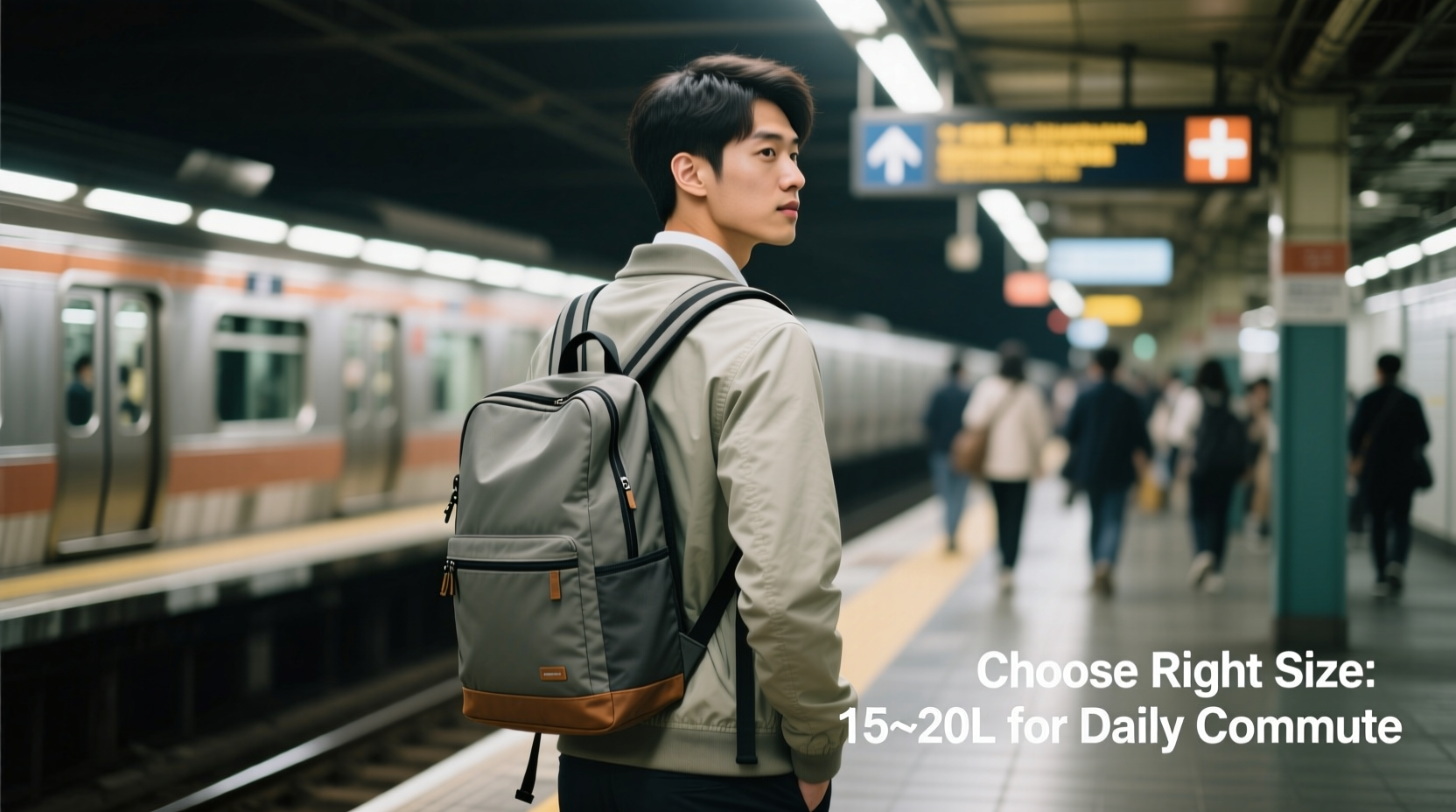
Backpack sizing is often misunderstood. Many assume that height alone determines the correct pack size, but torso length is far more critical. Two people who are both 5'10\" can have vastly different torso measurements—one may need a small, the other an extra-large, depending on where their spine curves from neck to pelvis.
To measure your torso length:
- Find the C7 vertebra: Tilt your head forward and locate the most prominent bump at the base of your neck.
- Mark this point.
- Measure down to the top of your iliac crest—the top of your hip bones, which you can feel by placing your hands on your hips.
This measurement, typically between 14 and 20 inches for adults, should guide your backpack selection. Most outdoor and ergonomic brands categorize packs as:
| Torso Length | Recommended Backpack Size |
|---|---|
| 14–16 inches | Small (S) |
| 16–18 inches | Medium (M) |
| 18–20 inches | Large (L) |
| 20+ inches | Extra Large (XL) or adjustable fit |
A poorly fitted backpack shifts the center of gravity away from your body’s core, forcing your lower back to compensate. Over time, this leads to chronic tension, disc pressure, and even sciatica-like symptoms.
Match Capacity to Commute Needs—No More, No Less
The volume of your backpack, measured in liters, should align with what you carry daily—not what you might carry someday. Overpacking is one of the leading causes of back strain among urban commuters.
- 10–18L: Ideal for essentials only—laptop (up to 13”), notebook, phone, wallet, keys. Best for short commutes or bike riders prioritizing agility.
- 18–25L: Most versatile range. Fits a 15” laptop, light jacket, lunch, water bottle, and personal items. Suitable for office workers, students, or hybrid commuters.
- 25–30L: For longer commutes or those carrying gym clothes, multiple devices, or bulkier gear. Requires a supportive frame and proper fit.
- 30L+: Generally excessive for daily use. Risk of overloading increases significantly. Reserve for travel or multi-day trips.
Carrying more than 10–15% of your body weight in a backpack raises injury risk, according to the American Academy of Orthopaedic Surgeons. For a 150-pound person, that means no more than 15–22 pounds—including the bag itself.
“Backpacks that exceed functional capacity encourage overloading, which disrupts spinal alignment and increases lumbar disc pressure by up to 40%.” — Dr. Lena Torres, Physical Therapist & Ergonomics Consultant
Key Features That Prevent Back Pain
Size matters, but design determines comfort. Even a correctly sized backpack can cause pain if it lacks essential ergonomic features. Look for these structural elements:
1. Padded, Contoured Shoulder Straps
Straps should be at least 2 inches wide, padded with memory foam or EVA, and contoured to follow the slope of your shoulders. Avoid thin, flat straps—they dig into nerves and restrict circulation.
2. Adjustable Chest and Sternum Strap
A chest strap stabilizes the pack during movement, especially helpful when walking briskly or biking. It prevents shoulder shrugging and lateral sway, reducing upper trapezius strain.
3. Load-Lifter Straps
Found on higher-end commuter and hiking-style packs, these small straps connect the top of the shoulder harness to the main compartment. They pull the weight closer to your back, improving balance.
4. Ventilated Back Panel
Molded air channels or suspended mesh prevent direct contact between your spine and the pack. This reduces heat buildup and allows airflow, minimizing sweat-related irritation and muscle fatigue.
5. Hip Belt (Even a Minimal One)
A padded hip belt transfers up to 80% of the load from shoulders to hips—your body’s natural weight-bearing structure. Even a lightweight, stowable belt makes a difference on longer walks.
6. Laptop Compartment at Back-Close Position
Your laptop should sit against your spine, not at the outer edge of the pack. When the heaviest item is too far from your back, it creates a lever effect, straining lower back muscles.
Step-by-Step Guide: Fitting Your Commuter Backpack
Selecting the right size isn’t complete without proper adjustment. Follow this sequence every time you wear your backpack to ensure optimal support:
- Loosen all straps before putting on the pack.
- Put it on like a jacket, then lift slightly to position the bottom edge just above your hip bones.
- Fasten the hip belt first—it should sit snugly across your iliac crest, not your stomach.
- Tighten shoulder straps until there’s a two-finger gap between the strap and your shoulder. The pack should rest firmly against your back without pulling down.
- Attach the sternum strap across your chest, positioned at armpit level. It should allow full breathing without restriction.
- Adjust load-lifter straps (if present) to a 45-degree angle from the top of the shoulder straps.
- Check mobility: Bend forward, twist side to side. The pack should move with you, not swing or shift.
If the backpack sags, rides high, or pulls your shoulders back, re-adjust starting from the hip belt. A properly worn pack feels almost weightless after a few minutes of walking.
Real-World Example: Sarah’s Morning Commute Transformation
Sarah, a 32-year-old project manager in Chicago, used a 28-liter backpack for her 45-minute subway commute. She carried her 15” laptop, tablet, lunch, water bottle, umbrella, and occasionally a change of shoes. After six months, she developed persistent lower back pain and numbness in her left shoulder.
She visited a physical therapist who identified two issues: her backpack was too large for her 16-inch torso, and she wasn’t using the hip belt. The weight rested entirely on her shoulders, creating anterior pelvic tilt and overworked erector spinae muscles.
She switched to an 18-liter ergonomic pack with a custom-fit harness, began using the hip belt daily, and adopted a minimalist packing list. Within three weeks, her pain decreased by 80%. “I didn’t realize how much my bag was working against me,” she said. “Now I walk taller, and my shoulders don’t ache by noon.”
Backpack Do’s and Don’ts Checklist
- ✅ Measure your torso before buying
- ✅ Choose a volume that matches your daily load
- ✅ Use both shoulder straps—never sling over one shoulder
- ✅ Fasten the hip belt on walks over 10 minutes
- ✅ Pack heavy items close to your spine
- ❌ Don’t exceed 15% of your body weight
- ❌ Avoid top-heavy loading (prevents backward lean)
- ❌ Never carry a backpack by the top handle
Frequently Asked Questions
Can a small backpack still cause back pain?
Yes. Even compact packs can cause strain if improperly worn or overloaded. A 10-liter bag filled with dense items like books or tools can exceed safe weight limits. Fit and usage matter more than size alone.
Is a backpack better than a messenger bag for back health?
Generally, yes. Two-strap backpacks distribute weight symmetrically, reducing spinal torsion. Messenger bags force uneven loading, which can lead to scoliosis-like postural adaptation over time. If you prefer a single strap, take frequent breaks and switch sides hourly.
How often should I replace my commuter backpack?
Inspect your pack annually for signs of wear: frayed straps, collapsed padding, broken buckles, or stretched fabric. Structural degradation reduces support efficiency. Most quality backpacks last 3–5 years with daily use. Replace sooner if you notice increased discomfort.
Final Thoughts: Invest in Comfort Like You Invest in Health
Your backpack is more than a carryall—it’s part of your daily wellness routine. Just as you’d choose supportive shoes or an ergonomic chair, selecting the right backpack size and design is a proactive step toward long-term musculoskeletal health. The ideal commuter pack isn’t the biggest or trendiest; it’s the one that disappears on your back. It supports without squeezing, carries without dragging, and adapts to your body rather than forcing your body to adapt.
Start by measuring your torso, auditing what you truly need to carry, and testing fit with real-world weight. Prioritize adjustability, padding, and weight transfer features over aesthetics. Small changes in backpack choice can yield significant relief from stiffness, fatigue, and pain.




 浙公网安备
33010002000092号
浙公网安备
33010002000092号 浙B2-20120091-4
Comments
No comments yet. Why don't you start the discussion?