
Your eyebrows frame your face. More than just a grooming task, shaping them correctly can balance your features, highlight your eyes, and subtly alter your facial proportions. Yet, one wrong tweeze can lead to thin, uneven brows that take months—or even years—to recover. Overplucking remains one of the most common beauty regrets. The key isn’t just avoiding excess hair removal; it’s about understanding your face shape and working with your natural bone structure to create a brow that enhances, not overwhelms.
Choosing the right eyebrow shape doesn’t require expensive treatments or permanent makeup. With careful assessment and patience, you can sculpt brows that suit your unique face—without sacrificing healthy growth.
Understanding Face Shapes and Brow Harmony
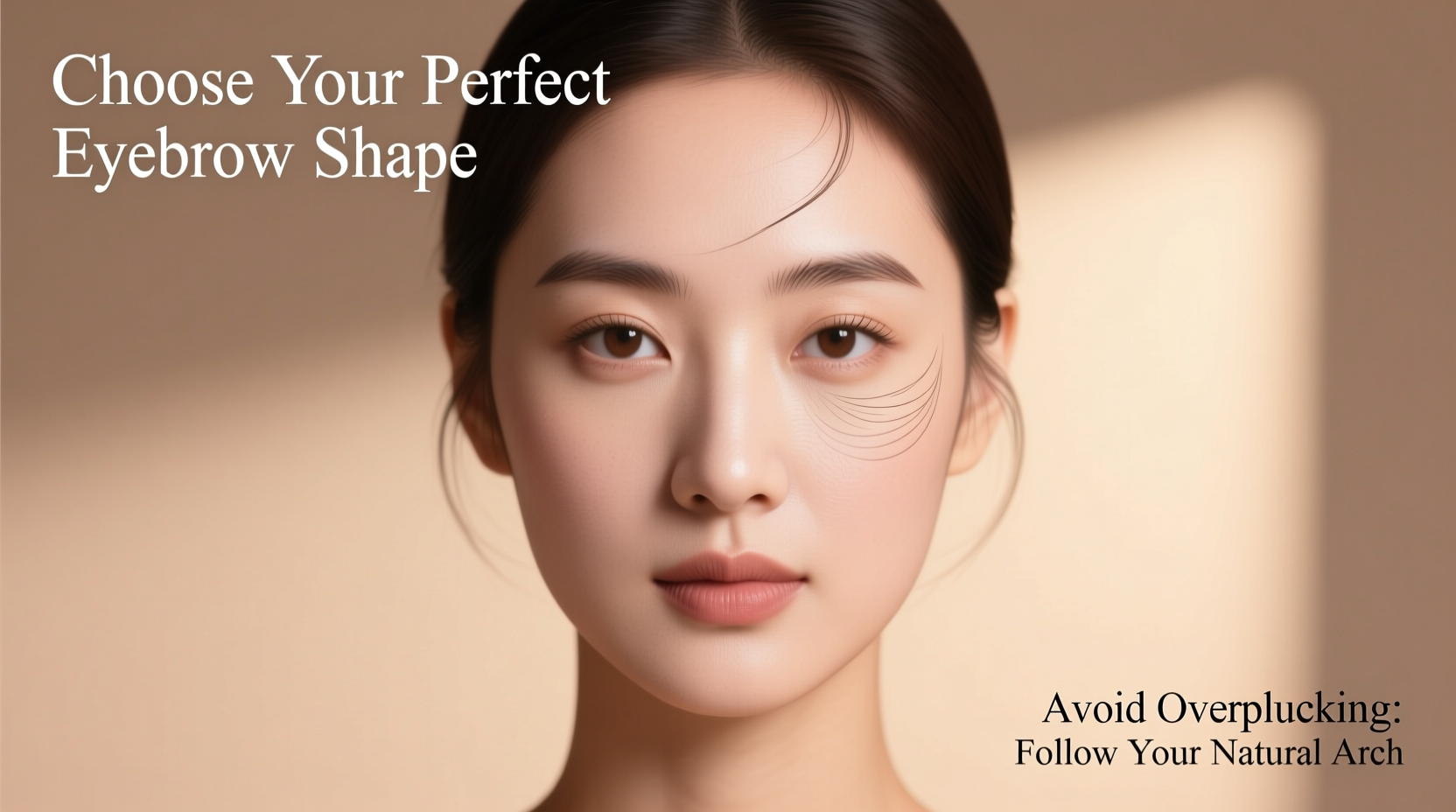
Facial symmetry and proportion play a crucial role in how eyebrows are perceived. The ideal brow shape complements your face by balancing width, length, and angles. Start by identifying your face shape. Common types include oval, round, square, heart, diamond, and oblong. Each responds best to a specific brow style.
For example, high arches can elongate a round face, while softer, straighter brows help soften strong jawlines. Misjudging your face shape often leads to overplucking in pursuit of a trend that doesn’t suit your bone structure.
Oval Face
An oval face has balanced proportions with gently curved jawlines and a forehead slightly wider than the chin. This shape is considered the most versatile for brow styles. A soft arch with moderate thickness works best, following the natural curve of the eye socket. Avoid overly flat or exaggerated arches, which can distort facial harmony.
Round Face
Rounded faces benefit from higher, more defined arches that lift the eyes and create vertical elongation. Position the peak of the arch farther from the center of the eye to draw attention upward. Keep the tail of the brow extended slightly beyond the outer corner of the eye to add angular definition. Overplucking the tail or creating a low arch can make the face appear wider.
Square Face
Defined by a strong jawline and broad forehead, square faces do well with softly arched or slightly curved brows. Sharp, angular brows can intensify the harshness of the jaw, so aim for a rounded peak and avoid over-thinning. Let the brow taper naturally toward the tail without dropping downward.
“Eyebrows should enhance, not dominate. The goal is subtle framing—not drawing attention to the brow itself, but to the eyes beneath.” — Lena Torres, Celebrity Makeup Artist & Brow Specialist
Heart-Shaped Face
This face shape features a wide forehead and narrow chin. To balance the upper face, opt for brows with a gentle, low-to-moderate arch. Keep the front thicker to ground the forehead, and avoid overly long or dramatic tails that emphasize the pointed chin. Rounded brows work better than sharp angles here.
Diamond Face
With high cheekbones and a narrow forehead and jaw, diamond shapes need brows that widen the forehead slightly. A straighter, horizontal brow with a soft arch helps create balance. Avoid extreme peaks, which can accentuate cheekbone prominence. Fill in sparse areas at the start of the brow to broaden the upper face visually.
Oblong (Long) Face
To counteract length, go for flat, straight brows with minimal arch. This creates a horizontal line that shortens the appearance of the face. Never overpluck the tail, as extending it too far will exaggerate length. Keep the brows fuller and level, aligned with the natural crease of the eyelid.
The Golden Rules of Natural Brow Shaping
Before removing any hair, establish boundaries. The three-point method—using a pencil or brush—is foundational for defining where your brows should begin, arch, and end.
- Start Point: Place a pencil vertically against the side of your nose, aligning it with the inner corner of your eye. Where the pencil meets your brow is your ideal starting point.
- Arch Point: Angle the pencil from the outer edge of your nostril through the outer edge of your iris. The intersection with your brow marks the highest point of your arch.
- End Point: Extend the pencil diagonally from the side of your nose through the outer corner of your eye. This shows where your brow should naturally end.
These guidelines prevent overplucking by giving you clear limits. Anything inside the start point is usually part of the natural brow field. Hair outside the end point should typically be removed unless it’s minimal.
Step-by-Step Guide: Shaping Without Overplucking
Follow this routine to refine your brows safely and effectively:
- Assess Growth Patterns: Brush brows upward with a spoolie. Note areas of density, gaps, and stray hairs. Do not tweeze yet.
- Define Your Frame: Use the pencil method above to mark start, arch, and endpoint. Lightly dot these positions with an eyebrow pencil.
- Identify Strays: Only remove hairs clearly outside your natural shape. Focus on isolated strays below the brow line or between the brows.
- Tweeze Sparingly: Pull in the direction of hair growth using clean, slanted tweezers. Remove no more than 5–10 hairs per session. Less is more.
- Check Symmetry: Compare both brows from a distance. Small differences are normal; perfect symmetry is unnatural and often unflattering.
- Fill if Needed: Use a fine pencil or powder to simulate fullness. This reveals whether gaps need correction or if they’re optical illusions.
- Wait 48 Hours: Reassess before further plucking. Swelling or redness can distort perception immediately after grooming.
Resist the urge to “perfect” every hair. Natural asymmetry adds character. Over time, consistent minor adjustments yield better results than aggressive reshaping.
Do’s and Don’ts: Brow Maintenance Table
| Do’s | Don’ts |
|---|---|
| Use clean, sharp tweezers | Share tweezers or use dull tools |
| Tweeze every 2–3 weeks max | Pluck daily or weekly out of habit |
| Brush brows daily to train growth | Wax or thread frequently (increases overplucking risk) |
| Apply aloe or soothing balm post-plucking | Touch brows with dirty hands afterward |
| Let the tail end at the pencil-measured point | Extend brows too far, creating a ‘surprised’ look |
| Embrace slight asymmetry | Remove hair above the brow line unless medically necessary |
Real Example: Sarah’s Brow Recovery Journey
Sarah, a 29-year-old teacher, began overplucking in her teens, chasing the thin, high arches popularized in the early 2000s. By her mid-20s, her brows were sparse, uneven, and slow to grow back. After consulting a dermatologist, she learned that repeated trauma had damaged some hair follicles.
She stopped plucking entirely for six months, used castor oil nightly, and visited a licensed brow technician for microfill mapping—a technique that uses pigment dots to show where hair should ideally grow. Gradually, she resumed minimal grooming only on strays. Within ten months, her brows regained 70% of their volume. Today, she maintains a soft, natural arch suited to her oval face—fuller at the start, gently arched, and never overdefined.
Her lesson? Patience and precision matter more than perfection.
Expert Insight: Why Less Is More
“Overplucking causes micro-inflammation that can permanently damage follicles. Once lost, those hairs may never return. I always tell clients: shape around what’s there, don’t erase to fit a trend.” — Dr. Amara Lin, Dermatologist & Hair Specialist
Dr. Lin emphasizes that eyebrow hair cycles are longer than scalp hair—up to four months per strand. Frequent plucking disrupts this cycle, leading to thinner regrowth or complete loss. She recommends using tinting or makeup to create illusionary shape instead of removing hair unnecessarily.
FAQ: Common Brow Questions Answered
Can overplucked eyebrows grow back?
In most cases, yes—but it depends on the extent of follicle damage. If plucking has been chronic and aggressive, some hairs may not regrow. Early intervention with nourishing oils (like castor or rosemary), peptide serums, and avoiding further trauma improves recovery chances. Full regrowth can take 6–12 months.
How do I know if my brows are overplucked?
Signs include visible skin between hairs, difficulty filling them in naturally, a drawn-on appearance even after grooming, or feeling self-conscious about bare patches. If your brows look significantly different from photos five years ago—and not in a good way—it’s likely time to reassess your routine.
Should I dye my eyebrows to make them look fuller?
Dyeing can enhance the appearance of thickness and definition, especially for light or gray hairs. However, it’s best done professionally. At-home kits can stain skin or result in uneven tones. Dye lasts 4–6 weeks and should complement, not replace, proper shaping.
Brow Care Checklist
- ✔ Identify your face shape using a mirror and measuring tool
- ✔ Map start, arch, and endpoint with a pencil
- ✔ Use clean, slanted tweezers
- ✔ Limit plucking to every 2–3 weeks
- ✔ Only remove obvious stray hairs outside the natural brow line
- ✔ Apply a soothing gel or aloe post-grooming
- ✔ Brush brows daily to encourage uniform growth
- ✔ Use makeup to test shapes before committing to changes
- ✔ Consult a professional for major corrections
- ✔ Be patient—natural brows take time to restore
Conclusion: Shape Smart, Preserve Growth
Choosing the right eyebrow shape isn’t about following trends—it’s about honoring your natural structure. Every face is unique, and so should be its brows. By understanding your face shape, respecting your hair’s growth patterns, and resisting the urge to overcorrect, you can achieve balanced, expressive eyebrows that enhance your beauty without sacrifice.
Start today: put down the tweezers, pick up a pencil, and map your brows with intention. Let your natural shape guide you. With mindful maintenance, your eyebrows can become a defining feature—one that frames your face with confidence, not regret.




 浙公网安备
33010002000092号
浙公网安备
33010002000092号 浙B2-20120091-4
Comments
No comments yet. Why don't you start the discussion?