
Olive skin tones are beautifully unique—rich, warm, and often with a subtle green or golden undertone that sets them apart from neutral or cool complexions. Yet, finding the perfect foundation match remains one of the most persistent challenges for people with olive skin. Without access to in-store testers or natural daylight comparisons, the process can feel overwhelming. The wrong shade can look ashy, too orange, or create an obvious line at the jawline. But with the right knowledge and strategy, you can confidently select a foundation that blends seamlessly into your skin—all from the comfort of home.
The key lies in understanding your undertone, analyzing lighting conditions, leveraging technology, and learning how to interpret product descriptions accurately. This guide walks you through each step with precision, so you can make informed decisions even when physical swatching isn’t possible.
Understanding Olive Skin Tones
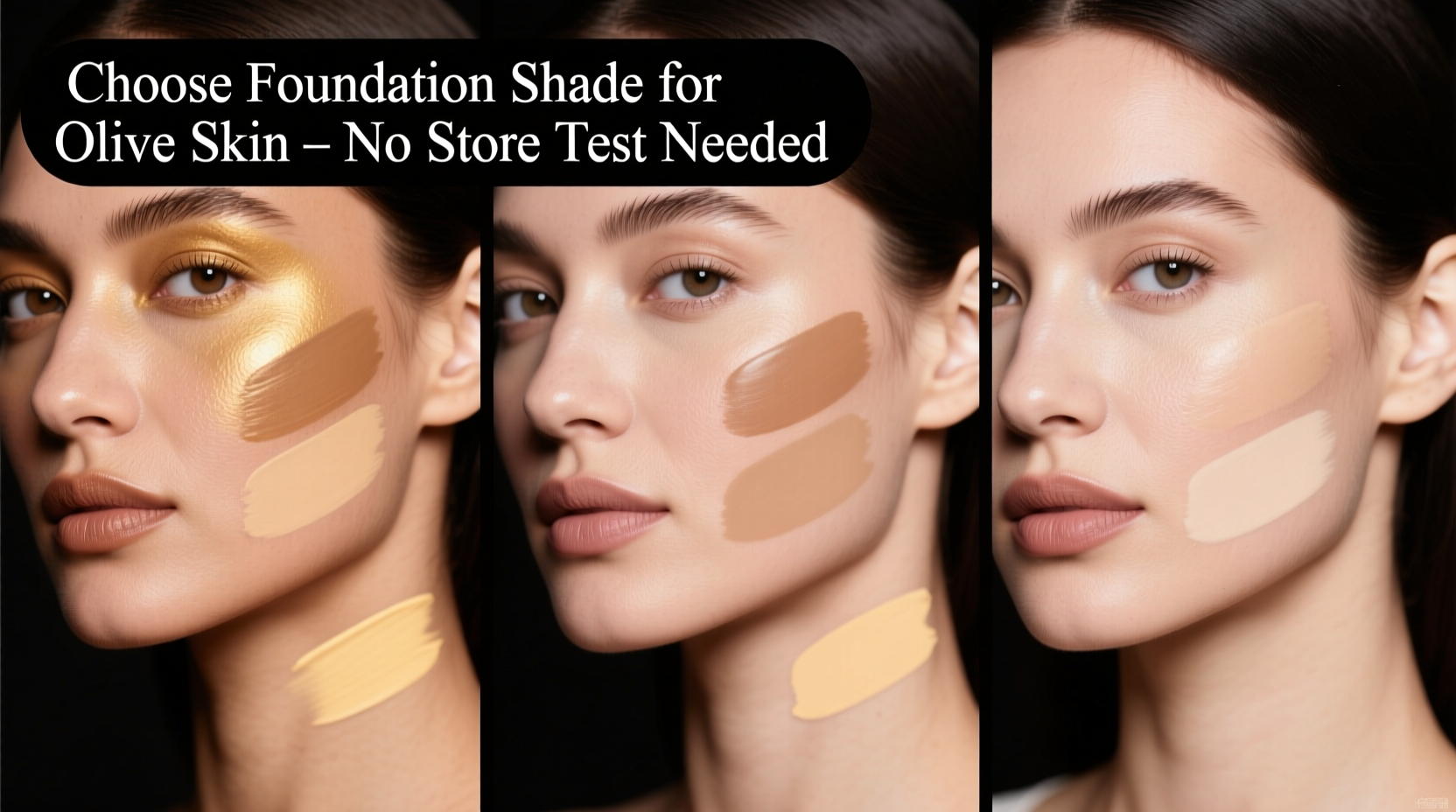
Olive skin is not simply a tan version of fair or medium skin—it’s a distinct category characterized by a balance of warm and cool pigments. Unlike purely warm or cool tones, olive complexions often have underlying greenish or yellow-green hues, which interact uniquely with makeup. These undertones can shift slightly depending on sun exposure, season, or health, making consistency in shade selection crucial.
There are generally three subcategories within olive skin:
- Light Olive: Often mistaken for neutral-warm, but shows greenish undertones under certain lighting.
- Medium Olive: More pronounced golden-green base; common across Mediterranean, Middle Eastern, and South Asian populations.
- Deep Olive: Richer pigment with deeper warmth, sometimes bordering on neutral-cool depending on individual variation.
A common misconception is that all olive skin is “yellow-based.” In reality, many olive complexions carry muted green undertones that react poorly to overly warm foundations, resulting in an unnatural orange cast. Conversely, cool-toned foundations can leave olive skin looking gray or dull.
“Olive skin doesn't fit neatly into warm/cool binaries. It's a hybrid tone that needs balanced pigmentation—neither too red nor too yellow.” — Dr. Lena Torres, Cosmetic Dermatologist
Step-by-Step Guide to Choosing Your Shade Online
Selecting the correct foundation remotely requires a systematic approach. Follow these steps carefully to minimize guesswork and returns.
- Determine Your Undertone Accurately
Use the vein test: Look at the inside of your wrist under natural light. If your veins appear greenish or a mix of blue-green, you likely have olive undertones. If jewelry preference helps, gold tends to flatter olive skin more than silver—but this isn’t definitive. - Analyze Your Current Foundation (If Applicable)
If you already wear a foundation that looks decent, note its brand, shade name, and number. Research whether the brand uses consistent numbering systems (e.g., N for neutral, W for warm). Compare it to new options using cross-brand shade converters like those offered by MakeupAlley or online communities such as r/MakeupAddiction on Reddit. - Use Natural Daylight for Self-Assessment
Stand near a window with indirect sunlight. Take a clear photo of your bare face without filters. Avoid flash photography, which distorts color perception. Compare your neck and jawline to your forehead—this reveals whether your skin appears sallow, pink, or gray in different areas. - Research Brand-Specific Shade Naming Conventions
Some brands label olive shades explicitly (e.g., \"Olive,\" \"Neutral-Olive,\" \"Golden-Olive\"). Others use codes. For example:- Fenty Beauty: Uses \"PRO\" followed by numbers; PRO 20 is a popular medium olive choice.
- Maybelline Fit Me: Look for \"W\" (warm) or \"N\" (neutral) with mid-range depths (e.g., 310 Warm Beige).
- Armani Luminous Silk: Shade 6.5 or 7 often suits light-to-medium olive tones.
- Leverage Virtual Try-On Tools
Apps like Sephora Virtual Artist, Ulta’s GLAMLab, or Nykaa’s AR tool allow you to upload a selfie and simulate foundation application. While not 100% accurate due to screen calibration differences, they help narrow down candidates. Test multiple shades side by side digitally before purchasing. - Order Sample Sizes When Possible
Many luxury brands offer mini versions or sample programs via their websites or subscription boxes. Apply samples at home under natural light after cleansing your face. Wait 10 minutes for oxidation to occur—some formulas darken slightly upon drying.
Decoding Foundation Labels: What Words Actually Mean
Brand terminology varies widely, leading to confusion. Below is a breakdown of common descriptors and what they typically mean for olive skin:
| Term | Typical Meaning | Suitability for Olive Skin |
|---|---|---|
| Warm | Yellow, golden, or peachy base | Mixed – may work if not overly yellow |
| Cool | Pink or red undertone | Poor – often causes ashy effect |
| Neutral | Balanced between warm and cool | Good starting point for olive |
| Olive | Greenish or muted golden-green base | Ideal – specifically formulated for olive tones |
| Golden | Strong yellow-gold pigment | Risky – can turn orange on olive skin |
| Beige | Grayish-yellow; often cooler | Caution – may pull too pink |
When shopping online, prioritize brands that include “olive” in their naming system. Examples include EM Cosmetics, Kosas, and Tower 28, which offer dedicated olive ranges. Even drugstore lines like L'Oréal True Match now include olive-specific designations (e.g., “C” for cool, “W” for warm, “N” for neutral, and “O” for olive).
Real Example: Finding the Right Match Without Swatching
Consider Maria, a 32-year-old with medium olive skin living in Chicago. She has struggled for years with foundations turning too orange or leaving a ghostly line at her jaw. After moving during winter, she needed a new bottle but couldn’t visit stores due to time constraints.
She began by reviewing old photos where her skin looked even and healthy. She noticed she wore Fenty Pro Filt’r Soft Matte in 350, which had worked well in summer. However, in winter, her skin was slightly paler. Instead of guessing, she used Sephora’s Virtual Artist to try shades 340 and 350. Shade 340 appeared slightly darker but better matched her current tone.
To confirm, she checked YouTube reviews from women with similar skin tones. Multiple reviewers mentioned that 340 suited medium-deep olive complexions in colder months. She ordered a sample, applied it at noon under north-facing light, and waited 15 minutes. The shade blended invisibly along her hairline and jaw. Confident, she purchased the full size—and finally achieved a seamless finish.
This case illustrates how combining digital tools, community insights, and self-observation leads to successful outcomes—even without physical swatching.
Checklist: How to Choose Foundation for Olive Skin Without Testing
- ✅ Assess your undertone using natural daylight and the vein test.
- ✅ Take an unfiltered photo of your face in daylight for reference.
- ✅ Identify whether your olive tone leans warm, cool, or neutral.
- ✅ Research brands that offer olive-specific shades (look for “O,” “OL,” or “Olive” labels).
- ✅ Use virtual try-on apps to preview shades on your face.
- ✅ Read verified customer reviews filtered by skin tone and type.
- ✅ Order samples whenever possible and test them after oxidation.
- ✅ Match the foundation to your jawline and neck, not just your face.
- ✅ Re-evaluate your shade twice a year—seasonal changes affect skin tone.
Frequently Asked Questions
Can I use my concealer shade to estimate my foundation?
Not reliably. Concealers are usually 1–2 shades lighter than foundation to brighten under eyes. Using concealer as a reference may lead you to pick a foundation that’s too pale. Always assess both separately.
Why does my foundation look orange even though it’s labeled 'warm'?
Many “warm” foundations contain strong yellow or golden pigments that clash with olive skin’s green undertones. True olive-compatible shades balance warmth with neutrality. Look for terms like “neutral-warm” or “golden-olive” instead of pure “warm.”
Do olive skin tones need different shades in summer vs. winter?
Yes. Olive skin often deepens slightly in summer due to sun exposure and tans more evenly than other tones. You may need a shade or half-shade darker in warmer months. Keep two bottles on hand—one for summer, one for winter—or adjust with bronzer and moisturizer.
Avoid These Common Mistakes
Even with good intentions, shoppers make errors that compromise foundation matching:
- Choosing based on packaging alone: Marketing images often feature models with different undertones.
- Ignoring oxidation: Some formulas start light and darken quickly. Always wait before deciding.
- Testing only on the hand or wrist: These areas are often darker or thinner-skinned than the face.
- Buying the same shade year-round: Skin tone shifts with seasons; reevaluate every few months.
- Trusting artificial lighting: Bathroom bulbs distort color. Only judge matches in natural daylight.
Conclusion: Confidence Starts With the Right Match
Finding the perfect foundation for olive skin without in-store testing is entirely achievable—with patience, observation, and smart research. By understanding your undertone, using technology wisely, and relying on trusted brand cues, you can avoid the frustration of mismatched makeup and achieve a flawless, natural finish.
Your skin deserves more than guesswork. Take control of your beauty routine with informed choices that honor your unique tone. Start today: analyze your current lighting, review your past favorites, and explore olive-specific brands. Share your journey or tips in the comments—your experience could help someone else find their match.




 浙公网安备
33010002000092号
浙公网安备
33010002000092号 浙B2-20120091-4
Comments
No comments yet. Why don't you start the discussion?