
Olive skin tones are beautifully unique—rich in depth, often resistant to visible redness, and capable of glowing with warmth. Yet, finding the perfect foundation match remains one of the most common struggles for people with olive undertones. Too pink, and the foundation looks ashy. Too yellow, and it turns orange. Too neutral, and the skin loses its natural harmony. The issue isn't scarcity of options—it's understanding what makes olive skin distinct and how to navigate the sea of shades with precision.
Olive undertones sit at the intersection of warm and cool, creating a greenish or golden-green base that can shift under different lighting. This duality confuses many when selecting makeup, especially since most foundation lines categorize shades as either warm, cool, or neutral without accounting for olive complexity. But with the right approach, choosing a foundation becomes less about guesswork and more about informed decision-making.
Understanding Olive Undertones: Beyond Warm and Cool
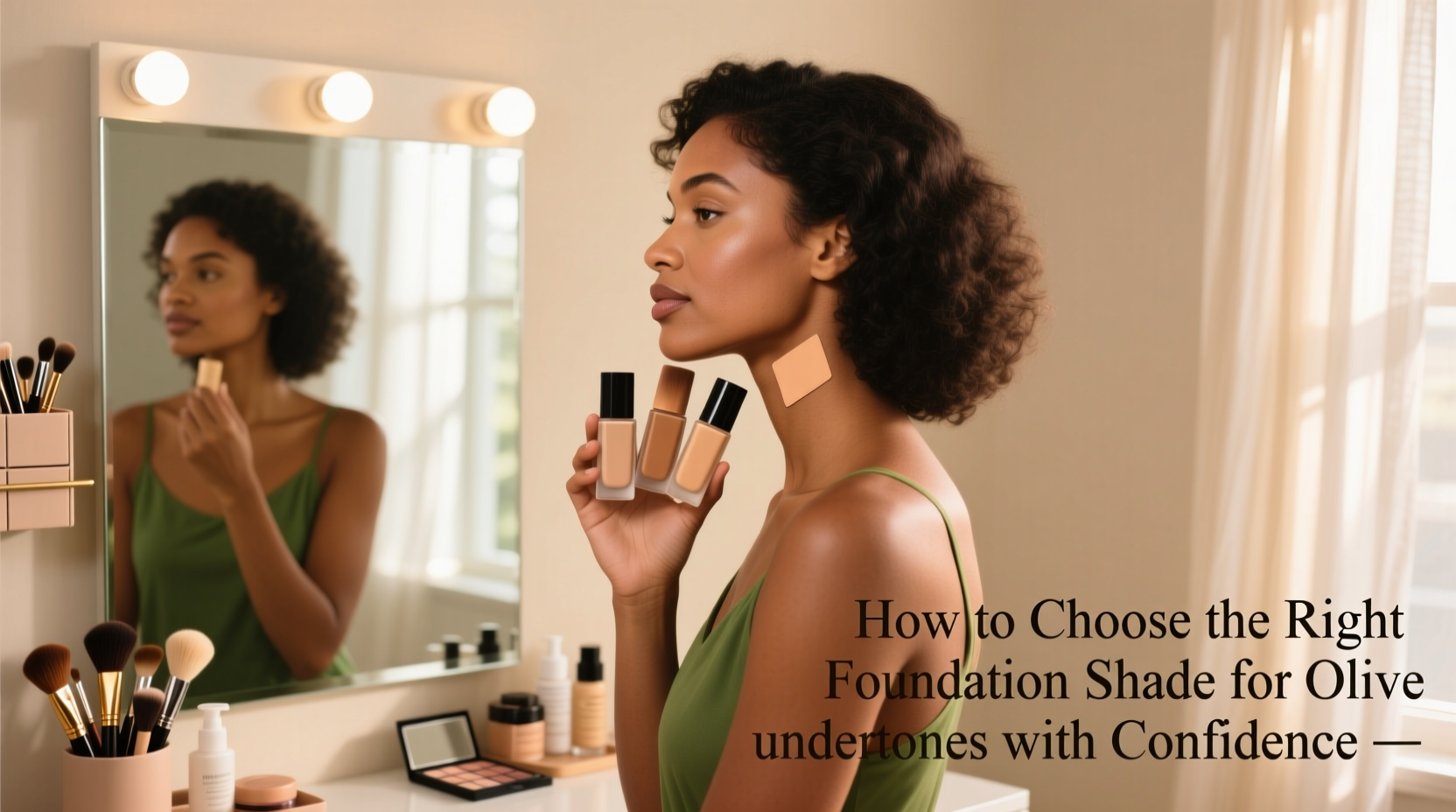
Olive skin is not simply warm or neutral—it’s a blend that contains both green and yellow pigments beneath the surface. This combination gives olive complexions their distinctive ability to tan easily while resisting sunburn, and also explains why certain “warm” foundations can look unnatural despite matching the surface tone.
The key to identifying olive undertones lies in observing subtle cues:
- Vein Test (with caution): Under natural light, if your veins appear greenish or a mix of blue and green, you likely have olive or warm undertones. However, this test is not definitive—many olive-toned individuals see blue veins due to higher melanin levels.
- Jewelry Preference: Gold often complements olive skin better than silver, though some olive tones with cooler influences may suit both.
- Sun Reaction: If you tan deeply without burning and avoid turning pink in the sun, olive undertones are likely present.
- Fabric Test: Hold up white and off-white fabrics near your face. If stark white washes you out but cream or ivory enhances your glow, you probably have olive undertones.
True olive skin doesn’t fit neatly into traditional color theory. It requires foundations that balance yellow and green undertones without veering into overly ashy or overly golden territory.
Step-by-Step Guide to Finding Your Perfect Match
Selecting the ideal foundation for olive skin should follow a methodical process. Impulse buying based on packaging or influencer recommendations rarely leads to long-term satisfaction. Follow these steps to build confidence in your selection:
- Determine Your Depth and Sub-Undertone: Olive skin varies from light beige-olive to deep espresso-olive. Identify whether your olive tone leans warm (golden-olive), cool (ashy-olive), or true olive (balanced green-gold). True olive often avoids extreme warmth or coolness.
- Swatch Strategically: Apply three potential shades along your jawline—not your hand or wrist. Blend them slightly and step outside into natural daylight. The correct shade will disappear into your skin.
- Wait 15 Minutes: Foundations oxidize. A shade that looks perfect initially may darken or shift. Give it time before ruling a match in or out.
- Check Indoor and Outdoor Lighting: View your face under fluorescent, incandescent, and natural light. Some olive-matching foundations look gray indoors if too cool, or orange outdoors if too warm.
- Test Multiple Brands: One brand’s “neutral olive” may be another’s “warm gold.” Expand your trials beyond a single line.
- Evaluate Finish and Formula: Matte, dewy, or satin—your skin type and lifestyle matter. Oily skin may prefer matte; dry skin benefits from radiant finishes.
This process eliminates assumptions and centers the decision on how the product behaves on your actual skin.
Top Foundation Characteristics for Olive Skin
Not all foundations are created equal when it comes to accommodating olive undertones. Look for these specific qualities to ensure a seamless match:
| Feature | Why It Matters | Recommended For |
|---|---|---|
| Olive-Specific Shades | Formulated with green-gold balance to prevent ashy or orange results | All olive undertones |
| Neutral-Olive Range | Bridges warm and cool without dominance on either side | True olive, medium-depth tones |
| Buildable Coverage | Allows layering without caking; adapts to daily needs | Combination and oily skin |
| Non-Oxidizing Formula | Stays true to color after application | Those prone to midday darkening |
| SPF Without White Cast | Protects deeper olive tones without leaving gray residue | Deep olive and rich brown olive |
Brands like IT Cosmetics, Fenty Beauty, Tower 28, and Kosas offer inclusive ranges with dedicated olive or neutral-olive categories. These lines acknowledge that olive is not an afterthought—it’s a legitimate undertone requiring specialized formulation.
“Olive skin has been historically underserved in beauty because formulators default to warm/cool binaries. The best foundations now recognize olive as its own category.” — Dr. Lena Park, Cosmetic Chemist & Inclusive Beauty Researcher
Real Example: Maria’s Foundation Journey
Maria, a 34-year-old with Mediterranean heritage, spent nearly a decade using shades labeled “warm beige” only to find her foundation looking increasingly orange by midday. She assumed she was doing something wrong—perhaps applying too much, or not blending properly. After switching to a dermatologist-recommended routine, she noticed her skin looked dull and lifeless under office lighting.
It wasn’t until she visited a makeup studio specializing in diverse skin tones that she learned her undertone was not warm, but olive with a slight cool influence—what experts call “ashy olive.” The artist tested several shades, finally landing on a “Neutral Olive 3C” from a clean beauty brand. The difference was immediate: no cast, no oxidation, and a natural finish that matched her neck and chest seamlessly.
Her breakthrough came not from changing her skincare, but from redefining her understanding of undertones. “I stopped chasing warmth,” she said. “Once I accepted my olive base, everything clicked.”
Common Mistakes to Avoid
Even with good intentions, many people make errors that compromise their foundation match. Here are the most frequent pitfalls—and how to avoid them:
- Mistake: Matching Only to the Face
Reality: The face often differs from the neck and chest due to sun exposure. Always blend downward to check continuity. - Mistake: Ignoring Seasonal Shifts
Reality: Olive skin tans easily. You may need two foundation shades—one for winter, one for summer. - Mistake: Trusting Artificial Lighting
Reality: Store lighting is harsh and distorts color perception. Never finalize a purchase without testing in daylight. - Mistake: Overlooking Oxidation
Reality: Some formulas contain ingredients that react with skin oils, darkening within minutes. Wait before deciding. - Mistake: Assuming All “Neutral” Shades Work
Reality: Many neutrals lean cool. True olive-neutrals contain trace green pigments to counteract sallowness.
Avoiding these mistakes streamlines the search and prevents repeated disappointments.
Foundation Shade Checklist for Olive Tones
Use this checklist to evaluate any foundation before committing to a full bottle:
- ✅ Does the brand offer a dedicated olive or neutral-olive range?
- ✅ Is the shade swatched on my jawline, not hand or arm?
- ✅ Does it blend invisibly in natural daylight?
- ✅ Does it remain consistent after 15–20 minutes?
- ✅ Does it match my neck and décolletage?
- ✅ Does it perform well under indoor lighting?
- ✅ Is the finish suitable for my skin type (matte, dewy, etc.)?
- ✅ Can I return or exchange if it oxidizes or separates?
Checking each box significantly increases the likelihood of a flawless, confidence-boosting result.
FAQ: Common Questions About Foundation for Olive Skin
Can olive skin use warm foundation shades?
Some olive tones—particularly golden-olive—can wear warm shades successfully. However, most olive complexions risk looking orange or mismatched if the foundation lacks green-balancing pigments. If using a warm shade, opt for one labeled “neutral-warm” rather than “golden” or “deep gold.”
Why does my foundation look ashy on olive skin?
Foundations with cool or pink undertones neutralize redness in fair-to-medium cool skin, but on olive skin, they introduce a grayish cast. This happens because the pink cancels out the natural warmth, leaving behind a flat, lifeless appearance. Always avoid shades with strong pink or rose bases unless explicitly formulated for cool-olive.
Do I need different foundation in summer vs. winter?
Yes. Olive skin typically tans rather than burns, meaning your overall depth may change seasonally. Keep two shades on hand: a lighter olive for winter and a deeper olive or tan-olive for summer. Transition gradually as your skin adjusts to sun exposure.
Final Thoughts: Confidence Starts With the Right Match
Choosing the right foundation for olive undertones isn’t about luck—it’s about knowledge, patience, and attention to detail. When your base disappears into your skin, enhancing rather than masking, it transforms not just your appearance but your self-assurance. You stop worrying about patches, discoloration, or looking “off,” and start feeling truly at home in your complexion.
The beauty industry has made strides in inclusivity, but gaps remain. As a consumer, your awareness empowers you to demand better formulations and smarter labeling. Don’t settle for “close enough.” Seek out brands that respect the complexity of olive skin, and trust your own eyes over marketing claims.




 浙公网安备
33010002000092号
浙公网安备
33010002000092号 浙B2-20120091-4
Comments
No comments yet. Why don't you start the discussion?