
Selecting a fragrance goes far beyond personal preference. A scent that smells divine on one person might turn sour or fade within minutes on another. This variation often comes down to two critical factors: your skin type and the season. Understanding how these elements interact with perfume allows you to make smarter choices, ensuring your signature scent performs as intended—whether it’s a crisp winter morning or a humid summer afternoon.
Fragrance is chemistry in motion. It reacts with your body’s natural oils, pH levels, and temperature, meaning no two people will experience the same scent identically. Pair this biological nuance with shifting environmental conditions across seasons, and choosing the right perfume becomes both an art and a science.
Understanding Skin Chemistry and Its Impact on Fragrance
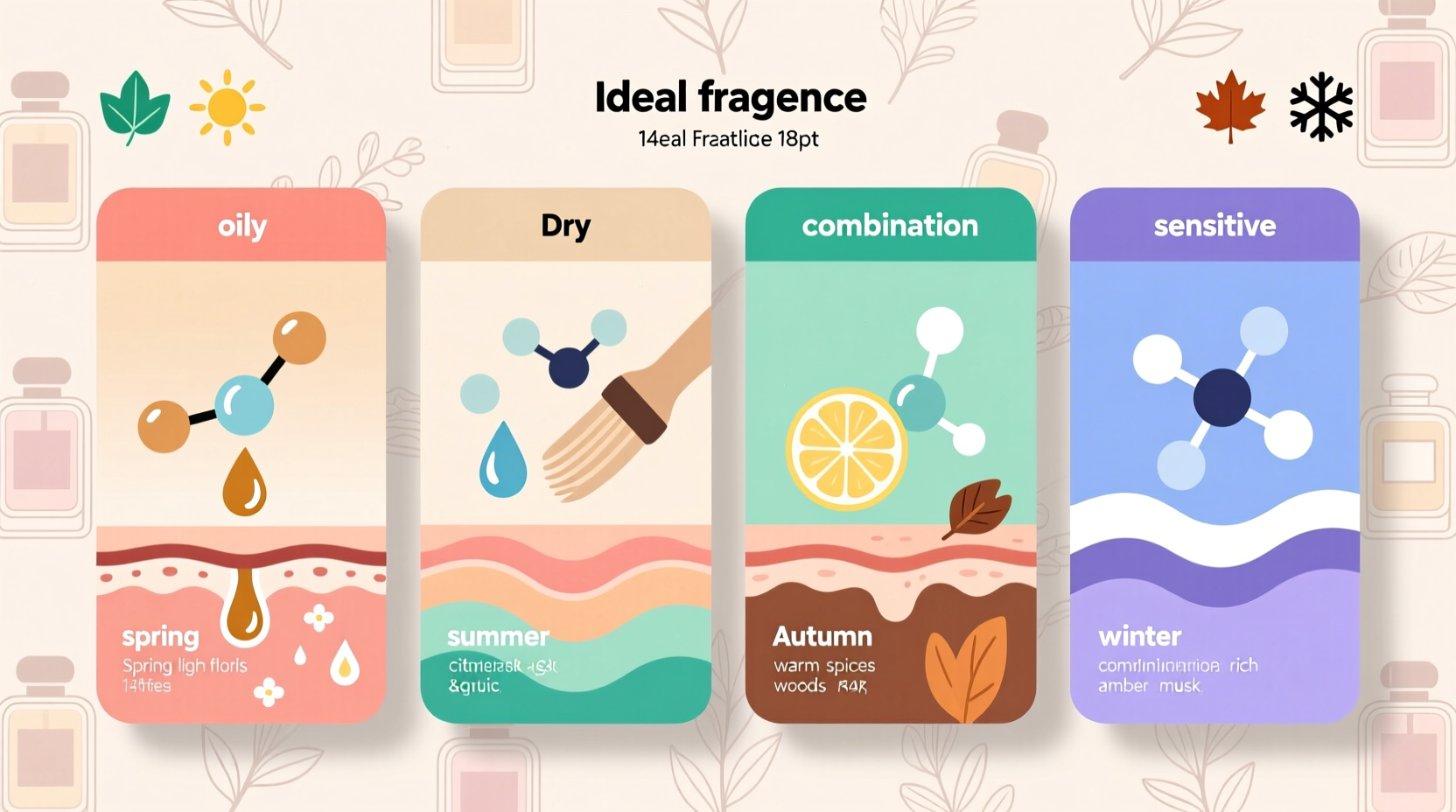
Your skin is not a neutral canvas. It has a unique chemical composition influenced by genetics, diet, hormones, and skincare routines. These variables affect how fragrance notes evolve once applied. For example, a floral scent may bloom beautifully on oily skin but vanish quickly on dry skin due to lack of moisture retention.
The primary components of skin chemistry that influence scent include:
- pH Level: Most skin falls between 4.5 and 6.0 on the pH scale. Lower (more acidic) pH tends to intensify base notes like musk or vanilla, while higher (alkaline) pH can amplify citrus and green notes but may cause some scents to sour.
- Sebum Production: Oily skin produces more sebum, which binds with fragrance molecules and slows evaporation. This means stronger projection and longer-lasting scent.
- Hydration Levels: Dry skin lacks natural oils, causing alcohol-based perfumes to evaporate faster. This results in weaker sillage and shorter wear time.
- Body Temperature: Warmer skin increases scent diffusion. People with higher body heat often find their fragrances project further and develop more quickly.
Matching Fragrance to Your Skin Type
Knowing your skin type helps you select formulations that perform optimally. Here's how different skin types interact with fragrance and what to look for:
| Skin Type | Fragrance Behavior | Recommended Fragrance Types | Application Tips |
|---|---|---|---|
| Oily | Longer-lasting, stronger projection | Lighter florals, citruses, green notes | Avoid heavy orientals; they can become overwhelming. Apply sparingly. |
| Dry | Fades quickly, weaker sillage | Rich orientals, vanillas, ambers, oil-based perfumes | Mist moisturizer before applying. Consider layering with matching scented lotion. |
| Normal/Combination | Balanced performance | Versatile—most fragrance families work well | Rotate based on season. Patch test new scents behind ears. |
| Sensitive | May react to alcohol or synthetic ingredients | Natural perfumes, alcohol-free roll-ons, minimalistic compositions | Avoid high-alcohol sprays. Opt for hypoallergenic brands. |
For those with dry skin, consider using unscented body oils or fragrance-free moisturizers before application. Hydrated skin acts as a better scent carrier. Conversely, if you have oily skin, avoid overly sweet or dense fragrances—they can become cloying when amplified by sebum.
“Perfume doesn’t just sit on your skin—it dances with it. The same scent can be soft and powdery on one person, bold and spicy on another.” — Clara Montaigne, Perfume Historian & Nose at Parfums de Cour
Seasonal Scent Selection: Why Timing Matters
Temperature, humidity, and even clothing weight affect how a fragrance behaves. What works in winter may suffocate in summer, and vice versa. Seasonal changes alter both scent volatility and social context.
In warmer months, air molecules move faster, accelerating the evaporation of top notes. Lighter, fresher compositions thrive. In colder weather, cold air suppresses scent diffusion, making richer, deeper fragrances more effective.
Spring: Renewal and Freshness
As nature reawakens, so should your fragrance wardrobe. Spring calls for bright florals, green accords, and aquatic notes. Think dewy jasmine, lily of the valley, or crisp apple blossom. These scents mirror blooming gardens and light breezes.
Summer: Heat-Resistant and Refreshing
High temperatures intensify strong notes like vanilla or patchouli, which can become oppressive. Instead, opt for citrus, marine, herbal, or ozonic fragrances. Lemon, bergamot, mint, and sea salt provide cooling effects and resist turning rancid in sweat.
Choose lighter concentrations like eau de cologne or eau fraîche. They’re less intense and more suitable for outdoor activities, beach days, or tropical climates.
Fall: Transition to Warmth
As leaves change color, shift toward amber, spice, and soft leather notes. Cinnamon, clove, tonka bean, and sandalwood create cozy, inviting impressions. These scents complement wool sweaters and evening walks.
This is the ideal time to reintroduce moderate sillage fragrances. Cool air carries scent farther, so balance warmth with restraint.
Winter: Depth and Longevity
Cold air dulls scent perception, requiring bolder, long-lasting compositions. Oriental, gourmand, and woody fragrances shine. Vanilla, incense, dark chocolate, oud, and smoked cedar deliver presence and warmth.
Higher concentration perfumes (eau de parfum or extrait) perform best. Their oil content ensures longevity despite low humidity and layered clothing absorbing scent.
Step-by-Step Guide: Choosing Your Ideal Seasonal Fragrance
Follow this practical process to align fragrance choice with skin type and season:
- Identify your skin type: Observe how your skin feels throughout the day. Is it tight after washing? Oily by midday? Use this to categorize yourself.
- Assess current season and climate: Note average temperature and humidity. Urban environments with central heating differ from rural or coastal areas.
- Review your fragrance wardrobe: Group existing perfumes by family (floral, citrus, oriental, etc.) and concentration level.
- Test new candidates: Visit stores during the target season. Spray on pulse points, wait 30–60 minutes, and evaluate development.
- Limit trial size purchases: Buy decants or travel sizes first. Wear for a full day in real-life conditions—office, outdoors, evening.
- Adjust application method: Dry skin? Apply to moisturized areas. Hot climate? Spray on clothes or hair to reduce skin interaction.
- Rotate seasonally: Store off-season perfumes in cool, dark places to preserve integrity.
Mini Case Study: From Frustrated Buyer to Confident Curator
Sophia, a graphic designer from Portland, Oregon, struggled for years with her favorite vanilla perfume fading within an hour. She assumed she was “not a perfume person” until consulting a niche perfumer at a local boutique. After analyzing her routine, the expert noted she had dry skin and used alcohol-heavy hand sanitizer frequently.
The solution? She began applying a plain shea butter lotion before spraying a richer vanilla bourbon fragrance in winter. In summer, she switched to a vetiver-and-grapefruit eau de cologne applied to her hairbrush and coat collar. Her confidence soared—colleagues started complimenting her scent weekly.
By aligning product choice with skin needs and seasonal shifts, Sophia transformed her relationship with fragrance from inconsistent to intentional.
Fragrance Checklist: Make Smarter Choices Year-Round
Use this checklist before purchasing or wearing any fragrance:
- ✅ Tested on my skin, not just paper
- ✅ Matches current season’s temperature and humidity
- ✅ Complements my skin type (hydrated/dry/oily)
- ✅ Appropriate for planned activities (work, date, gym)
- ✅ Concentration matches occasion (EDT for day, EDP for night)
- ✅ Stored properly when not in use (away from light and heat)
- ✅ Layered with matching unscented moisturizer if needed
Common Mistakes to Avoid
Even seasoned fragrance lovers fall into traps. Steer clear of these errors:
- Buying online without sampling: Digital descriptions can’t convey how a scent evolves on your skin.
- Using too much in cold weather: Over-application leads to olfactory fatigue and discomfort for others.
- Ignoring skincare interactions: Exfoliants, acne treatments, or retinols can alter skin pH and distort scent.
- Storing perfume incorrectly: Sunlight and temperature swings degrade essential oils. Keep bottles upright in drawers.
- Wearing summer scents in winter: Light citruses may disappear entirely in cold air, leaving you scentless.
FAQ: Common Questions About Fragrance Selection
Can I wear the same fragrance year-round?
You can, but performance will vary. A rich vanilla may dominate in summer and fade in winter. For consistent results, consider owning multiple versions of a scent family—one lighter, one deeper—or adjust application frequency.
Why does my perfume smell like vinegar sometimes?
This usually indicates oxidation or reaction with skin acidity. Perfumes containing aldehydes or certain citrus oils may sour on alkaline skin. Try a different batch or switch to a more stable fragrance base like sandalwood or musk.
How many perfumes should I own?
There’s no rule, but having at least three provides flexibility: one for warm weather, one for cold, and one signature scent for special occasions. Rotating prevents nose blindness and extends bottle life.
Final Thoughts: Build a Thoughtful Fragrance Wardrobe
Choosing the right fragrance isn’t about chasing trends or luxury branding—it’s about harmony between your body, environment, and intention. When you understand how your skin transforms scent and how seasons shape its expression, you gain control over your olfactory identity.
Start small. Reevaluate one fragrance at a time. Pay attention to how it behaves across days and settings. Adjust your approach with the seasons. Over time, you’ll build a curated collection that enhances your presence, boosts confidence, and reflects who you are—naturally and authentically.




 浙公网安备
33010002000092号
浙公网安备
33010002000092号 浙B2-20120091-4
Comments
No comments yet. Why don't you start the discussion?