
Choosing a Christmas tree is more than just picking the greenest, fullest evergreen from the lot. When your home features a vaulted ceiling, the decision becomes even more nuanced. The soaring architecture adds drama and openness—but it also presents unique challenges when selecting a tree that feels balanced, festive, and safe. A tree too tall risks brushing against the ceiling or becoming a fire hazard near lighting fixtures; one too short can look dwarfed and out of place in a grand space.
The key lies not in filling vertical space at all costs, but in creating harmony between your holiday centerpiece and the room’s architectural lines. With thoughtful measurement, proportion awareness, and design insight, you can select a tree that enhances—rather than competes with—your vaulted ceiling.
Understand Your Ceiling Height and Tree Clearance
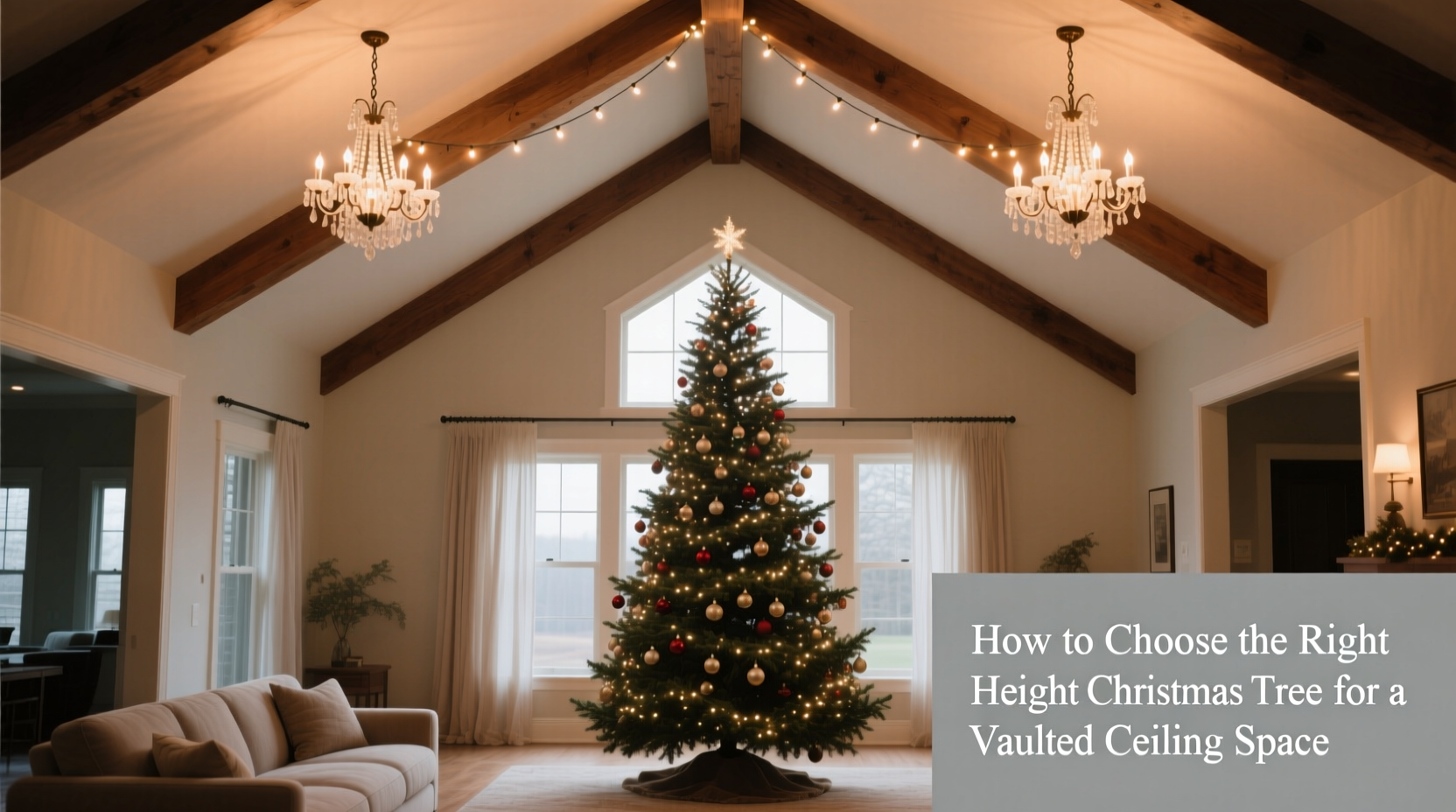
Vaulted ceilings typically range from 9 to over 20 feet, especially in great rooms, living areas, or cathedral-style entries. Before considering any tree, measure from floor to ceiling at the exact spot where the tree will stand. Don’t assume uniformity—vaults often slope, so the highest point may be above the center of the room.
Once you have the total height, subtract at least 6 inches (preferably 8–12) for clearance. This buffer ensures:
- The tree doesn’t scrape the ceiling when settling into its stand.
- Adequate space for a tree topper without contact.
- Safety from recessed lights, ceiling fans, or chandeliers.
- Room for garlands or draping decorations without entanglement.
For example, if your ceiling peaks at 16 feet in the center but the tree will sit 3 feet from the edge where the height is 12 feet, use 12 feet as your maximum reference. Aim for a tree no taller than 11 feet to allow breathing room.
Apply the Rule of Proportional Balance
Interior designers often follow spatial proportion rules to maintain visual comfort. In rooms with high ceilings, a common guideline is to fill two-thirds of the vertical space with key elements like furniture or focal points. Applied to Christmas trees, this means your ideal tree height should be roughly 60–70% of the wall height at the display location.
This isn’t a rigid formula, but a principle to prevent extremes. A 6-foot tree in a 15-foot-tall room occupies only 40% of the space—it may appear lost or comically undersized. Conversely, a 14-foot tree in the same room fills 93%, risking an overwhelming, top-heavy effect.
“Scale is everything in interior styling. A well-proportioned tree doesn't dominate the room—it completes it.” — Lena Pruitt, Interior Designer & Holiday Stylist
Consider these real-world examples using the proportion rule:
| Ceiling Height at Tree Location | Recommended Tree Height Range | Visual Effect |
|---|---|---|
| 9 feet | 6–7 feet | Balanced, traditional |
| 12 feet | 8–9 feet | Dramatic yet harmonious |
| 15 feet | 10–11 feet | Impressive without crowding |
| 18 feet | 12–13 feet | Grand statement piece |
| 20+ feet | 14–16 feet | Makes bold seasonal impact |
Note: Trees over 12 feet are specialty items. They require commercial-grade stands, professional delivery, and careful anchoring—especially in homes with children or pets.
Step-by-Step Guide: Selecting Your Vaulted-Ceiling Tree
Follow this sequence to ensure you pick the perfect tree for your elevated space:
- Measure the exact height from floor to ceiling at the tree’s intended location. Use a tape measure and ladder if needed.
- Check overhead fixtures—recessed lights, smoke detectors, ceiling fans, or chandeliers—and note their lowest hanging point.
- Determine max safe height by subtracting 8–12 inches from the ceiling height or the lowest fixture, whichever is lower.
- Calculate proportional height using 60–70% of the wall height. Compare this with your max safe height.
- Select the final height based on the lower of the two numbers—never exceed safety limits, even if proportion suggests otherwise.
- Choose tree type: Real Fraser firs, Balsam firs, or Nordmann firs hold up well in large spaces. Artificial trees offer consistent sizing and reusability.
- Plan for support: Secure tall trees to walls with tension rods or aircraft cables anchored discreetly behind branches.
Real Example: The Mountain Lodge Dilemma
In a Colorado vacation home with a great room featuring 18-foot cathedral ceilings, homeowners initially ordered a 16-foot pre-lit artificial tree. On arrival, they realized two problems: the treetop touched a recessed LED light, creating heat risk, and the sheer mass overwhelmed the seating area, making conversation feel overshadowed.
They downsized to a 12-foot tree with wide, full branches. By placing it slightly off-center and flanking it with tall lanterns and stacked pinecone décor, they created vertical continuity without literal height competition. The result? A warm, inviting focus that celebrated the season—not the structure.
The lesson: sometimes, perceived scale matters more than actual size. Strategic placement and complementary décor can enhance the sense of grandeur without pushing physical limits.
Do’s and Don’ts: Navigating Common Pitfalls
Even experienced decorators make mistakes when working with dramatic architecture. Avoid these frequent errors with clear guidelines:
| Do | Don’t |
|---|---|
| Measure ceiling height at the precise tree location | Assume ceiling height is uniform across the room |
| Leave 8–12 inches of clearance from ceiling and fixtures | Let the tree touch any surface or light source |
| Use a heavy-duty, stable tree stand rated for tall trees | Use a standard stand for trees over 9 feet |
| Anchoring tall trees to wall studs with soft ties | Rely solely on the stand for stability |
| Balance tree height with side décor (lanterns, ladders, art) | Place a short couch directly under a towering tree |
One overlooked factor is airflow. High ceilings often mean greater temperature stratification—warm air rises, leaving cooler air near the floor. This can dry out real trees faster. Monitor moisture levels and water daily, especially in heated homes.
FAQ: Your Vaulted Ceiling Tree Questions Answered
Can I use a 14-foot tree in a 20-foot ceiling space?
Yes, but only if you maintain at least 12 inches of clearance from the ceiling and any fixtures. While proportionally it fills just 70% of the space, which is acceptable, prioritize safety over aesthetics. Also consider whether the tree’s base width complements the room’s furniture scale.
Are artificial trees better for high-ceiling spaces?
Often, yes. Artificial trees offer predictable dimensions, durability, and reusability—important for hard-to-reach spaces. Many come in 10–14 foot sizes with built-in lights and hinged branches for easier assembly. However, real trees provide unmatched fragrance and authenticity. If choosing real, work with a local farm that can cut to custom heights.
How do I keep a tall tree from tipping?
Use a commercial-grade stand holding at least 1 gallon of water (for real trees) and weighing 20+ pounds empty. Anchor the tree to the wall using soft nylon straps or aircraft cable attached to an eye screw in a wall stud. Decorate heavier ornaments lower on the tree to improve weight distribution.
Final Checklist Before You Buy
Before committing to a tree, run through this essential checklist:
- ✅ Measured ceiling height at tree location
- ✅ Accounted for overhead lights, fans, or detectors
- ✅ Calculated safe max height (ceiling minus 8–12 inches)
- ✅ Determined proportional height (60–70% of wall height)
- ✅ Selected final height based on safer, lower number
- ✅ Verified tree stand capacity and stability
- ✅ Planned anchoring method for tall trees
- ✅ Confirmed door, stair, and hallway clearance for delivery
- ✅ Considered ease of decorating (step stool or ladder access?)
- ✅ Balanced tree size with furniture and window proportions
Conclusion: Elevate Your Holidays with Confidence
Choosing the right Christmas tree for a vaulted ceiling isn’t about reaching the sky—it’s about achieving balance, safety, and seasonal joy within your unique space. By respecting architectural limits and applying simple design principles, you can create a centerpiece that draws gasps for all the right reasons.
Your tree should invite warmth, wonder, and gathering—not raise concerns about clearance or stability. Whether you go real or artificial, towering or modest, let intentionality guide your choice. Measure with care, decorate with heart, and enjoy a holiday season where every element, from beam to bough, feels just right.




 浙公网安备
33010002000092号
浙公网安备
33010002000092号 浙B2-20120091-4
Comments
No comments yet. Why don't you start the discussion?