
In an age where smartphones are both essential and expensive, protecting your device from accidental drops is no longer optional—it’s a necessity. A single fall from waist height onto concrete can result in cracked screens, damaged cameras, or internal malfunctions. While many phone cases claim to offer \"military-grade\" protection, not all live up to their promises. Choosing the right case isn’t just about aesthetics; it’s about engineering, materials, and real-world performance. Understanding what truly delivers drop protection and long-term durability ensures your investment in both phone and case lasts.
Understand the Science Behind Drop Protection
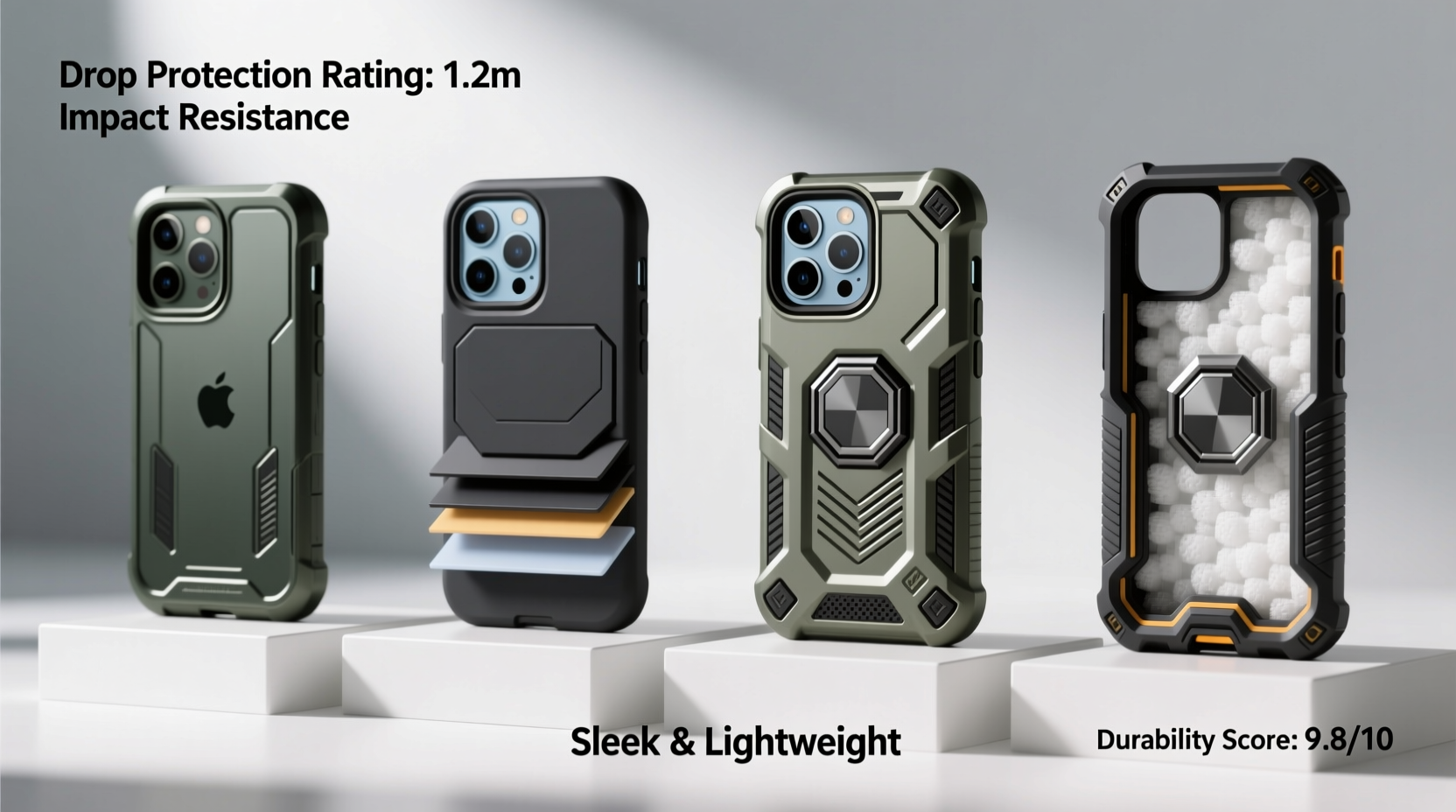
When a phone hits the ground, kinetic energy transfers instantly into its structure. A good case acts as a shock absorber, dispersing that energy across its surface rather than letting it concentrate on vulnerable points like corners and edges. The most effective designs incorporate multi-layer construction: a rigid outer shell resists scratches and abrasions, while a soft inner layer (often TPU—thermoplastic polyurethane) compresses on impact to cushion the phone.
Cases labeled with MIL-STD-810G or similar standards have undergone controlled drop tests from 4 to 6 feet onto various surfaces. However, not all manufacturers test rigorously, so look for third-party certifications or independent lab verification when possible.
Compare Materials: Strengths and Weaknesses
The material of your phone case directly influences its protective ability, weight, and longevity. Here’s a breakdown of the most common types:
| Material | Drop Protection | Durability | Pros | Cons |
|---|---|---|---|---|
| TPU (Thermoplastic Polyurethane) | High | Moderate | Flexible, absorbs shock well, affordable | Can yellow over time, collects dust |
| Polycarbonate (Hard Plastic) | Moderate | High | Scratch-resistant, slim profile, retains color | Rigid—less impact absorption alone |
| Hybrid (TPU + Polycarbonate) | Very High | High | Balances flexibility and rigidity, excellent overall protection | Slightly bulkier than single-material cases |
| Silicone | Low-Moderate | Low | Soft feel, good grip, wide color options | Poor drop resistance, degrades faster, attracts lint |
| Leather (Faux or Genuine) | Low | Moderate | Elegant look, ages well, improves grip | Minimal shock absorption, not ideal for rough use |
For maximum drop protection, hybrid cases are widely recommended by engineers and consumer testers alike. They combine the best qualities of both worlds: a hard outer shell prevents deformation, while the inner TPU liner dampens impact forces.
“Most smartphone failures after drops occur at the corners due to stress concentration. Cases with elevated bezels and reinforced corners reduce failure rates by over 60%.” — Dr. Alan Zhou, Materials Engineer at Mobile Safety Labs
Key Features That Enhance Real-World Durability
Beyond material choice, specific design features significantly influence how well a case holds up over time and during accidents.
- Elevated Edges: A case with a slightly raised lip around the screen and camera prevents direct contact with flat surfaces when placed face-down.
- Reinforced Corners: Some premium cases include air-cushion technology or extra padding in corners—the most common impact zone.
- Non-Slip Texture: Textured sides or rubberized finishes improve grip, reducing the chance of slipping from your hand.
- Port and Button Covers: Sealed ports help resist dust and moisture, especially useful for outdoor or industrial environments.
- Compatibility with Screen Protectors: Ensure the case doesn’t interfere with full adhesion of tempered glass protectors.
Real-World Testing: A Case Study
Jamie, a field technician based in Denver, uses her phone constantly—from logging data on construction sites to navigating remote locations. Over two years, she cycled through five different cases. Her first was a sleek silicone model that looked great but cracked after a 5-foot drop off a ladder. Next, she tried a basic TPU case; it survived several minor falls but began yellowing within six months.
She then switched to a hybrid case marketed for rugged use, featuring MIL-STD-810G certification and corner air pockets. After nine months of daily wear—including three documented drops on concrete—it showed only minor scuffing. The phone remained fully functional with no screen damage. Jamie now recommends this model to colleagues, emphasizing that initial cost ($38) was far less than replacing her $1,100 phone.
This scenario illustrates a broader trend: users in high-risk environments benefit most from cases designed for repeated impact resistance, not just one-time survival.
Step-by-Step Guide to Selecting Your Ideal Case
Follow this sequence to ensure you’re choosing a case that genuinely protects your phone:
- Assess Your Risk Level: Are you prone to dropping your phone? Do you work in dusty, wet, or high-motion environments?
- Determine Your Priority: Is drop protection more important than slimness or style?
- Check Independent Reviews: Look for video drop tests, teardown analyses, or user feedback on platforms like Wirecutter or Consumer Reports.
- Verify Certification Claims: If a case claims MIL-STD-810G compliance, confirm whether it was tested independently or self-declared.
- Inspect Build Quality: Examine seam tightness, button fit, and overall symmetry. Poorly molded cases may crack prematurely.
- Test Fit Before Committing: If buying in-store, check alignment with ports, speakers, and camera cutouts.
- Consider Long-Term Maintenance: Will the case discolor? Is it easy to clean? Can you remove it without tools?
Frequently Asked Questions
Do ultra-slim cases offer any real protection?
Most ultra-slim cases made of hard plastic or metal provide minimal shock absorption. They guard against scratches and light bumps but are unlikely to prevent damage in a serious fall. For meaningful drop protection, some thickness and flexibility are necessary.
How often should I replace my phone case?
Inspect your case every 6–12 months. Replace it if you notice cracks, warping, loss of elasticity, or loose fit. Even durable cases degrade over time, especially when exposed to UV light, heat, or frequent impacts.
Are MagSafe-compatible cases less protective?
Not necessarily. Many MagSafe cases now include built-in magnets without sacrificing structural integrity. Just ensure the added magnetic ring doesn’t compromise corner padding or create weak points in the frame.
Final Checklist Before Buying
- ✅ Confirmed MIL-STD-810G or equivalent certification (with proof)
- ✅ Hybrid construction (TPU + polycarbonate)
- ✅ Reinforced corners with air-cushion or hexagonal support
- ✅ Raised edges for screen and camera protection
- ✅ Positive independent reviews including drop test videos
- ✅ Precise cutouts and responsive buttons
- ✅ Non-slip texture or grip-enhancing finish
Conclusion: Make Protection a Priority
Your smartphone is a powerful tool, a communication lifeline, and often a significant financial investment. Treating its protection as an afterthought risks costly repairs or premature replacement. By selecting a case engineered for actual drop scenarios—not just marketing claims—you extend your device’s lifespan and maintain peace of mind. Don’t be swayed by minimalist designs or celebrity endorsements; focus on proven materials, intelligent design, and verified performance. The right case won’t just survive a fall—it’ll help your phone do the same.




 浙公网安备
33010002000092号
浙公网安备
33010002000092号 浙B2-20120091-4
Comments
No comments yet. Why don't you start the discussion?