
For those who shift positions throughout the night—moving from back to side and sometimes even stomach—the quest for the ideal pillow is more complex than a one-size-fits-all solution. A pillow that supports proper spinal alignment in one position may cause strain in another. The key lies not just in material or brand, but in understanding how firmness interacts with your body’s changing needs during sleep. Without the right balance, you risk waking up with neck pain, shoulder stiffness, or disrupted sleep cycles. Choosing wisely means evaluating anatomy, sleep habits, and material responsiveness to ensure comfort no matter which way you turn.
Understanding Spinal Alignment Across Sleep Positions
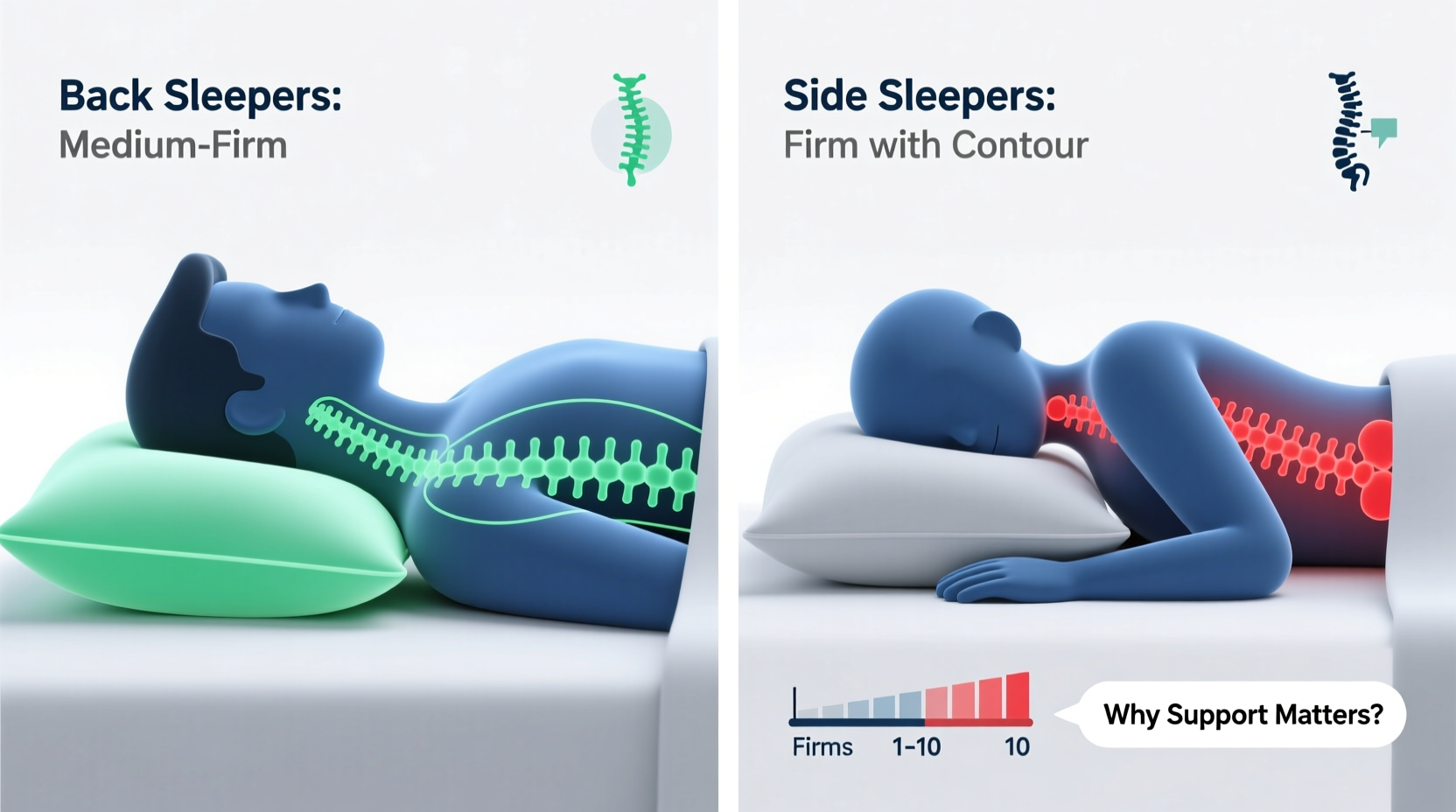
Spinal alignment is the foundation of pain-free, restorative sleep. When lying down, your head and neck should remain in a neutral position—aligned with the natural curve of your spine. Deviations from this line create tension in muscles and joints, leading to discomfort over time.
In back sleeping, the head should be slightly elevated so the chin stays parallel to the ceiling. Too much lift strains the neck forward; too little causes it to tilt backward. Side sleeping demands more height because the pillow must fill the gap between the shoulder and ear. This distance varies significantly based on build, but generally requires 30–50% more loft than back sleeping.
The challenge for combination sleepers arises when these two needs conflict. A soft pillow might cradle the head gently when on the back but collapse under the weight of the shoulder in side position, dropping the head below the spine. Conversely, an overly firm pillow may elevate the head too high when lying on the back, even if it provides adequate support on the side.
“Combination sleepers need dynamic support—something that adapts rather than forces adaptation.” — Dr. Lena Torres, Chiropractic Sleep Specialist
Matching Firmness to Body Type and Build
Pillow requirements aren’t universal—they depend heavily on individual physiology. Two people switching between back and side sleep may need entirely different firmness levels based on their frame size, shoulder width, and neck length.
Taller individuals or those with broad shoulders typically carry more mass through the upper torso. When side sleeping, this creates a wider space between the mattress and the ear, demanding a higher-loft, firmer pillow to maintain alignment. For back sleepers with the same build, moderate firmness often suffices since less elevation is needed.
Smaller-framed sleepers—especially those under 5'6\" or with narrow shoulders—usually require less loft overall. A medium-soft pillow can support both positions without over-elevating the head in back sleep or collapsing in side sleep.
Body weight also influences compression. Heavier individuals compress foam and fiberfill more deeply, which can reduce effective loft during side sleeping. Lighter sleepers may find the same materials too stiff or unyielding. Memory foam responds differently than latex or down alternative, so material choice must complement both body type and positional shifts.
Firmness Guide by Material Type
No single material works perfectly for every combination sleeper, but certain types offer better adaptability across positions. Here's how common pillow materials perform under shifting conditions:
| Material | Firmness Level | Pros for Combo Sleepers | Cons for Combo Sleepers |
|---|---|---|---|
| Memory Foam | Firm to Medium-Firm | Excellent contouring; maintains shape under pressure | Can retain heat; slow response may delay repositioning comfort |
| Latex (Natural) | Medium to Firm | Bouncy yet supportive; responsive to movement | Heavier; higher cost; some find it too springy |
| Down/Feather | Soft to Medium | Moldable; easily adjusted mid-sleep | Lacks consistent support; may flatten over time |
| Hybrid (Foam + Down) | Medium | Combines contouring with fluffiness; adaptable | May compress unevenly; durability varies |
| Polyester Fiberfill | Soft to Medium | Affordable; lightweight | Flattens quickly; poor longevity and support |
For true versatility, many combination sleepers benefit from zoned memory foam pillows—engineered with softer areas for the head and firmer zones beneath the neck. These provide targeted support regardless of orientation. Adjustable shredded foam models are also popular, allowing users to add or remove filling to fine-tune loft and firmness.
Step-by-Step Guide to Testing and Selecting Your Pillow
Finding the right pillow isn't instantaneous—it requires observation, adjustment, and patience. Follow this sequence to identify what works best for your hybrid sleep pattern.
- Track Your Sleep Habits: Use a sleep journal or wearable device for three nights to confirm how often you switch between back and side positions. This data informs whether you spend equal time in each or favor one slightly.
- Evaluate Current Discomfort: Note where you feel tension—neck, shoulders, upper back. Pain at the base of the skull suggests over-elevation in back sleep; shoulder soreness may indicate inadequate support in side sleep.
- Test Loft Height: Lie on your side on a flat surface (like your mattress). Have someone measure the horizontal distance from your shoulder’s outer edge to your ear. Ideally, your pillow should match this measurement.
- Try Adjustable Pillows First: Start with a shredded memory foam or hybrid model that allows filling removal. Begin with full capacity, then gradually take out small amounts until both positions feel balanced.
- Sleep Test Over Multiple Nights: Don’t judge after one night. It takes 3–5 nights for your body to adjust. Pay attention to morning symptoms, not just nighttime comfort.
- Assess Responsiveness: Roll onto your side and notice how quickly the pillow conforms. Does it rebound smoothly? Lags or excessive sink indicate mismatched firmness.
- Reassess Monthly: As seasons change or stress affects posture, your needs may shift. Revisit your choice every few months, especially if discomfort returns.
Real-World Example: Sarah’s Transition to Better Sleep
Sarah, a 38-year-old teacher and chronic combination sleeper, struggled with recurring neck stiffness. She started each night on her back but woke up multiple times on her side—often with a dull ache radiating from her left shoulder into her neck. Her old down-alternative pillow felt plush initially but flattened completely by midnight.
After measuring her shoulder-to-ear distance (5.5 inches), she realized most standard pillows were too low. She switched to a medium-firm shredded memory foam pillow with adjustable loft. By adding extra filling, she achieved the necessary height for side sleeping without compromising back support.
Within a week, her morning pain diminished. She also noticed fewer awakenings—likely because her spine stayed aligned, reducing micro-adjustments. After two months, she reported improved energy and reduced reliance on stretching exercises upon waking.
Sarah’s case illustrates that even subtle mismatches in firmness and loft can have significant consequences—and that small, deliberate changes yield measurable results.
Checklist: Choosing the Right Pillow for Positional Shifts
- ✅ Determine your dominant sleep positions using tracking tools
- ✅ Measure shoulder-to-ear distance in side-lying position
- ✅ Prioritize materials that respond well to movement (e.g., latex, shredded foam)
- ✅ Choose adjustable or dual-zone designs for customized support
- ✅ Avoid ultra-soft pillows that collapse under shoulder weight
- ✅ Steer clear of excessively firm options that hyperextend the neck in back sleep
- ✅ Test for at least three consecutive nights before making a final decision
- ✅ Replace pillows every 18–24 months, or sooner if they lose resilience
Frequently Asked Questions
Can one pillow really work for both back and side sleeping?
Yes—but only if it offers balanced loft and adaptive firmness. Pillows labeled as “medium” or “combination-friendly” with contoured shapes or adjustable fill tend to perform best. Success depends on matching the pillow to your specific anatomy, not just general claims.
Is memory foam too firm for back sleepers who also sleep on their side?
Traditional solid memory foam can be too rigid for lighter back sleepers, but shredded versions offer greater flexibility. They conform closely while allowing airflow and manual adjustment. Look for models marketed specifically for combo sleepers, which often use softer-density foams.
How do I know if my pillow is too high or too low?
If your chin points downward toward your chest when lying on your back, the pillow is likely too high. If your head tilts sharply backward, exposing your throat, it’s too low. In side sleeping, your spine should form a straight line from neck to lower back—if your head dips below shoulder level, the pillow lacks sufficient loft.
Final Considerations: Longevity, Care, and Environmental Factors
A pillow’s performance degrades over time. Even the best-designed support system loses resilience after repeated compression. Most high-quality pillows last 18 to 24 months with regular use. Signs it’s time to replace include permanent indentations, lumps, loss of height, or increased discomfort upon waking.
Care routines also influence longevity. Washing instructions vary by material—memory foam should never be submerged, while down and fiberfill can usually be machine washed (on gentle cycle) and dried thoroughly to prevent mildew. Using a removable, washable cover helps protect the core and extends lifespan.
Environmental factors like room temperature and humidity affect material behavior. Memory foam softens in heat and firms in cold environments. If you live in a region with seasonal extremes, consider keeping your pillow in climate-controlled space or opting for temperature-neutral latex.
Take Action for Truly Restorative Sleep
Your pillow isn’t just an accessory—it’s a critical component of your sleep health. For those who move between back and side sleeping, the difference between restless nights and deep, uninterrupted rest often comes down to a few inches of properly calibrated support. By understanding your body’s unique needs, testing thoughtfully, and choosing adaptive materials, you can end the compromise between comfort and alignment.
Don’t settle for generic advice or marketing hype. Measure, test, adjust, and listen to what your body tells you. The right pillow won’t eliminate movement—it will support it, quietly guiding your spine into harmony no matter which way you turn.




 浙公网安备
33010002000092号
浙公网安备
33010002000092号 浙B2-20120091-4
Comments
No comments yet. Why don't you start the discussion?