
Resistance bands have become a staple in home fitness routines, offering portable, affordable, and effective strength training. But with so many options—looped, tube-style, fabric, latex-free, varying tensions—it’s easy to feel overwhelmed. Choosing the wrong set can lead to frustration, ineffective workouts, or even injury. The key isn’t just buying any band; it’s selecting the right one for your goals, body type, and workout style. This guide cuts through the noise with practical insights, real-world examples, and expert-backed criteria to help you make a confident decision.
Understand the Types of Resistance Bands
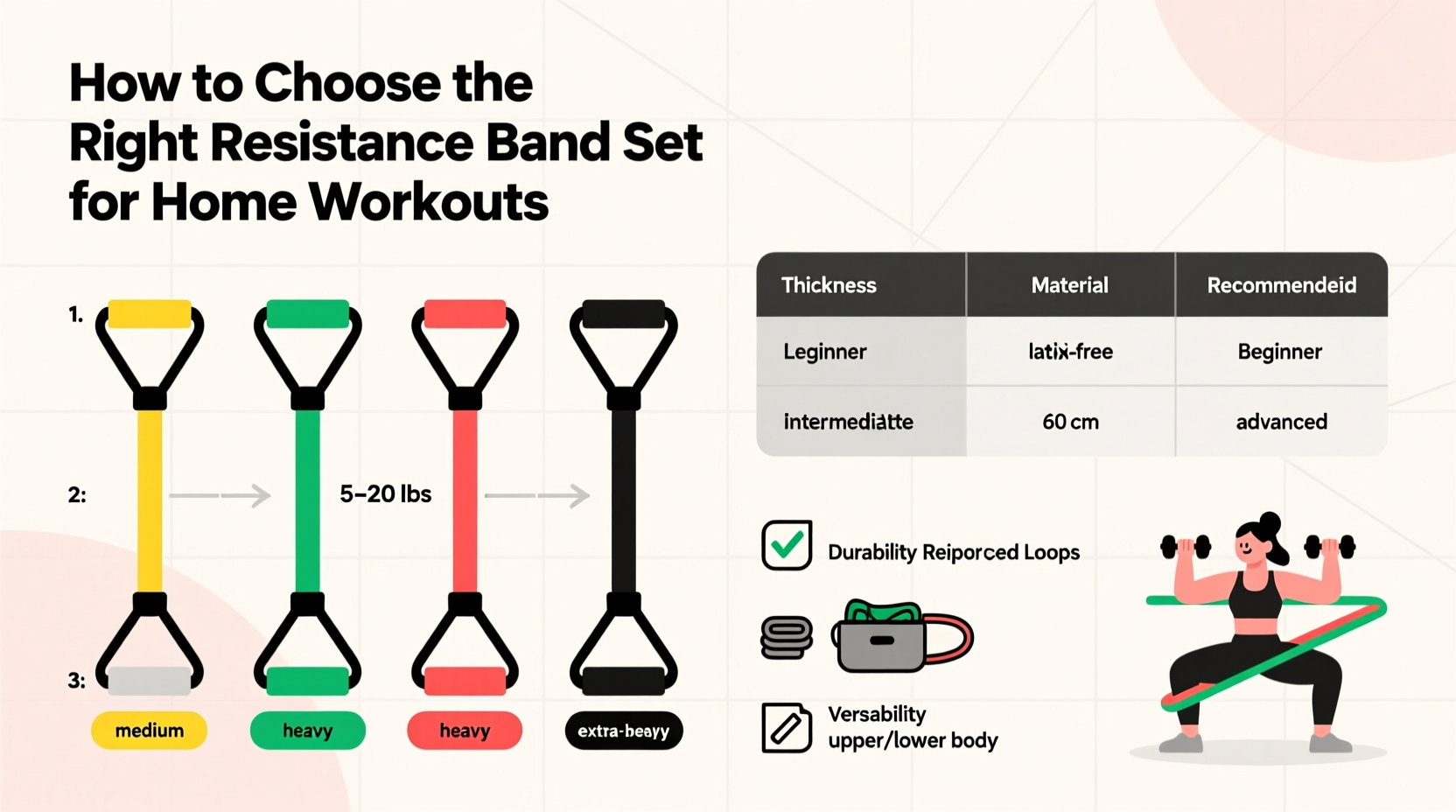
Not all resistance bands are created equal. Each type serves different purposes, fits various exercises, and suits different user preferences. Knowing the differences helps narrow your choices.
- Loop Bands (or Mini Bands): Short, continuous loops typically made from latex or fabric. Ideal for glute activation, leg exercises, and mobility drills. Commonly used in physical therapy and lower-body strength work.
- Tube Bands with Handles: Long elastic tubes with handles on each end. Best for upper-body movements like rows, chest presses, and shoulder exercises. Often come with door anchors for added versatility.
- Therapy Bands (Flat Bands): Flat strips of latex or synthetic rubber, usually sold in graduated resistance levels. Used for rehabilitation, stretching, and controlled strength training.
- Fabric Bands: Wider, non-roll bands made from durable textile materials. Great for squats, hip thrusts, and heavier resistance work because they stay in place and don’t snap easily.
- Figure-8 and Pull-Up Bands: Thicker, heavy-duty bands designed for assisted pull-ups or deep stretches. Less common in general home kits but valuable for advanced users.
Match Resistance Levels to Your Fitness Goals
One of the most common mistakes is buying a set with too few resistance levels or mismatched tension. Resistance is measured by pounds of force (e.g., 10–50 lbs), not color—but colors are often used as indicators.
A well-rounded set should include at least five levels: light, medium, heavy, x-heavy, and xx-heavy. This allows progression over time and accommodates different muscle groups. For example, bicep curls may require less resistance than squats.
| Resistance Level | Lbs of Tension | Ideal For |
|---|---|---|
| Extra Light | 10–15 lbs | Rehabilitation, warm-ups, beginners |
| Light | 20–30 lbs | Shoulders, arms, mobility drills |
| Medium | 30–40 lbs | Chest, back, moderate leg work |
| Heavy | 40–50 lbs | Squats, glute bridges, pull-downs |
| X-Heavy | 50–70+ lbs | Advanced strength, power training |
Progressive overload—the gradual increase of stress on muscles—is essential for building strength. A single band won’t support long-term growth. Stacking multiple bands (using two together) can simulate higher resistance, but only if your set supports this functionally.
“Having a range of resistances allows users to scale intensity safely and effectively, reducing plateaus and preventing overuse injuries.” — Dr. Lena Torres, Sports Physiologist and Strength Coach
Material Matters: Latex vs. Non-Latex, Durability, and Comfort
The material impacts durability, comfort, and safety. Most bands are made from natural latex, which provides excellent elasticity and rebound. However, latex allergies affect about 4% of the population, making non-latex alternatives crucial.
- Latex Bands: High elasticity, great for dynamic movements. Prone to drying out and snapping if exposed to sunlight or heat. Should be cleaned regularly with mild soap and water.
- Non-Latex (TPU or Fabric): Hypoallergenic and more resistant to wear. Fabric bands, while less stretchy, offer superior grip and are ideal for heavy lower-body exercises.
Durability also depends on weave quality and thickness. Thinner bands (under 0.5 inches) may roll during use or lose elasticity faster. Look for reinforced stitching in fabric bands and consistent thickness in latex loops.
Your Step-by-Step Guide to Choosing the Right Set
Selecting the perfect resistance band set doesn’t need to be complicated. Follow this timeline-based approach to ensure you get exactly what you need.
- Assess Your Current Fitness Level (Day 1): Are you a beginner recovering from inactivity? Intermediate looking to build muscle? Advanced seeking supplemental resistance? Your starting point determines the minimum resistance range needed.
- Define Your Primary Workout Goals (Day 2): Focus on rehab? Glute growth? Upper-body strength? Full-body HIIT? This shapes the types of bands you’ll use most.
- Check for Included Accessories (Day 3): Door anchors, handles, carry bags, and exercise guides add value. A door anchor expands functionality for rows and chest flyes. A carrying case improves portability and storage.
- Review User Feedback (Day 4): Look beyond star ratings. Search reviews for keywords like “snapped,” “rolls,” “slips,” or “stretches out.” Real-world usage reveals flaws specs can’t.
- Test the Set (Day 5+): Once purchased, test each band in common movements: squat with a loop, row with a tube band, stretch for shoulder mobility. Ensure comfort, stability, and smooth resistance.
Real Example: Sarah’s Home Gym Upgrade
Sarah, a 38-year-old remote worker, wanted to strengthen her glutes and improve posture after months of sitting. She initially bought a cheap 3-band loop set online. The bands rolled during clamshells and snapped within two weeks of moderate use.
After researching, she switched to a premium 5-loop fabric set with graduated resistance (15–70 lbs combined). The wider bands stayed in place, and the increased tension allowed her to progress. She paired them with a tube band set featuring foam handles and a door anchor to add upper-body pulling exercises.
Six weeks later, she reported improved muscle tone, better movement control, and no equipment failures. Her total investment was under $60—less than a single gym session—and she now uses the bands daily.
What to Avoid: Common Mistakes When Buying Resistance Bands
Even experienced fitness enthusiasts fall into traps when selecting bands. Here’s what to watch out for:
| Mistake | Why It’s Problematic | Better Alternative |
|---|---|---|
| Buying only one resistance level | Limits progression and muscle adaptation | Choose a set with at least 5 levels |
| Ignoring material allergies | Can cause skin irritation or reactions | Opt for non-latex if sensitive |
| Prioritizing price over quality | Cheap bands degrade quickly and may snap | Invest in reputable brands with warranties |
| Overlooking accessories | Reduces exercise variety and convenience | Select sets with door anchors or handles |
| Storing bands in direct sunlight | UV rays weaken latex rapidly | Store in a cool, dry drawer or bag |
Essential Checklist Before You Buy
Use this checklist to ensure you’re getting a high-quality, functional resistance band set:
- ✅ Includes at least 5 resistance levels (light to x-heavy)
- ✅ Made from durable, non-slip material (latex or fabric)
- ✅ Suitable for your primary exercises (e.g., loops for legs, tubes for arms)
- ✅ Comes with useful accessories (door anchor, handles, carry bag)
- ✅ Has verified customer reviews mentioning longevity and safety
- ✅ Backed by a warranty or satisfaction guarantee
- ✅ Color-coded and clearly labeled for easy identification
Frequently Asked Questions
Can I use resistance bands every day?
Yes, but not the same muscle groups daily. Like weights, muscles need recovery. Rotate focus—glutes one day, upper body the next—to allow repair and growth. Daily mobility work with light bands is safe and beneficial.
How long do resistance bands last?
With proper care, high-quality bands last 6–12 months of regular use. Signs of wear—fuzziness, small tears, loss of elasticity—are signals to replace them. Exposure to heat, UV light, or oils accelerates degradation.
Are resistance bands as effective as weights?
For hypertrophy and strength, they can be nearly as effective, especially for beginners and intermediates. A 2020 study in the Journal of Sports Science & Medicine found comparable muscle activation between bands and free weights in compound movements when progressive overload was applied. They’re not a full replacement for heavy lifting long-term but are excellent for home training, travel, and joint-friendly loading.
Final Thoughts: Build Confidence Through Smart Selection
Choosing the right resistance band set comes down to clarity of purpose, attention to detail, and respect for your body’s needs. It’s not about owning the most expensive kit, but the one that aligns with your routine, supports progression, and stands up to regular use. Whether you’re rebuilding strength post-injury, adding variety to your workouts, or creating a compact home gym, the right bands empower consistency.
Start with a versatile, multi-type set that covers a broad resistance range. Prioritize quality materials and thoughtful design. Reassess your needs every few months as you grow stronger. And remember—fitness isn’t about perfection. It’s about showing up, using what works, and moving with intention.




 浙公网安备
33010002000092号
浙公网安备
33010002000092号 浙B2-20120091-4
Comments
No comments yet. Why don't you start the discussion?