
Shin splints—medically known as medial tibial stress syndrome—are a common and often debilitating issue for runners at all levels. Characterized by sharp or dull pain along the inner edge of the shinbone, they frequently arise from overuse, improper biomechanics, or inadequate footwear. While training volume and surface play roles, one of the most overlooked yet critical factors is arch support in running shoes. Choosing the right level of arch support can mean the difference between consistent progress and weeks of sidelined recovery.
The foot’s arch acts as a natural shock absorber during impact. When it collapses too much (overpronation) or stays too rigid (underpronation), excessive stress transfers to the lower leg muscles and tendons, particularly the tibialis anterior and posterior. Over time, this strain leads to inflammation and micro-tears along the shinbone—shin splints. The solution isn’t just about cushioning; it’s about matching your unique foot structure and gait pattern with targeted arch support.
Understanding Foot Arch Types and Their Impact on Shin Health
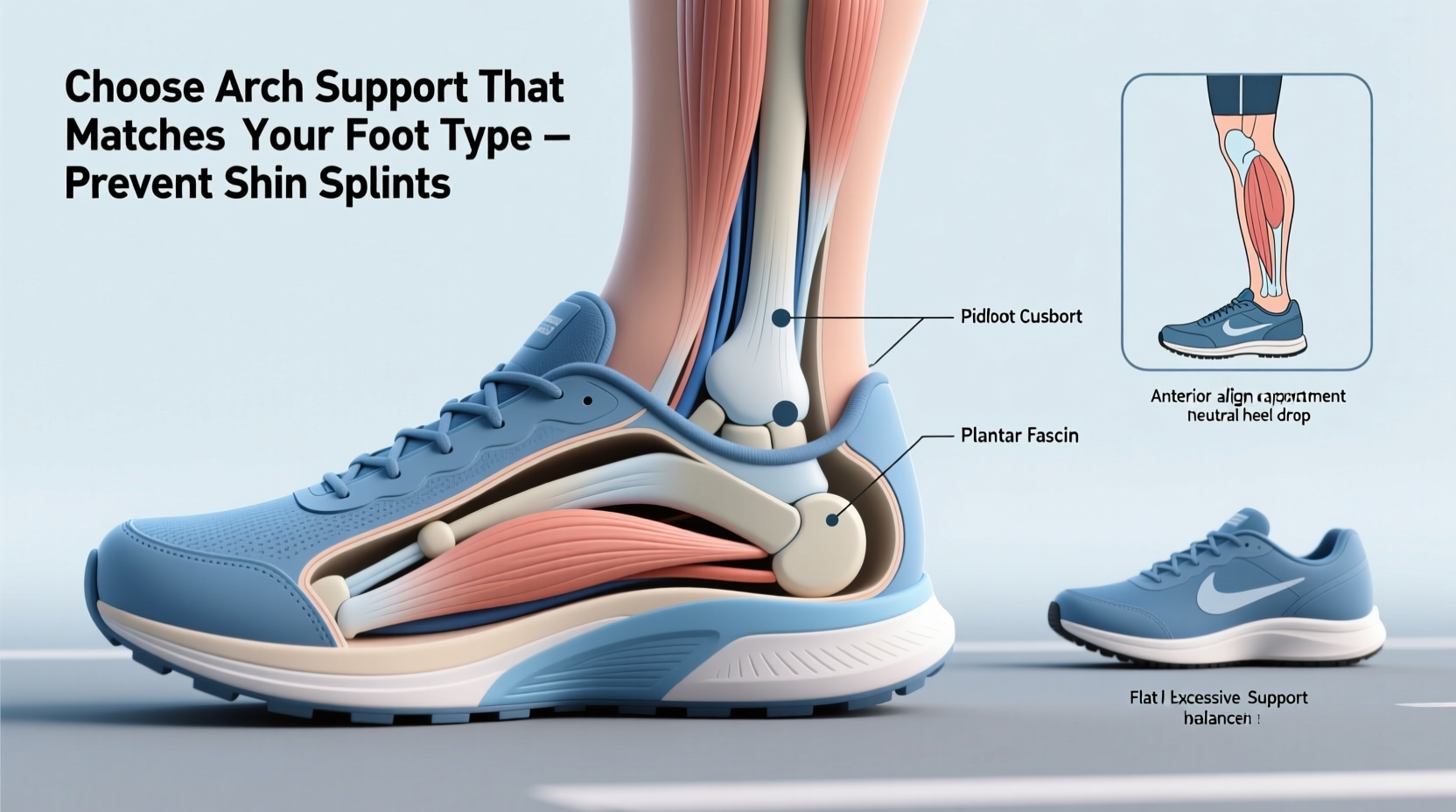
Not all feet are the same, and neither are their support needs. There are three primary arch types: low (flat feet), neutral (medium arch), and high (rigid arch). Each affects how force is distributed through the foot and up the kinetic chain into the shins.
- Low Arch (Overpronated): The foot rolls inward excessively after heel strike. This over-stretching of the posterior tibial tendon increases tension along the shin, making runners more prone to medial shin splints.
- Neutral Arch: Offers balanced weight distribution and natural shock absorption. Runners with this type typically respond well to moderate arch support and stability features.
- High Arch (Supinated): The foot has limited inward roll, reducing shock absorption. Impact forces travel directly up the leg, increasing risk of anterior (front) shin splints due to overworked tibialis anterior muscles.
Identifying your arch type is the first step toward selecting appropriate footwear. A simple wet test can help: wet the sole of your foot and step onto a piece of cardboard. If you see nearly the entire footprint, you likely have flat feet. If only a thin strip connects heel and forefoot, you have high arches. A moderate curve indicates a neutral arch.
How Arch Support Influences Shin Biomechanics
Arch support in running shoes does more than just cradle the foot—it actively manages motion and redistributes load. When properly aligned, it reduces abnormal muscle activation patterns that contribute to shin pain.
In overpronators, a firm medial post or dual-density midsole helps limit excessive inward collapse. This stabilizes the ankle and reduces strain on the tibialis posterior, which runs behind the shin and inserts into the foot’s arch. Without this control, the muscle works overtime to compensate, leading to fatigue and inflammation.
For supinators, arch support focuses less on motion control and more on cushioning and flexibility. A highly curved, responsive midsole encourages natural pronation, allowing the foot to absorb impact efficiently. Shoes with excessive rigidity can worsen anterior shin splints by forcing the front of the foot to slap down abruptly with each stride.
“Runners with unresolved biomechanical issues often develop shin splints not from training errors alone, but from wearing shoes that don’t match their structural needs.” — Dr. Lena Torres, Sports Podiatrist and Running Injury Specialist
Step-by-Step Guide to Choosing the Right Running Shoe Arch Support
Selecting the ideal shoe involves more than reading labels. Follow this structured process to ensure optimal fit and function:
- Assess Your Arch Type: Perform the wet test or consult a professional for a dynamic gait analysis. Note whether you overpronate, underpronate, or have a neutral stride.
- Determine Your Running Style: Are you a heel striker, midfoot striker, or forefoot runner? Heel strikers benefit from rearfoot cushioning and guided support, while forefoot runners need flexible forefeet and responsive arch curves.
- Try Shoes in the Late Afternoon: Feet swell throughout the day. Shop later when your feet are largest to avoid tightness during long runs.
- Test for Arch Contact: When standing in the shoe, your arch should feel supported—not compressed or floating. There should be no gap between the midsole and your foot’s natural curve.
- Walk and Jog Indoors: Take a short jog in the store. Pay attention to any early signs of discomfort along the shins or instability in the ankles.
- Check the Midsole Technology: Look for terms like “medial post,” “guidance rail,” or “dynamic support” for overpronators. Supinators should seek “soft EVA foam,” “rockered geometry,” or “plush cushioning.”
- Replace Every 300–500 Miles: Worn-out midsoles lose their supportive properties, increasing injury risk even if the upper looks fine.
Arch Support Comparison: Matching Shoe Features to Foot Type
| Foot Type | Recommended Support Level | Key Shoe Features | Avoid These Shoes |
|---|---|---|---|
| Low Arch (Flat Feet) | Firm, Structured Support | Medial post, dual-density midsole, stability or motion-control design | Cushioned-only models, minimal drop, zero stability tech |
| Neutral Arch | Moderate Support | Balanced cushioning, slight guidance system, adaptable midfoot fit | Overly rigid motion-control shoes, ultra-minimalist designs |
| High Arch | Flexible Cushioning | Soft foam, rockered sole, responsive arch curve, good heel-to-toe transition | Hard medial posts, stiff soles, narrow toe boxes |
Real Runner Case: From Chronic Shin Pain to Pain-Free Mileage
Meet Daniel, a 32-year-old recreational runner training for his first half-marathon. After building up to 20 miles per week, he began experiencing sharp pain along the front of both shins during the first mile of every run. Rest and ice provided temporary relief, but symptoms returned immediately upon resuming training.
He visited a running clinic where a podiatrist performed a gait analysis. Video footage revealed severe underpronation—his feet barely rolled inward, creating a jarring impact with each step. His current shoes were lightweight, high-cushion models designed for neutral runners, but lacked the flexibility his high arches needed.
The specialist recommended switching to a maximally cushioned, flexible shoe with a curved last and soft midsole—specifically the Hoka Bondi series. Within two weeks of transitioning gradually to the new shoes, Daniel reported a 70% reduction in shin pain. By week four, he was running pain-free and completed his race without setbacks.
This case underscores a crucial point: even “premium” or “top-rated” shoes can cause injury if mismatched to foot mechanics. The right support isn’t about price or popularity—it’s about alignment with individual biomechanics.
Expert-Backed Checklist for Shin-Safe Shoe Selection
Use this checklist before purchasing your next pair of running shoes to reduce the risk of developing shin splints:
- ✅ Identified my arch type through wet test or professional analysis
- ✅ Selected a shoe category (stability, neutral, motion control) based on my gait
- ✅ Ensured the arch contour matches the natural curve of my foot
- ✅ Verified there’s no slippage or pinching in the midfoot
- ✅ Tested the shoe with a short jog to assess comfort and stability
- ✅ Confirmed adequate heel counter stiffness to prevent ankle wobble
- ✅ Chose a heel-to-toe drop between 8–10mm if prone to anterior shin splints
- ✅ Plan to replace shoes before 500 miles, even if they look intact
“The most supportive shoe isn’t always the stiffest. Sometimes, the best support comes from allowing the foot to move naturally within a well-cushioned, responsive platform.” — Dr. Marcus Reed, Physical Therapist and Gait Analyst
Frequently Asked Questions
Can orthotics help prevent shin splints even if I already have supportive shoes?
Yes. Custom or over-the-counter orthotics can enhance arch support beyond what the shoe provides, especially if you have significant overpronation or flat feet. They improve alignment and reduce muscle strain. However, ensure they fit properly inside the shoe without compressing the foot or altering heel position.
Is barefoot or minimalist running safe for people with shin splint history?
Minimalist running requires strong calves, ankles, and foot intrinsic muscles. For those with a history of shin splints, transitioning too quickly can overload the tibialis anterior, increasing injury risk. If interested, adopt a gradual 6–8 week transition plan, starting with walk-run intervals on soft surfaces.
Does shoe weight affect shin splint development?
Indirectly. Heavier shoes increase the workload on lower leg muscles, especially during uphill running or speed work. Lighter shoes with proper support reduce fatigue, helping maintain form over distance. However, light weight shouldn’t come at the cost of necessary cushioning or stability.
Conclusion: Protect Your Shins by Supporting Your Foundation
Your running shoes are more than gear—they’re an extension of your body’s biomechanics. Ignoring arch support is like driving a car with misaligned tires: eventually, the wear and tear will catch up. Shin splints are often a warning sign that your feet aren’t getting the support they need to handle repetitive impact.
By understanding your arch type, testing shoes mindfully, and prioritizing functional fit over aesthetics, you can significantly reduce your risk of shin pain. Combine the right footwear with smart training progression—avoiding sudden spikes in mileage—and you’ll build resilience from the ground up.




 浙公网安备
33010002000092号
浙公网安备
33010002000092号 浙B2-20120091-4
Comments
No comments yet. Why don't you start the discussion?