
Dark circles affect nearly everyone at some point—whether due to genetics, lack of sleep, aging, or lifestyle factors. While concealer is a go-to solution, choosing the wrong shade can backfire, leaving behind an ashy, grayish tone that draws more attention than the discoloration it’s meant to hide. This guide breaks down the science and art of selecting a concealer that neutralizes darkness while blending seamlessly into your skin tone—without any unwanted cool undertones.
Understanding Why Gray Cast Happens
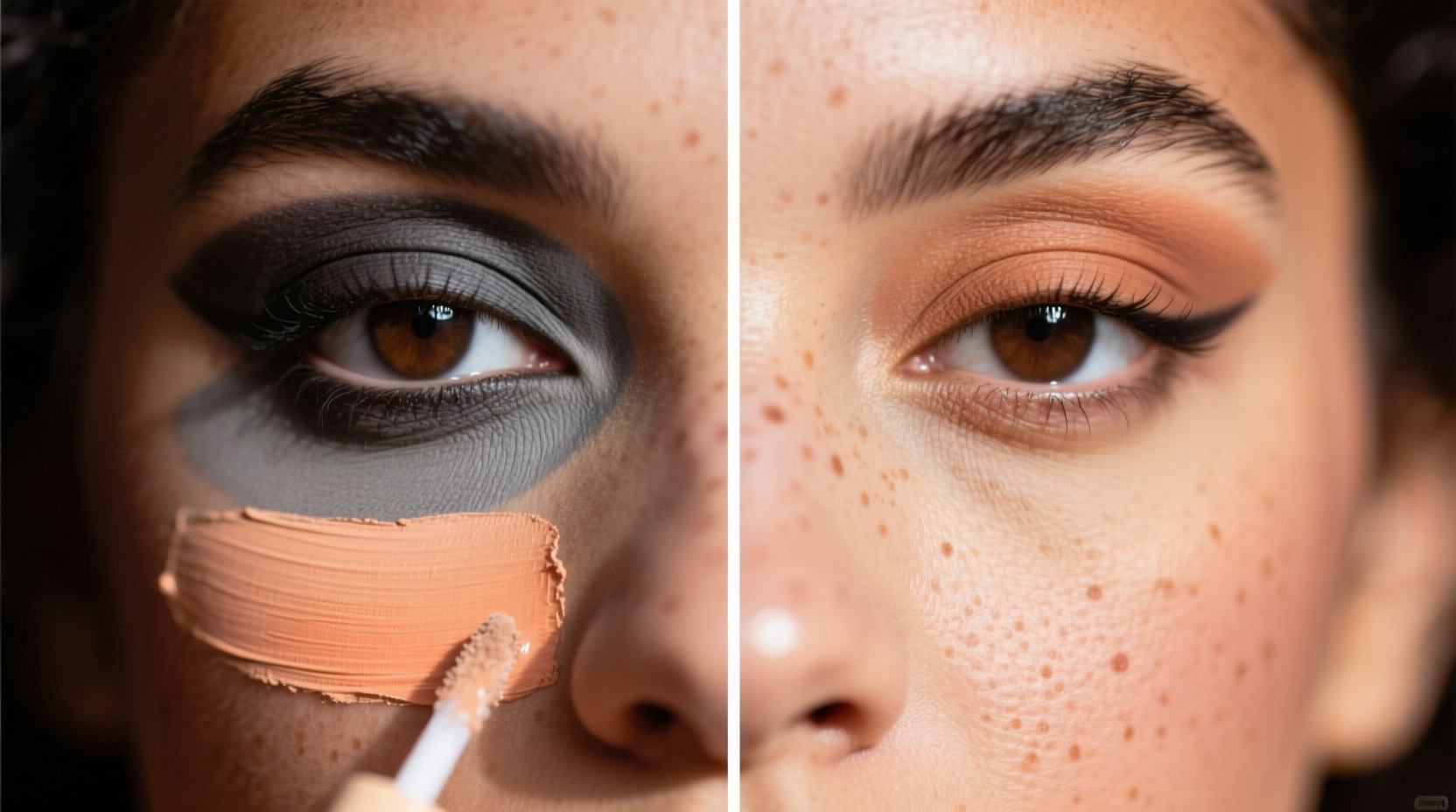
A gray cast occurs when a concealer is too cool-toned, too light, or mismatched to your skin’s undertone. Many people instinctively reach for a lighter concealer under the eyes, assuming brightness will counteract darkness. But if that shade leans blue, pink, or ashy, it reflects light in a way that creates a sunken, lifeless appearance—especially under natural or flash lighting.
The problem often stems from misunderstanding undertones. Skin has three primary undertones: warm (yellow, golden, olive), cool (pink, red, bluish), and neutral (a balance). Concealers marketed as “brightening” frequently skew cool to mimic the look of well-rested skin, but they clash with warmer complexions, resulting in a ghostly or bruised effect.
“Choosing concealer isn’t just about matching surface color—it’s about harmonizing with your skin’s underlying warmth or coolness.” — Dr. Lena Park, Board-Certified Dermatologist and Cosmetic Formulation Advisor
Step-by-Step Guide to Selecting the Right Concealer Shade
Selecting the ideal concealer involves more than swatching on your hand. Follow this structured approach to ensure accuracy and avoid common pitfalls.
- Identify Your Undertone First
Check the veins on your wrist under natural light. If they appear greenish, you likely have warm undertones. Bluish veins suggest cool undertones. If it’s hard to tell, you may be neutral. Alternatively, observe how gold vs. silver jewelry looks against your skin—gold complements warm tones, silver suits cool tones. - Assess Your Skin Tone Accurately
Use the Fitzpatrick scale as a reference: Type I–II (very fair to fair), III–IV (light to medium), V–VI (dark to deep). Match your overall facial tone—not your neck or arm—to avoid visible lines. - Choose a Concealer One Shade Lighter Than Your Foundation—But Only If It Matches Your Undertone
A slight lift in brightness helps illuminate the under-eye area. However, if the shade is too pale or cooler than your skin, it will look unnatural. The key is subtle luminosity, not stark contrast. - Neutralize Before You Conceal
Dark circles often have blue, purple, or brown hues. Use a corrector first:- Peach or salmon correctors cancel out blue-purple shadows (ideal for medium to deep skin tones).
- Yellow or orange correctors work for deeper pigmentation in rich complexions.
- For fair skin with mild blue tones, a soft pink-peach may suffice.
- Test Under Natural Light
Swatch two potential shades along your jawline and under-eye area. Step outside or near a window. If one disappears into your skin and the other casts a shadow or looks chalky, you’ve found your answer. - Observe How It Sets
Some concealers oxidize after application, shifting toward gray or orange. Wait five minutes after blending to evaluate the final result. If it turns ashy, it’s too cool or dehydrating for your skin.
Do’s and Don’ts When Choosing Concealer for Dark Circles
| Do’s | Don’ts |
|---|---|
| Choose a concealer with warm or neutral undertones if you have warm or olive skin. | Use a bright white or icy concealer thinking it will \"lighten\" the area. |
| Opt for creamy, hydrating formulas if you have dry under-eyes or fine lines. | Apply powder concealer directly on bare skin—it can settle into creases and emphasize texture. |
| Use a color corrector tailored to your specific discoloration. | Layer multiple thick layers of concealer—it builds up and cakes, increasing the risk of ashy residue. |
| Blend outward and upward with a damp sponge or brush for seamless edges. | Forget to set lightly with a translucent powder that matches your skin tone. |
| Reevaluate your concealer choice seasonally—your skin tone may change with sun exposure. | Stick with a product that consistently leaves a gray cast just because it’s expensive or popular. |
Real Example: Sarah’s Concealer Breakthrough
Sarah, a 34-year-old with light-medium skin and warm golden undertones, struggled for years with her under-eye concealer looking “like I’ve been punched.” She used a best-selling ivory concealer labeled “for dark circles,” but it always turned gray by midday. After consulting a makeup artist, she realized the product had a pink base—completely opposite her warm complexion.
She switched to a neutral-beige concealer one shade lighter than her foundation, with a hint of yellow undertone. She paired it with a sheer peach corrector only where the deepest shadow appeared. The difference was immediate: no ashiness, no cakiness, just a refreshed, even look. By aligning her concealer choice with her undertone rather than chasing “brightness,” she finally achieved a natural finish.
Checklist: How to Choose Concealer Without Gray Cast
- ☑ Determine your skin’s undertone (warm, cool, neutral)
- ☑ Match concealer to your face tone—not your hand or neck
- ☑ Pick a shade only slightly lighter than your foundation
- ☑ Ensure the undertone aligns with yours (avoid cool/ashy bases if warm)
- ☑ Use a color corrector if dark circles are blue or purple
- ☑ Test in natural daylight before committing
- ☑ Watch for oxidation over 5–10 minutes
- ☑ Choose a hydrating formula for delicate under-eye skin
- ☑ Set with a skin-tone-matched translucent powder
- ☑ Reassess your shade twice a year with seasonal changes
Common Myths About Concealer and Dark Circles
Misinformation leads many people to make choices that worsen the problem. Here are myths that need debunking:
- Myth: Lighter is better.
Reality: Too-light concealer creates a stark contrast that mimics shadows and emphasizes aging. Illumination should come from skincare and application technique, not extreme shade differences. - Myth: All “ivory” concealers are suitable for fair skin.
Reality: Ivory doesn’t specify undertone. Some are warm, others are icy. Always check the sub-tone. - Myth: High-coverage concealers are best for dark circles.
Reality: Heavy coverage often means thicker formulas that cling to dry patches and oxidize faster. Medium coverage with buildable layers works better for most. - Myth: You don’t need foundation-level undertone matching for concealer.
Reality: Concealer is part of your complexion routine. It must harmonize with your overall tone, especially in transitional zones like the lower cheek.
Frequently Asked Questions
Why does my concealer look gray after a few hours?
This is usually due to oxidation or dehydration. Some formulas react with your skin’s pH or oils, shifting toward a cooler, ashy tone. Switch to a long-wearing, non-drying formula with balanced undertones. Also, prep the under-eye area with a hydrating eye cream before applying concealer.
Can I use a warm-toned concealer if I have pink-based dark circles?
Yes—but layer strategically. If your dark circles have a pink or red hue (common in fair skin), start with a yellow-based corrector to neutralize, then apply a warm-neutral concealer. Avoid warm concealers directly over redness without correction, as this can create an orange cast.
Is there a universal concealer shade for dark circles?
No. While some brands offer “universal” or “self-adjusting” concealers, these often rely on capsules that release pigment upon blending. Their success depends on your starting tone. True universality is rare—personalized matching remains the gold standard.
Final Thoughts: Achieving Natural, Bright Under-Eyes
Choosing the right concealer isn’t about covering up—it’s about enhancing your natural radiance. A shade that eliminates the gray cast allows your skin to look rested, healthy, and cohesive. The goal is invisibility: when people notice you look refreshed, not that you’re wearing makeup.
Take the time to analyze your undertone, test products mindfully, and invest in formulas that respect the delicacy of the under-eye area. Remember, consistency matters more than perfection. Even the best concealer won’t fix poor prep or incorrect technique.
“The best concealer doesn’t hide your skin—it honors it.” — Marcus Reed, Celebrity Makeup Artist and Inclusive Beauty Advocate
Take Action Today
Reevaluate your current concealer using the steps outlined here. Take it outside in daylight. Blend it, wait, and observe. If it leaves a ghostly trace, it’s time to explore better-matched options. Share your experience or questions in the comments—your journey might help someone else finally say goodbye to the gray cast for good.




 浙公网安备
33010002000092号
浙公网安备
33010002000092号 浙B2-20120091-4
Comments
No comments yet. Why don't you start the discussion?