
Selecting the perfect area rug can transform a room from disjointed to harmonious. Yet, one of the most common decorating missteps isn’t about color or texture—it’s size. Too small, and the rug looks like a sad island in a sea of flooring. Too large, and it overwhelms the space. Many people reach for a measuring tape, only to second-guess their numbers or misalign furniture afterward. The good news? You don’t need precise measurements to get it right. With a few intuitive strategies and visual cues, you can confidently choose the right size area rug—no tape required.
Why Rug Size Matters More Than You Think
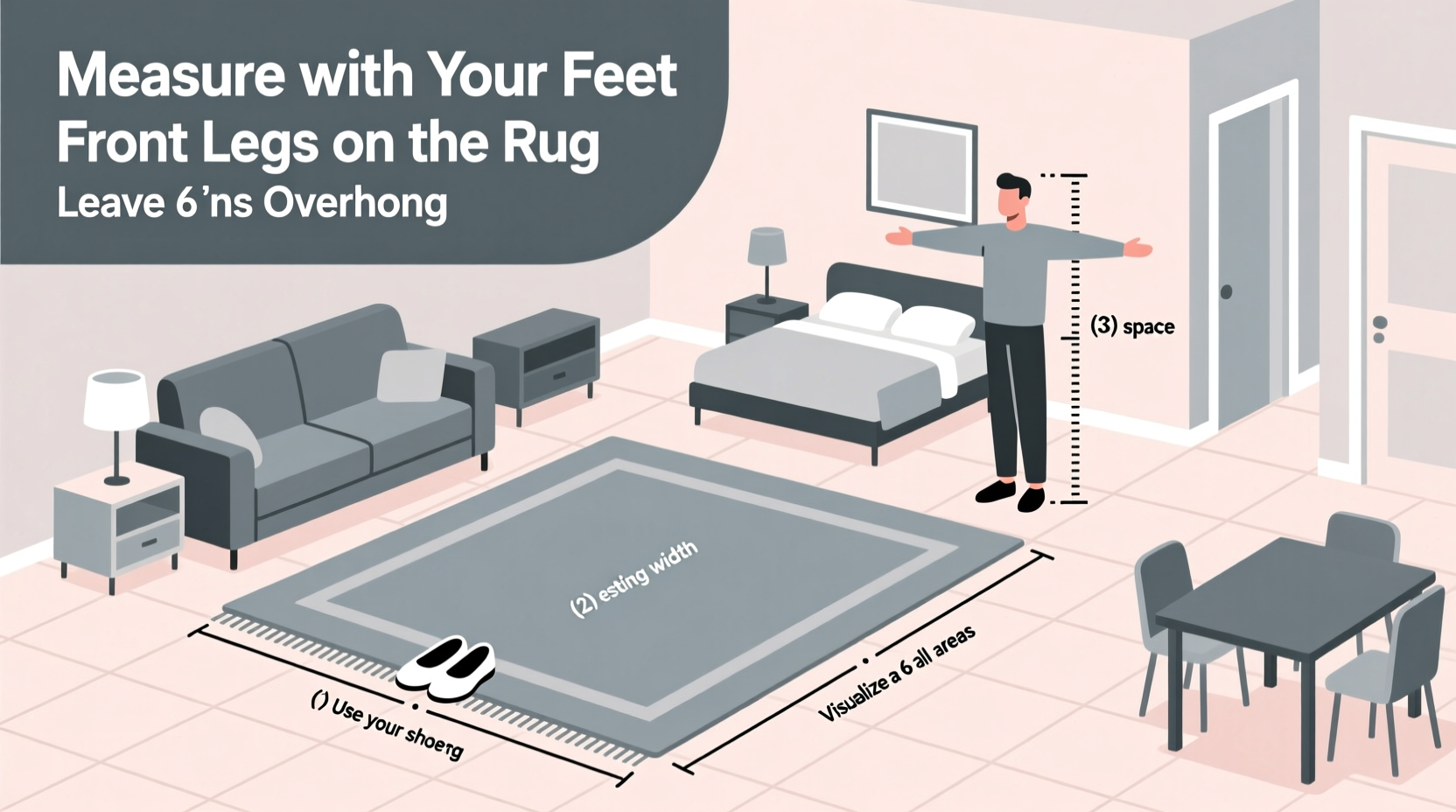
The size of your area rug influences more than just aesthetics; it defines zones, anchors furniture, and impacts how spacious a room feels. A properly sized rug ties the seating arrangement together, making the space feel intentional and balanced. On the other hand, a too-small rug forces furniture legs off its edges, breaking visual continuity and creating a cluttered impression—even in a well-decorated room.
Interior designers often emphasize that incorrect rug sizing is among the top five decor mistakes homeowners make. According to Sarah Mitchell, an interior design consultant with over 15 years of experience,
“A rug should act as the foundation of your room’s layout. When it’s undersized, the entire space feels ungrounded—like the furniture hasn’t found its home yet.” — Sarah Mitchell, Interior Design Consultant
This foundational role means that even if your rug is made of premium materials and complements your palette perfectly, poor sizing will undermine its impact.
Visual Anchoring: Use Furniture as Your Guide
Instead of reaching for a tape measure, use your furniture as a natural ruler. This method relies on spatial awareness and proportional balance—skills anyone can develop with practice.
In living rooms, the rug should anchor the primary seating group. At minimum, all front legs of sofas and chairs should rest on the rug. Ideally, all furniture pieces in the conversation area sit fully on the rug, especially in smaller spaces. If that’s not possible due to room dimensions, ensure at least two-thirds of each major piece overlaps the rug.
In dining rooms, the rule shifts slightly. The rug must extend beyond the dining table on all sides by at least 24 inches. This ensures that when chairs are pulled out, they remain on the rug—a crucial detail for comfort and safety. Without this buffer, chair legs catch on the edge, causing trips and wear.
To estimate this visually, stand behind a dining chair and imagine pulling it back. Trace the path your foot would take. If that motion lands outside the rug boundary, the rug is too narrow.
Room Mapping: The Walk-Around Method
One of the most effective no-tape techniques is the “walk-around” method. It helps determine how much breathing room a rug needs relative to walls and door swings.
Begin by standing in the center of the room. Slowly walk toward each wall, noting where you naturally stop before feeling cramped. In living rooms, aim for 18–24 inches of exposed floor between the rug and the wall. This creates a frame that gives the room balance. In bedrooms, allow 18–30 inches of flooring on each side of the bed, depending on nightstand placement and traffic flow.
Next, test door clearance. Open every door fully—especially closet and entry doors—and observe its arc. The rug should never interfere with a door’s swing. If your foot hits fabric when stepping through, the rug encroaches too far into the pathway.
- Stand in the doorway and walk straight in.
- Pause where you’d normally stop entering the room.
- That spot is roughly where the nearest edge of the rug should begin.
This technique uses human movement patterns instead of static measurements, aligning the rug with real-life usage.
Rug Sizing Guidelines by Room Type
Different rooms serve different functions, so rug expectations vary. Here’s a breakdown of ideal proportions based on room type, using visual and functional benchmarks instead of exact inches.
| Room | Furniture Coverage Rule | Floor Exposure | Common Mistake |
|---|---|---|---|
| Living Room | Front legs or all legs on rug | 18–24” from walls | Rug too small under coffee table |
| Dining Room | All chairs on rug when pulled out | 24” beyond table edges | Chairs tip off rug edge |
| Bedroom | At least 18” on each side of bed | Foot of rug extends past nightstands | Rug only under bed, not beyond |
| Entryway | Covers main walking zone | Fits within threshold | Too wide, blocks door swing |
| Home Office | Chair rolls fully on rug | No tripping hazard near desk | Edge curls under rolling chair |
This table emphasizes function over formula. For example, in a bedroom, the luxury of stepping onto soft fabric first thing in the morning is maximized when the rug extends well beyond the bed’s footprint. If you place nightstands flush with the bed, the rug should go beyond them—ideally 18–24 inches—to avoid catching toes in the dark.
The Paper Template Technique: DIY Layout Without Tape
If you want precision without tools, use paper or cardboard to mock up the rug shape on the floor. Newspaper, old moving boxes, or craft paper work perfectly for this.
Lay sheets edge-to-edge to form a rectangle matching your desired rug size. Use masking tape to outline the perimeter. Step back and assess how it interacts with furniture and pathways. Sit on the sofa, pull out a dining chair, walk through the doorway—all while observing how the “rug” fits.
This method reveals optical illusions. What looked generous in the catalog might cut off too sharply in person. Conversely, a medium-sized rug may appear more substantial once anchored by furniture.
This tactile approach builds spatial intuition. Over time, you’ll be able to visualize rug sizes accurately just by scanning a room.
Case Study: Transforming a Misproportioned Living Room
Jamie rented a downtown apartment with a compact living area. She bought a 5x7 rug because it was on sale and fit her budget. Once placed, the coffee table sat fully on the rug, but the sofa and chairs hovered mostly off it. Her designer friend visited and immediately noticed the imbalance.
“It’s like your furniture is tiptoeing onto the rug,” she said. Jamie tried pushing everything inward, but then the room felt cramped and unnatural.
Using the furniture-anchoring method, they determined that an 8x10 rug would allow all front legs to rest comfortably on the fabric while maintaining 20 inches of floor space along the walls. Jamie used flattened delivery boxes to simulate the larger size. The difference was immediate—the space felt grounded and cohesive.
She returned the 5x7 and invested in an 8x10. No measuring tape was used, only observation and iteration. The new rug became the centerpiece of the room, not an afterthought.
Checklist: How to Choose the Right Rug Size Without Measuring Tape
Follow this actionable checklist the next time you're selecting a rug:
- Observe furniture placement: Identify which pieces need anchoring—sofa, dining set, bed.
- Check leg positioning: Ensure front (or all) legs of key furniture sit on the rug.
- Simulate chair movement: Pull out dining or office chairs to confirm they stay on the rug.
- Walk the perimeter: Circle the room to verify 18–24 inches of floor around the rug.
- Test door clearance: Open all doors fully to avoid rug interference.
- Create a paper outline: Use newspaper or cardboard to visualize size before buying.
- Step back and evaluate: View the space from multiple angles, including seated height.
- Consider traffic flow: Ensure high-traffic paths cross the rug smoothly, not at awkward angles.
Frequently Asked Questions
Can I layer rugs instead of buying a larger one?
Yes, layering is a stylish workaround. Place a larger, neutral jute or flatweave rug underneath a smaller decorative one. This adds texture and effectively increases coverage without replacing the top rug. Just ensure edges are secure to prevent tripping.
What if my room is irregularly shaped?
Focus on the primary function zone. In an L-shaped living area, place the rug under the main seating cluster, even if it doesn’t extend into the secondary arm. Use a round or oval rug to soften angular layouts. Visual cohesion matters more than covering every square inch.
Do rug pads affect sizing decisions?
Rug pads should be slightly smaller than the rug itself—about 1–2 inches narrower on all sides—to remain hidden. When estimating size, ignore the pad. Your visual assessment should be based on the rug’s outer edge, not the padded base.
Final Thoughts: Trust Your Eyes, Not Just the Numbers
While measuring tapes have their place, they’re not the only—or even the best—tool for choosing a rug. Spatial harmony comes from proportion, function, and flow, not digits on a tape. By learning to read a room visually, you develop a decorator’s eye that serves you far beyond rug selection.
The goal isn’t perfection but intentionality. A rug should feel like it belongs, not like it was squeezed in to fit a measurement. Whether you use furniture as a guide, map movement patterns, or lay out paper templates, the process trains your judgment. Over time, you’ll walk into a room and instantly sense what size rug will work—no math required.




 浙公网安备
33010002000092号
浙公网安备
33010002000092号 浙B2-20120091-4
Comments
No comments yet. Why don't you start the discussion?