
Selecting the perfect mini dress goes beyond just picking a trendy silhouette or eye-catching color. The key to looking polished, confident, and effortlessly stylish lies in choosing a dress that complements your body shape while aligning with your personal aesthetic. A well-fitted mini dress enhances your natural proportions, flatters your figure, and allows you to move with ease—whether you're dressing up for a night out or keeping it casual on a sunny afternoon. With so many cuts, necklines, and fabrics available, knowing where to start can feel overwhelming. This guide breaks down how to match your body type with the ideal mini dress styles, what measurements matter most, and how to tailor your choice to your lifestyle and fashion preferences.
Understand Your Body Shape First
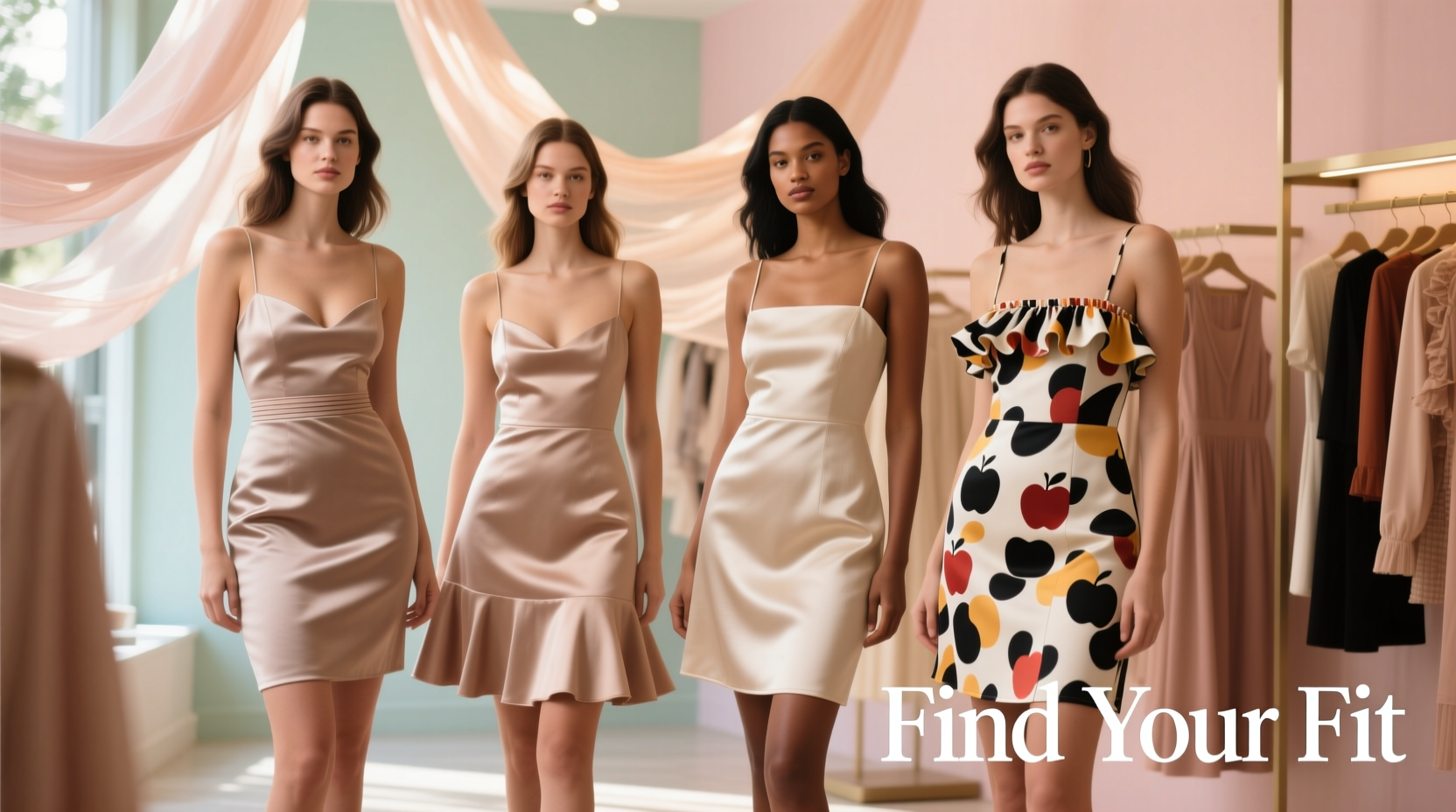
Before browsing online stores or scrolling through lookbooks, take time to identify your body shape. This foundational step ensures you’re selecting silhouettes that enhance your best features rather than fighting against them. The five most common body shapes are:
- Hourglass: Balanced bust and hips with a defined waist.
- Pear (or Triangle): Hips wider than shoulders, narrower at the top.
- Apple (or Round): Broader midsection, narrower hips and legs.
- Inverted Triangle: Broad shoulders and bust, narrower hips.
- Rectangle (or Straight): Minimal waist definition, balanced shoulder and hip width.
Once you know your shape, you can prioritize designs that create balance and draw attention to your strongest assets.
Match Mini Dress Styles to Your Figure
Not every mini dress works for every body. Below is a breakdown of which cuts suit different shapes and why they work.
| Body Shape | Best Mini Dress Styles | Why It Works |
|---|---|---|
| Hourglass | Fitted sheath, wrap, belted | Highlights a narrow waist and curves; emphasizes proportion balance. |
| Pear | A-line, off-the-shoulder, embellished neckline | Distracts from hips by drawing eyes upward; balances lower half. |
| Apple | V-neck, empire waist, flowy fabrics | Creates vertical lines; drapes over midsection without clinging. |
| Inverted Triangle | Fit-and-flare, ruffled hem, high-low | Adds volume below the waist to balance broad shoulders. |
| Rectangle | Belted, peplum, tiered skirts | Adds illusion of curves; defines waist where natural shaping is minimal. |
“Dressing for your body isn’t about hiding—it’s about highlighting. The right mini dress should make you feel powerful, not constrained.” — Lena Park, Celebrity Stylist and Fashion Consultant
Measure for Fit, Not Just Size Labels
Sizing varies wildly across brands—even within the same country. Relying solely on a tag (like ‘S’ or ‘M’) can lead to disappointment. Instead, focus on actual measurements.
Use a soft measuring tape to record three key areas:
- Bust: Measure around the fullest part, wearing a standard bra.
- Waist: Measure at the narrowest point, usually above the navel.
- Hips: Measure around the widest part, typically below the hip bones.
Compare these numbers to the brand’s size chart—not their model’s size. Many retailers provide detailed garment measurements (e.g., chest width, dress length), which are more reliable than generic size categories.
Mini Case Study: Finding Confidence Through Fit
Sophia, a 29-year-old marketing executive with a pear-shaped body, avoided mini dresses for years after an ill-fitting bodycon style made her feel self-conscious. She assumed all short dresses emphasized her hips. Then, a stylist friend suggested trying an A-line mini with a structured bodice and square neckline. The slightly flared skirt balanced her lower half, while the clean upper line gave her shoulders proportion. “It wasn’t the length that was wrong,” she said. “It was the cut. Now I own four mini dresses—and wear them regularly.”
Align Style With Lifestyle and Personal Taste
Your ideal mini dress should reflect not only your shape but also your personality and daily routine. Ask yourself:
- Do you prefer bold prints or minimalist solids?
- Are you drawn to vintage-inspired silhouettes or modern, sleek designs?
- Will you wear this mostly for evenings, brunches, or office events?
For example, a bohemian-style tiered mini in cotton voile suits a relaxed weekend vibe but may not be appropriate for a cocktail party. Conversely, a sequined slip dress might dazzle at night but feel out of place at a daytime garden party.
Consider versatility. A black sleeveless shift mini in stretch jersey can transition from day to night with a change of accessories. Pair it with sneakers and a denim jacket for errands, then swap in heels and statement earrings for dinner.
Checklist: Choosing Your Next Mini Dress
Before purchasing, run through this checklist:
- ✅ I’ve identified my body shape and chosen a silhouette that flatters it.
- ✅ I’ve compared my measurements to the garment’s size chart.
- ✅ The fabric has some stretch or drape if I want comfort and movement.
- ✅ The neckline draws attention to my favorite feature (e.g., collarbones, shoulders).
- ✅ The length hits at least mid-thigh—short enough to feel playful, long enough for confidence.
- ✅ I can sit, walk, and bend without constant readjustment.
- ✅ The style fits my lifestyle and wardrobe needs.
Common Mistakes to Avoid
Even fashion-savvy shoppers make errors when selecting mini dresses. Watch out for these pitfalls:
- Ignoring fabric weight: Thin, clingy materials may show panty lines or lack support. Opt for lined dresses or thicker knits when needed.
- Overlooking undergarments: Seamless underwear or a silicone strapless bra can make or break the look.
- Choosing length based on trends alone: A micro-mini might be trending, but if it rides up every time you sit, it won’t be wearable.
- Skipping movement tests: Always simulate real-life actions—sit down, climb stairs, reach up—to check coverage and comfort.
FAQ
How short is too short for a mini dress?
There’s no universal rule, but a good guideline is that the hem should hit at least mid-thigh. If you can’t sit comfortably without exposing too much, consider a slightly longer cut or wear with opaque tights or shorts underneath.
Can petite women wear mini dresses?
Absolutely. Mini dresses are often ideal for shorter frames because they elongate the legs. Just ensure the waistline is properly placed—high-waisted or belted styles can enhance proportion.
What if I love a style that doesn’t suit my body shape?
You don’t have to rule anything out completely. Try a variation—like a looser fit, different neckline, or added layer (e.g., a cropped jacket)—to adapt the look. Sometimes, confidence makes any dress work.
Final Thoughts: Own Your Look
Choosing the right mini dress isn’t about conforming to rigid rules—it’s about understanding your body, respecting your comfort, and expressing your individuality. The perfect dress should make you feel put-together, radiant, and ready to take on the day. Whether you gravitate toward classic shirtdresses, flirtatious skater styles, or sleek slip designs, let fit and function guide your choices as much as fashion does.




 浙公网安备
33010002000092号
浙公网安备
33010002000092号 浙B2-20120091-4
Comments
No comments yet. Why don't you start the discussion?