
For people with fine or thin hair, finding a scrunchie that actually stays in place can feel like an endless struggle. Too often, oversized scrunchies slip off within minutes, while others tug painfully at delicate strands. The key isn’t just about material or style—it’s about selecting the right size for your hair type and volume. A properly sized scrunchie enhances your look, provides gentle hold, and avoids breakage. This guide breaks down everything you need to know about choosing a scrunchie that works with thin hair, not against it.
Understanding Hair Volume and Scrunchie Fit
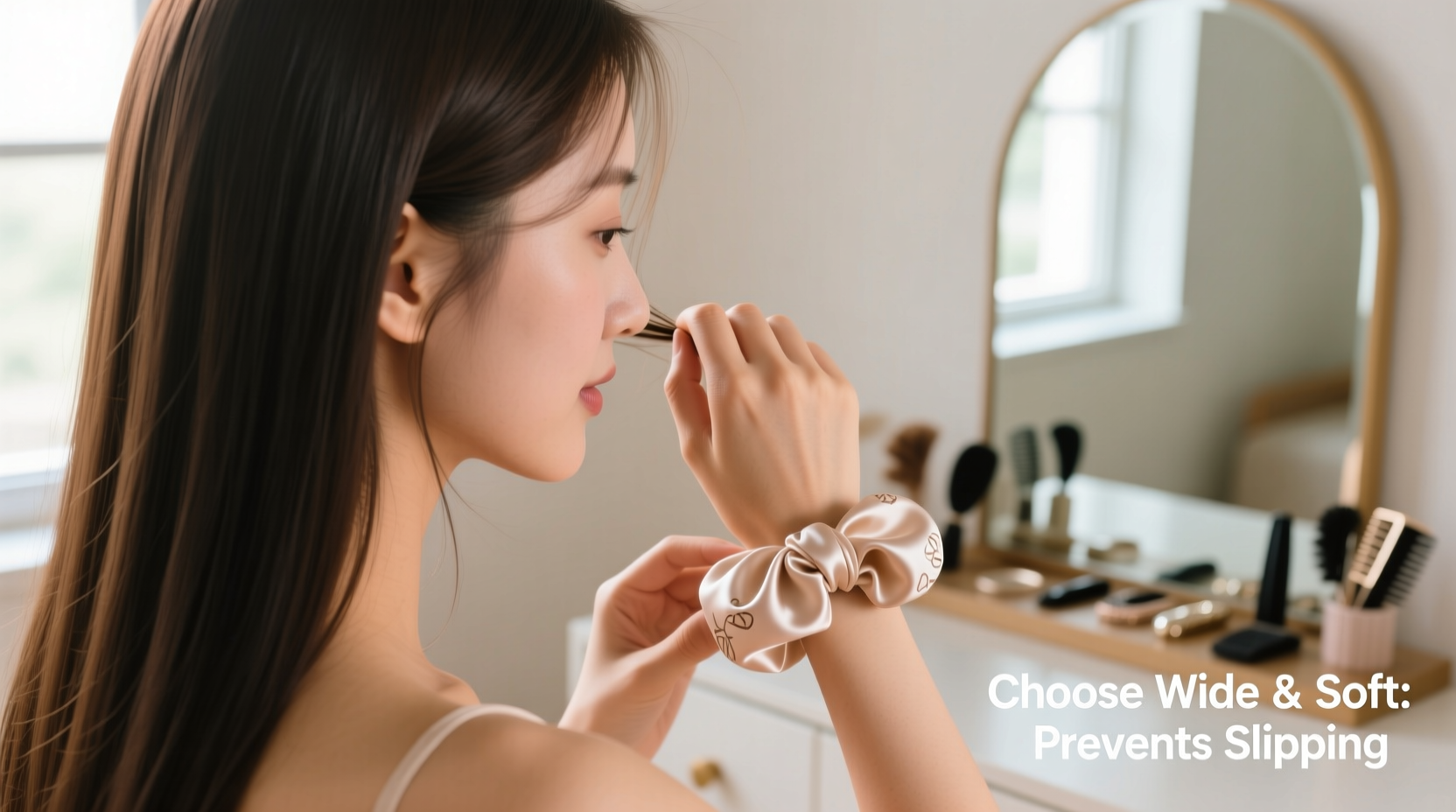
Thin hair doesn’t mean no hair—it means lower density, finer strands, and less grip for accessories. Standard scrunchies, typically 4–6 inches in diameter, are designed for average to thick hair and rely on bulk to stay put. When placed on thin hair, they lack resistance and slide off due to insufficient tension.
The ideal scrunchie for thin hair should create gentle friction without requiring excessive tightness. It needs to wrap snugly around a ponytail but not so loosely that it collapses under its own weight. This balance starts with understanding three factors: scrunchie diameter, inner band strength, and fabric texture.
“Many clients come to me frustrated because their scrunchies won’t stay. The issue is rarely the product quality—it’s poor size matching. Fine hair needs proportionate accessories.” — Lena Park, Professional Stylist & Founder of Tress Theory Salon
Key Features of a Secure Scrunchie for Thin Hair
Not all scrunchies are created equal. To prevent slippage, focus on these structural elements:
- Diameter: Opt for small or mini scrunchies (2.5 to 3.5 inches). These provide enough fabric for style without overwhelming fine strands.
- Inner Band: Look for scrunchies with a reinforced elastic core. A stronger band grips better even when hair volume is low.
- Fabric Texture: Textured materials like velvet, terry cloth, or ribbed cotton increase surface grip. Avoid slippery fabrics such as satin unless layered over a grippy inner band.
- Fill Level: Choose scrunchies that are moderately filled. Overstuffed ones add unnecessary bulk; underfilled ones collapse too easily.
Step-by-Step Guide to Choosing the Right Size
Selecting the perfect scrunchie involves more than guesswork. Follow this process to ensure compatibility with your hair type:
- Assess Your Ponytail Thickness: Gather your hair into a mid-height ponytail. Measure the circumference with a soft tape measure. Most thin-haired individuals fall between 1.5 and 2.5 inches.
- Select Based on Diameter: Match your ponytail size to scrunchie dimensions. Use the table below for reference.
- Check the Elastic Strength: Gently stretch the scrunchie. It should return to shape quickly. If it feels loose or laggy, skip it.
- Test the Fabric Grip: Rub the scrunchie against your palm. Does it catch slightly? That micro-resistance helps prevent slippage.
- Try Before Committing: Wear it for 20 minutes during normal activity—walking, head tilts, light movement. If it shifts, it’s not the right fit.
Scrunchie Size vs. Hair Type Comparison
| Ponytail Circumference | Recommended Scrunchie Diameter | Best Fabric Types | Avoid |
|---|---|---|---|
| 1.5 – 2 inches | 2.5 – 3 inches (Mini) | Velvet, Terry, Ribbed Cotton | Oversized Satin, Loose Knit |
| 2 – 2.5 inches | 3 – 3.5 inches (Small) | Cotton Twill, Faux Suede, Waffle Knit | Glossy Polyester, Ultra-Loose Weave |
| 2.5+ inches | 4+ inches (Standard) | Any durable fabric | None specific |
Real-Life Example: From Slipping to Secure
Sophie, a 29-year-old teacher with fine, straight hair, used to avoid scrunchies entirely. “Every time I tried one, it would fall out by lunch,” she said. After switching to a stylist-recommended 3-inch velvet scrunchie with a double-stitched elastic core, her experience changed completely. She now wears scrunchies daily, using them for low buns and half-up styles. “The difference was the size and texture. It grips without pulling, and I don’t have to re-tie it every hour.”
Her turning point came when she stopped buying generic sets and started evaluating each scrunchie based on structure rather than color alone. She also began using a light texturizing spray before styling, which added minimal volume and improved grip—another small change that made a big difference.
Expert Tips for Maximum Hold Without Damage
A secure scrunchie shouldn’t compromise hair health. Here are proven strategies to keep your scrunchie in place while protecting fragile strands:
- Prep Hair with Texture: Apply a dry shampoo or sea salt spray to roots before styling. Even slight lift increases friction.
- Double-Wrap Technique: Instead of looping once, twist the scrunchie and loop twice. This reduces slack and improves contact with hair.
- Position Matters: Place the scrunchie closer to the crown for higher tension. Low ponytails on thin hair offer less resistance.
- Avoid Overloading: Don’t use multiple scrunchies stacked together—they create uneven pressure and increase breakage risk.
- Rotate Styles: Alternate between scrunchies, clips, and pins to reduce stress on the same hair sections.
“Fine hair is more vulnerable to accessory-related damage. Always prioritize grip-through-design over grip-through-tightness.” — Dr. Amara Lin, Trichologist & Hair Wellness Consultant
Checklist: How to Pick a Non-Slip Scrunchie for Thin Hair
Before purchasing or styling, run through this checklist:
- ✅ Measure your typical ponytail thickness
- ✅ Choose a scrunchie diameter no more than 1.5x your ponytail size
- ✅ Confirm the inner elastic is strong and responsive
- ✅ Prefer textured over smooth fabrics
- ✅ Test grip by wrapping around wrist or finger
- ✅ Avoid excessively wide or overstuffed designs
- ✅ Consider dual-layer scrunchies (grippy inside, stylish outside)
- ✅ Read reviews specifically from people with fine hair
Frequently Asked Questions
Can I use regular scrunchies if I have thin hair?
You can, but standard 5–6 inch scrunchies are likely to slip unless your hair has significant volume. Most people with thin hair find better results with smaller sizes (2.5–3.5 inches) that match their hair’s natural resistance.
Why do my scrunchies keep falling out?
Slippage usually comes down to mismatched size, weak elastic, or overly smooth fabric. Even high-quality scrunchies fail if they’re too big or made from slippery materials like satin without grip-enhancing features.
Are there scrunchies specifically made for fine hair?
Yes—some brands now design \"fine hair friendly\" lines featuring smaller diameters, textured fabrics, and tighter elastics. Look for terms like “mini,” “petite,” or “slip-resistant” in product descriptions.
Conclusion: Style Shouldn’t Mean Sacrifice
Choosing the right size scrunchie for thin hair isn’t about settling for less—it’s about being intentional. With the right proportions, fabric, and technique, you can enjoy the soft elegance of scrunchies without constant readjustment or damage. Focus on fit first, then style. Prioritize function without sacrificing fashion. And remember: the best scrunchie is the one that stays put, feels comfortable, and makes you feel confident from morning to night.




 浙公网安备
33010002000092号
浙公网安备
33010002000092号 浙B2-20120091-4
Comments
No comments yet. Why don't you start the discussion?