
In today’s digital-first world, most adults spend upwards of 6–10 hours daily in front of screens. Whether working remotely, studying online, or unwinding with a movie, prolonged exposure to blue light from LEDs can contribute to digital eye strain, disrupted sleep cycles, and long-term retinal stress. Blue light blocking glasses have become a popular defense—but not all tints are created equal. The effectiveness of these glasses depends heavily on the lens tint, which should be matched precisely to your screen time duration, usage patterns, and circadian rhythm.
Selecting the right tint isn’t about aesthetics alone; it’s about aligning optical science with personal habits. A tint that works for a night-time binge-watcher may hinder color accuracy for a graphic designer working during daylight hours. This guide breaks down how to make an informed choice based on measurable factors like screen exposure, lighting conditions, and biological sensitivity.
Understanding Blue Light and Lens Tint Functionality
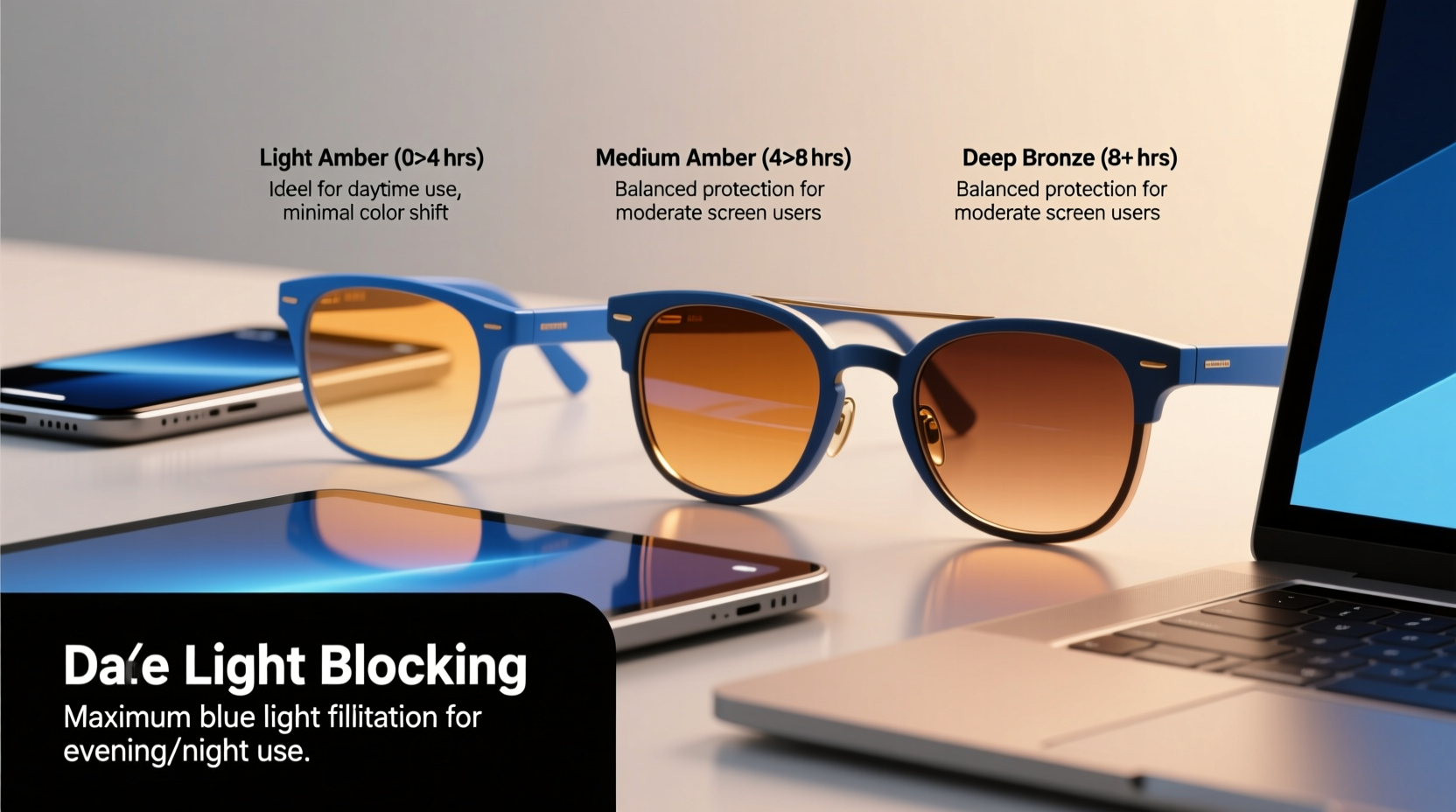
Blue light falls within the visible spectrum (380–500 nanometers), with the most harmful wavelengths concentrated between 415–455 nm—often referred to as “high-energy visible” (HEV) light. Digital screens emit significant amounts of this range, especially LED-backlit devices. While some blue light is beneficial during daytime (boosting alertness and mood), excessive exposure at night suppresses melatonin, delaying sleep onset.
Lens tints in blue light glasses filter specific wavelengths. The depth and hue of the tint determine both filtering strength and visual impact:
- Clear lenses block only a small portion of blue light (usually below 20%), typically targeting higher-end blue-violet light without altering color perception.
- Yellow/amber tints absorb more blue light (up to 65–80%) by shifting the color balance, enhancing contrast and reducing glare.
- Red/orange tints offer maximum filtration (90%+), ideal for evening use when melatonin protection is critical.
The key is matching tint intensity to your screen schedule—not just how much time you spend, but when you’re exposed.
“Choosing the wrong tint can either under-protect or over-filter, leading to unnecessary visual distortion. Timing and environment matter as much as screen duration.” — Dr. Lena Patel, Optometrist & Vision Health Researcher
Matching Tint Strength to Daily Screen Exposure Levels
Your total screen time should directly influence your tint selection. However, duration alone isn't enough—consider whether your screen use occurs primarily during daylight, under artificial lighting, or after sunset. Here's a tiered approach based on cumulative exposure:
| Screen Time Level | Daily Duration | Recommended Tint | Rationale |
|---|---|---|---|
| Light Use | 2–4 hours | Clear to light yellow | Minimal filtering preserves natural color vision; suitable for occasional work or social media browsing. |
| Moderate Use | 5–7 hours | Medium amber | Balances comfort and protection during full workdays; reduces eye fatigue without distorting design or photo-editing tasks excessively. |
| Heavy Use | 8–12+ hours | Amber to red-orange | Strong filtering recommended, especially if usage extends into evening; helps maintain melatonin levels and reduce chronic strain. |
Time-of-Day Considerations: Day vs. Night Screen Use
The human body operates on a circadian rhythm regulated in part by light exposure. During daylight hours, blue light enhances focus and wakefulness. After sunset, it becomes disruptive. Therefore, the optimal tint varies depending on when you're using screens.
For individuals who work late shifts, engage in nighttime streaming, or respond to emails post-dinner, stronger tints are essential. Red or orange lenses block nearly all blue light below 550 nm, creating a physiological signal that it’s time to wind down. In contrast, daytime users—especially creatives requiring accurate color representation—should avoid deep tints that skew hues.
Daytime Strategy (6 AM – 6 PM)
Use clear or lightly tinted lenses. These allow beneficial blue light to support alertness while filtering out the most aggressive HEV rays. Ideal for office workers, students, and remote professionals maintaining a standard schedule.
Nighttime Strategy (6 PM – 12 AM)
Switch to amber or red-tinted glasses at least two hours before bedtime. Studies show that wearing red-tinted lenses in the evening increases melatonin production by up to 58%, significantly improving sleep quality—even when screen use continues.
Shift Workers & Irregular Schedules
Those working overnight or rotating shifts benefit from dynamic tint strategies. Use medium amber during active screen periods regardless of clock time, and switch to red lenses during breaks or pre-sleep wind-down routines. Consistency in filtering helps stabilize circadian cues despite non-traditional schedules.
“Night shift employees who wore amber lenses during their shifts reported better daytime sleep quality and reduced ocular discomfort compared to controls.” — Journal of Clinical Sleep Medicine, 2021 Study
Step-by-Step Guide: Choosing Your Ideal Tint
Follow this five-step process to select the most effective blue light blocking tint for your lifestyle:
- Track your screen time: Use built-in tools (iOS Screen Time, Android Digital Wellbeing, or apps like RescueTime) to log daily exposure across devices.
- Note usage timing: Break down screen activity into day (before 6 PM) and night (after 6 PM). Prioritize filtering for evening use.
- Assess visual demands: Are you editing photos, coding, or watching videos? Color-critical tasks favor lighter tints.
- Evaluate symptoms: Frequent headaches, dry eyes, or difficulty falling asleep suggest a need for stronger filtration.
- Test and adjust: Start with a moderate amber tint. If colors feel too distorted, step down to light yellow. If sleep doesn’t improve, upgrade to red for nighttime-only use.
Real-World Example: Sarah’s Transition to Effective Eye Protection
Sarah, a 34-year-old UX designer, spent 9–10 hours daily in front of multiple monitors. She began experiencing persistent eye strain and trouble falling asleep despite limiting phone use before bed. Initially, she purchased red-tinted glasses for all-day use, only to find her design work compromised by inaccurate color rendering.
After consulting an occupational optometrist, she adopted a dual-tint strategy: clear-coated lenses during work hours (9 AM–5 PM), then switched to amber lenses at 6 PM. Within two weeks, her eye fatigue decreased, and she fell asleep 25 minutes faster on average. On weekends, when she streamed movies late at night, she used red-tinted glasses exclusively after dinner.
This case illustrates that one-size-fits-all solutions often fail. Tailoring tint choice to context leads to better outcomes in both performance and well-being.
Do’s and Don’ts When Selecting Blue Light Glass Tints
| Do’s | Don’ts |
|---|---|
| Choose amber for 5–8 hours of mixed-use screen time | Wear red-tinted glasses during daylight color-sensitive work |
| Use clear lenses if screen time is under 4 hours | Assume darker tint always means better protection |
| Switch to red/orange two hours before bedtime | Use unverified brands without spectral transmission data |
| Verify lens specs: look for 400–450 nm blocking claims | Wear heavy tints while driving at night (can impair vision) |
Frequently Asked Questions
Can I wear blue light glasses all day?
Yes, but only if they have a light or medium tint. Clear or pale yellow lenses are safe for daytime wear and won’t interfere with natural circadian signaling. Avoid dark amber or red lenses during daylight unless you’re in a low-light environment or are sensitive to brightness.
Do blue light glasses really help with sleep?
Clinical evidence supports their effectiveness, particularly with amber and red tints. A 2020 study published in Chronobiology International found that participants wearing amber lenses for three hours before bed experienced significantly improved sleep latency and quality compared to placebo groups.
How do I know if my glasses actually block blue light?
Check for third-party lab testing or spectral transmittance reports. Reputable brands disclose how much light is blocked at specific wavelengths (e.g., “blocks 98% of blue light under 450 nm”). You can also perform a simple test: hold the lens under a bright LED flashlight—if the light appears warm or orange through the lens, it’s filtering blue wavelengths.
Final Recommendations and Action Plan
Choosing the right tint for blue light blocking glasses requires more than guessing based on appearance. It demands awareness of your screen habits, environmental lighting, and biological rhythms. For light users (<4 hours), clear or minimal tints suffice. Moderate users (5–7 hours) benefit from amber lenses, especially in the afternoon and evening. Heavy users, particularly those extending screen time past sunset, should adopt red-tinted glasses in the final hours before bed.
No single tint fits every scenario. The smartest approach combines situational awareness with practical flexibility—owning multiple pairs, adjusting based on symptoms, and verifying product claims. Over time, this personalized strategy reduces eye strain, supports healthier sleep, and enhances overall digital wellness.




 浙公网安备
33010002000092号
浙公网安备
33010002000092号 浙B2-20120091-4
Comments
No comments yet. Why don't you start the discussion?