
Choosing a wig isn’t just about color or length—it’s about creating a seamless blend between your natural appearance and the hairpiece. A poorly matched texture can instantly give away that you’re wearing a wig, no matter how high-quality it is. The key to an undetectable, natural look lies in selecting the right wig texture—one that mirrors your natural hair pattern, complements your skin tone, and suits your daily routine. With countless options available—from silky straight to tight coils—knowing how to navigate textures can transform your confidence and style.
Understand Your Natural Hair as a Guide
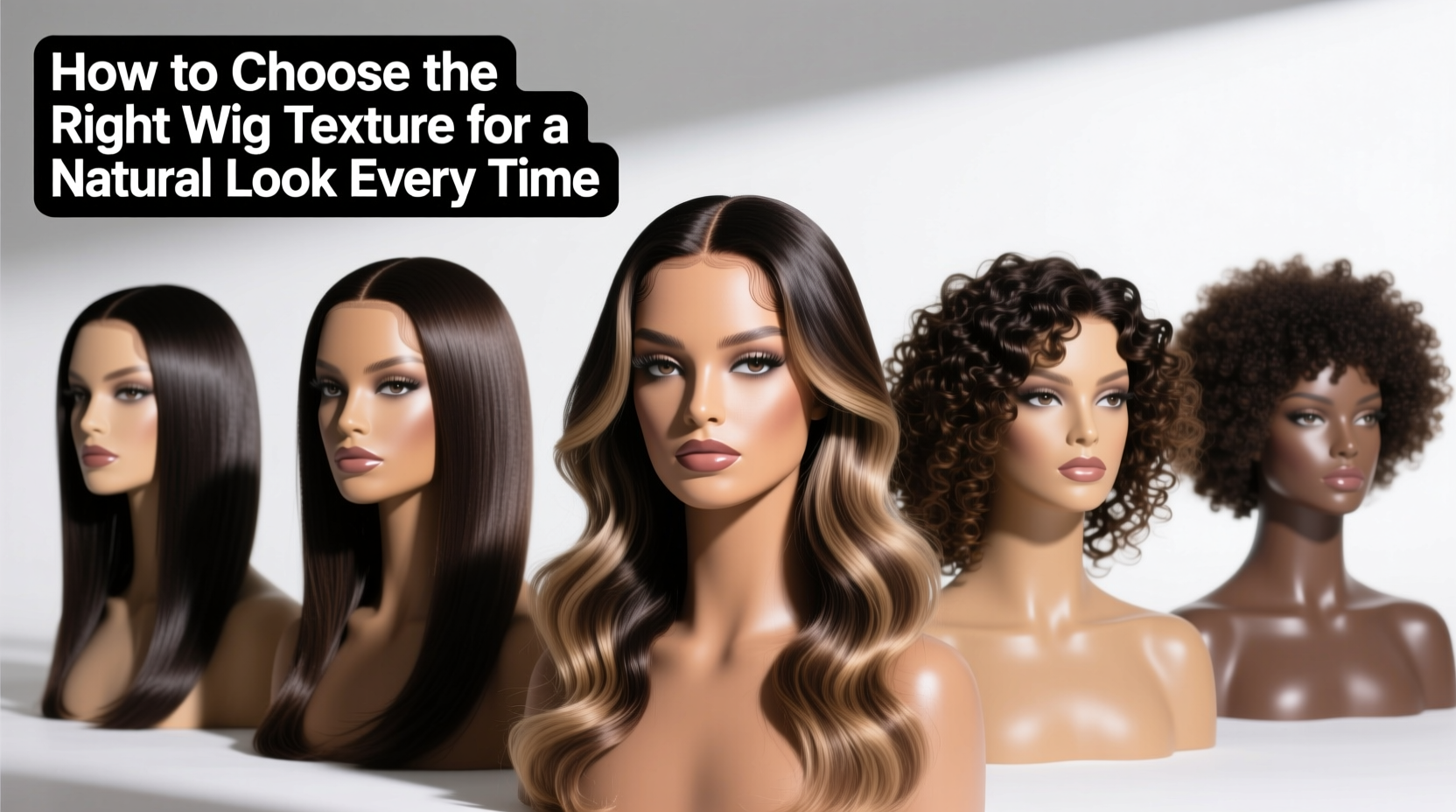
Your own hair is the best reference point when choosing a wig texture. Even if you're covering thinning areas, managing alopecia, or simply experimenting with new styles, grounding your choice in your natural texture ensures authenticity. Begin by analyzing your current hair: Is it fine and straight? Thick and wavy? Coily with a dense pattern? Take note of its behavior in different conditions—does it frizz in humidity? Does it fall flat easily?
Texture isn’t just about curl pattern; it includes density, wave formation, and strand thickness. Wig manufacturers categorize textures using standardized labels such as “body wave,” “loose deep,” or “kinky straight.” These terms may seem confusing at first, but understanding them in relation to your biological hair makes selection far more intuitive.
Match Texture to Face Shape and Lifestyle
A wig should enhance your features, not compete with them. The interplay between facial structure and hair texture plays a crucial role in achieving balance. For example, someone with a round face may benefit from a textured wig with volume at the crown and looser waves to elongate the silhouette. Conversely, angular jawlines often pair beautifully with soft curls that add warmth and roundness.
- Oval face: Most textures work well. Experiment with tighter curls or sleek straight styles.
- Square jaw: Opt for wigs with gentle waves or body waves to soften strong lines.
- Heart-shaped face: Choose medium-volume textures like loose deep waves to balance a wider forehead.
- Round face: Prioritize height and movement—textured bobs or layered curls create vertical emphasis.
Lifestyle matters just as much. If you live in a humid climate, tightly coiled textures may shrink and tighten unexpectedly, while very straight wigs could become limp and lifeless. Active individuals who sweat frequently should consider pre-plucked lace fronts with heat-resistant fibers that hold shape under stress.
“Clients often pick textures based on trends, but the most convincing wigs are those tailored to their biology and environment.” — Latoya Simmons, Celebrity Wig Stylist & Founder of Crown & Coil Studio
Compare Common Wig Textures and Their Real-World Performance
Not all textures behave the same way once worn. Some require daily styling, while others offer ‘wash-and-wear’ convenience. Below is a detailed comparison of popular wig textures, including suitability, maintenance level, and realism potential.
| Texture Type | Best For | Maintenance Level | Natural Look Potential |
|---|---|---|---|
| Straight | Professional settings, sleek styles | Medium (prone to oil buildup at roots) | High (if cut with layers and tapered ends) |
| Natural Wave | Everyday wear, low-maintenance routines | Low (holds shape after washing) | Very High (mimics organic growth patterns) |
| Body Wave | Volume seekers, formal events | Medium-High (requires occasional steaming) | High (when paired with correct parting) |
| Loose Curl | Humid climates, curly-haired individuals | Medium (needs light moisturizing) | Very High (especially with varied curl sizes) |
| Kinky Curly / Afro | Type 4 hair replacement, protective styling | Low (resilient to environmental changes) | Extremely High (when density matches scalp contrast) |
Note that “natural look” doesn’t mean invisible—it means believable. A kinky curly wig doesn’t need to lie perfectly flat; its volume and texture should appear consistent with real human hair behavior.
Step-by-Step: How to Test and Confirm Your Ideal Wig Texture
Selecting the right texture involves more than browsing online photos. Follow this five-step process to make a confident, informed decision.
- Assess Your Scalp and Base Color
Light reflects differently off various textures. A shiny straight wig might highlight redness or pigmentation on fair skin, while a voluminous afro can cast shadows that alter perceived face shape. Match your base wig cap color (brown, black, transparent) to your neck and hairline shade. - Swatch Test Under Natural Light
Purchase small texture samples or visit a wig boutique. Hold each swatch next to your temple in daylight—not under store lighting. Observe how light bounces off the strands. Does it mimic your natural sheen? Avoid overly glossy finishes unless your biological hair is naturally shiny. - Check Movement and Flow
Gently shake the swatch or wig. Real hair has variation in curl diameter and spring-back. Uniform spirals or robotic bounce suggest synthetic overprocessing. Human hair and premium synthetic blends will show subtle inconsistencies—this is good. - Simulate Daily Conditions
If you exercise regularly or live in a humid area, mist the sample with water and let it dry. Watch how the texture responds. Kinky curls should retain definition; waves shouldn’t turn into mushy ringlets. Straight textures should resist frizz without heavy serums. - Wear It With Your Usual Outfits
Borrow or rent a wig in your top two contenders. Wear it for a full day—commute, run errands, maybe even work out. Notice how people react. Do they glance twice? Compliment your “great hair”? Or does something feel off? Authenticity often registers subconsciously.
Real Example: Choosing the Right Texture After Medical Hair Loss
Maria, a 42-year-old teacher undergoing chemotherapy, wanted to return to school looking like herself. She had naturally thick, shoulder-length wavy hair with a slight bend—somewhere between a 2A and 2B curl pattern. Early attempts with straight synthetic wigs felt stiff and alien. One colleague remarked, “You look polished, but not like *you*.”
She consulted a trichologist who recommended a human hair wig in “natural wave” texture with a monofilament top for multidirectional parting. The stylist advised against tight curls (too dramatic) or pin-straight styles (too severe). After trying three samples, Maria chose a mid-density wave with hand-tied knots near the hairline for a lived-in root effect. She now air-dries it with a sea salt spray, mimicking her pre-treatment routine. Students haven’t questioned her hair—only complimented her resilience.
This case illustrates that emotional authenticity matters as much as visual accuracy. The right texture didn’t just look natural—it helped her feel continuous with her identity.
Checklist: Final Verification Before Purchasing
Before clicking “buy,” go through this verification checklist to ensure your chosen wig texture delivers a natural result:
- ✅ Matches my natural curl pattern within one grade (e.g., slightly looser or tighter is acceptable)
- ✅ Behaves realistically in my climate (doesn’t frizz excessively or flatten)
- ✅ Complements my face shape (adds balance, not distortion)
- ✅ Moves naturally when I walk or turn my head
- ✅ Blends with my neck and skin tone at the nape and temples
- ✅ Requires a maintenance level I can sustain weekly
- ✅ Looks authentic in photographs (ask for customer photos or video reviews)
Skipping even one of these checks can result in a wig that feels “almost right”—but never quite convincing.
Frequently Asked Questions
Can I wear a different texture than my natural hair?
Yes—but only if the shift serves a deliberate aesthetic purpose and aligns with your features. Going from straight to tight coils requires adjusting your makeup, accessories, and styling habits to support the new visual language. For everyday wear aiming for invisibility, staying close to your natural texture yields the most believable results.
Does hair color affect how texture appears?
Absolutely. Darker colors emphasize texture depth and shadow, making curls look denser. Lighter shades, especially highlights or balayage, reduce perceived volume and soften wave definition. A honey-blonde loose curl may read as “flowing” rather than “curly,” while the same texture in jet black will look more structured. Consider both elements together.
Is human hair always better for a natural texture?
Not necessarily. While human hair offers superior movement and heat tolerance, low-quality processed human hair can feel coarse or wiry. Meanwhile, modern synthetic fibers like Kanekalon J-Dream or Toyokalon mimic natural wave patterns convincingly and hold style longer. For many, a premium synthetic texture provides a more consistent natural look with less upkeep.
Final Thoughts: Confidence Begins With Authenticity
The goal of any wig isn’t to deceive—it’s to affirm. When your wig texture aligns with your natural rhythm, your posture relaxes, your eye contact deepens, and your presence becomes effortless. That intangible quality is what people respond to, even if they don’t know why.
Choosing the right texture demands patience and self-awareness. It asks you to study your reflection honestly, consider your environment, and prioritize function alongside beauty. But when you get it right, the result isn’t just a great-looking wig—it’s a version of yourself that feels wholly integrated, visible, and unapologetically real.




 浙公网安备
33010002000092号
浙公网安备
33010002000092号 浙B2-20120091-4
Comments
No comments yet. Why don't you start the discussion?