
Yoga blocks are more than just props—they’re essential tools that bridge the gap between where you are and where you want to be in your practice. Whether you're reaching for a forward fold or stabilizing an arm balance, the right block can enhance alignment, reduce strain, and build confidence. But not all blocks are created equal. One of the most overlooked yet critical factors is density: the firmness and structural integrity of the block material. Choosing the correct density impacts safety, comfort, and effectiveness across different skill levels and pose types.
For beginners, too firm a block can feel unforgiving; for advanced practitioners, a soft one may lack the stability needed in complex postures. Understanding how density influences performance helps yogis make informed choices that align with their body’s needs and goals.
Understanding Yoga Block Density: What It Means and Why It Matters
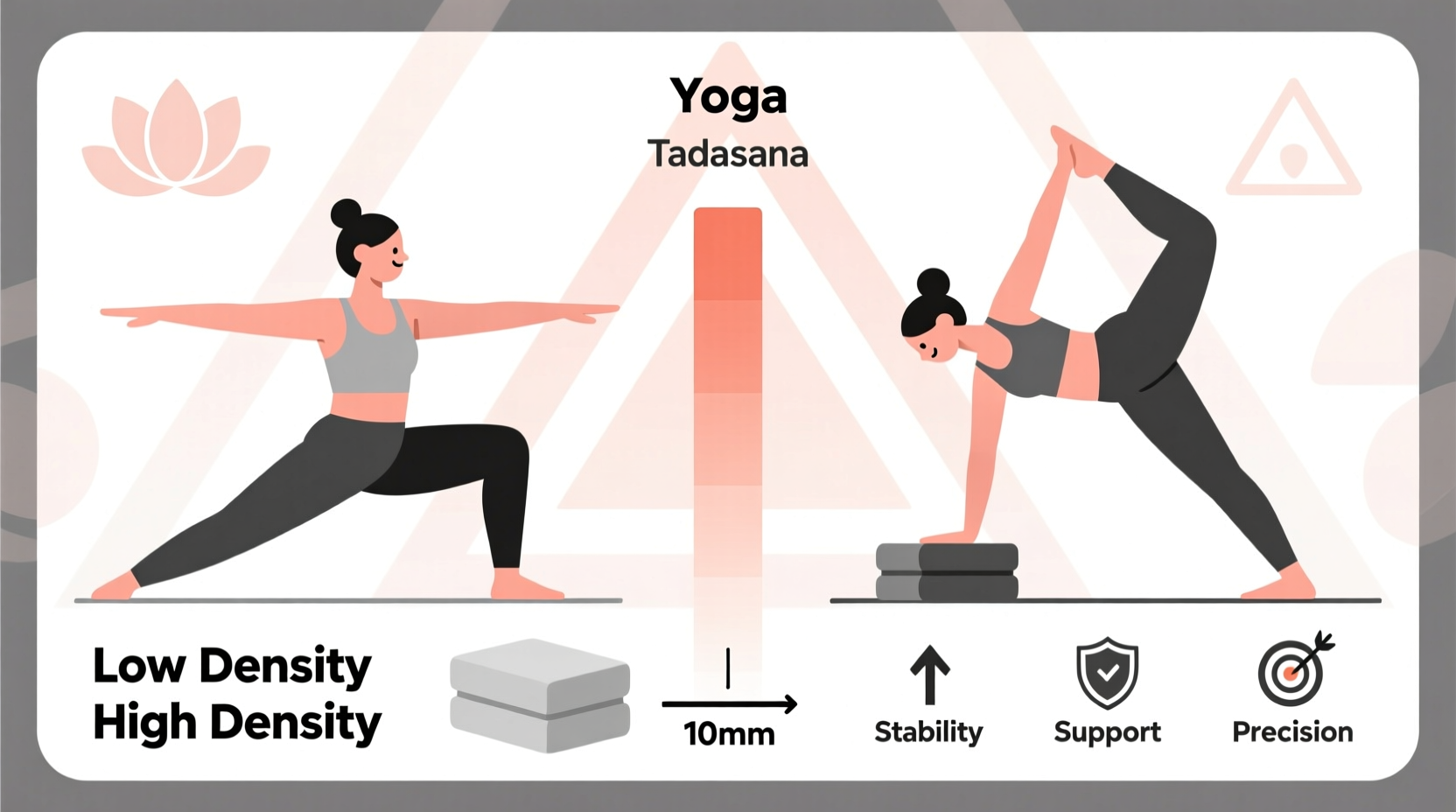
Density refers to how tightly packed the material inside a yoga block is. It determines the block’s weight, durability, compressibility, and surface rigidity. Blocks come primarily in three materials—foam (EVA), cork, and wood—each offering a distinct density profile.
- Foam blocks are lightweight and soft, typically made from ethylene-vinyl acetate (EVA). They offer cushioning and flexibility, making them ideal for restorative work or gentle support.
- Cork blocks are denser and heavier, providing firm resistance and excellent grip. Their natural texture resists slipping, even during sweaty sessions.
- Wooden blocks, often made from bamboo or birch, are the densest option. Extremely durable and stable, they’re best suited for experienced practitioners who need unwavering support.
The choice of density affects everything from joint protection to proprioception—the body’s ability to sense its position in space. A softer block may compress under body weight, altering alignment subtly but significantly over time. Conversely, a high-density block maintains shape and height, ensuring consistent biomechanical support.
Choosing the Right Density for Beginners
New yoga students often struggle with flexibility, balance, and spatial awareness. The goal at this stage isn’t perfection—it’s safe exploration. That’s why lower-density foam blocks are frequently recommended for beginners.
Foam blocks absorb pressure, reducing discomfort when hands or feet rest on hard floors. For someone struggling to touch the ground in Uttanasana (Standing Forward Bend), a soft EVA block allows gradual progress without straining hamstrings or rounding the spine. Its light weight also makes it less intimidating and easier to maneuver.
However, there's a trade-off: foam lacks rigidity. In poses like Parivrtta Trikonasana (Revolved Triangle), where the hand must press into the block to lift the torso, a spongy surface can collapse slightly, compromising leverage. This subtle instability might discourage proper engagement of core and obliques.
To balance comfort with functionality, some studios now offer medium-density foam blocks—slightly firmer than standard ones but still forgiving. These serve as a transitional option, especially useful for those building strength while maintaining mobility limitations.
“Beginners benefit most from supportive tools that encourage correct alignment without fear of injury. A well-chosen block becomes an extension of their body.” — Dr. Lena Patel, Integrative Movement Therapist
Key Considerations for Beginner Yogis
- Look for blocks labeled “light” or “soft,” typically weighing under 8 oz.
- Prioritize non-slip surfaces—even soft blocks should have textured finishes.
- Avoid ultra-light travel foams if practicing dynamic sequences; they shift easily.
- Use two blocks instead of one overly compressed block to maintain structural integrity.
Density Needs for Advanced Practitioners and Complex Poses
As practice evolves, so do demands on props. Advanced yogis engage in deeper backbends, inversions, and arm balances where precision and stability become non-negotiable. Here, high-density blocks aren't just preferable—they're often essential.
Cork and wooden blocks excel in these scenarios. Take Natarajasana (Dancer’s Pose): when using a block to assist balance by pressing the foot into it, only a firm surface provides reliable feedback and force transmission. A foam block would compress unevenly, destabilizing the pelvis and disrupting focus.
In arm balances like Bhujapidasana (Shoulder Pressing Pose), blocks are sometimes placed under the feet to elevate the hips. Any give in the block risks tipping or wobbling, increasing fall risk. Cork, with its minimal compression and high friction coefficient, offers secure footing even with partial contact.
Backbends such as Setu Bandhasana (Bridge Pose) or Urdhva Dhanurasana (Wheel Pose) performed with a block under the sacrum require absolute stability. A soft block could deform under full body weight, leading to misalignment or sudden collapse. High-density cork or wood ensures the pelvis remains level and supported throughout the hold.
When Light Isn’t Right: Scenarios Demanding Firm Support
- Inversions: Handstands against the wall using blocks under hands for elevation—requires zero compression.
- Deep hip openers: Pigeon Pose variations with block under hip need consistent height.
- Restorative poses with bolsters: Even in relaxation, a sinking block undermines spinal alignment.
- Partner yoga: Shared weight distribution demands predictable, rigid support.
Comparing Materials: A Practical Guide to Making the Right Choice
Selecting a block isn’t just about personal preference—it’s about matching material properties to functional requirements. The table below compares common block types based on key performance metrics.
| Material | Density Level | Weight (approx.) | Grip Quality | Best For | Limitations |
|---|---|---|---|---|---|
| Foam (EVA) | Low | 6–8 oz | Moderate (can slip when wet) | Beginners, restorative yoga, travel | Compresses easily, wears faster |
| Cork | High | 18–22 oz | Excellent (naturally grippy) | Vinyasa, Iyengar, advanced poses | Heavier, eco-sensitive sourcing |
| Wood (Bamboo/Birch) | Very High | 24–30 oz | Good (smooth finish, may need towel) | Therapeutic precision, long-term use | Bulkier, higher cost |
While cork strikes an optimal balance for many intermediate to advanced practitioners, eco-conscious users appreciate its biodegradability and renewable sourcing. Foam, though convenient, often ends up in landfills due to limited recyclability. Wooden blocks, though sustainable if sourced responsibly, tend to be pricier and less portable.
Real-World Example: Transitioning from Foam to Cork
Sophie, a dedicated Hatha yoga student for two years, initially relied on foam blocks for seated forward folds and gentle twists. As she progressed into more dynamic classes, her teacher noticed she was losing balance in Half Moon Pose (Ardha Chandrasana). Despite correct form, her supporting hand sank slightly into the foam, triggering micro-adjustments that broke her focus.
Upon switching to a cork block, Sophie reported immediate improvement. “It felt like the floor extended upward,” she said. “I didn’t have to ‘fight’ the prop anymore.” Over six weeks, her confidence and stability increased significantly, allowing her to deepen the pose safely.
Step-by-Step Guide to Selecting Your Ideal Yoga Block Density
Follow this practical sequence to determine the best block for your current practice level and intentions:
- Assess Your Practice Style: Are you doing slow, meditative flows (favor foam), or fast-paced vinyasa/Iyengar (favor cork)?
- Evaluate Physical Needs: Do you have joint sensitivity? Soft foam may protect wrists. Need maximum stability? Opt for cork.
- Test Compression: Apply firm downward pressure with your palm. Does the block retain its shape? If not, it may be too soft.
- Check Surface Texture: Run your fingers across the sides. Cork naturally resists slippage; foam may require added grip tape.
- Consider Longevity: How often will you use it? Frequent use favors durable cork or wood over cheaper foam.
- Factor in Portability: Traveling often? Lightweight foam wins. Studio-based practice? Weight matters less than performance.
- Try Before You Buy: Visit a yoga studio or retail store to test multiple densities side by side.
Frequently Asked Questions
Can I use a soft foam block for advanced poses?
Generally, no. While possible in low-load situations, soft foam lacks the structural integrity required for poses involving full-body weight or balance. It may compromise alignment and increase injury risk over time.
Are cork blocks worth the extra cost?
Yes, for regular practitioners. Cork offers superior durability, grip, and environmental sustainability. Though initially more expensive, its lifespan often exceeds that of foam blocks by several years, making it cost-effective in the long run.
Do I need different blocks for different styles of yoga?
Not necessarily, but having options enhances adaptability. A single high-quality cork block serves most needs. However, owning both cork and foam allows customization—e.g., foam for yin/restorative, cork for power yoga.
Final Thoughts: Align Your Tools With Your Journey
Your yoga practice is dynamic, evolving with every breath and movement. The props you choose should reflect that growth. Starting with a soft, forgiving foam block makes sense when learning foundational alignment. But as strength, flexibility, and body awareness improve, upgrading to a higher-density option like cork supports continued development with greater precision and safety.
Remember, the best block isn’t the fanciest or most expensive—it’s the one that meets you where you are, supports your current goals, and adapts as you grow. By understanding density and its role in stability, grip, and longevity, you empower yourself to practice smarter, safer, and more intentionally.




 浙公网安备
33010002000092号
浙公网安备
33010002000092号 浙B2-20120091-4
Comments
No comments yet. Why don't you start the discussion?