
In today’s fast-paced world, time and space are precious. Whether you're commuting between the office and dinner plans, traveling for business with a side of leisure, or simply trying to streamline your wardrobe, the ability to create outfits that adapt is no longer a luxury—it's a necessity. The key lies not in owning more clothes, but in choosing fewer, smarter pieces that serve multiple purposes without compromising on style or appropriateness.
Versatile dressing isn’t about looking the same everywhere; it’s about mastering the art of subtle transformation. With thoughtful fabric choices, strategic layering, and a focus on neutral palettes accented by intentional details, you can move confidently through meetings, social gatherings, and casual weekends—all with minimal wardrobe changes.
Build a Foundation with Core Wardrobe Staples
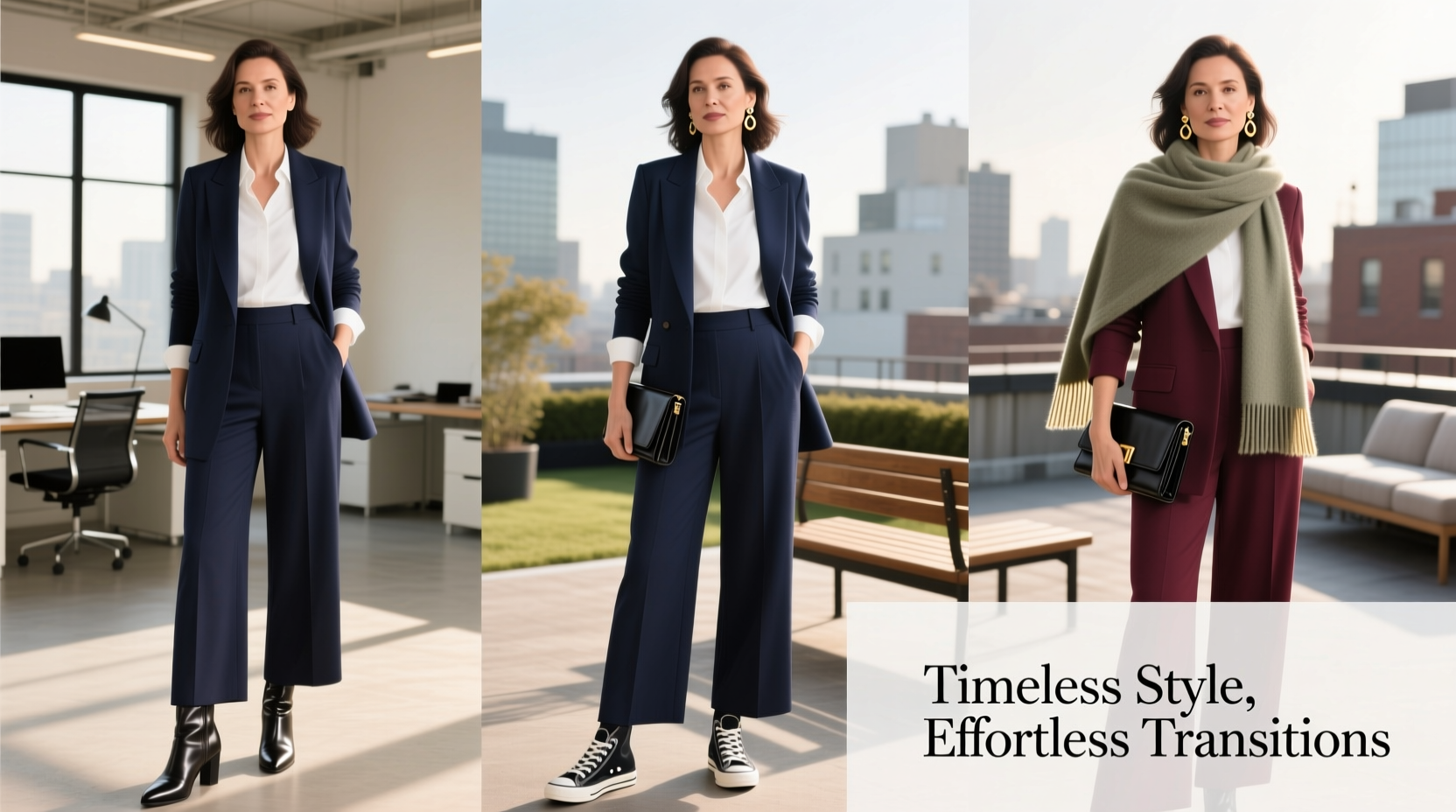
The cornerstone of any adaptable wardrobe is a collection of high-quality, timeless basics. These pieces act as anchors—reliable, well-fitting garments that pair effortlessly with others. When selecting foundational items, prioritize cut, fabric, and color over trendiness.
A tailored blazer, dark wash jeans, a crisp white button-down, a black turtleneck, and a midi-length wool coat are examples of staples that transcend seasons and settings. Invest in natural fabrics like cotton, wool, silk, and linen—they breathe better, drape more elegantly, and age gracefully compared to synthetics.
Master the Art of Layering
Layering is the secret weapon for transitioning an outfit across temperatures, times of day, and dress codes. It allows one ensemble to function in multiple contexts with simple additions or subtractions.
Start with a base layer—a breathable tee, camisole, or fine-gauge knit. Add a mid-layer such as a cardigan, vest, or button-up shirt. Finish with a structured outer layer like a trench coat or tailored jacket. Each piece can be worn independently or combined depending on the occasion.
For example, a silk camisole works under a blazer for a boardroom meeting. Remove the blazer, swap flats for heels, add statement earrings, and you’re ready for cocktails. Later, throw on a longline duster for a breezy evening look.
“Versatility begins with proportion and ends with polish. The right layer can elevate a look from casual to commanding in seconds.” — Marcus Reed, Fashion Stylist & Editorial Contributor, *Vogue Living*
Choose a Cohesive Color Palette
Color coordination dramatically increases mix-and-match potential. Stick to a unified palette centered around neutrals—navy, charcoal, beige, olive, black, and white. These shades form a silent framework that supports bolder accents when needed.
Introduce personality through accessories: a burgundy scarf, cobalt clutch, or patterned pocket square. These elements shift the tone of an outfit without requiring a full change.
| Neutral Base | Pairs Well With | Avoid Pairing With |
|---|---|---|
| Charcoal Gray | White, blush, rust, navy | Bright red, neon yellow |
| Beige/Cream | Olive, camel, denim, black | Muddy browns, dull oranges |
| Navy Blue | White, gold, gray, cherry red | Purple (unless deep eggplant) |
| Olive Green | Tan, cream, black, rust | Bright blues, pastel pink |
This approach ensures that even if you only pack five core garments, they can generate ten or more distinct combinations—ideal for travel or tight closet space.
Step-by-Step Guide: Create a 3-in-1 Outfit Formula
Follow this sequence to design an outfit that adapts throughout the day:
- Select a neutral base: Choose tailored trousers or a pencil skirt in black, gray, or navy.
- Add a polished top: Opt for a silk blouse, fitted knit, or structured shell.
- Include closed-toe shoes: Loafers, ankle boots, or pumps maintain professionalism.
- Layer with a blazer: This instantly signals “work-ready” and adds structure.
- Midday adjustment: Remove the blazer, roll up sleeves, switch to a crossbody bag.
- Evening evolution: Swap shoes for heels, add metallic jewelry, and drape a lightweight wrap or leather moto jacket.
This progression transforms a 9-to-5 look into an after-work drink ensemble, then into a dinner-out appearance—all without returning home.
Real-Life Example: The Business Trip That Turned Social
Sophia, a marketing consultant, had a packed Thursday: client presentations in the morning, a team lunch, a flight to a friend’s birthday dinner, and a weekend city tour. She packed just four outfits—but thanks to smart versatility, she never repeated a look.
Her key piece? A black wool-blend shirtdress. By day, she wore it with opaque tights, ankle boots, and a cropped blazer. Post-meeting, she unbuttoned the top two buttons, swapped the blazer for a camel trench, and carried a tote. For dinner, she added strappy heels, bold lipstick, and a gold cuff bracelet. The next day, she layered the same dress over a turtleneck with knee-high boots for a museum visit.
One garment, four distinct appearances. No overpacking. No stress.
Checklist: Build Your Own Versatile Capsule Wardrobe
- ☐ 1 pair of dark-wash, straight-leg jeans
- ☐ 1 tailored blazer in a neutral tone
- ☐ 2 tops: one crisp (e.g., white shirt), one soft (e.g., cashmere sweater)
- ☐ 1 midi or pencil skirt
- ☐ 1 versatile dress (shirt, wrap, or sheath style)
- ☐ 1 pair of comfortable yet polished flats
- ☐ 1 pair of sleek ankle boots or loafers
- ☐ 1 statement accessory (scarf, necklace, belt)
- ☐ 1 outerwear piece (trench, coat, or utility jacket)
- ☐ All items must coordinate in at least three different combinations
Frequently Asked Questions
Can I include patterns in a versatile wardrobe?
Yes—but keep them subtle and tonal. A pinstripe shirt, herringbone blazer, or micro-check skirt can add texture without limiting pairing options. Avoid loud prints unless used as accent pieces, like a patterned silk scarf.
How do I handle weather changes without bulky layers?
Opt for technical fabrics with temperature regulation (like merino wool or wrinkle-resistant blends) and pack a foldable down vest or compact windbreaker. These compress easily and add warmth without bulk.
Is it possible to be versatile and still follow trends?
Absolutely. Incorporate trends through accessories or one seasonal item—like a wide-leg pant in a current silhouette or a trending shoe style. Keep the rest of your wardrobe stable, so fleeting trends don’t dominate or date your entire closet.
Final Thoughts: Dress Smart, Live Freely
Choosing versatile outfits isn’t about minimizing expression—it’s about maximizing efficiency and confidence. When your clothes work with you, not against you, getting dressed becomes less of a chore and more of a seamless extension of your day.
The most stylish people aren’t those with overflowing closets, but those who know how to reconfigure what they have with intention. Start small: audit your wardrobe, identify gaps, invest in quality over quantity, and practice transforming one outfit into many.




 浙公网安备
33010002000092号
浙公网安备
33010002000092号 浙B2-20120091-4
Comments
No comments yet. Why don't you start the discussion?