
Selecting the right mountaineering boots is one of the most consequential decisions a hiker or alpinist can make. Unlike standard hiking footwear, mountaineering boots must withstand extreme conditions—freezing temperatures, sharp rock edges, ice, snow, and prolonged use over uneven terrain. Waterproofing is essential, but it’s only one piece of the puzzle. True performance comes from a balance of protection, support, breathability, and fit. Choosing poorly can lead to blisters, fatigue, or even compromised safety on exposed ridges. The goal isn’t just to keep your feet dry—it’s to ensure they remain comfortable, stable, and injury-free through every mile of ascent and descent.
Understand Boot Categories and Their Purpose
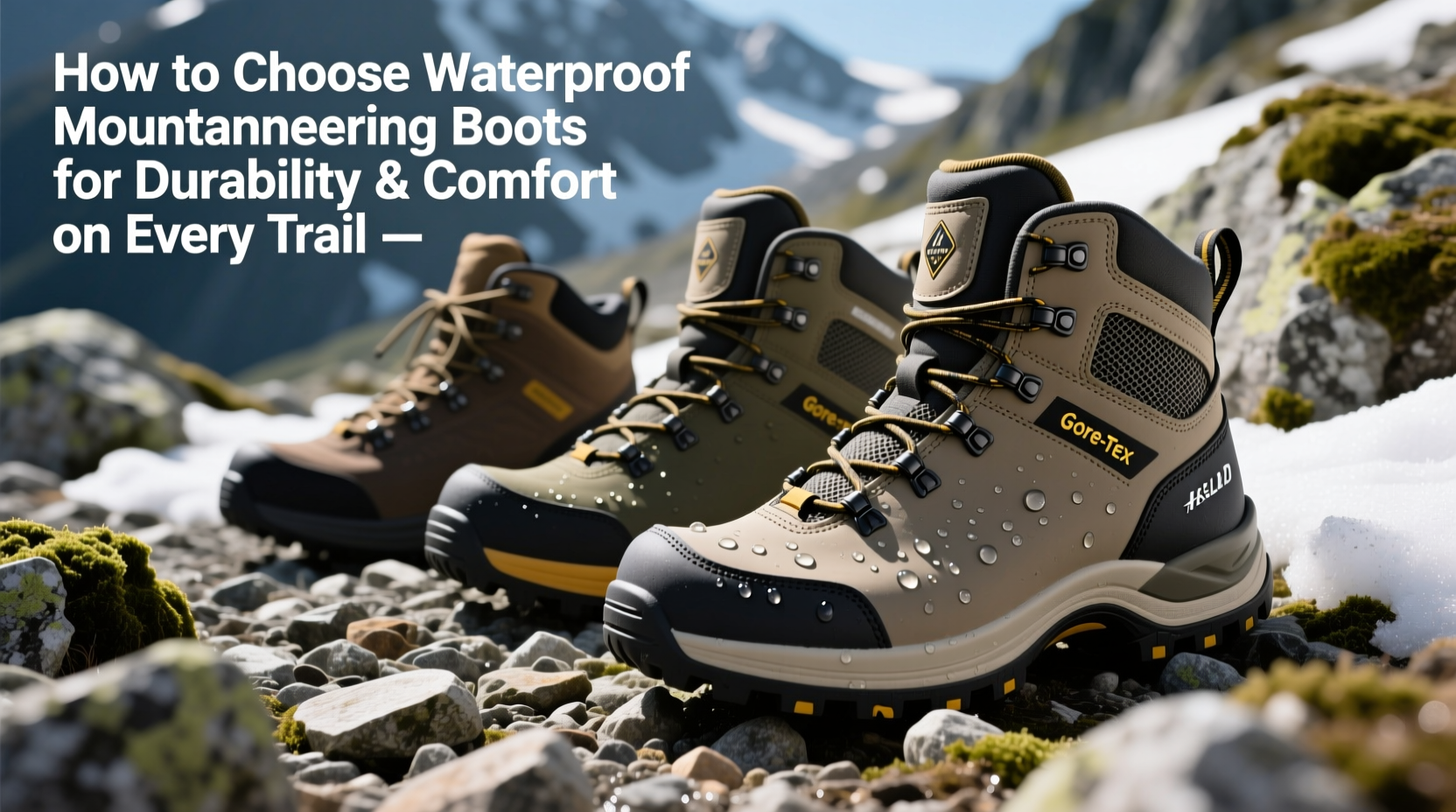
Mountaineering boots are not a one-size-fits-all solution. They fall into distinct categories based on technical demands, insulation, stiffness, and intended use. Recognizing these differences ensures you don’t overbuy or underprepare.
| Boot Type | Best For | Waterproof Rating | Rigidity (Crampon Compatibility) |
|---|---|---|---|
| Lightweight Mountaineering | Summer alpine routes, glacier travel | High (Gore-Tex or similar) | Stiff sole – semi-automatic crampons |
| Midweight / All-Purpose | Year-round climbs, mixed terrain | Very High (sealed construction) | Firm flex – automatic crampons |
| Expedition-Grade | High-altitude climbs, winter ascents | Extreme (double boot system) | Full rigidity – fully automatic crampons |
The lightweight category suits moderate objectives where agility matters. Midweight boots offer a sweet spot between mobility and protection, ideal for multi-day treks with variable snow and rock. Expedition boots, often double-walled with an insulated inner bootie, are built for Everest-style campaigns where sustained sub-zero exposure is expected. Choosing outside your typical use case leads to unnecessary weight or inadequate protection.
Key Features That Ensure Durability
Durability in mountaineering boots stems from materials, construction, and design choices that resist abrasion, delamination, and structural failure under stress.
- Upper Material: Full-grain leather or high-denier nylon with a rubber rand provides superior resistance to scree, rock contact, and UV degradation. Avoid thin synthetics unless weight is critical.
- Outsole Compound: Vibram® soles with deep, multidirectional lugs maintain grip on wet rock and compacted snow. Look for models using Idrogrip or Megagrip compounds for enhanced wet traction.
- Stitching & Bonding: Double-stitched seams and heat-welded overlays reduce weak points. Boots with minimal external stitching last longer in abrasive environments.
- Toecap & Heel Counter: Reinforced rubber toe bumpers and molded heel cups protect against impacts and extend life when kicking steps into snow or brushing rock.
A well-constructed boot should survive thousands of vertical feet without visible wear to the upper or sole separation. Brands like La Sportiva, Scarpa, and Lowa invest heavily in field-tested durability, often offering resoling services to further extend lifespan.
“Durability isn’t just about surviving a single climb—it’s about consistent performance across seasons. A boot that maintains its integrity after repeated freeze-thaw cycles earns its place in serious alpine kits.” — Arjun Patel, IFMGA-certified Mountain Guide
Prioritize Fit and Comfort Without Sacrificing Support
No amount of technology compensates for poor fit. Mountaineering boots require a precise balance: snug enough to prevent heel lift and toe slosh, yet roomy enough to accommodate swelling and thick socks at altitude.
Try boots later in the day when feet are slightly swollen. Wear the same socks you plan to use in the field—typically medium-weight merino wool blends. Walk on an incline, simulate downhill braking by lowering your heels, and check for pressure points around the ankle and metatarsals.
Fit Checklist Before Purchase
- Heel stays locked with no slippage during descents.
- Toes do not repeatedly hit the front wall when walking downhill.
- Midfoot is securely cradled without pinching.
- There’s slight wiggle room (about a thumbnail’s width) at the toe box when standing.
- Ankle collar cushions without restricting movement.
Many manufacturers offer different last shapes—Scarpa’s lasts tend to be narrower, while Salomon’s X Ultra series accommodates wider forefeet. Try multiple brands if your foot shape is non-standard. Remember: boots will mold slightly over time, but major fit issues won’t resolve with wear.
Waterproofing Technologies Compared
Not all waterproof membranes perform equally under sustained load. Understanding the differences helps avoid moisture ingress from sweat, snow immersion, or stream crossings.
- Gore-Tex Performance Comfort: Ideal for moderate climates. Offers reliable waterproofing and moderate breathability. Most common in midweight boots.
- Gore-Tex Pro: More durable membrane designed for high-abrasion use. Resists breakdown from friction inside the boot. Found in premium expedition models.
- eVent: Highly breathable alternative that allows moisture vapor to escape faster than standard Gore-Tex. Best for high-output climbers who sweat heavily.
- Double-Boot Systems: Separate inner insulated bootie and outer shell create an air gap, minimizing condensation and maximizing warmth in extreme cold.
Regardless of membrane type, seam sealing and gusseted tongues are critical. Water often enters through unsealed stitching or gaps above the tongue. Fully gusseted tongues attached directly to the inside of the boot eliminate this vulnerability.
Real-World Example: The Andes Traverse Challenge
In 2022, climber Maria Tran attempted a seven-day traverse of the Cordillera Blanca in Peru. Conditions varied from tropical humidity in the valleys to frozen couloirs above 5,800 meters. She initially considered a lighter GTX hiking boot but opted instead for a midweight leather model with a Gore-Tex Pro lining and a stiff TPU shank.
On day three, her team crossed a glacial river fed by morning melt. Water surged over the tops of her boots. Thanks to the gusseted tongue and sealed construction, her feet stayed dry. Over rocky moraines, the rubber rand protected against sharp quartzite. By the final summit push, her boots remained intact, showing only minor scuffing. “I’ve learned,” she said later, “that trusting your feet means investing in boots that handle more than just rain.”
Step-by-Step: How to Select Your Next Pair
Follow this sequence to make a confident, informed decision:
- Define your primary use: Summer alpine? Winter climbing? Long expeditions?
- Narrow down boot category: Lightweight, midweight, or expedition.
- Research models: Focus on those with proven track records in similar conditions.
- Try them on: Visit a specialty outdoor retailer with knowledgeable staff.
- Test rigorously: Simulate uphill/downhill motion, squat to check ankle clearance.
- Evaluate features: Check waterproofing, sole depth, lacing system, and compatibility with your crampons.
- Break them in: Wear them on shorter hikes with full pack weight before committing to big routes.
Frequently Asked Questions
Can I use regular hiking boots for mountaineering?
No. Standard hiking boots lack the torsional rigidity, insulation, and crampon compatibility required for technical terrain. Using them on icy slopes risks slips, sprains, or sole detachment under stress.
How long do waterproof mountaineering boots last?
With proper care, expect 3–5 years or 500–800 miles of hard use. Factors include frequency, terrain, maintenance, and resoling. Many quality boots can be resoled twice.
Do waterproof boots breathe well enough?
Modern membranes like Gore-Tex Pro and eVent offer decent breathability, but no boot eliminates internal moisture completely. Manage sweat by pacing appropriately, airing boots at breaks, and using moisture-wicking socks.
Final Thoughts
Choosing waterproof mountaineering boots is an investment in both performance and personal safety. It requires balancing technical needs with physical comfort, understanding material science, and respecting real-world conditions. Durability ensures your boots endure season after season; comfort keeps your mind focused on the climb, not your feet. There’s no universal “best” boot—only the best boot for your goals, environment, and anatomy.




 浙公网安备
33010002000092号
浙公网安备
33010002000092号 浙B2-20120091-4
Comments
No comments yet. Why don't you start the discussion?