
Cooking is a joy for many, but few things are more frustrating than lifting the lid off a pot only to find a layer of blackened, crusty residue stuck to the bottom. Whether you were simmering tomato sauce or boiling rice, burnt food can bond tightly to metal surfaces, making cleanup seem like a chore that demands elbow grease. But what if you could restore your pot to near-new condition without aggressive scrubbing? The answer lies in two common kitchen staples: baking soda and vinegar.
This natural cleaning method leverages the chemical properties of sodium bicarbonate (baking soda) and acetic acid (vinegar) to break down carbonized food particles safely and efficiently. Not only is this approach eco-friendly and cost-effective, but it also preserves the integrity of your cookware, especially non-stick or delicate surfaces that can be damaged by steel wool or abrasive pads.
Below is a detailed guide on how to use this powerful duo to dissolve burnt-on food effortlessly, along with expert-backed insights, real-life examples, and practical tips to ensure success every time.
The Science Behind Baking Soda and Vinegar Cleaning
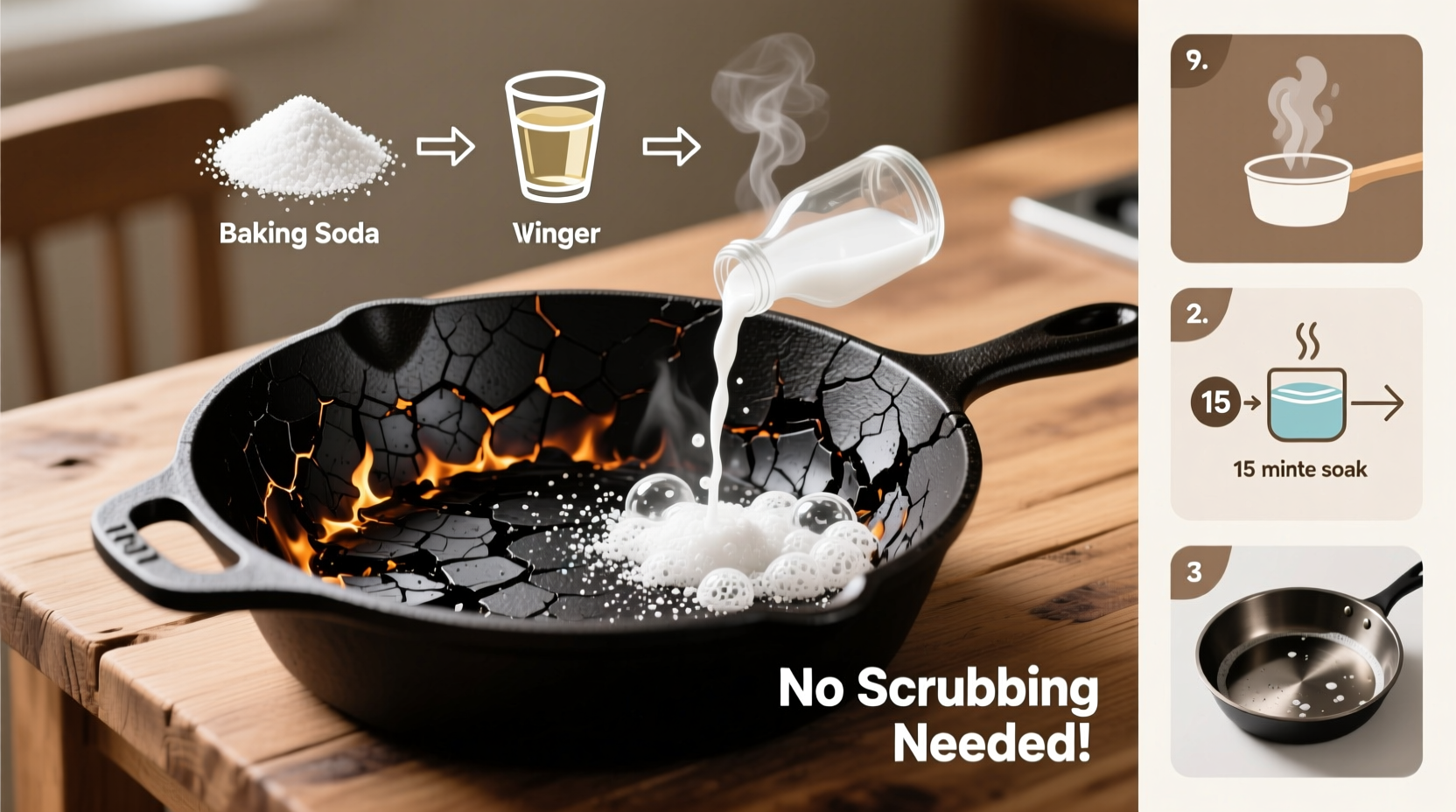
Baking soda and vinegar are often hailed as miracle cleaners, but their effectiveness isn’t magic—it’s chemistry. When combined, they produce a fizzy reaction caused by the release of carbon dioxide gas. While this visual spectacle might seem like the main event, the real cleaning power comes from their individual properties and how they work in sequence, not necessarily mixed together.
- Baking soda is a mild alkali that softens and lifts acidic residues. It acts as a gentle abrasive when damp, helping to loosen grime without scratching surfaces.
- Vinegar, an acid, dissolves mineral deposits, grease, and alkaline buildup. Its acidity helps break the molecular bonds holding burnt food to metal.
When used in tandem—first baking soda, then vinegar—the combination creates a dynamic cleaning cycle. Baking soda prepares the surface by lifting carbonized layers, while vinegar penetrates and dissolves them. This synergy makes it possible to remove stubborn burnt material without harsh scrubbing.
“Using natural agents like baking soda and vinegar allows for deep cleaning without compromising the longevity of your cookware.” — Dr. Lena Patel, Environmental Chemist and Sustainable Living Advocate
Step-by-Step Guide: Clean a Burnt Pot Without Scrubbing
Follow this proven method to restore your pot with minimal effort. The process takes under 90 minutes and requires only three ingredients: baking soda, white vinegar, and water.
- Let the pot cool completely. Never add liquids to a hot pot—thermal shock can warp metal or cause cracking, especially with ceramic-coated or cast iron cookware.
- Add 1–2 tablespoons of baking soda. Sprinkle evenly over the burnt areas. For larger pots or severe burns, increase to 3 tablespoons.
- Pour in enough water to cover the residue. Fill the pot so the liquid rises at least half an inch above the burnt layer.
- Bring to a gentle boil. Heat on medium for 5–10 minutes. The hot water activates the baking soda, softening the carbonized food.
- Remove from heat and add ½ cup white vinegar. The mixture will fizz immediately. Let it sit for 15–30 minutes. Do not stir or scrub.
- Drain and inspect. Most burnt residue should lift away easily. If traces remain, repeat the vinegar soak for another 15 minutes.
- Rinse thoroughly with warm water. Use a soft sponge only if needed—most debris will slide off.
- Dry completely. Prevent water spots or rust by towel-drying immediately.
Do’s and Don’ts: Best Practices for Natural Pot Cleaning
To maximize effectiveness and protect your cookware, follow these guidelines.
| Do’s | Don’ts |
|---|---|
| Use distilled white vinegar (5% acidity) for consistent results. | Avoid apple cider or wine vinegar—they contain pigments that may stain. |
| Allow adequate soaking time—longer exposure improves results. | Never mix vinegar with bleach or ammonia-based cleaners. |
| Test on a small area first if using on coated or vintage cookware. | Don’t use metal scrapers or steel wool after treatment—they defeat the purpose of a no-scrub method. |
| Store baking soda in a dry place to maintain reactivity. | Don’t pour boiling vinegar directly into cold glass or ceramic pots—risk of cracking. |
| Wear gloves if you have sensitive skin—vinegar can be drying. | Avoid leaving the solution in aluminum pots longer than 30 minutes—acid can corrode soft metals. |
Real Example: Reviving a Decade-Old Dutch Oven
Sarah M., a home cook from Portland, Oregon, inherited her grandmother’s enameled cast iron Dutch oven. After using it to reduce a balsamic glaze, she returned to find the bottom encrusted with a thick, jet-black layer. “I thought I’d ruined a family heirloom,” she recalls. “I tried soaking it overnight in dish soap, but nothing budged.”
She followed the baking soda and vinegar method: added 3 tablespoons of baking soda, filled the pot with water, brought it to a boil, then poured in ½ cup vinegar and let it sit for 45 minutes. “The burnt stuff started peeling up like bark,” she says. “I didn’t touch a scrubber. Just rinsed it with a sponge and warm water. It looked almost new.”
This case illustrates how even decades-old cookware can be restored with patience and the right technique. The key was avoiding abrasives that could chip the enamel—a risk Sarah was keen to avoid.
Tips for Different Types of Cookware
Not all pots react the same way to natural cleaners. Adjust your approach based on material.
- Stainless Steel: Highly resistant. Safe for prolonged vinegar soaks. Baking soda enhances shine after cleaning.
- Non-Stick Coatings: Use low heat and avoid boiling too vigorously. Never use metal tools afterward—soft sponges only.
- Cast Iron: Avoid vinegar soaks longer than 30 minutes. After cleaning, re-season the pan with oil to maintain its protective layer.
- Aluminum: Reacts quickly with acids. Limit vinegar exposure to 15–20 minutes to prevent pitting or discoloration.
- Ceramic-Coated Pots: Gentle method ideal for preserving coating integrity. Do not use high heat during boiling phase.
Frequently Asked Questions
Can I use baking powder instead of baking soda?
No. Baking powder contains baking soda, but also includes cornstarch and acidifying agents. It lacks the concentrated alkalinity needed to effectively lift burnt residue. Stick to pure sodium bicarbonate (baking soda).
Is it safe to mix baking soda and vinegar in a sealed container?
No. The reaction produces carbon dioxide gas, which can build pressure and cause containers to burst. Always perform this cleaning in an open pot or bowl, never in a closed system.
What if the burnt layer doesn’t come off after the first attempt?
Repeat the process. Some heavily carbonized layers require multiple treatments. Alternatively, extend the soak time to several hours or overnight. Patience yields better results than force.
Checklist: No-Scrub Burnt Pot Rescue
Keep this checklist handy for quick reference next time disaster strikes in the kitchen:
- ✅ Cool the pot completely before starting
- ✅ Add 1–3 tbsp baking soda to the base
- ✅ Pour in enough water to cover burnt areas
- ✅ Boil gently for 5–10 minutes
- ✅ Remove from heat and add ½ cup white vinegar
- ✅ Let sit for 15–60 minutes (longer for tough burns)
- ✅ Drain and rinse with warm water
- ✅ Inspect results—repeat if necessary
- ✅ Dry thoroughly to prevent moisture damage
“The best kitchen hacks are the ones that turn a stressful cleanup into a quiet, almost meditative process. This method does exactly that.” — Mark Tran, Culinary Instructor and Author of *Effortless Home Cooking*
Conclusion: A Simpler Way to Care for Your Cookware
Cleaning a burnt pot doesn’t have to mean sore hands, scratched surfaces, or toxic fumes from chemical cleaners. With baking soda and vinegar—two items likely already in your pantry—you can dissolve even the most stubborn residue using nothing but science and patience. This method respects both your cookware and your time, offering a sustainable alternative to abrasive scrubbing or single-use cleaning products.
By understanding how these common ingredients interact and applying them in the right sequence, you gain more than a clean pot—you gain confidence in handling kitchen mishaps gracefully. Whether you’re reviving a beloved Dutch oven or rescuing a weeknight dinner disaster, this technique proves that sometimes, the simplest solutions are the most powerful.




 浙公网安备
33010002000092号
浙公网安备
33010002000092号 浙B2-20120091-4
Comments
No comments yet. Why don't you start the discussion?