
Cleaning a cast iron skillet properly is one of the most important skills for anyone who owns one. A well-maintained cast iron pan can last generations, developing a natural non-stick surface over time through repeated seasoning. However, many beginners make the mistake of scrubbing too hard or using soap, which can damage or strip away that precious layer. The good news? You can clean your skillet effectively—removing food residue and grease—without harming the seasoning. This guide walks you through safe, proven methods that preserve your pan’s integrity while keeping it hygienic and ready for its next use.
Why Preserving Seasoning Matters
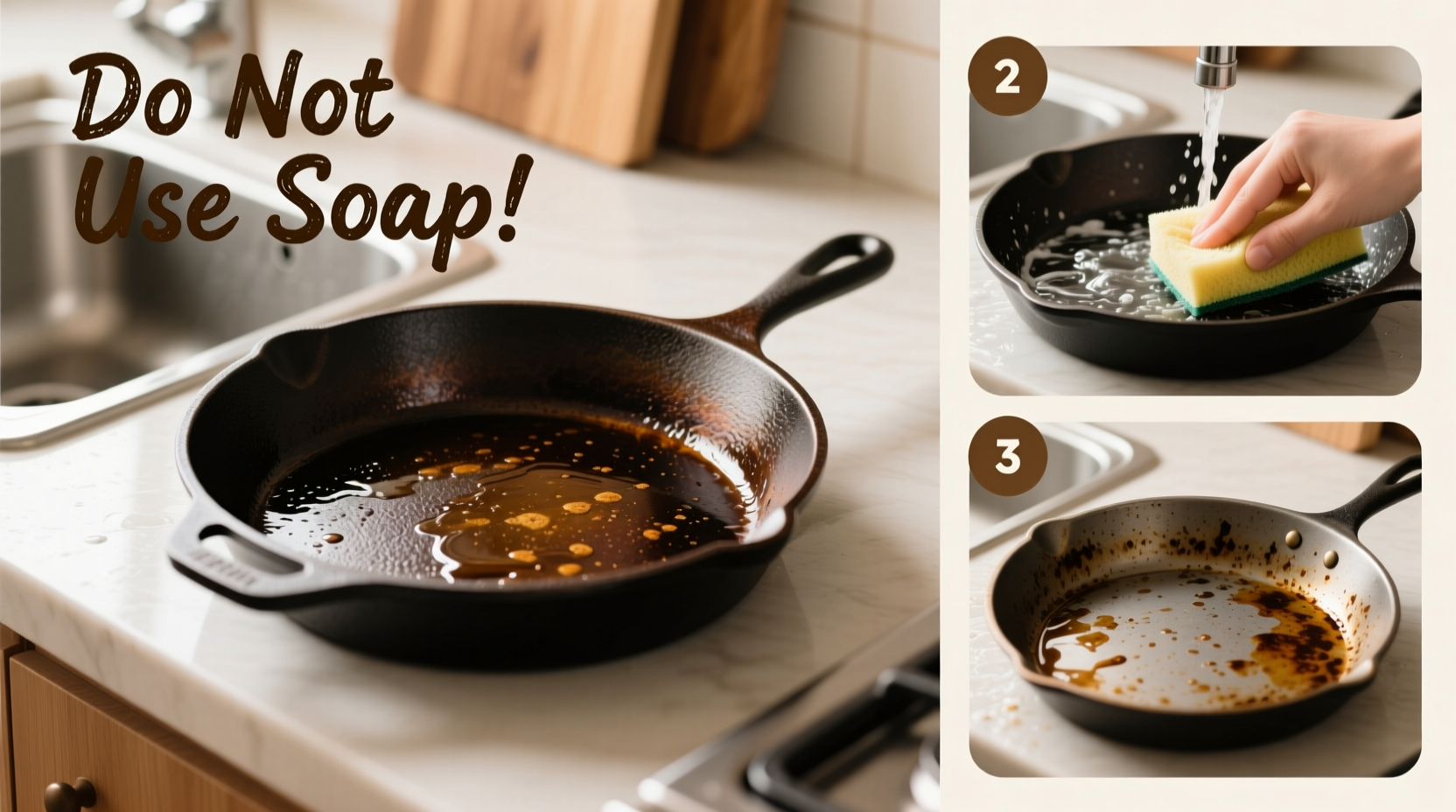
The magic of a seasoned cast iron skillet lies in the polymerized oil layer bonded to the metal. This layer forms through repeated heating of oils, creating a slick, rust-resistant surface that improves with use. Stripping this seasoning means starting over: re-seasoning takes time, effort, and multiple rounds of baking oil into the metal. Worse, an unseasoned skillet will stick, rust easily, and lose its non-stick advantages.
Many people believe that soap should never touch cast iron. While traditional wisdom warned against it, modern dish soaps are mild and won’t harm a well-established seasoning if used sparingly. The real danger isn’t soap—it’s aggressive scrubbing, soaking, or using abrasive tools like steel wool. These actions mechanically remove layers of seasoning rather than just cleaning the surface.
“Seasoning isn’t something you apply once and forget. It’s a living finish that builds up with every proper cook and clean.” — Daniel Gritzer, Culinary Lead at Serious Eats
Step-by-Step Guide to Safe Cleaning
Cleaning your cast iron after cooking doesn’t have to be complicated. Follow these steps to maintain your skillet’s performance without damaging the seasoning:
- Let the pan cool slightly. Wait until it's warm but not scalding hot. Going from searing heat to cold water can warp the iron or cause cracking.
- Scrape off excess food. Use a flat-edged wooden spatula, silicone scraper, or chainmail scrubber to remove large bits while the pan is still warm.
- Add warm water and scrub gently. Rinse under warm running water. Use a soft sponge, nylon brush, or non-abrasive scrub pad. For stuck-on bits, sprinkle coarse salt or baking soda as a gentle abrasive.
- Optional: Use a drop of mild dish soap. One small drop on a soft sponge is acceptable for greasy residues. Avoid soaking or prolonged exposure.
- Rinse thoroughly. Ensure no food particles or soap remain.
- Dry immediately and completely. Wipe with a lint-free towel, then place the skillet over low heat on the stove for 3–5 minutes to evaporate any remaining moisture.
- Apply a thin oil coat. While still warm, rub a few drops of high-smoke-point oil (like flaxseed, canola, or vegetable oil) onto the surface with a paper towel. Buff lightly to avoid pooling.
- Store in a dry place. Keep uncovered or with a paper towel inside to prevent moisture buildup.
What Not to Do: Common Mistakes That Strip Seasoning
Avoiding damage is just as important as knowing the right way to clean. Here are the top mistakes beginners make—and how to steer clear of them:
| Mistake | Why It’s Harmful | Better Alternative |
|---|---|---|
| Soaking the skillet in water | Water penetrates microscopic pores in the metal, leading to rust and weakening the seasoning bond. | Rinse quickly and dry immediately. |
| Using steel wool or metal scrubbers | These abrasives scrape off the carbonized oil layer, exposing bare iron. | Use a nylon brush, soft sponge, or dedicated cast iron chainmail scrubber. |
| Leaving food residue overnight | Stuck-on food becomes harder to remove, tempting aggressive cleaning later. | Clean soon after cooking while the pan is still warm. |
| Applying too much oil during maintenance | Excess oil turns sticky or gummy instead of polymerizing properly. | Use only a few drops and buff until no visible oil remains. |
| Storing while damp | Even a little moisture leads to rust spots, especially in humid environments. | Always heat-dry the pan before storing. |
Real Example: Sarah’s Skillet Rescue
Sarah, a home cook in Portland, inherited her grandmother’s 1950s cast iron skillet. Excited to use it, she roasted chicken thighs and loved the results—until cleanup. She soaked the pan overnight “to loosen the grease,” then scrubbed vigorously with steel wool when the food didn’t budge. The next day, she noticed patches of dull gray and orange speckles—rust. Panicked, she nearly threw it out.
Instead, she researched and learned she hadn’t ruined it permanently. She re-seasoned the skillet by scrubbing off rust with vinegar, drying it completely, and baking three thin layers of flaxseed oil at 450°F. Within a week, the pan was back to near-original condition. Now, she cleans it within minutes of cooking using only salt and a sponge, dries it on the stove, and applies a whisper-thin oil coat. Her skillet performs better than ever—and she credits the mishap for teaching her how to truly care for it.
When and How to Deep Clean Safely
Sometimes, regular cleaning isn’t enough. Burnt-on residue, old grease buildup, or sticky film may require a deeper clean. The key is doing it without destroying the entire seasoning layer.
For moderate buildup:
- Fill the skillet with a mix of equal parts water and white vinegar. Let sit for 30–60 minutes (no longer).
- Scrub gently with a non-abrasive pad.
- Rinse, dry thoroughly, and re-oil.
For stubborn residue:
- Simmer a mixture of water and baking soda in the skillet for 5–10 minutes to loosen debris.
- Use a wooden spoon or plastic scraper to lift off gunk.
- Rinse and dry immediately.
In extreme cases—like decades-old neglect or heavy carbon deposits—some opt for oven cleaner or electrolysis. But for beginners, these methods are overkill and risky. Stick to mechanical removal (scrubbing), mild acids (vinegar), and heat-based loosening (simmering). After any deep clean, always re-season the pan with at least one round of high-heat oil baking.
Essential Care Checklist
Keep this checklist handy for post-cooking maintenance:
- ✅ Cool the skillet slightly before cleaning
- ✅ Scrape off excess food while warm
- ✅ Rinse with warm water only (or add a drop of soap if needed)
- ✅ Use a soft sponge or nylon brush—never steel wool
- ✅ Dry immediately with a towel
- ✅ Heat-dry on the stove for 3–5 minutes
- ✅ Apply a thin layer of oil while warm
- ✅ Store in a dry location with airflow
- ✅ Re-season every few months or if food starts sticking
Frequently Asked Questions
Can I use soap on my cast iron skillet?
Yes, modern dish soaps are mild and won’t strip a well-bonded seasoning if used sparingly. One drop on a soft sponge is fine for greasy pans. Avoid soaking or scrubbing aggressively with soap, as the combination of friction and detergent increases the risk of damage.
My skillet looks cloudy after washing. Did I ruin the seasoning?
Not necessarily. A cloudy appearance often comes from residual moisture or a thin layer of un-polymerized oil. Make sure the pan is fully heat-dried after washing. If cloudiness persists, wipe it down with a clean cloth and apply a fresh, thin oil layer followed by 15 minutes at 350°F in the oven.
How often should I re-season my cast iron?
There’s no fixed schedule. Re-season when you notice food sticking more than usual, the surface feels rough, or you see dull or patchy areas. Most home cooks benefit from re-seasoning 2–4 times per year. Regular use of oily foods (like frying bacon or sautéing in oil) naturally reinforces the seasoning between formal treatments.
Final Thoughts: Treat Your Skillet Like a Trusted Tool
Your cast iron skillet isn’t fragile—but it does demand respect. It responds best to consistent, thoughtful care rather than perfection. You don’t need to fear soap or water; you just need to understand how they interact with the seasoned surface. By cleaning promptly, drying thoroughly, and maintaining a light oil coating, you’ll keep your skillet performing beautifully for years.
Every scratch, every meal cooked, and every careful wipe adds to the story of your pan. With the right habits, you’re not just cleaning a piece of cookware—you’re nurturing a kitchen heirloom.




 浙公网安备
33010002000092号
浙公网安备
33010002000092号 浙B2-20120091-4
Comments
No comments yet. Why don't you start the discussion?