
Dusty artificial pine branches are a common problem for seasonal decor, especially in holiday wreaths, garlands, and centerpieces. Over time, fine particles settle into the delicate flocking and textured needles, dulling their appearance and diminishing visual impact. Many people hesitate to clean them, fearing that even light handling could ruin the realistic finish. However, with the right approach, it’s entirely possible—and highly recommended—to remove dust safely while preserving both the flocking and structural integrity of the branches.
Flocking, the soft white coating that mimics snow or frost on pine needles, is particularly fragile. It's often made from finely ground cellulose, cotton, or synthetic fibers adhered with a light adhesive. Moisture, friction, and aggressive cleaning tools can cause it to flake off, leaving bare patches and an uneven look. The plastic or PVC needles themselves may also become brittle over time, especially if stored improperly. Cleaning must therefore be gentle, deliberate, and methodical.
This guide provides a comprehensive approach to restoring the freshness of artificial pine branches without compromising their appearance. From preparation and dust removal techniques to drying and storage, every step is designed to protect the delicate materials while delivering visible results.
Understanding Artificial Pine Branch Construction
Before attempting any cleaning, it’s important to understand what you’re working with. Most artificial pine branches used in home decor consist of three main components:
- Stem and wire frame: Provides structure and allows for bending and shaping.
- Needles: Typically made from PVC, PE (polyethylene), or a blend; designed to mimic the look and feel of real pine.
- Flocking: A thin, powdery coating applied to simulate snow or frost, often in white but sometimes in gray or blue tints.
The flocking is not paint—it’s a loose particulate bonded lightly to the surface. This makes it vulnerable to moisture, pressure, and static buildup. High humidity can cause clumping, while dry conditions increase brittleness. Cleaning methods that involve water, rubbing, or strong airflow can permanently damage this layer.
Additionally, some branches feature added glitter, scents, or UV coatings for enhanced realism. These elements further restrict the range of acceptable cleaning techniques.
“Flocking on artificial greens is meant to last through multiple seasons, but only if treated like archival material—minimal contact, no moisture, and controlled environments.” — Lila Tran, Seasonal Decor Conservator
Step-by-Step Guide: Safe Dust Removal Process
Cleaning dusty artificial pine branches requires patience and precision. Follow this sequence to minimize risk and maximize effectiveness.
- Prepare your workspace: Choose a large, well-ventilated area—preferably outdoors or in a garage. Lay down a drop cloth or old sheet to catch falling debris. Wear gloves to prevent oils from your skin transferring to the flocking.
- Inspect each branch: Examine for loose flocking, cracked needles, or weak stems. Mark any fragile areas with a small tag or mental note to avoid during cleaning.
- Remove loose debris: Gently shake each branch upside down to dislodge larger particles. Do this over a trash can or outside to prevent redistribution.
- Use compressed air (with caution): Hold a can of electronics-grade compressed air upright and spray in short bursts from a distance of at least 10–12 inches. Angle the nozzle to blow dust off rather than into the branch. Avoid tilting the can, as this can release cold liquid propellant, which may dissolve adhesives.
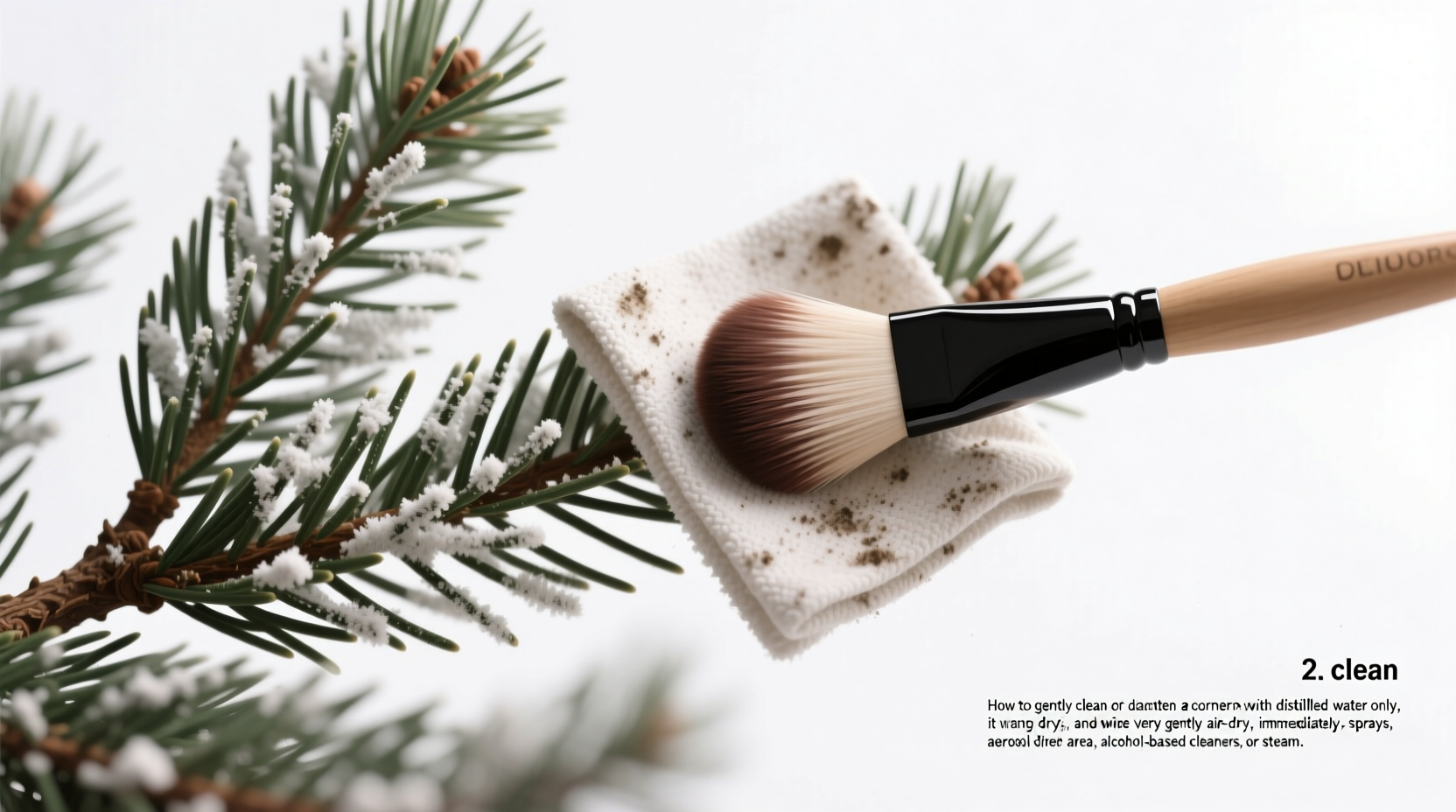
- Employ a soft brush: Use a clean makeup brush, artist’s brush, or soft-bristled clothes brush. Gently flick the bristles from the base of the branch toward the tip in one-directional strokes. Never scrub back and forth.
- Utilize a vacuum with a brush attachment: Set the vacuum to low suction. Cover the nozzle with a nylon stocking or mesh screen to reduce airflow intensity. Lightly glide the attachment over the surface without direct contact.
- Let branches rest: After cleaning, allow them to sit undisturbed for several hours to ensure all loosened particles have settled or been removed.
Do’s and Don’ts: Best Practices Summary
To reinforce proper technique, here is a clear comparison of recommended versus harmful actions.
| Do | Don’t |
|---|---|
| Use a soft brush with light, sweeping motions | Scrub or press hard on the branches |
| Clean in a dry, warm environment (60–75°F) | Clean in humid or damp rooms |
| Test methods on a small, inconspicuous area first | Assume all artificial greens react the same way |
| Store cleaned branches in breathable bags | Wrap in plastic, which traps moisture |
| Use low-suction vacuum with protective mesh | Press vacuum nozzle directly onto flocking |
Mini Case Study: Preserving a Heirloom Wreath
Sarah M., a homeowner in Vermont, inherited a large artificial pine wreath from her grandmother. The wreath had been stored in an attic trunk wrapped in plastic for over a decade. When she unpacked it before the holidays, she found it covered in thick dust, with visible yellowing and clumped flocking.
Instead of discarding it, Sarah followed a careful cleaning protocol: she began by shaking the wreath gently outside, then used a soft boar-bristle brush to lift surface dust. She avoided water entirely and skipped compressed air due to concerns about propellant residue. After two sessions spaced a week apart, the wreath regained much of its original brightness. She now stores it in a cotton garment bag inside a sealed bin with silica gel packs. Three years later, it still looks festive with minimal annual maintenance.
This example underscores that even heavily soiled pieces can be revived—without chemicals or moisture—if handled with care and consistency.
Alternative Methods: When Standard Techniques Aren’t Enough
In cases where dust has bonded due to humidity or long-term neglect, standard dry methods may not suffice. However, introducing moisture remains risky. One carefully tested alternative involves static control:
Static electricity attracts and holds dust on synthetic materials. Using an anti-static spray designed for electronics or fabrics can reduce this effect. Spray lightly onto a microfiber cloth—not directly onto the branch—and gently wipe along the length of the stems. Choose a product free of alcohol, silicone, and oils.
Another option is a handheld fabric steamer used at a safe distance (at least 18 inches). The brief exposure to warm vapor can loosen particles without saturating the flocking. Pass the steamer slowly across the branch, never pausing in one spot. Immediately follow with a soft brush to remove dislodged dust.
Checklist: Preparing Artificial Pine Branches for Storage and Future Use
Proper storage prevents future dust buildup and extends the life of your decor. Use this checklist annually:
- ☑ Clean branches thoroughly before storing
- ☑ Allow them to air-dry completely (even after dry cleaning)
- ☑ Shape branches to fit storage containers without crushing
- ☑ Wrap in breathable fabric (cotton sheets, pillowcases, or specialty tree bags)
- ☑ Place in rigid plastic bins with tight lids to block dust
- ☑ Add desiccant packs to control humidity
- ☑ Store in a cool, dry place away from sunlight and pests
- ☑ Label containers clearly for easy identification
Avoid cardboard boxes, which attract insects and absorb moisture. Also avoid vacuum-sealed bags—while they save space, the compression can deform needles and crush flocking over time.
Frequently Asked Questions
Can I wash artificial pine branches with water?
No, washing with water is strongly discouraged. Water dissolves the adhesive used in flocking and can cause irreversible clumping or peeling. Even damp cloths pose a risk if pressed too firmly. Stick to dry cleaning methods only.
Is it safe to use a hairdryer to blow off dust?
Not recommended. Most hairdryers produce high-velocity airflow and heat, both of which can dislodge flocking and warp plastic needles. If you must use forced air, opt for a cooler setting on a professional duster or electronics compressor, and maintain a safe distance.
How often should I clean artificial pine branches?
Once per year, ideally just before or after the display season. If stored properly, annual cleaning is sufficient. In high-dust environments, a quick dust-off mid-season may help maintain appearance.
Conclusion: Maintain Beauty Without Compromise
Cleaning dusty artificial pine branches doesn’t require special products or complicated tools—just attention to detail and respect for the materials. By avoiding moisture, minimizing contact, and using gentle, targeted techniques, you can keep your decor looking fresh and lifelike for many seasons.
The key is prevention as much as restoration. Proper storage, regular inspection, and cautious handling form the foundation of long-term preservation. With these practices, even decades-old pieces can remain centerpiece-worthy, carrying both aesthetic value and sentimental meaning.




 浙公网安备
33010002000092号
浙公网安备
33010002000092号 浙B2-20120091-4
Comments
No comments yet. Why don't you start the discussion?