
Artificial pine branches are a staple in seasonal décor, offering year-round greenery with minimal maintenance. But over time, they collect dust, pet dander, and allergens—especially after storage. The challenge? Cleaning them thoroughly without releasing microplastics into your home or the environment. Most synthetic foliage is made from PVC, PE, or polyester, materials that degrade slightly with friction, heat, or improper cleaning. When disturbed, these materials can shed microscopic plastic fibers, which become airborne or settle in household dust.
Cleaning artificial pine branches isn’t just about aesthetics—it’s about indoor air quality and environmental responsibility. With the right tools and techniques, you can restore their freshness while minimizing microplastic dispersion. This guide walks through proven, low-impact cleaning strategies backed by material science and sustainable home practices.
Why Microplastic Shedding Matters
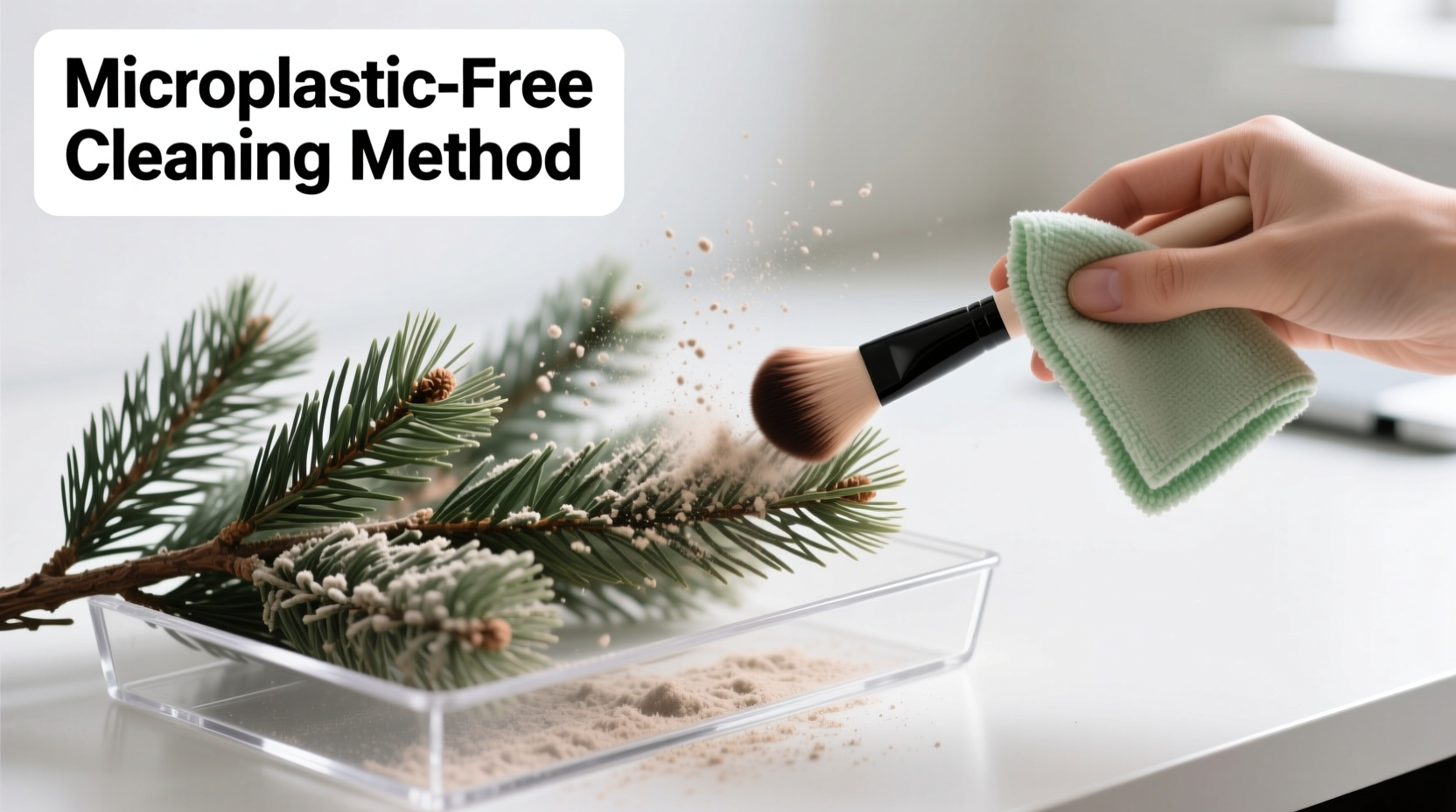
Microplastics—tiny plastic particles less than 5mm in size—are now recognized as pervasive pollutants. They’ve been found in human lungs, blood, and even placental tissue. While one cleaning session won’t cause harm, repeated exposure from routine tasks like dusting synthetic décor contributes to cumulative contamination. Artificial trees and branches, often used for years, undergo multiple cleanings, each potentially releasing new particles.
The risk increases when using high-pressure tools (like compressed air dusters) or abrasive cloths. Heat from hair dryers can soften plastic filaments, making them more prone to fragmentation. Even vigorous shaking indoors disperses microplastics into the air, where they’re inhaled or later washed into water systems.
“Every time we disturb synthetic materials without containment, we contribute to indoor microplastic pollution. Simple changes in cleaning habits can significantly reduce this.” — Dr. Lena Park, Environmental Health Researcher at the Institute for Sustainable Living
A Step-by-Step Guide to Low-Shed Cleaning
Cleaning artificial pine branches safely requires a methodical approach: containment first, gentle action second, and proper drying third. Follow this timeline for best results:
- Prepare an outdoor or contained workspace – Choose a garage, balcony, or backyard. Lay down a large cotton sheet or tarp to catch falling debris. Avoid windy days to prevent airborne spread.
- Shake gently outdoors – Hold the branch at the base and shake it upside-down in short bursts. Do not whip or snap it—this increases fiber breakage.
- Dust with a soft brush or vacuum attachment – Use a natural-bristle clothes brush or a vacuum with a soft upholstery nozzle. Work from the trunk outward, following the grain of the needles to avoid pulling.
- Spot-clean stained areas – Dip a microfiber cloth in distilled water or a mild vinegar solution (1 part white vinegar to 4 parts water). Wipe lightly; do not saturate.
- Air-dry completely before storing – Hang branches loosely on a clothesline or lay flat on a clean towel. Never use heat sources to speed drying.
Tools and Materials That Minimize Damage
Not all cleaning tools are created equal. Some increase friction or abrasion, accelerating microplastic release. The table below compares common tools and their safety profiles:
| Tool | Risk Level | Why |
|---|---|---|
| Natural bristle clothes brush | Low | Soft bristles lift dust without scraping plastic |
| Vacuum with soft brush attachment | Low-Moderate | Suction removes particles; avoid pressing hard |
| Compressed air duster | High | High-velocity air fractures brittle plastic tips |
| Hair dryer (on any setting) | High | Heat weakens polymer bonds; fans disperse particles |
| Damp microfiber cloth | Low | Light moisture traps dust; wring well to avoid saturation |
| Dry paper towel | Moderate | Abrasive texture can pull loose fibers |
Select tools that prioritize contact gentleness and particle capture. A handheld vacuum with HEPA filtration is ideal—it traps microplastics instead of recirculating them.
A Real Example: Cleaning a Five-Year-Old Pine Garland
Sophie, a sustainability consultant in Portland, noticed her holiday garland looked dull after years in a basement bin. Instead of wiping it down indoors, she took it to her covered patio. She laid out an old bedsheet and used a vintage clothes brush to gently sweep each section. After brushing, she wiped particularly dusty clusters with a barely damp cloth. The entire process took 20 minutes. She collected visible dust and tiny plastic fragments on the sheet, which she folded inward and disposed of in the trash—never compost or recycling. The garland looked revitalized, and Sophie avoided tracking microplastics into her living space.
Her key insight: “I used to shake everything outside my back door. Now I realize that even that releases particles into the yard. Containment makes all the difference.”
Do’s and Don’ts for Long-Term Care
Maintaining artificial pine branches starts long before cleaning. How you store and handle them determines how much dust accumulates and how fragile they become. Refer to this checklist before your next cleaning session:
- ✅ Clean outdoors or in a contained area (garage with closed doors)
- ✅ Cover the floor with a washable cloth or tarp
- ✅ Use only soft, non-abrasive tools (natural brush, microfiber)
- ✅ Test cleaning method on one small branch first
- ✅ Wear a mask if sensitive to dust or allergens
- ❌ Never use compressed air, hair dryers, or bleach-based cleaners
- ❌ Avoid soaking or rinsing under running water
- ❌ Don’t store in plastic bags or humid environments
When and How Often to Clean
Frequency depends on storage conditions and household environment. Branches kept in attics or basements may need cleaning twice a year—once before display, once after storage. Those in climate-controlled closets with minimal dust may only need attention every 18–24 months.
Signs it’s time to clean:
- Visible dust or grime on needle surfaces
- Dull appearance despite lighting
- Allergy symptoms flare up near décor
- Static cling attracting lint or pet hair
Regular light maintenance extends the interval between deep cleanings. Gently brush stored branches once per season to prevent compacted dust layers.
Eco-Friendly Alternatives and Upgrades
If you're replacing old artificial branches, consider newer options designed for durability and lower environmental impact. Some manufacturers now use recycled PET (rPET) with UV stabilizers to reduce brittleness. Others offer modular designs where only soiled sections are cleaned or replaced.
Alternatively, explore preserved (not artificial) greenery. These are real plants treated with glycerin and natural preservatives, retaining flexibility and color for years. While not indestructible, they don’t shed microplastics and are biodegradable at end-of-life.
“Consumers have power through choice. Opting for longer-lasting, responsibly made décor reduces both waste and invisible pollution.” — Mark Tran, Sustainable Product Designer
FAQ
Can I wash artificial pine branches in the sink or shower?
No. Submerging or rinsing synthetic branches risks loosening glued joints and increasing microplastic runoff into drains. Water also promotes mold if not dried completely. Stick to dry or minimally damp methods.
Are there microplastic-free artificial trees?
Not yet widely available. Most \"eco-friendly\" artificial trees still use plastic—though some brands highlight reduced PVC or recyclable packaging. True microplastic-free alternatives remain in development, but preserved botanicals are a viable interim option.
What should I do with the dust and debris after cleaning?
Collect all residue in a sealed container or double-wrapped bag and dispose of it in the general waste. Do not compost or flush, as microplastics can enter soil or waterways. Wash your cleaning cloth or brush separately afterward.
Conclusion: Clean Smarter, Not Harder
Caring for artificial pine branches doesn’t have to come at the cost of your health or the planet’s. By shifting from reactive, aggressive cleaning to proactive, contained maintenance, you preserve both the appearance of your décor and the quality of your indoor environment. The goal isn’t perfection—it’s reduction. Every microfiber caught, every particle contained, is a step toward cleaner homes and cleaner ecosystems.
Start with one branch. Apply gentle tools, work outdoors, and notice the difference. Over time, these habits become second nature. Share what you learn with others who decorate with synthetics—because sustainable beauty shouldn’t be hidden behind dust or compromise.




 浙公网安备
33010002000092号
浙公网安备
33010002000092号 浙B2-20120091-4
Comments
No comments yet. Why don't you start the discussion?