
Dusty artificial pine garlands, wreaths, and trees are a common sight after seasonal storage. While these decorations offer lasting charm, their delicate flocking—designed to mimic snow—and fine needle textures are vulnerable to improper cleaning. Many well-intentioned attempts at dust removal end in flaking flocking, matted tips, or faded color. The key is using gentle, targeted techniques that lift dust without agitation or moisture exposure. With the right tools and approach, you can restore your artificial evergreens to their original lifelike appearance while preserving structural integrity for years to come.
Understanding Artificial Pine Needle Construction
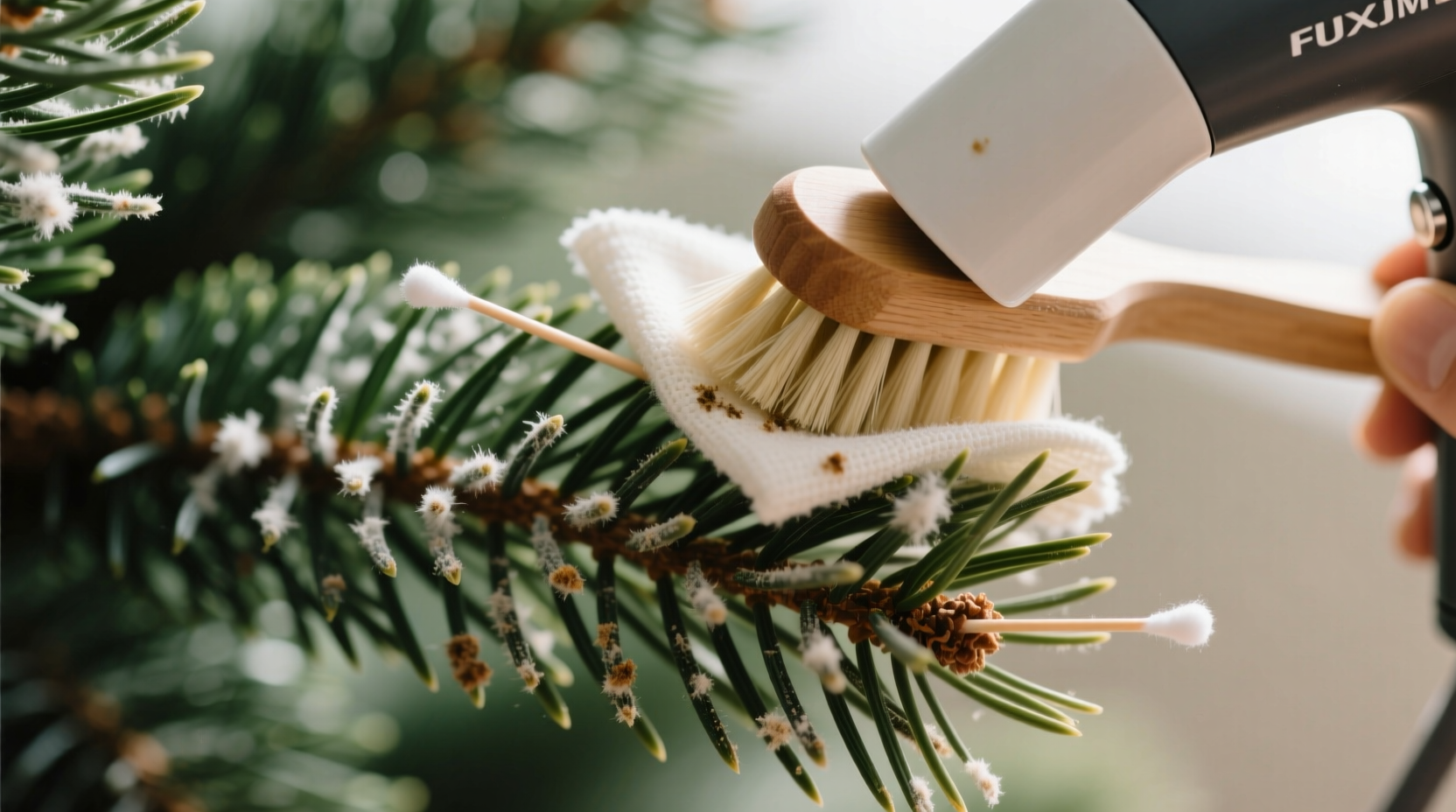
Artificial pine needles are typically made from PVC, PE (polyethylene), or a blend, molded to replicate natural foliage. Flocking—a fine coating of adhesive-bound fibers such as rayon or cellulose—is applied to simulate snowfall on branches. This layer adheres weakly compared to the base material, making it highly susceptible to friction, moisture, and chemical exposure.
The texture of the needles themselves contributes to realism but also traps dust deep within clusters. Unlike flat surfaces, densely packed tips create micro-environments where particulates accumulate over time. Standard dusting tools like feather dusters or cloths often fail to reach inside these clusters and instead grind debris into the flocking, accelerating wear.
Maintaining these materials requires understanding their limitations. Water-based cleaning is generally off-limits, especially for flocking. Humidity can weaken adhesive bonds, leading to peeling. Similarly, abrasive wiping or compressed air at high pressure may strip fibers or bend flexible needle tips permanently.
“Flocked artificial greens are meant to look realistic, not withstand real-world weather. Their care must be equally specialized.” — Lydia Monroe, Seasonal Decor Conservationist, New England Holiday Preservation Society
Step-by-Step Guide: Safe Dust Removal Process
Cleaning artificial pine needles demands patience and precision. Follow this methodical process to remove dust effectively while protecting flocking and texture.
- Preparation: Set Up an Outdoor or Well-Ventilated Area
Choose a covered outdoor space like a porch or garage. Lay down a drop cloth or large sheet to catch dislodged dust and loose flocking particles. Avoid carpeted or enclosed indoor areas to prevent airborne dust from spreading indoors. - Initial Shake-Out
Gently shake each section of the garland, wreath, or tree limb by hand. Hold one end and use short, firm flicks to loosen surface dust. Do not snap or whip the piece—excessive force can detach flocking or bend wire cores inside stems. - Use a Soft-Bristle Brush
Select a makeup brush, paintbrush (natural or synthetic bristles), or soft-bristle clothes brush. Work in the direction of the needles—from base to tip—to avoid fraying. Lightly sweep across clustered areas, focusing on shadow zones where dust collects. Rotate the piece frequently to access all angles. - Apply Low-Pressure Air
Use a can of compressed air (electronics grade) held at least 10 inches from the surface. Use short bursts in a sweeping motion. Never hold the nozzle close or spray continuously, as cold propellant can freeze and crack flocking. Alternatively, use a hairdryer on its coolest setting with no heat, maintaining distance. - Spot-Clean Stubborn Areas (If Necessary)
For greasy spots or sticky residue, lightly dampen a cotton swab with distilled water. Touch only the affected area—do not saturate. Blot immediately with a dry microfiber cloth. Never rub. - Final Inspection and Rest
Allow the piece to sit undisturbed for 15 minutes. Inspect under natural light for missed spots or damage. If satisfied, proceed to storage preparation.
Do’s and Don’ts: Best Practices Summary
| Do | Don’t |
|---|---|
| Do use soft brushes and low-pressure air | Don’t use vacuum cleaners with motorized heads |
| Do work in sections from top to bottom | Don’t submerge or rinse with water |
| Do store cleaned items in breathable bags | Don’t expose to direct sunlight during cleaning |
| Do inspect flocking regularly for lifting | Don’t use household cleaners or alcohol wipes |
| Do label and date stored pieces | Don’t stack heavy objects on stored greenery |
Real Example: Preserving a Heirloom Flocked Wreath
Sarah K., a decorator from Vermont, inherited a flocked pine wreath from her grandmother, dating back to the early 1990s. Each year, she displayed it proudly—but after decades, it appeared dull and gray. Attempts with a damp cloth left blotches and visible bald spots where flocking had peeled.
Determined to restore it, Sarah researched non-abrasive methods. She used a combination of a vintage hat brush and a handheld air blower set to cool mode. Over two sessions, she worked through each quadrant, spending about 20 minutes per section. She avoided any liquid entirely. The result was dramatic: dust lifted away without disturbing the fragile white coating. The wreath regained its soft, frosted appearance and has remained display-ready for three additional seasons with annual maintenance.
Her experience underscores a vital principle: slower, gentler methods yield better long-term outcomes than quick fixes that compromise material integrity.
Checklist: Pre-Cleaning & Storage Preparation
- ☐ Choose a draft-free, dry workspace with good lighting
- ☐ Gather tools: soft brush, compressed air can, microfiber cloth, cotton swabs
- ☐ Remove ornaments, lights, or decorative elements
- ☐ Perform initial shake-out to dislodge loose particles
- ☐ Inspect for existing flocking damage or mold (discard if moldy)
- ☐ Clean section by section, documenting progress
- ☐ Allow to rest before repacking
- ☐ Store in a breathable fabric bag or open-weave container
- ☐ Keep in a climate-stable location (avoid attics, basements, garages)
- ☐ Label with contents and last cleaning date
Frequently Asked Questions
Can I use a vacuum cleaner to remove dust from flocked pine needles?
No—standard vacuum cleaners, especially those with rotating brush attachments, generate too much suction and friction. They will pull out flocking fibers and bend delicate tips. If absolutely necessary, use a vacuum with a hose attachment covered in nylon mesh (like tights) to diffuse airflow, but even then, risk remains high. A soft brush or compressed air is far safer.
Is it safe to wash artificial pine needles with soapy water?
Washing is strongly discouraged, particularly for flocked items. Water dissolves the adhesive binding the flocking to the surface. Even minimal dampness can lead to bubbling, streaking, or complete detachment. For non-flocked artificial greens made of durable PE, a mild wipe with a barely damp cloth may be acceptable, but never immerse or soak. Always dry immediately and fully before storage.
How often should I clean my artificial pine decorations?
Clean once per year—ideally before storage, not just before display. Annual cleaning prevents dust accumulation that becomes harder to remove over time. Heavily used pieces (e.g., commercial displays) may benefit from mid-season inspection. For most households, a single thorough cleaning per season is sufficient.
Expert Insight: Why Gentle Methods Matter
According to Dr. Alan Prescott, materials researcher at the Institute for Synthetic Floriculture, “The longevity of flocked artificial foliage depends almost entirely on handling. These products weren’t engineered for repeated cleaning—they were designed for visual impact. But with careful stewardship, their lifespan can exceed 15 to 20 years.”
“The difference between a decoration that lasts five years versus twenty isn’t quality—it’s cleaning technique.” — Dr. Alan Prescott, Materials Researcher
His studies show that mechanical abrasion accounts for over 70% of premature degradation in artificial evergreens. Moisture exposure ranks second. Both are preventable with proper protocols.
Conclusion: Care That Honors Craftsmanship
Artificial pine decorations, especially those with flocking, represent a blend of design and craftsmanship meant to evoke the quiet beauty of winter landscapes. Their value isn't just aesthetic—it's emotional, often tied to tradition and memory. Cleaning them isn't merely maintenance; it's preservation.
By adopting thoughtful, low-impact methods, you protect not just the physical structure but the sentiment they carry. A few hours of patient brushing and careful air-blowing each year can keep these pieces vibrant for generations. Respect the fragility of the materials, follow proven techniques, and treat each piece as the delicate replica it is.




 浙公网安备
33010002000092号
浙公网安备
33010002000092号 浙B2-20120091-4
Comments
No comments yet. Why don't you start the discussion?