
Maintaining a clean Litter Robot 4 is essential for both your cat’s health and the device’s longevity. Unlike traditional litter boxes, this self-cleaning unit requires a specific care routine to prevent odor buildup, mechanical issues, and sensor malfunctions. Many owners assume that because it's automated, cleaning is minimal—but neglecting regular maintenance can lead to costly repairs or replacement. This guide provides actionable, tested strategies to keep your Litter Robot 4 functioning smoothly while ensuring a hygienic environment for your pet.
Why Regular Cleaning Matters
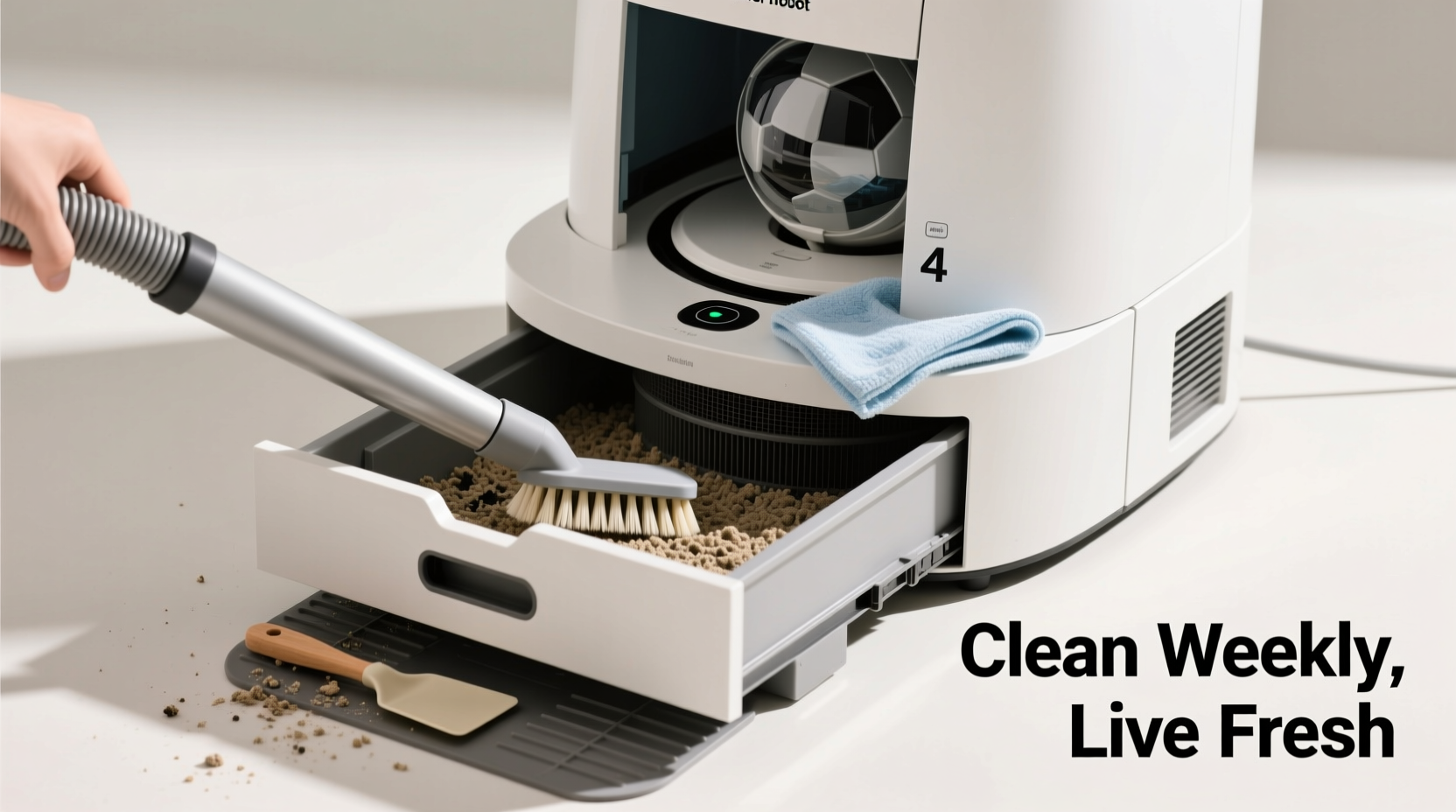
The Litter Robot 4 uses advanced sensors, a rotating globe, and an automatic waste drawer to manage your cat’s waste. Over time, dust, stray litter particles, and moisture accumulate in crevices, affecting performance. A poorly maintained unit may fail to detect weight accurately, jam during rotation, or emit persistent odors—even with frequent litter changes.
According to Dr. Linda Wilson, a feline behavior specialist at the National Pet Wellness Institute:
“Cats are highly sensitive to scent and texture. A dirty litter system, even if it appears functional, can deter them from using it—leading to inappropriate elimination elsewhere in the home.”
Regular cleaning not only preserves hygiene but also ensures the machine operates as intended, reducing false cycles and extending the life of internal components.
Step-by-Step Guide to Deep Cleaning Your Litter Robot 4
A thorough cleaning should be performed every 1–2 months, depending on usage. Follow this timeline for best results:
- Unplug the unit – Always disconnect power before starting any maintenance.
- Empty the waste drawer completely – Remove the liner and dispose of waste. Wash the drawer with warm, soapy water and dry thoroughly.
- Remove the bonnet and globe – Lift the bonnet off and rotate the globe counter-clockwise to detach it from the base.
- Clean the interior surfaces – Use a soft cloth dampened with mild dish soap and water to wipe down the inside of the globe and bonnet. Avoid abrasive sponges or harsh chemicals.
- Inspect and clean the chute – Litter clumps can occasionally break apart and scatter into the chute. Use a small brush or vacuum attachment to remove debris.
- Wipe down the base and turntable – Pay special attention to the sensor ring and rotation mechanism. Dust here can interfere with startup cycles.
- Reassemble carefully – Ensure the globe clicks securely into place and the bonnet fits snugly. Misalignment prevents proper sealing and cycle initiation.
- Run a test cycle – Plug the unit back in and initiate a manual cycle to confirm smooth operation.
Daily and Weekly Maintenance Checklist
Prevent deep-seated grime by incorporating these simple habits into your routine:
- ✅ Empty the waste drawer every 1–2 days (more often with multiple cats)
- ✅ Wipe the exterior with a disinfectant-safe cloth weekly
- ✅ Top up crystal litter as needed, avoiding overfilling beyond the fill line
- ✅ Check for stray litter around the base and inlet
- ✅ Listen for unusual grinding or resistance during rotation
- ✅ Replace carbon filter monthly (if using one)
Do’s and Don’ts of Litter Robot 4 Cleaning
| Do | Don't |
|---|---|
| Use non-abrasive cleaners like diluted vinegar or mild dish soap | Submerge electrical components in water |
| Dry all parts completely before reassembly | Use bleach or ammonia-based cleaners (corrosive and toxic to pets) |
| Clean the whisker guard gently with a toothbrush | Ignore error codes—address them immediately |
| Replace worn seals or liners promptly | Overfill the globe with litter (causes uneven tumbling) |
| Vacuum around the base to prevent dust accumulation | Force the globe if it’s stuck—investigate the cause first |
Real-World Example: Resolving a Persistent Odor Issue
Sarah, a cat owner in Portland with two adult Maine Coons, noticed a lingering ammonia smell despite changing the waste drawer every day. She assumed the issue was the litter type, but after switching brands with no improvement, she decided to disassemble the unit for a deep clean.
Upon removing the globe, she discovered a hardened clump lodged behind the chute, invisible from the outside. After soaking the part and scrubbing it clean, the odor vanished. Sarah now schedules a full disassembly every five weeks and keeps a log of maintenance dates. “I didn’t realize how much hidden waste could build up,” she said. “Now my Litter Robot runs quieter and smells neutral.”
Expert Tips for Long-Term Performance
Based on technician recommendations and user feedback, here are key practices to extend your Litter Robot 4’s lifespan:
- Use only compatible litter – The manufacturer recommends crystal litter or low-dust clumping formulas. Clay or natural litters may produce excessive dust that clogs sensors.
- Keep firmware updated – New software versions often improve cycle accuracy and error detection.
- Monitor the night light and indicator lights – Flickering may signal moisture exposure or loose connections.
- Place on a hard, level surface – Carpets or rugs can trap moisture and encourage mold growth underneath.
“The number one reason for service calls isn’t mechanical failure—it’s preventable gunk buildup in the rotation track and waste chute.” — Mark Tran, Certified Litter-Robot Technician
Frequently Asked Questions
Can I run the Litter Robot 4 without the bonnet?
No. The bonnet is required for safety and proper cycle initiation. It contains infrared sensors that detect when the cat has exited. Operating without it disables the auto-clean function and risks injury or malfunction.
How often should I replace the globe?
With proper care, the globe lasts 3–5 years. Signs it needs replacement include cracks, warping, or difficulty rotating. Minor scratches are normal and don’t affect performance.
Is it safe to use disinfectant wipes on the exterior?
Yes, but only on non-electrical surfaces. Use pet-safe wipes (free of phenols and alcohol) on the outer shell and control panel. Never spray directly onto buttons or ports.
Conclusion: Make Cleaning Part of Your Cat Care Routine
Keeping your Litter Robot 4 clean isn’t just about convenience—it’s a critical component of responsible pet ownership. A well-maintained unit reduces odor, prevents breakdowns, and encourages consistent litter box use. By integrating daily checks, monthly wipe-downs, and bi-monthly deep cleans, you’ll protect your investment and support your cat’s comfort and hygiene.




 浙公网安备
33010002000092号
浙公网安备
33010002000092号 浙B2-20120091-4
Comments
No comments yet. Why don't you start the discussion?