
Silicone phone cases are popular for their flexibility, shock absorption, and sleek appearance. However, over time, they tend to accumulate oils, dust, and grime—especially from hands and pockets. This buildup often leads to a tacky or sticky surface that feels unpleasant and attracts even more dirt. Many people attempt to clean their cases only to find the stickiness returns quickly, sometimes worse than before. The issue usually lies not in the cleaning itself, but in the methods used and the residues left behind.
The good news is that with the right approach, you can restore your silicone case to its original smooth, non-sticky state—and keep it that way longer. This guide provides a proven, detailed process that avoids common pitfalls like residue buildup, material degradation, and premature aging of the silicone. Whether your case has turned slightly tacky or fully gum-like, this method works effectively and safely.
Why Silicone Cases Become Sticky Over Time
Silicone is a durable synthetic polymer known for its resistance to heat, UV light, and chemicals. However, not all silicone used in phone cases is pure. Many manufacturers use lower-cost formulations that blend silicone with plasticizers, softening agents, or other additives to enhance flexibility and reduce production costs. These additives can break down over time due to exposure to heat, sunlight, and skin oils.
When these compounds degrade, they migrate to the surface of the case, creating a sticky film. Additionally, daily contact with hand lotions, sunscreen, sweat, and pocket lint contributes to surface contamination that bonds with the degrading layer. Simply wiping the case with a damp cloth may spread this gunk around rather than removing it, which is why many users report their cases feeling stickier after cleaning.
“Most stickiness in silicone cases isn’t dirt—it’s chemical breakdown at the molecular level. Cleaning must address both surface grime and residual breakdown compounds.” — Dr. Lena Park, Materials Scientist at PolyTech Research Institute
Step-by-Step Guide: How to Clean Your Silicone Case Without Making It Sticky Again
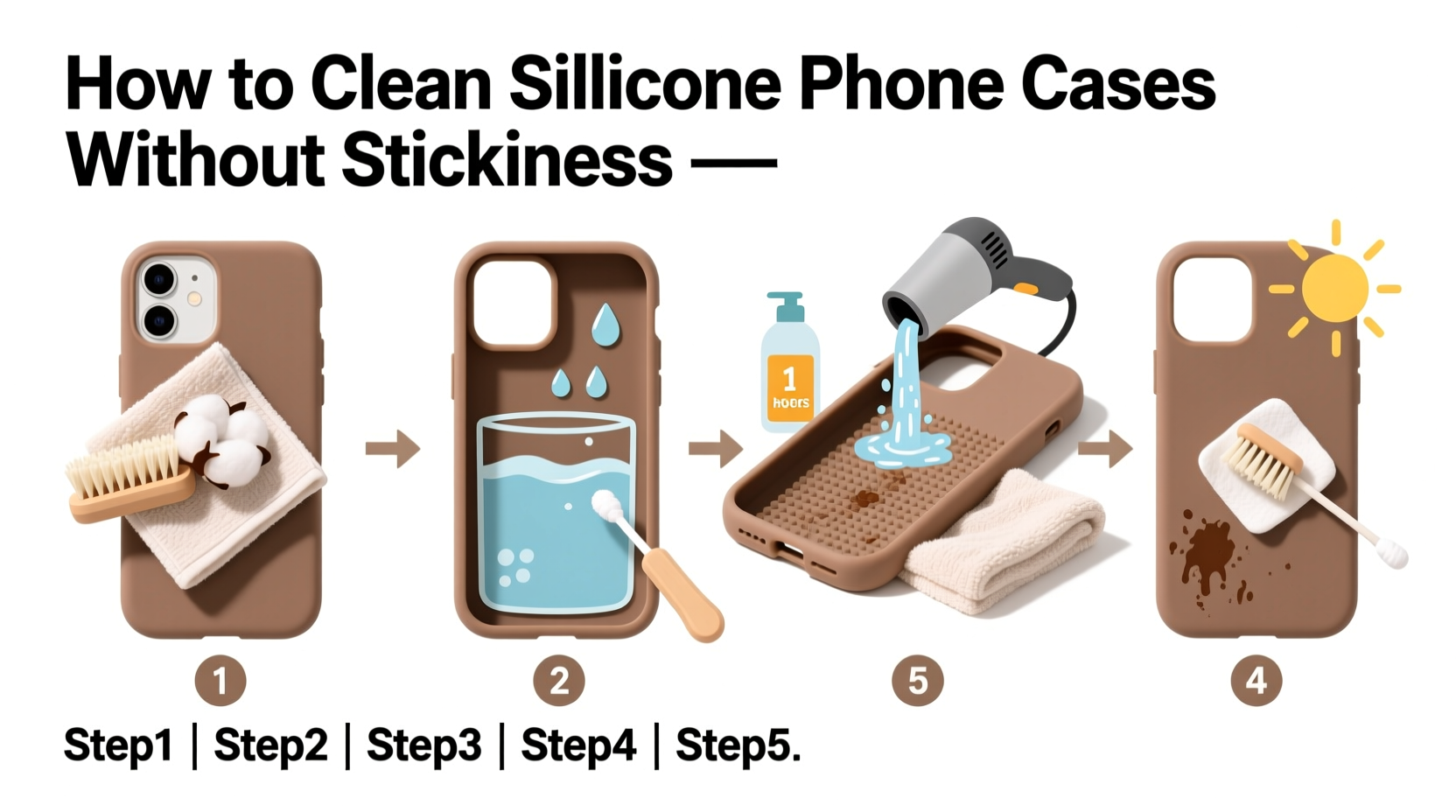
Cleaning a silicone phone case properly requires more than just soap and water. The goal is to remove contaminants while preserving the integrity of the material and avoiding any residue that could accelerate future stickiness. Follow this six-step method carefully for optimal results.
- Remove the phone and dry brush the surface
Take the case off your phone and use a soft-bristled toothbrush (preferably unused) to gently scrub away loose debris. Focus on corners, ports, and edges where dust accumulates. This prevents particles from turning into abrasive paste during washing. - Wash with mild dish soap and lukewarm water
Fill a small bowl with lukewarm water and add 1–2 drops of fragrance-free dish soap (like Dawn or Seventh Generation). Avoid antibacterial soaps or those with moisturizers, as they leave oily residues. Submerge the case and use your fingers or the toothbrush to gently scrub all surfaces for about 30 seconds. - Rinse thoroughly under running water
Hold the case under cool running tap water for at least 20 seconds. Ensure all soap is rinsed off. Leftover soap film reacts with skin oils and becomes sticky within days. - Soak in isopropyl alcohol (70%) for deep sanitization
Prepare a solution of 70% isopropyl alcohol and 30% water. Soak the case for exactly 5 minutes. Alcohol dissolves oily residues and kills bacteria without damaging most silicone. Do not exceed 5 minutes, as prolonged exposure weakens softer silicones. - Air-dry completely on a lint-free towel
Place the case on a clean microfiber cloth in a well-ventilated area, away from direct sunlight. Let it air-dry for at least 4 hours. Do not wipe it dry—towels can transfer fibers or oils. Complete drying ensures no moisture gets trapped, which can promote microbial growth. - Optional: Apply a light silicone protectant
Once fully dry, lightly buff the exterior with a silicone conditioner or a tiny amount of 100% food-grade silicone oil using a cotton pad. This helps replenish surface integrity and delay future stickiness. Wipe off any excess immediately.
Do’s and Don’ts When Cleaning Silicone Phone Cases
| Do’s | Don’ts |
|---|---|
| Use fragrance-free, dye-free dish soap | Use hand soap or body wash (they contain moisturizers) |
| Scrub gently with a soft toothbrush | Use steel wool or abrasive pads |
| Rinse under cool running water for 20+ seconds | Leave soap residue on the surface |
| Soak briefly in 70% isopropyl alcohol | Soak in acetone, bleach, or nail polish remover |
| Air-dry completely before reapplying | Blow-dry with a hairdryer (heat damages silicone) |
| Buff with food-grade silicone oil occasionally | Apply baby oil, lotion, or cooking oil |
Real Example: Recovering a Heavily Degraded Case
Mark, a delivery driver in Phoenix, noticed his black silicone phone case had become extremely sticky after just four months. He lived in a hot climate and kept his phone in his pocket all day, exposing the case to sweat, friction, and high temperatures. After trying baby wipes and dish soap, the stickiness worsened.
He followed the six-step method outlined above: dry brushing, washing with minimal dish soap, thorough rinsing, a 5-minute alcohol soak, and full air-drying. To his surprise, the case emerged looking nearly new—smooth, matte, and free of residue. He now cleans it every three weeks and applies a drop of food-grade silicone oil monthly. Ten months later, the case remains functional and non-sticky, far exceeding its expected lifespan.
This example highlights how environment and usage amplify degradation—but also how proper cleaning can significantly extend usability, even under harsh conditions.
Checklist: Keep Your Silicone Case Clean and Non-Sticky
- ☐ Remove phone and detach any screen protectors or mounts
- ☐ Dry brush the case to remove loose debris
- ☐ Wash with 1–2 drops of fragrance-free dish soap in lukewarm water
- ☐ Scrub gently with a soft toothbrush
- ☐ Rinse under cool running water for 20+ seconds
- ☐ Soak in 70% isopropyl alcohol for 5 minutes
- ☐ Air-dry face-down on a microfiber towel for 4+ hours
- ☐ Buff lightly with food-grade silicone oil (optional)
- ☐ Reattach to phone only when completely dry
- ☐ Repeat cleaning every 2–3 weeks based on usage
How Often Should You Clean Your Silicone Case?
Frequency depends on lifestyle. For average daily use, cleaning every 2–3 weeks prevents noticeable buildup. Heavy users—those who work outdoors, exercise with their phones, or live in humid environments—should clean weekly. Signs it’s time to clean include:
- A faint oily or tacky feel
- Visible discoloration or cloudiness
- Dust clinging to the surface
- An odor when removed from the phone
Regular maintenance prevents deep degradation. Waiting until the case is obviously sticky makes restoration harder and shortens its lifespan.
FAQ: Common Questions About Cleaning Silicone Phone Cases
Can I put my silicone case in the dishwasher?
No. Dishwashers expose silicone to high heat, strong detergents, and mechanical agitation that can warp the case, degrade softeners, and leave detergent residues that attract stickiness. Hand-washing is safer and more effective.
Why does my case get sticky even when I don’t touch it much?
Even minimal contact transfers skin oils. Additionally, environmental factors like UV exposure, temperature fluctuations, and airborne pollutants contribute to material breakdown. Silicone begins degrading the moment it’s manufactured—the rate just depends on conditions.
Is it safe to use alcohol on clear silicone cases?
Yes, if done correctly. Use only 70% isopropyl alcohol and limit soaking to 5 minutes. Higher concentrations or longer exposure may cause yellowing or hazing, especially in cheaper transparent cases that contain polycarbonate blends.
Conclusion: A Simple Habit for Long-Lasting Protection
Cleaning a silicone phone case doesn’t have to be complicated or risky. The key is consistency, gentle materials, and avoiding residues that invite future stickiness. By following this step-by-step method—brushing, washing, rinsing, sanitizing, drying, and optionally conditioning—you preserve both function and feel.
Many people replace cases every few months because they assume stickiness is inevitable. But with proper care, a high-quality silicone case can last a year or more without losing its smooth finish. Treat your case like an extension of your device: worth protecting with smart, sustainable habits.




 浙公网安备
33010002000092号
浙公网安备
33010002000092号 浙B2-20120091-4
Comments
No comments yet. Why don't you start the discussion?