
Retainers play a crucial role in maintaining the results of orthodontic treatment. Whether you wear a Hawley, Essix, or clear plastic retainer, keeping it clean is essential—not just for freshness, but for your overall oral health. Over time, plaque, tartar, bacteria, and odor-causing microbes accumulate on retainers, especially when worn nightly. However, many people unknowingly damage their retainers by using harsh chemicals, abrasive tools, or improper cleaning techniques. The good news: with the right approach, you can keep your retainer hygienic, odor-free, and intact for months—or even years—without compromising its fit or material integrity.
Dentists and orthodontists consistently emphasize that gentle, consistent care is far more effective than aggressive cleaning. This guide outlines safe, professional-recommended practices to clean your retainer effectively while preserving its structure and function.
Why Proper Retainer Cleaning Matters
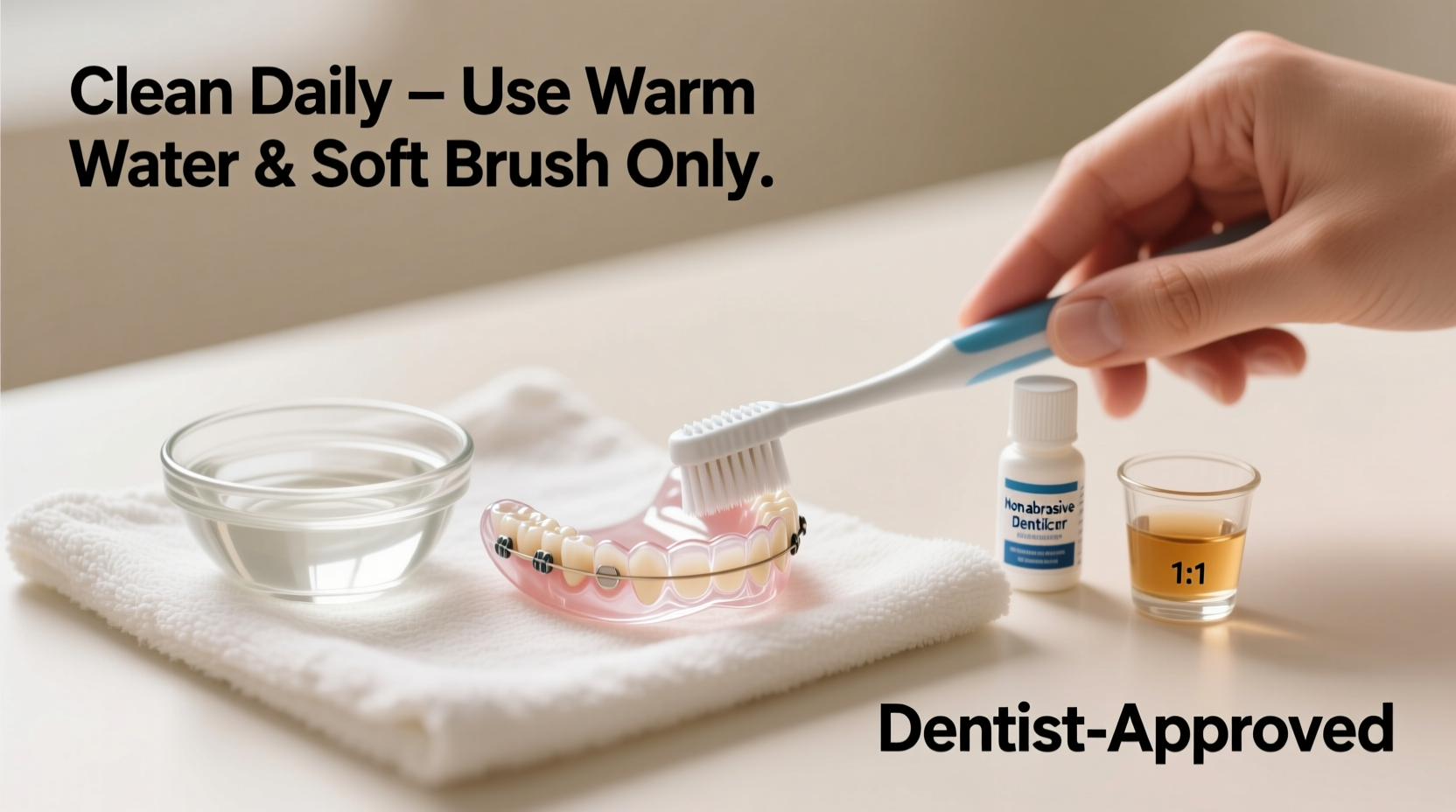
Your retainer sits in your mouth for several hours each day, often overnight. During this time, it absorbs saliva, food particles, and bacteria. Without regular cleaning, these residues harden into plaque and eventually calcify into tartar—just like on your teeth. A dirty retainer doesn’t just smell unpleasant; it can contribute to gum irritation, bad breath, tooth decay, and even reinfection if you’ve had previous dental issues.
Moreover, retainers are made from delicate materials—acrylic, polyurethane, or thermoplastic—that degrade under extreme temperatures or exposure to certain chemicals. Scratches from abrasive brushing or warping from hot water can alter the fit, making the retainer less effective at holding your teeth in place. Poor maintenance may lead to premature replacement, which can be costly and inconvenient.
Dentist-Approved Daily Cleaning Routine
A consistent daily routine prevents buildup and prolongs your retainer’s lifespan. The American Association of Orthodontists recommends cleaning your retainer every time you remove it, ideally when brushing your teeth.
- Brush gently with a soft-bristle toothbrush. Use lukewarm water and non-abrasive toothpaste (preferably one without whitening agents or baking soda). Scrub both sides carefully, paying attention to grooves and edges where plaque collects.
- Rinse thoroughly after meals. If you remove your retainer to eat, rinse it under cool water immediately afterward to prevent food particles from sticking.
- Store it properly. Always place your retainer in its case when not in use. Leaving it wrapped in napkins or exposed to air increases the risk of bacterial growth and accidental damage.
While some suggest using regular toothpaste, many dentists caution against it due to mild abrasives that can cause micro-scratches over time. These tiny imperfections become breeding grounds for bacteria, defeating the purpose of cleaning.
“Patients often think scrubbing harder makes retainers cleaner, but it actually creates microscopic grooves where bacteria thrive. A soft brush and gentle touch are all you need.” — Dr. Lena Torres, Board-Certified Orthodontist
Weekly Deep-Cleaning Methods That Work
Daily brushing handles surface debris, but weekly deep-cleaning removes stubborn buildup and sanitizes the appliance. Below are three dentist-endorsed methods, each suitable for different types of retainers.
1. White Vinegar and Water Soak
Mix equal parts white vinegar and lukewarm water in a container large enough to submerge the retainer. Soak for 20–30 minutes, then gently brush and rinse. Vinegar’s acetic acid helps dissolve mineral deposits and kill bacteria without harming plastic.
2. Baking Soda Paste
Create a paste using one teaspoon of baking soda and a few drops of water. Apply with a soft toothbrush, scrub lightly for 60 seconds, then rinse. Baking soda neutralizes odors and lifts stains gently. Avoid making the paste too gritty.
3. Denture Cleaning Tablets
Drop one tablet into a glass of cool water and soak your retainer for the time specified on the package (usually 5–15 minutes). Polident, Efferdent, and other brands are frequently recommended by orthodontists for retainers. They effervesce to loosen debris and disinfect without scratching.
What Not to Do: Common Mistakes That Damage Retainers
Many well-intentioned cleaning attempts do more harm than good. Here’s a breakdown of practices to avoid—and why they’re risky.
| Don’t | Why It’s Harmful | Safe Alternative |
|---|---|---|
| Use hot or boiling water | Can warp acrylic and plastic, altering fit | Lukewarm or cool water only |
| Soak in mouthwash long-term | Alcohol-based formulas dry out and discolor plastic | Rinse briefly only; never store in mouthwash |
| Scrub with hard-bristle brushes or toothpaste | Cause micro-scratches that harbor bacteria | Soft toothbrush + non-abrasive cleaner |
| Use bleach or hydrogen peroxide regularly | Weakens material and may release harmful fumes | Occasional diluted soak (1:10 ratio) max once monthly |
| Leave retainer in direct sunlight or near heat | Heat exposure causes warping and deformation | Store in case at room temperature |
Even seemingly harmless habits—like placing your retainer on a bathroom counter near a running shower—can expose it to steam and heat. One patient reported that her retainer no longer fit after being left near a radiator during winter; the subtle warping went unnoticed until she experienced discomfort and shifting teeth.
Mini Case Study: How Improper Cleaning Led to Replacement
Sophie, a 24-year-old graphic designer, wore her clear Essix retainer every night as prescribed. She brushed it daily with her regular toothpaste and occasionally soaked it in mouthwash to eliminate odor. After six months, she noticed it felt tighter and smelled faintly sour despite cleaning. Upon visiting her orthodontist, the doctor found significant micro-scratching across the surface and early calcification along the edges.
“The toothpaste was too abrasive,” the orthodontist explained, “and the alcohol in the mouthwash dried out the plastic, making it brittle.” Sophie needed a new retainer sooner than expected—costing $120 out of pocket. Switching to a soft brush, baking soda soaks, and proper storage reduced odor and extended her next retainer’s life to nearly two years.
This case illustrates how small choices compound over time. What seems like thorough cleaning can actually accelerate degradation.
Step-by-Step Weekly Cleaning Schedule
To simplify maintenance, follow this structured weekly plan:
- Every Morning: Remove retainer, rinse under cool water, brush gently with soft toothbrush and water (or non-abrasive cleanser), then store in case.
- After Meals (if removed): Rinse retainer before reinserting to wash away food particles.
- Once Per Week (e.g., Sunday Night):
- Fill a cup with cool water.
- Add one denture tablet or prepare vinegar solution (1:1).
- Soak retainer for 15–30 minutes.
- Remove and brush gently with soft toothbrush.
- Rinse thoroughly with cool water.
- Return to clean, dry case.
- Monthly Check: Inspect for cloudiness, cracks, or warping. If changes are visible, consult your orthodontist.
FAQ: Common Questions About Retainer Care
Can I use hydrogen peroxide to clean my retainer?
You can, but sparingly. A diluted solution (one part 3% hydrogen peroxide to ten parts water) can be used for a 10-minute soak once a month to disinfect. Never use full-strength peroxide—it degrades plastic and may irritate your gums if residue remains.
How often should I replace my retainer?
With proper care, most retainers last 1–3 years. Clear retainers typically show wear faster than Hawley retainers due to material sensitivity. Replace yours if it’s cracked, loose-fitting, yellowed, or difficult to insert. Your orthodontist can assess fit during checkups.
Is it safe to sleep with a dirty retainer?
No. Wearing a dirty retainer reintroduces bacteria into your mouth and increases risks of plaque buildup on teeth and gums. Always clean it before bedtime use. If you forget, rinse it thoroughly before inserting—even a quick rinse reduces microbial load.
Checklist: Retainer Care Best Practices
- ✔ Brush daily with soft toothbrush and cool water
- ✔ Soak weekly using vinegar, baking soda, or denture tablets
- ✔ Store in a ventilated case when not in use
- ✔ Keep away from heat, pets, and direct sunlight
- ✔ Avoid abrasive pastes, hot water, and alcohol-heavy mouthwashes
- ✔ Visit your orthodontist annually for fit evaluation
- ✔ Replace promptly if warped, cracked, or ill-fitting
“Retainer longevity isn’t about luck—it’s about consistency. Five minutes a day saves hundreds in replacements and protects your smile investment.” — Dr. Arjun Patel, Clinical Dentist & Preventive Care Specialist
Conclusion: Protect Your Smile Investment
Your retainer is more than an appliance—it’s the guardian of your straightened smile. Every effort you make to clean it safely and consistently pays off in oral health, comfort, and cost savings. By avoiding common pitfalls and adopting dentist-approved methods, you ensure that your retainer remains clear, odor-free, and perfectly fitted for as long as possible.
Start today: gather a soft toothbrush, pick up denture tablets or white vinegar, and designate a clean case for storage. Small habits, repeated over time, create lasting results. Your future self will thank you when your retainer lasts twice as long—and your smile stays exactly where it should be.




 浙公网安备
33010002000092号
浙公网安备
33010002000092号 浙B2-20120091-4
Comments
No comments yet. Why don't you start the discussion?