
Facebook groups have become vital spaces for communities, businesses, and interest-based networks. But as priorities shift or goals are met, group administrators may find it necessary to close a group. Whether due to declining activity, privacy concerns, or the completion of a project, closing a group properly ensures members are respected and data is handled responsibly. Unlike deleting a group, which permanently removes all content, closing a group restricts new participation while preserving history. This guide walks through the process with precision, offering best practices for managing privacy, notifying members, and archiving valuable information.
Understanding the Difference: Close vs. Delete a Group
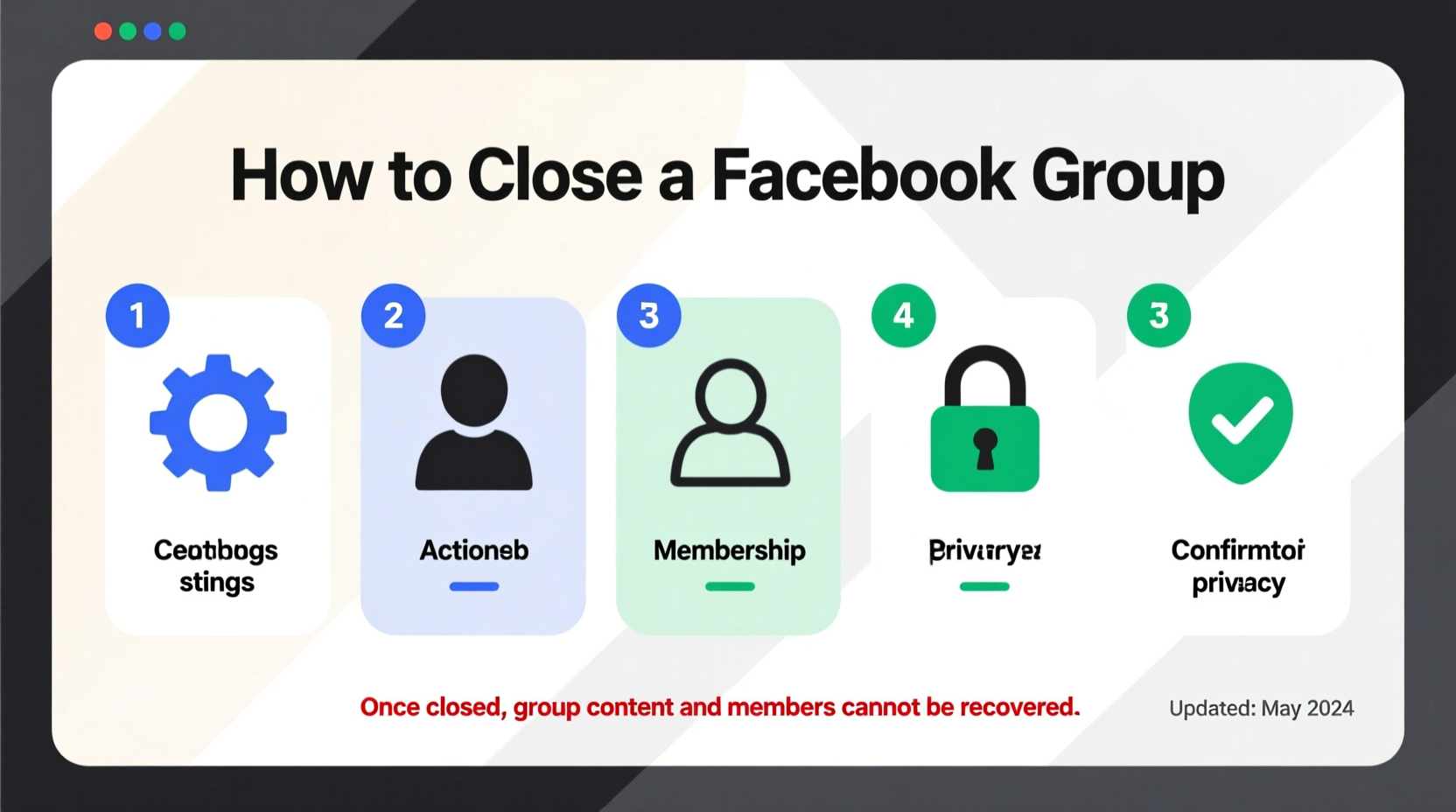
Before taking action, it’s crucial to understand the distinction between closing and deleting a Facebook group. The two options serve different purposes and carry irreversible consequences.
| Action | Effect on Content | Member Access | Reversibility |
|---|---|---|---|
| Close Group | All posts and comments remain visible to existing members | New members cannot join; current members retain access | Reversible — can reopen at any time |
| Delete Group | All content is permanently erased after 30 days | No one can access the group after deletion begins | Irreversible after grace period |
Closing a group is often the preferred choice when you want to preserve discussions, resources, or memories without allowing further interaction. It maintains transparency while reducing administrative burden.
Step-by-Step Guide to Closing a Facebook Group
Closing a group requires access to admin tools and careful execution. Follow these steps across desktop or mobile devices:
- Log in to your Facebook account using the profile that holds admin rights to the group.
- Navigate to the group by searching its name or accessing it via your Groups list.
- Click “Members” below the group cover photo (on desktop) or tap “Members” under the info tab (mobile).
- Select “Edit Group Settings” from the dropdown menu.
- Scroll to “Privacy” section and click “Change Privacy Settings.”
- Choose “Closed” or switch to “Secret” if not already set. Note: You cannot close a public group directly — convert it first.
- Return to main settings, then locate the option labeled “Close Group” (may appear as “Restrict New Members”).
- Confirm your decision. Facebook will prompt you to verify this action.
- Save changes.
Once closed, no new members can join unless invited by an admin. Existing members can still view past content but cannot post unless permissions allow.
Managing Membership and Privacy After Closure
Closing a group doesn’t end your responsibilities as an administrator. Privacy management continues to matter even in inactive communities.
- Review member roles: Remove inactive admins or transfer ownership if stepping away.
- Adjust posting permissions: Limit who can comment or share media to prevent spam.
- Archive critical content: Export key discussions, event details, or shared documents for future reference.
- Monitor for reactivation requests: Some members may inquire about reopening — decide policies in advance.
Facebook allows admins to download a full archive of group data, including photos, messages, and member activity. To do so:
- Go to Settings & Privacy > Settings.
- Select Your Facebook Information.
- Click Download Your Information.
- Choose date range, format (HTML or JSON), and select “Groups” under filters.
- Request file generation — Facebook will email a download link within days.
“Preserving digital community records respects contributors’ efforts and supports accountability, especially in professional or educational groups.” — Dr. Lena Torres, Digital Archivist & Social Media Researcher
Real-World Example: Closing a Parenting Support Group
Sarah managed a local parenting support group with over 1,200 members during the pandemic. As in-person meetups resumed and engagement declined, she decided to close the group rather than delete it. She announced the closure two weeks in advance, highlighting that all advice threads and resource lists would remain accessible. She also emailed a downloadable PDF of top-voted recommendations compiled from three years of discussions. By closing instead of deleting, parents retained access to emotional support posts and emergency contacts, fulfilling her original mission long after active moderation ended.
Essential Checklist Before Closing Your Group
Use this checklist to ensure a smooth transition and responsible closure:
- Notify members at least 7–14 days in advance
- Back up essential files and discussion highlights
- Remove or reassign admin privileges as needed
- Ensure no ongoing events or sensitive conversations are active
- Update group description to reflect closure status
- Confirm you’re using an admin account with full permissions
- Download group data archive via Facebook’s tool
Frequently Asked Questions
Can I reopen a closed Facebook group?
Yes. Admins can reopen a closed group at any time by adjusting privacy settings back to “Public” or “Open.” All previous content and members remain intact.
What happens to members when a group is closed?
Existing members keep access to past content unless they leave or are removed. They receive no notifications about the closure unless manually informed by admins.
Is there a way to automatically notify all members?
Facebook does not send automatic alerts when a group closes. Admins must communicate changes via pinned posts, direct messages, or external channels like email newsletters.
Final Considerations for Responsible Group Management
Closing a Facebook group isn’t just a technical task — it’s a stewardship decision. Communities form around trust, shared experiences, and consistent leadership. Even when winding down, honoring that foundation matters. Consider writing a farewell message acknowledging contributions, expressing gratitude, and guiding members toward alternative resources if applicable.
For professional or organizational groups, document the closure in internal records. For personal communities, take a moment to reflect on what was achieved. Digital spaces may evolve or end, but their impact often extends far beyond the platform.




 浙公网安备
33010002000092号
浙公网安备
33010002000092号 浙B2-20120091-4
Comments
No comments yet. Why don't you start the discussion?