
Finding a meaningful product idea doesn’t start with technology or trends—it starts with people. The most successful products in history didn’t disrupt markets by accident; they emerged from deep understanding of unmet needs. Whether you're an aspiring entrepreneur, a startup founder, or an intrapreneur within a larger organization, your ability to identify genuine customer pain points is the foundation of innovation. Instead of guessing what might sell, focus on discovering what already hurts—and then build the solution nobody has delivered well enough.
Start with Empathy, Not Assumptions
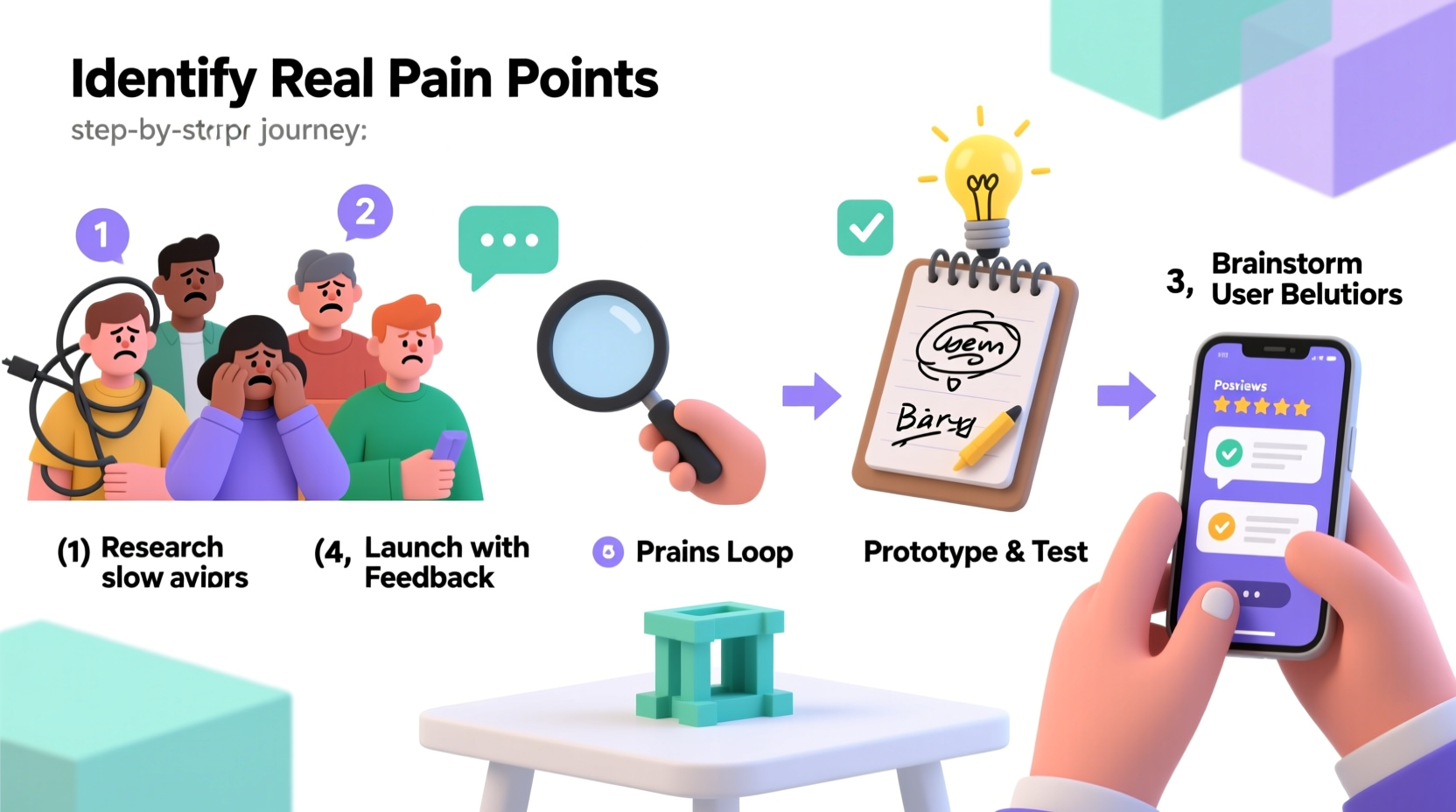
The first step in uncovering valuable product ideas is stepping into your customers’ shoes. Too many innovators begin with a solution in mind and work backward, which often leads to products that feel forced or irrelevant. True problem-solving begins with observation and listening.
Spend time where your potential users spend theirs—online forums, social media groups, customer support threads, or physical spaces like retail stores or public transit. Pay attention not just to what people say, but to what they *do*. Look for friction: moments of frustration, workarounds, or repetitive complaints. These are signals of unmet needs.
“We don’t think of ourselves as building products. We think of ourselves as solving problems worth solving.” — Tony Fadell, inventor of the iPod and founder of Nest
Use Problem Discovery Frameworks
Structured thinking helps turn raw observations into actionable insights. Several frameworks can guide your search for real problems:
- Jobs to Be Done (JTBD): Focuses on the underlying \"job\" a customer hires a product to do. For example, someone doesn’t buy a drill because they want a drill—they want a hole. Understanding the job reveals opportunities for better solutions.
- Pain Point Mapping: Categorize frustrations by frequency, intensity, and existing solutions. High-frequency, high-intensity problems with poor current options are prime targets.
- Customer Journey Analysis: Map out every step a user takes when interacting with a service or product. Identify drop-off points, delays, or confusion—these are hotspots for innovation.
Step-by-Step Guide: From Observation to Idea
- Observe behavior in natural settings (e.g., watching parents pack school lunches).
- Interview users about their experiences without leading them toward solutions.
- List recurring frustrations and rank them by emotional impact and frequency.
- Ask “Why?” five times to get past surface-level complaints to root causes.
- Validate demand by testing interest before building anything.
Avoid Common Pitfalls
Many promising ideas fail early because they solve imaginary problems. Here’s a comparison of common missteps versus best practices:
| Do’s | Don’ts |
|---|---|
| Validate assumptions through direct conversations | Rely solely on surveys or secondary research |
| Focus on underserved niches before scaling | Try to appeal to everyone from day one |
| Build minimal prototypes to test reactions | Spend months coding before getting feedback |
| Measure willingness to pay early | Assume people will adopt a free tool |
| Look for analogies in unrelated industries | Copy competitors directly |
Real Example: How Slack Solved a Hidden Communication Problem
In 2013, Stewart Butterfield and his team were developing a video game. During development, they created an internal messaging tool to streamline communication across remote teams. They noticed something unexpected: team members preferred using this chat system over email, project management tools, or even phone calls.
Instead of dismissing this as a minor convenience, they dug deeper. Through interviews and usage data, they realized traditional workplace communication was fragmented, noisy, and inefficient. Employees juggled dozens of emails, missed messages in siloed apps, and struggled to find context after switching tasks.
Slack didn’t invent messaging—but it reimagined it around the real problem: information overload and lost productivity. By focusing on searchability, integrations, and organized channels, Slack addressed a widespread but under-served pain point. Within two years, it reached $100 million in annual recurring revenue—not because it had flashy features, but because it solved a daily struggle for knowledge workers.
Checklist: Validate Your Product Idea Before Building
Before investing time and money, ensure your idea meets these criteria:
- ✅ Have I spoken to at least 10 potential users about this problem?
- ✅ Can they describe the issue in their own words without prompting?
- ✅ Are they currently using awkward workarounds or multiple tools to cope?
- ✅ Would they commit to trying a beta version or pre-ordering?
- ✅ Is the problem frequent or urgent enough to justify changing behavior?
- ✅ Does my solution offer a 10x improvement over existing options?
“If I had asked people what they wanted, they would have said faster horses.” — Henry Ford (often quoted to emphasize the need for visionary thinking—but also a caution against ignoring underlying needs)
FAQ
How do I know if a problem is big enough to build a business around?
A problem is viable if it affects a sizable group, occurs regularly, and causes measurable frustration or cost. Look for evidence: people spending money on partial fixes, writing reviews complaining about gaps, or dedicating significant time to manual processes. If multiple people independently express the same struggle, it’s likely a real market opportunity.
Can I use online tools to discover customer problems?
Yes. Platforms like Reddit, Quora, Amazon reviews, and niche Facebook groups are goldmines for authentic customer language. Search for phrases like “I wish there was…” or “Why doesn’t anyone make…?” These reveal latent demand. Tools like AnswerThePublic or SparkToro can help aggregate such queries at scale.
What if I find a problem but no clear solution?
That’s normal—and often ideal. Start by defining the problem precisely. Then explore analogous domains. For example, meal kit services borrowed logistics ideas from subscription boxes and applied them to home cooking. Don’t rush to invent; instead, adapt and combine proven approaches in new contexts.
Conclusion: Turn Insight Into Action
Great product ideas don’t come from brainstorming in isolation—they emerge from curiosity, patience, and relentless focus on human experience. The next time you’re stuck looking for inspiration, stop thinking about features and start paying attention to friction. Watch how people struggle, listen to what they sigh about, and ask why things are so hard.
You don’t need a revolutionary technology to create value. You need a clear-eyed view of a real problem and the courage to solve it better than anyone else. Now go talk to real people. Ask questions. Take notes. Test small ideas. The best product you’ll ever build is waiting not in a lab, but in someone’s everyday life.




 浙公网安备
33010002000092号
浙公网安备
33010002000092号 浙B2-20120091-4
Comments
No comments yet. Why don't you start the discussion?