
System Protection Pack (SPP) files are often associated with software licensing, activation mechanisms, or temporary installation components used by certain programs—particularly those tied to Microsoft Windows or third-party licensed applications. While these files serve a purpose during setup or validation, they can linger after uninstallation, consume disk space, or trigger false positives in security scans. Removing them requires more than a simple drag-to-trash action. To fully eliminate an SPP file or the program that generated it, you must follow a structured process that includes safe deletion, registry cleanup, and verification.
This guide walks through every critical step needed to ensure complete removal—without risking system stability or leaving behind residual data.
Understanding SPP Files: What They Are and Why They Matter
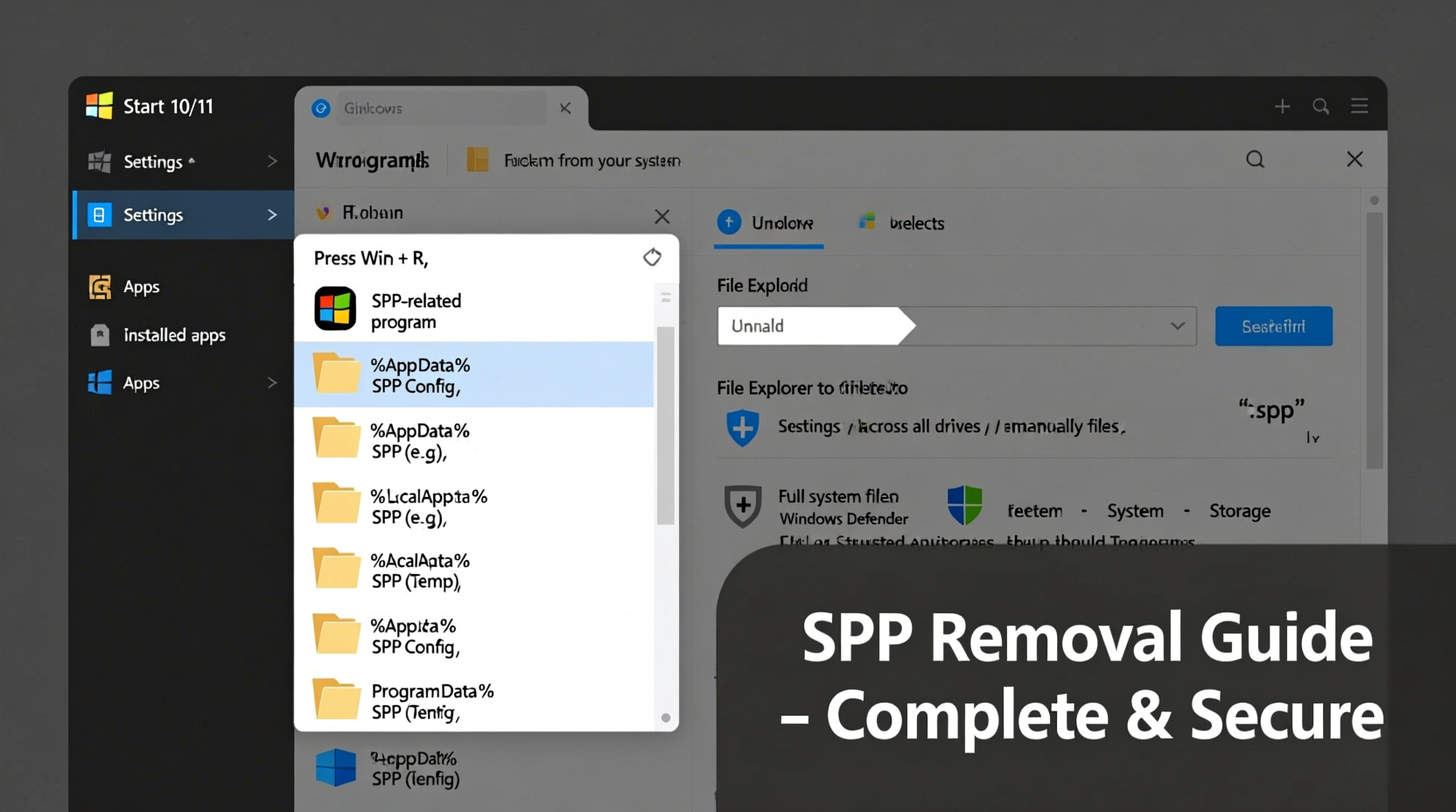
An SPP file typically stands for \"Software Protection Platform\" data. These files are created by Windows or licensed software to manage product activation, validate licenses, or store encrypted keys. Common locations include:
C:\\ProgramData\\Microsoft\\SoftwareProtectionPlatform\\C:\\Windows\\ServiceProfiles\\NetworkService\\AppData\\Roaming\\Microsoft\\SoftwareProtectionPlatform\\- Within application-specific folders under
AppDataorProgram Files
Because SPP files are often protected by system permissions or actively used by background services, attempting to delete them without proper preparation may result in access denied errors or system warnings.
“SPP-related components are deeply integrated into Windows licensing architecture. Direct deletion without disabling dependent services can lead to boot issues or activation failures.” — Daniel Reeves, Senior Systems Engineer at ITSecure Labs
Step-by-Step Guide to Completely Remove an SPP File or Program
Follow this sequence carefully. Skipping steps may leave traces behind or cause instability.
- Uninstall the Associated Program (if applicable)
Navigate to Settings > Apps > Installed apps, locate the software linked to the SPP file (e.g., Microsoft Office, Adobe Creative Cloud, or other licensed tools), and select “Uninstall.” Confirm all prompts and allow the process to complete. - Stop Related Background Services
Press Win + R, typeservices.msc, and press Enter. Locate services such as:- Software Protection
- Windows License Manager Service
- Any vendor-specific service (e.g., Adobe Software Integrity Service)
- Take Ownership of the SPP File or Folder
SPP files are usually owned by TrustedInstaller or SYSTEM. To gain control:- Right-click the folder/file > Properties > Security > Advanced
- Next to Owner, click “Change”
- Type your username, click “Check Names,” then OK
- Check “Replace owner on subcontainers and objects”
- Click Apply > OK
- Delete the SPP File or Directory
After ownership is transferred, navigate to the folder in File Explorer and press Shift + Delete to bypass the Recycle Bin. Confirm deletion if prompted. - Clean the Registry (Advanced Users Only)
Press Win + R, typeregedit, and open Registry Editor. Back up the registry first (File > Export). Then navigate to:HKEY_LOCAL_MACHINE\\SOFTWARE\\Microsoft\\SoftwareProtectionPlatformHKEY_CURRENT_USER\\Software\\[Vendor]\\[ProductName](e.g., Adobe, Autodesk)
- Clear Temporary and Cache Files
Use Disk Cleanup (cleanmgr) or run:del /f /q /s \"%temp%\\*.spp\" del /f /q /s \"C:\\Windows\\Temp\\*.spp\"
Or use Command Prompt as Administrator to remove orphaned temp files. - Reboot and Verify Deletion
Restart your computer. After rebooting, recheck the original directory to confirm the SPP file does not regenerate. If it returns, the associated service may still be active or the program wasn’t fully uninstalled.
Common Mistakes to Avoid When Deleting SPP Files
Even experienced users can make errors when handling protected system components. The table below outlines key do’s and don’ts:
| Do | Don't |
|---|---|
| Create a restore point before starting | Delete tokens.dat or pkeyconfig.xrm-ms files unless replacing a system |
| Use built-in uninstallers first | Force-delete files while services are running |
| Verify file legitimacy via VirusTotal or Microsoft docs | Edit registry keys without backing them up |
| Use trusted third-party uninstallers like Revo Uninstaller Free | Assume all .spp extensions are safe to remove |
Real-World Example: Removing Lingering SPP Traces After Office Deactivation
A freelance graphic designer uninstalled Microsoft Office 2019 but continued receiving activation pop-ups. Investigation revealed that cache.dat and several .spp files remained in C:\\ProgramData\\Microsoft\\Office\\Activation\\. The Software Protection service was still running and periodically attempting to validate a non-existent license.
By following the steps above—stopping the service, taking ownership, manually deleting the cache and SPP files, and clearing Office-related registry entries—the activation loops ceased. A final reboot confirmed no recurrence. This case highlights how incomplete removal can cause persistent issues even after standard uninstallation.
Essential Checklist for Complete SPP Removal
Use this checklist to ensure no step is missed:
- ☐ Uninstall the associated program via Settings or Control Panel
- ☐ Stop relevant services (e.g., Software Protection)
- ☐ Take ownership of the SPP file or parent folder
- ☐ Grant full control permissions to your user account
- ☐ Permanently delete the file using Shift + Delete
- ☐ Clean related registry entries (with backup)
- ☐ Run Disk Cleanup or command-line temp deletion
- ☐ Reboot and verify absence of the file and related errors
Frequently Asked Questions
Can deleting an SPP file deactivate my Windows or software?
Yes, if done improperly. SPP files are part of the licensing infrastructure. While removing leftover files after uninstallation is safe, deleting active protection files from a licensed system can trigger reactivation requests or loss of functionality. Always confirm the software is already uninstalled before proceeding.
Are all .spp files harmful or safe to delete?
No. Some .spp files are legitimate system components; others may be mislabeled malware. Before deletion, verify the file path and digital signature. Legitimate SPP files are usually located in ProgramData, Windows, or vendor-specific directories. Suspicious ones found in Downloads or Temp folders should be scanned with antivirus software first.
What if the SPP file keeps coming back after deletion?
This usually means the associated service is still active or the program wasn’t fully removed. Check Task Manager for background processes, review startup items, and use a tool like Revo Uninstaller to scan for leftovers. You may also need to disable the Software Protection service temporarily or perform a clean boot to isolate the source.
Final Steps and Best Practices
Complete deletion of an SPP file or its parent program isn’t just about freeing up space—it’s about ensuring clean system operation and preventing future conflicts. Always prioritize safety over speed: back up your data, document changes, and proceed methodically. If you're managing a business environment, consider using centralized management tools like Group Policy or Microsoft Endpoint Configuration Manager to handle licensing components at scale.
For personal users, adopting routine audits of installed programs and temporary files can prevent accumulation of obsolete SPP data. Tools like CCleaner (used cautiously) or built-in Storage Sense in Windows can help maintain system hygiene.
“Residual licensing files are among the top hidden causes of software conflicts. Clean removal isn’t optional—it’s maintenance.” — Lisa Tran, IT Support Lead at NexaCore Solutions
Take Action Today
If you’ve been seeing mysterious SPP files or dealing with ghost activations, now is the time to reclaim control. Follow the steps outlined here, use the checklist to stay on track, and protect your system with regular reviews. Your computer will run cleaner, safer, and more efficiently once unnecessary licensing debris is gone.




 浙公网安备
33010002000092号
浙公网安备
33010002000092号 浙B2-20120091-4
Comments
No comments yet. Why don't you start the discussion?