
One of the most dreaded questions in job interviews is also one of the most common: “What are your biggest weaknesses?” It feels like a trap. Admit too much, and you risk sounding unqualified. Say “I work too hard,” and you come across as disingenuous. Yet, this question isn’t designed to catch you off guard—it’s an opportunity to demonstrate self-awareness, honesty, and growth.
The key isn’t to avoid the question or fabricate a fake flaw. It’s to reframe it. A well-crafted response turns a perceived weakness into a narrative of progress, resilience, and professional maturity. Done right, this answer can become one of your strongest moments in the interview.
Why Interviewers Ask About Weaknesses
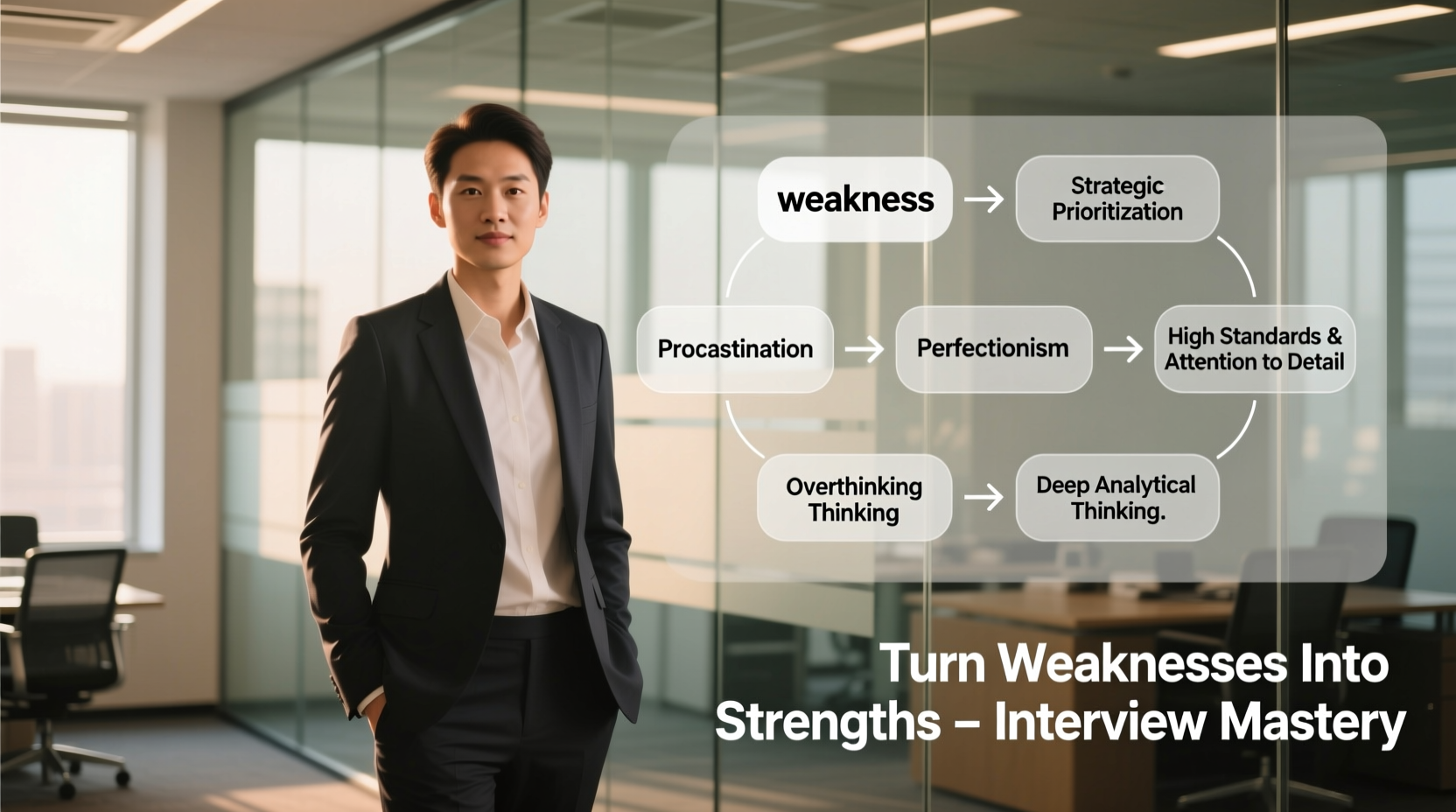
At first glance, asking about weaknesses seems counterintuitive. But hiring managers aren’t looking for reasons to disqualify you. They’re assessing three critical qualities:
- Self-awareness: Can you objectively evaluate your performance?
- Accountability: Do you take ownership of your shortcomings?
- Growth mindset: Are you actively working to improve?
A 2023 LinkedIn survey found that 78% of hiring managers value candidates who acknowledge areas for improvement—especially when paired with actionable steps toward development. The goal isn’t perfection; it’s progress.
“Honesty about limitations shows emotional intelligence. What separates good candidates from great ones is how they respond to those limitations.” — Dr. Laura Simmons, Organizational Psychologist
How to Structure Your Answer: The S.T.A.R. for Weaknesses
While S.T.A.R. (Situation, Task, Action, Result) is traditionally used for behavioral questions, a modified version works perfectly for discussing weaknesses:
- State the weakness clearly and honestly.
- Trace its origin or impact (briefly).
- Action taken to address it.
- Result or ongoing improvement.
This structure keeps your answer concise, credible, and forward-looking. It shifts focus from failure to effort.
Choosing the Right Weakness to Share
Not all weaknesses are safe to disclose. You must select one that is both authentic and strategically sound. Avoid red flags like poor time management for project roles or public speaking anxiety for client-facing positions—unless you can show dramatic improvement.
Instead, consider developmental areas that many professionals face:
- Delegating tasks (common among high performers)
- Asking for help early
- Public speaking or presenting
- Using specific software tools
- Handling ambiguous feedback
The best weaknesses are skills that can be learned or improved, not character flaws.
Do’s and Don’ts When Selecting a Weakness
| Do’s | Don’ts |
|---|---|
| Choose a skill-based limitation | Say “I’m impatient” or “I get stressed easily” |
| Pick something you’re actively improving | Mention weaknesses central to the role (e.g., “I’m bad at Excel” for a data analyst) |
| Use industry-relevant examples | Blame others (“My last team didn’t support me”) |
| Show measurable progress | Use clichés like “I’m a perfectionist” without context |
Turning Weakness into Strength: Real Example
Meet Jordan, a marketing coordinator applying for a senior campaign manager role. In a previous interview, they struggled when asked about weaknesses. They said, “Sometimes I miss deadlines,” which raised concerns.
After coaching, Jordan refined their answer using the S.T.A.R. framework:
“I used to struggle with prioritizing multiple campaigns, especially during product launches. I’d dive into creative details and lose sight of timelines. After missing a minor deadline last year, I realized I needed better systems. I enrolled in a time-blocking course, started using Asana for task dependencies, and now schedule weekly priority reviews with my manager. Since then, I’ve delivered 14 campaigns on time, two ahead of schedule.”
The revised answer transformed a liability into proof of initiative and results. Jordan landed the job.
Step-by-Step Guide to Crafting Your Response
Follow these steps to build a compelling, authentic answer:
- Reflect honestly: List 2–3 areas where feedback has shown room for growth.
- Assess relevance: Eliminate any weakness that directly contradicts essential job functions.
- Identify action: What have you done—or are doing—to improve? Training? Mentorship? Tools?
- Measure progress: Can you point to outcomes? Fewer errors? Faster delivery? Positive feedback?
- Practice aloud: Keep it under 90 seconds. Sound natural, not rehearsed.
Common Pitfalls and How to Avoid Them
Even experienced professionals stumble on this question. Here are frequent mistakes and fixes:
- The Fake Weakness: “I care too much.” This lacks authenticity. Instead, admit a real challenge and show growth.
- Over-sharing: Don’t reveal deep personal issues. Keep it professional and solution-focused.
- No follow-up: Saying “I’m working on it” without specifics sounds vague. Name the course, tool, or habit.
- Negative framing: Avoid dwelling on failure. Emphasize learning and change.
Checklist: Preparing Your Weakness Answer
- ✅ Selected a genuine, non-critical weakness
- ✅ Identified a specific instance where it affected work
- ✅ Listed concrete steps taken to improve
- ✅ Included a positive outcome or current progress
- ✅ Practiced delivery to sound confident and concise
- ✅ Tailored example to the target role
FAQ: Common Questions About Discussing Weaknesses
Isn’t it risky to admit a weakness?
Only if you don’t show improvement. The risk lies in appearing unaware or defensive. Employers respect humility paired with initiative. A 2022 Harvard Business Review study found candidates who acknowledged weaknesses and described corrective actions were 34% more likely to receive offers.
What if I can’t think of a real weakness?
Ask former colleagues or mentors for feedback. Common blind spots include communication clarity, delegation, handling criticism, or adapting to change. If you’ve never received constructive feedback, that itself might be a clue—seek growth opportunities proactively.
Can I use the same answer for every interview?
Have a base response, but tailor it. For a leadership role, discuss delegation. For a technical position, mention mastering a new programming language. Relevance builds credibility.
Final Thoughts: Confidence Comes from Preparation
The question about weaknesses isn’t a test of your flaws—it’s a test of your professionalism. Confidence doesn’t mean pretending you’re perfect. It means knowing you’re capable of growth.
When you walk into an interview ready to speak openly about a challenge—and more importantly, how you’re overcoming it—you signal maturity, integrity, and ambition. That’s not damage control. That’s strategic storytelling.
Your weakness doesn’t define you. Your response does.




 浙公网安备
33010002000092号
浙公网安备
33010002000092号 浙B2-20120091-4
Comments
No comments yet. Why don't you start the discussion?