
Zircon, a natural gemstone often mistaken for cubic zirconia due to its brilliance and clarity, is increasingly used in high-end designer jewelry. While it shares visual similarities with diamonds and synthetic stones, zircon has unique optical and physical properties that set it apart. However, the growing market for imitation pieces means buyers must be vigilant. Whether you're a collector, jeweler, or enthusiast, knowing how to distinguish real zircon from fakes ensures authenticity and value. This guide walks through the essential characteristics of genuine zircon and practical methods to verify its presence in designer bracelets.
Understanding Zircon: Nature’s Brilliant Gem
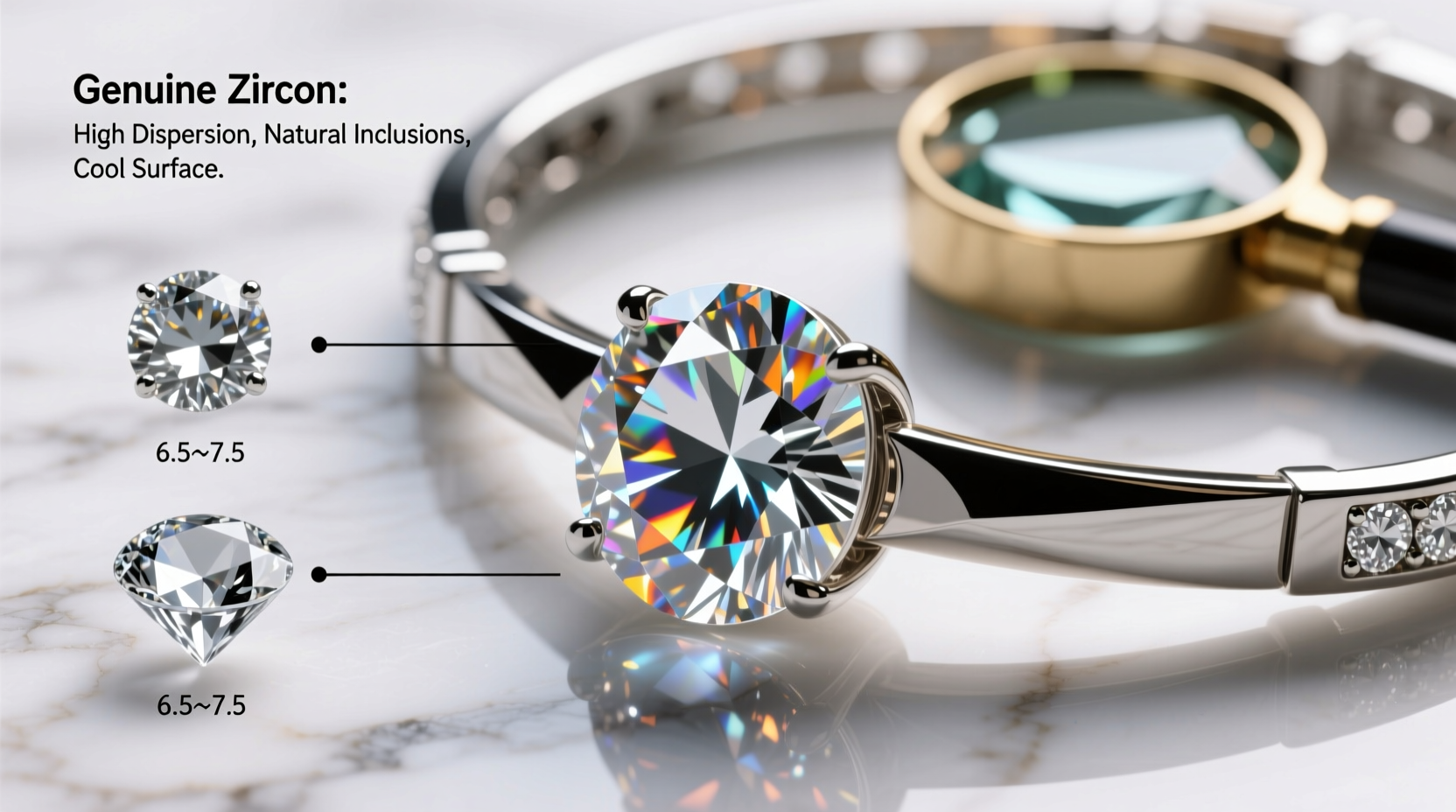
Zircon (zirconium silicate) is one of the oldest minerals on Earth, found in ancient crust formations. Unlike cubic zirconia—a lab-created diamond simulant—zircon is naturally occurring and prized for its fire, luster, and historical significance. It occurs in various colors, including colorless, blue, yellow, and red, with colorless varieties commonly used in fine jewelry for their diamond-like sparkle.
Designers favor zircon not only for its affordability compared to diamonds but also for its durability (6.5–7.5 on the Mohs hardness scale) and high refractive index, which gives it exceptional brilliance. Still, these same qualities make it a target for replication. Imitations range from glass and plastic to low-grade synthetics, all designed to mimic zircon’s appeal at a fraction of the cost.
Key Visual and Physical Features of Genuine Zircon
Identifying zircon begins with close observation. Use a 10x jeweler’s loupe or magnifier to examine the stone under good lighting. Here are the critical indicators of authenticity:
- Fire and Dispersion: Zircon exhibits strong dispersion—the ability to split white light into spectral colors. This results in vivid flashes of rainbow-colored light, more intense than in diamonds.
- Birefringence: A hallmark of zircon is double refraction. When viewed through a loupe, facet edges may appear doubled, especially in larger stones.
- Natural Inclusions: Real zircon often contains tiny internal flaws such as needle-like inclusions or growth patterns. Perfectly clear stones without any imperfections may indicate a synthetic substitute.
- Weight and Density: Zircon is denser than glass or quartz. A genuine zircon bracelet will feel heavier than expected for its size.
- Cut Precision: High-quality zircon in designer pieces is typically well-cut with symmetrical facets. Poor symmetry or chipped edges suggest lower craftsmanship and possibly fake materials.
“Zircon’s double refraction is one of the most reliable field tests available to consumers. No synthetic simulant replicates this property exactly.” — Dr. Lena Patel, Gemologist at the International Gemological Institute
Step-by-Step Guide to Testing Zircon in Bracelets
Visual inspection is just the beginning. For confident identification, follow this systematic testing approach:
- Examine Under Magnification: Use a jeweler’s loupe to inspect the stone’s surface and interior. Look for doubling of facet junctions, which confirms birefringence.
- Conduct a Thermal Conductivity Test: Use a handheld diamond tester. While zircon isn’t a diamond, many testers can differentiate between natural gems and glass/plastic. Zircon will register differently than cubic zirconia.
- Perform a Scratch Resistance Check: With professional tools, test hardness using a calibrated scratch kit. Zircon should resist scratching by materials below 6.5 on the Mohs scale (e.g., steel file).
- Use a UV Light Test: Some zircons exhibit weak fluorescence under long-wave UV light, appearing pale yellow or green. Lack of reaction doesn’t rule out authenticity, but strong blue glow may indicate cubic zirconia.
- Assess Specific Gravity: Weigh the bracelet, then measure displacement in water. Divide weight by volume to get specific gravity. Zircon ranges from 3.90 to 4.70 g/cm³—higher than glass (2.2–4.2) and close to cubic zirconia (5.6–6.0), so use this in combination with other tests.
Comparison Table: Zircon vs. Common Imitations
| Property | Genuine Zircon | Cubic Zirconia | Glass Simulant |
|---|---|---|---|
| Origin | Natural | Synthetic | Synthetic |
| Hardness (Mohs) | 6.5–7.5 | 8–8.5 | 5–6 |
| Birefringence | High (visible doubling) | None | None |
| Density (g/cm³) | 3.90–4.70 | 5.6–6.0 | 2.2–4.2 |
| Dispersion (Fire) | 0.038 (very high) | 0.058–0.066 | Low to moderate |
| UV Fluorescence | Weak yellow/green | Bright blue | Variable |
Real Example: Spotting Fake Zircon in a Designer Collection
A collector in London purchased what was advertised as a limited-edition zircon tennis bracelet from an online boutique. The price seemed reasonable, and the photos were convincing. Upon receipt, she noticed the stones lacked fire under sunlight and felt unusually light. Using a loupe, she saw no doubling of facets. A local jeweler performed a thermal test: the stones registered as non-conductive, inconsistent with zircon’s typical behavior. Further investigation revealed the piece used low-grade glass simulants painted to resemble zircon. The seller had misrepresented the product. After filing a dispute, she recovered her funds—but the experience highlighted the need for proactive verification.
Checklist: How to Verify Zircon Authenticity
- ✅ Inspect the stone with a 10x loupe for birefringence (doubled facet lines)
- ✅ Check for natural inclusions or growth patterns inside the gem
- ✅ Compare weight—real zircon feels dense for its size
- ✅ Test thermal conductivity with a professional gem tester
- ✅ Shine a UV light to observe fluorescence response
- ✅ Verify the seller provides certification from a recognized lab (e.g., GIA, IGI)
- ✅ Consult a certified gemologist if uncertain
Frequently Asked Questions
Is zircon the same as cubic zirconia?
No. Zircon is a natural mineral (zirconium silicate), while cubic zirconia is a man-made diamond simulant made from zirconium dioxide. They differ in origin, chemical composition, and optical properties. Cubic zirconia is harder and more uniform, but lacks zircon’s natural fire and birefringence.
Can I clean my zircon bracelet at home?
Yes, but gently. Use warm water, mild dish soap, and a soft brush. Avoid ultrasonic cleaners if the stone has fractures or inclusions, as vibrations can cause damage. Dry with a lint-free cloth and store separately to prevent scratches.
Does genuine zircon lose its shine over time?
Over years of wear, zircon can develop surface scratches or dullness, especially if exposed to harsh chemicals or abrasives. Regular cleaning and proper storage help maintain its brilliance. Heat-treated blue zircons may fade slightly if exposed to prolonged sunlight.
Final Thoughts: Confidence Through Knowledge
Authenticating zircon in designer bracelets isn’t about suspicion—it’s about empowerment. With the right tools and understanding, anyone can distinguish natural beauty from clever mimicry. The elegance of zircon lies not just in its sparkle, but in its geological history and rarity. By learning its signature traits and applying simple verification steps, you protect your investment and deepen your appreciation for fine craftsmanship.




 浙公网安备
33010002000092号
浙公网安备
33010002000092号 浙B2-20120091-4
Comments
No comments yet. Why don't you start the discussion?