
Stringing together Christmas lights is one of the most joyful parts of holiday decorating. But nothing kills the cheer faster than a tripped breaker or a blown fuse halfway through setup. Many people assume that if one light set works, linking several more should be fine — but electrical systems have limits. Connecting too many strands can overload a circuit, damage wiring, or even pose a fire hazard.
The good news: with proper planning and awareness of your lighting’s electrical demands, you can safely connect multiple sets of Christmas lights while keeping your home safe and your display dazzling. This guide walks through the technical details, practical strategies, and real-world considerations for extending your light display without crossing safety thresholds.
Understand Your Circuit Capacity
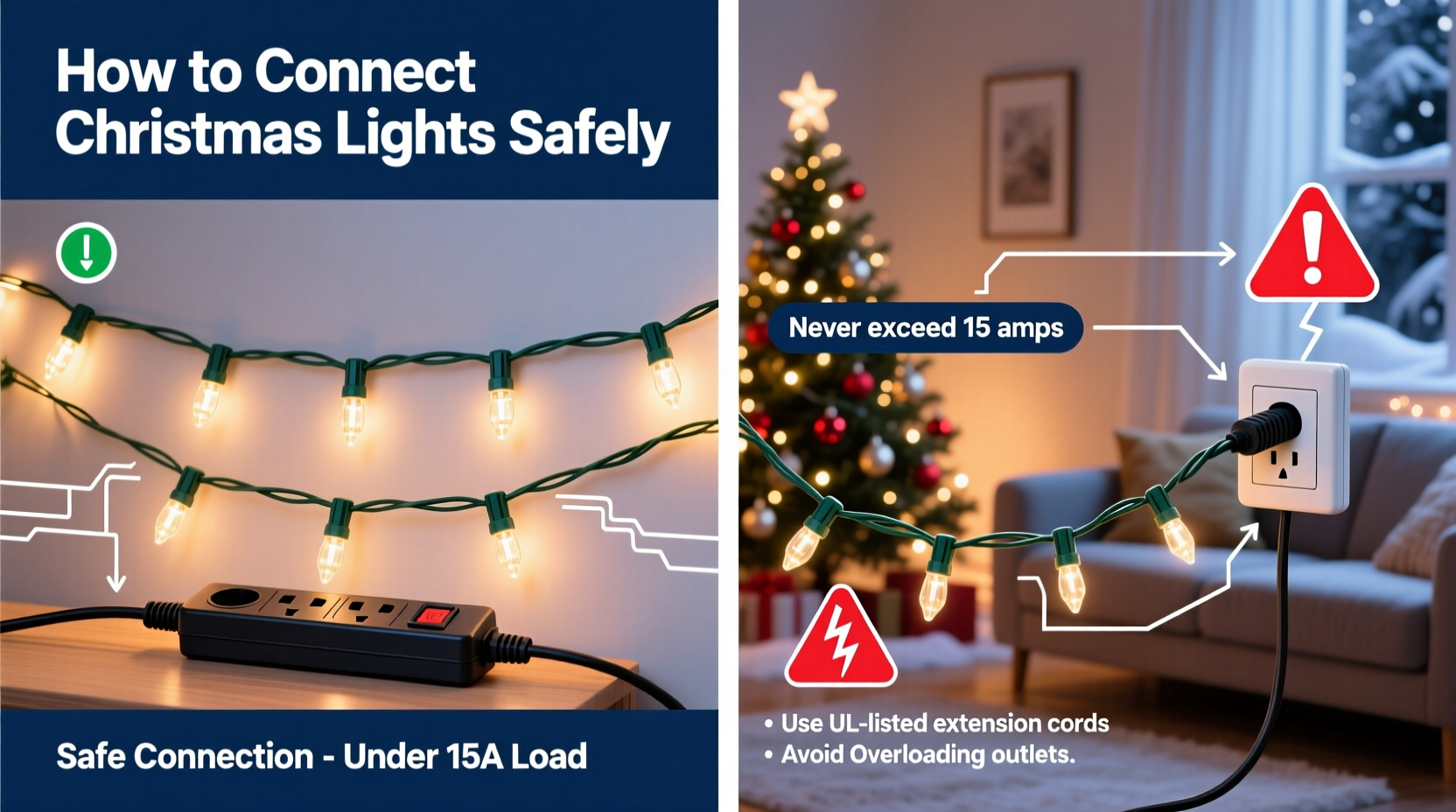
Before plugging in a single strand, it's essential to know what your electrical system can handle. Most standard household circuits in the U.S. are rated for 15 or 20 amps at 120 volts. A 15-amp circuit provides about 1,800 watts of power (15 amps × 120 volts), while a 20-amp circuit offers 2,400 watts. However, electricians recommend using only 80% of a circuit’s capacity for continuous loads — meaning 1,440 watts on a 15-amp circuit and 1,920 watts on a 20-amp circuit.
Outdoor outlets often share circuits with indoor ones, so adding heavy holiday loads can easily push a system past its limit. The key is calculating total wattage across all connected devices — not just lights, but also inflatables, projectors, or extension cords powering other decorations.
Know the Limits of Your Light Sets
Not all Christmas lights are created equal. Incandescent bulbs consume significantly more power than LEDs. For example:
- A typical incandescent mini light string uses 40–50 watts and draws about 0.3–0.4 amps.
- An LED equivalent uses only 4–7 watts and draws roughly 0.03–0.06 amps.
Manufacturers often indicate how many sets can be safely connected end-to-end. For incandescent lights, this is usually 3 to 5 sets; for LEDs, it can be as high as 40 or more. These ratings are based on wire gauge, connector design, and internal fusing — not just wattage.
Always check the label on the light set or packaging for phrases like “Connect up to 6 sets” or “Maximum load: 210 watts.” Exceeding these limits risks overheating wires, melting sockets, or triggering thermal cutoffs.
“Just because two strings plug together doesn’t mean they’re safe to combine. Always follow manufacturer specifications.” — David Langford, Electrical Safety Consultant, NFPA Contributor
Step-by-Step Guide to Safe Light Chaining
Follow this sequence to connect multiple light sets confidently and safely:
- Inventory your lights: Separate incandescent from LED sets. Mix them only when powered independently.
- Check labels: Note the wattage, amperage, and maximum connectable sets for each type.
- Calculate total load: Multiply the wattage per string by the number of strings you plan to link. Compare this to the 80% rule of your circuit.
- Use dedicated outlets: Plug major displays into outlets on different circuits whenever possible.
- Test before finalizing: Power up the full chain for at least 15 minutes to ensure no flickering, heat buildup, or tripping.
- Secure connections: Elevate plugs off the ground and use weatherproof outlet covers outdoors.
This method prevents cumulative overloads and helps identify weak points early — such as frayed wires or corroded connectors — before they become hazards.
Do’s and Don’ts When Connecting Multiple Lights
| Do | Don’t |
|---|---|
| Use LED lights for large displays — they draw less power and generate less heat. | Daisy-chain more than the manufacturer allows, even if the plugs fit. |
| Plug multiple strands into a power strip with surge protection instead of one wall outlet. | Run cords under rugs, through doorways, or where they can be damaged. |
| Inspect each set for broken bulbs, exposed wires, or melted sockets before use. | Mix old and new light sets of different voltages or types on the same run. |
| Use timers to limit runtime and reduce heat exposure overnight. | Overload extension cords beyond their rating — especially lightweight indoor cords used outside. |
| Split large displays across multiple circuits to balance the load. | Leave lights on unattended or while sleeping unless using low-wattage LEDs with timers. |
Real Example: A Homeowner’s Near-Miss Experience
Mark T., a homeowner in Ohio, wanted to outline his two-story house with warm white lights for the first time. He bought six packs of traditional incandescent mini lights, each rated at 48 watts. Thinking he could simply plug them all together, he daisy-chained all six along the roofline and connected them to a porch outlet.
Within minutes, the living room lights dimmed, and the circuit breaker tripped. After resetting it twice, he called an electrician. The diagnosis? His six-light chain drew 288 watts — not enough to exceed the circuit alone, but combined with a refrigerator, furnace, and space heater running on the same 15-amp line, the total load surpassed 1,440 watts. The electrician advised switching to LED strings and splitting the display across two outdoor circuits.
After reworking the setup with four LED strands (totaling just 24 watts) on one circuit and using a second outlet for additional decor, Mark achieved his desired look without further issues. His experience highlights how easy it is to overlook cumulative loads — especially during winter when heating systems increase baseline demand.
Use Smart Power Distribution
Rather than relying on daisy-chaining, consider distributing power more intelligently. Instead of connecting five light sets end-to-end, plug each into a central hub like a heavy-duty outdoor power strip rated for 1,500+ watts. This approach:
- Reduces strain on individual connectors.
- Allows independent control of sections.
- Lowers risk of cascading failure if one set malfunctions.
- Makes troubleshooting easier if a section goes dark.
For permanent installations, some homeowners install dedicated outdoor circuits with GFCI (Ground Fault Circuit Interrupter) protection specifically for holiday lighting. While this requires an electrician, it eliminates competition with indoor appliances and supports larger displays year after year.
Additionally, smart plugs offer remote control and scheduling. You can program lights to turn on at dusk and off at bedtime, reducing runtime and heat accumulation. Some models even provide real-time energy monitoring via smartphone apps.
Checklist: Pre-Connection Safety Review
Before powering up any multi-set display, go through this checklist:
- ✅ Verified that all light sets are of the same type (LED or incandescent).
- ✅ Checked manufacturer’s max connectable sets per strand.
- ✅ Calculated total wattage and confirmed it stays under 80% of circuit capacity.
- ✅ Inspected all cords, plugs, and sockets for damage.
- ✅ Selected a heavy-duty extension cord if needed (16 AWG or thicker for outdoor use).
- ✅ Placed GFCI-protected outlets or power strips in dry, elevated locations.
- ✅ Installed timers or smart controls to manage daily operation.
- ✅ Identified backup circuits in case of overload.
Skipping even one item increases risk. A cracked socket might seem minor, but moisture ingress can lead to short circuits. An undersized extension cord may overheat, especially when hidden under mulch or snow.
Frequently Asked Questions
Can I mix LED and incandescent lights on the same circuit?
Yes, but not by daisy-chaining them together. They operate at different voltages and current draws, so connecting them end-to-end can damage the LED set or cause uneven performance. Instead, power them separately using a multi-outlet adapter or power strip.
Why did my fuse blow even though I didn’t exceed the recommended number of connected sets?
Several factors could be at play: existing load on the circuit (e.g., HVAC, kitchen appliances), degraded wiring, poor-quality extension cords, or voltage fluctuations. Also, older homes may have lower tolerance for sustained loads. Use a circuit analyzer to assess overall demand before decorating.
Is it safer to use battery-powered lights outdoors?
Battery-powered lights eliminate electrical risks entirely, making them ideal for small accents, wreaths, or areas far from outlets. However, they’re impractical for large-scale displays due to frequent battery changes and limited brightness. For extensive setups, hardwired LEDs with proper distribution remain the safest and most efficient option.
Final Thoughts and Call to Action
Connecting multiple sets of Christmas lights doesn’t have to be a game of electrical Russian roulette. With a clear understanding of wattage, circuit limits, and manufacturer guidelines, you can create a vibrant, reliable display that lasts all season. Prioritize LED technology, distribute loads wisely, and never bypass safety features like GFCI outlets or surge protectors.
Remember: the goal isn’t just to light up your home — it’s to do so safely, efficiently, and sustainably. Thousands of holiday fires start each year due to decorative lighting mistakes. A few minutes of planning now can prevent disaster later.




 浙公网安备
33010002000092号
浙公网安备
33010002000092号 浙B2-20120091-4
Comments
No comments yet. Why don't you start the discussion?