
Fresh spinach is one of the most versatile and nutrient-dense leafy greens available, yet many home cooks underutilize it or mishandle its delicate nature. Whether harvested from a garden, bought at a farmers market, or selected from a supermarket bin, raw spinach requires careful preparation to preserve its vibrant color, tender texture, and rich nutritional profile. When cooked improperly—overheated, over-salted, or poorly seasoned—it can turn into a slimy, bitter mess. But when treated with attention and technique, fresh spinach becomes a culinary asset: subtly earthy, mildly sweet, and capable of enhancing everything from soups and pastas to omelets and grain bowls. Understanding how to wash, store, cook, and season it transforms this humble green into a cornerstone of healthy, flavorful meals.
Definition & Overview
Spinach (Spinacia oleracea) is an edible flowering plant in the Amaranthaceae family, native to central and western Asia. It has been cultivated for over 2,000 years, first gaining prominence in Persia before spreading through the Mediterranean and eventually worldwide. Today, it is grown commercially across temperate climates and is available year-round in various forms—most commonly as fresh loose-leaf bunches, baby spinach in clamshells, or frozen blocks.
Fresh spinach differs significantly from its processed counterparts. Unlike canned or frozen versions that undergo blanching and long-term storage, fresh spinach retains higher levels of water-soluble vitamins like vitamin C, folate, and certain B-complex nutrients. Its leaves are tender but resilient, capable of being eaten raw or gently cooked without disintegrating entirely. The flavor is mild compared to other dark leafy greens such as kale or mustard greens, making it accessible even to those wary of “bitter” vegetables.
Culinarily, spinach plays multiple roles: as a base for salads, a filling for pastries, a thickener for sauces, and a nutritious addition to sautés, stews, and blended dishes. Its ability to wilt rapidly under heat makes it ideal for quick-cooking applications where time and precision matter.
Key Characteristics
| Attribute | Description |
|---|---|
| Flavor Profile | Mildly sweet with a faint earthiness; young leaves are nearly neutral, mature ones slightly more robust. |
| Aroma | Faintly green and vegetal when raw; develops a warm, mineral-like scent when cooked. |
| Color & Form | Deep green, glossy leaves; crinkled (savoy) or flat (semi-savoy/baby); varies by variety. |
| Texture | Tender-crisp when raw; softens quickly when heated, reducing by up to 75% in volume. |
| Heat Sensitivity | Extremely high—wilts within 1–3 minutes depending on method and quantity. |
| Culinary Function | Adds color, nutrients, moisture, and body to dishes; acts as a base, filler, or accent ingredient. |
| Shelf Life (Fresh) | 3–7 days refrigerated, depending on initial freshness and storage conditions. |
Practical Usage: How to Use Fresh Spinach in Cooking
The real value of fresh spinach lies not just in its health benefits but in its adaptability. With minimal prep and smart timing, it enhances both simple weeknight dinners and refined restaurant-style plates. Below are proven techniques for integrating fresh spinach effectively into everyday cooking.
Washing and Drying: The First Step
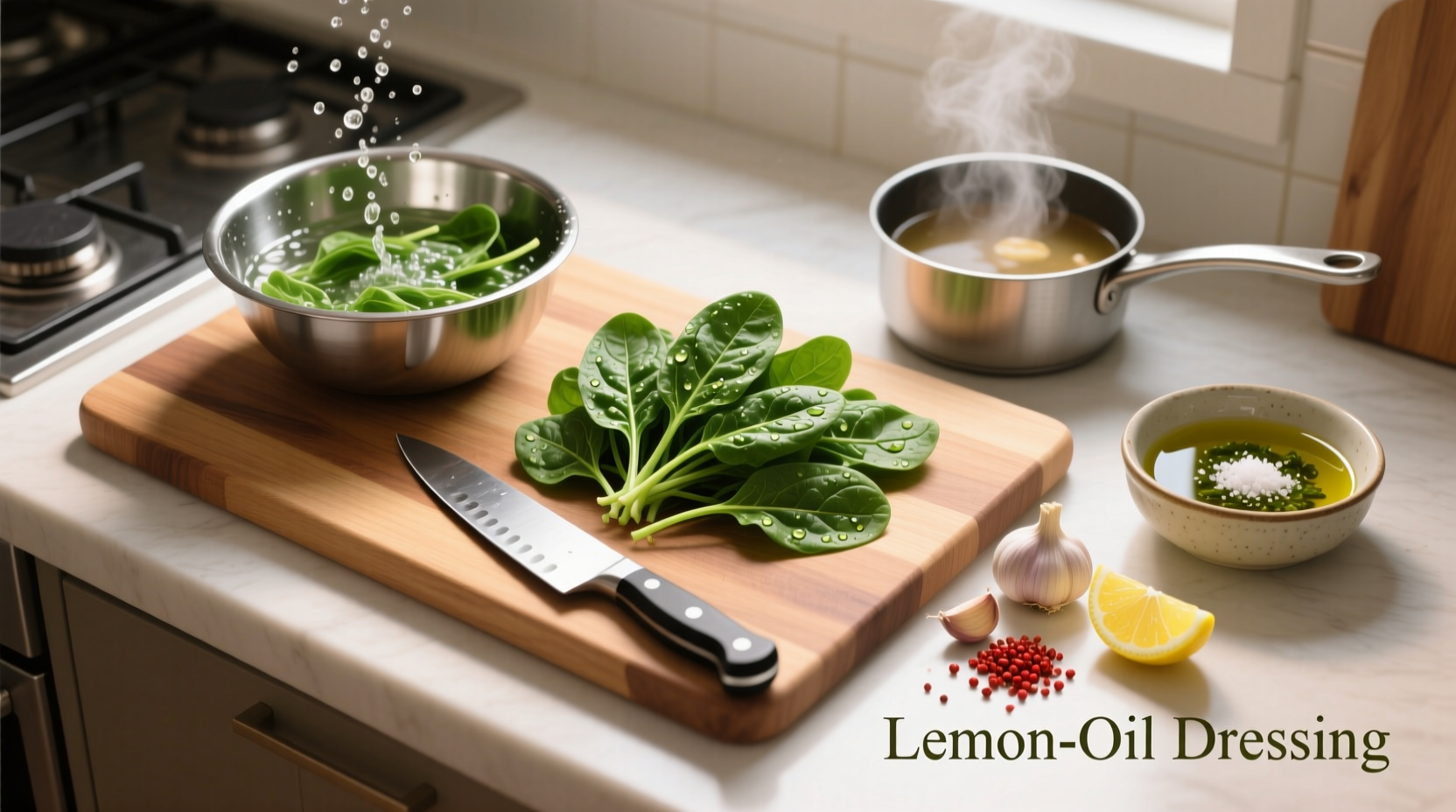
Never skip washing, even if labeled \"pre-washed.\" Soil, sand, and pesticide residues often cling to the crevices of savoyed leaves. Submerge the spinach in a large bowl of cold water, agitate gently, then lift it out—don’t pour, which would resettle debris. Repeat once or twice until no grit remains. Use a salad spinner to dry thoroughly. Excess moisture causes steaming instead of searing during sautéing and dilutes dressings in raw applications.
Pro Tip: For large quantities, fill your kitchen sink with cold water and soak spinach in batches. Drain using a colander lined with cheesecloth for faster cleanup.
Sautéing: Fast, Flavorful, and Foolproof
Sautéing is the most effective way to cook fresh spinach while preserving flavor and texture. Heat 1 tsp olive oil or butter in a wide skillet over medium-high. Add minced garlic or shallot and cook 30 seconds until fragrant. Add spinach in batches if necessary—crowding slows wilting. Toss constantly with tongs; the leaves will collapse in 1–2 minutes. Finish with a squeeze of lemon juice, flaky salt, and freshly cracked pepper.
This method works exceptionally well for side dishes, pasta additions (e.g., fettuccine alfredo with spinach), or protein accompaniments (like pan-seared salmon or grilled chicken).
Steaming: Gentle Nutrient Retention
For maximum vitamin preservation—especially heat-sensitive folate and vitamin C—steam spinach briefly. Place in a steamer basket over simmering water for 90 seconds to 2 minutes. Remove immediately and shock in ice water if serving cold, or drain and season warm. Steamed spinach integrates seamlessly into grain salads, stuffed chicken breasts, or layered casseroles.
Blanching: For Freezing or Puréeing
To preserve spinach for future use or create smooth purées (ideal for soups, dips, or baby food), blanch first. Boil for exactly 30–60 seconds, then plunge into ice water. Squeeze out excess liquid thoroughly before freezing in portions. This process deactivates enzymes that degrade flavor and color over time.
Raw Applications: Beyond Basic Salads
Baby spinach is prized for its tenderness and sweetness, making it perfect for raw consumption. However, don’t limit it to mixed greens. Try layering it under roasted vegetables on toast, folding into sandwiches instead of lettuce, or blending into herbaceous pestos (combine with basil, pine nuts, Parmesan, and olive oil). Its milder taste balances bold ingredients like blue cheese, dried cranberries, walnuts, or citrus vinaigrettes.
Cooking Ratios and Pairings
- Volume Reduction: 6 cups raw spinach ≈ 1 cup cooked.
- Fat Pairing: Fat-soluble vitamins (A, E, K) absorb better with oils, butter, avocado, or cheese.
- Acid Balance: Lemon juice or vinegar cuts richness and brightens earthy notes.
- Umami Boosters: Garlic, shallots, anchovy, soy sauce, or Parmesan deepen savory complexity.
- Protein Matches: Eggs, tofu, lentils, white beans, poultry, fish, and lean meats all pair naturally.
Expert Insight: In professional kitchens, chefs often add spinach at the very end of cooking to maintain vibrancy. A classic French technique involves stirring raw spinach into hot risotto just before plating—the residual heat wilts it perfectly without overcooking.
Variants & Types of Fresh Spinach
Not all spinach is the same. Three primary types are available in markets, each suited to different uses:
- Baby Spinach – Harvested early (20–30 days), featuring small, tender, mildly flavored leaves. Ideal for raw salads, sandwiches, and gentle cooking. Often sold pre-washed in plastic clamshells.
- Savoy Spinach – Mature plants with deeply crinkled, dark green leaves. More robust in flavor and texture. Best for sautéing, steaming, or incorporating into cooked dishes like quiches or lasagnas.
- Flat-Leaf (or Semi-Savoy) Spinach – Smoother than savoy but heartier than baby. Easier to clean due to fewer crevices. Commonly used in commercial kitchens for consistent performance across applications.
| Type | Best Uses | Availability | Storage Note |
|---|---|---|---|
| Baby Spinach | Raw salads, wraps, light sautés | Year-round, supermarkets | Use within 4–5 days; keep sealed |
| Savoy Spinach | Sautéing, soups, gratins | Seasonal (fall–spring); farmers markets | Store in breathable bag; lasts ~5 days |
| Flat-Leaf | All-purpose; especially good for purées | Supermarkets, bulk suppliers | Wash before storing to extend life |
Comparison with Similar Leafy Greens
Spinach is often confused with other leafy greens, particularly arugula, Swiss chard, and kale. While they share nutritional benefits, their culinary behaviors differ significantly.
| Green | Flavor | Texture | Cooking Time | Substitution Notes |
|---|---|---|---|---|
| Spinach | Mild, slightly sweet | Very tender when cooked | 1–3 minutes | Can substitute for chard or beet greens in fast-cook recipes |
| Kale | Bitter, peppery, fibrous | Chewy; requires longer cooking | 5–10+ minutes | Not interchangeable unless massaged (raw) or braised (cooked) |
| Swiss Chard | Earthy, slightly salty | Stems firm, leaves soft | 4–6 minutes (stems first) | Leaves can replace spinach; stems require separate treatment |
| Arugula | Pungent, peppery, spicy | Delicate but assertive | Less than 1 minute | Use sparingly as a flavor accent, not bulk replacement |
“Many people think ‘leafy green’ means ‘interchangeable,’ but each green has its own rhythm. Spinach wilts fast and fades faster—if you miss the window, you lose the dish.”
— Chef Elena Torres, Culinary Instructor, Institute of Plant-Based Cuisine
Practical Tips & FAQs
How do I prevent spinach from becoming watery or slimy?
Overcooking and inadequate drying are the main culprits. Always wash and spin-dry thoroughly. Cook quickly over medium-high heat and avoid covering the pan excessively, which traps steam. If adding to casseroles or bakes, pre-wilt and squeeze out moisture first.
Can I freeze fresh spinach?
Yes, but only after blanching. Raw freezing leads to texture degradation and off-flavors. Blanch for 60 seconds, cool in ice water, drain, squeeze firmly, and freeze in 1-cup portions in zip-top bags. Use within 12 months for best quality.
Is raw or cooked spinach more nutritious?
Both have advantages. Raw spinach provides more vitamin C and folate. Cooked spinach increases bioavailability of iron, calcium, and beta-carotene due to cell wall breakdown. For optimal nutrition, include both forms in your diet.
How much spinach should I use per person?
As a side dish: 2–3 oz (about 2 loosely packed cups raw) per serving. Since it reduces dramatically, plan accordingly. One pound of raw spinach yields roughly 1½ cups cooked.
What’s the best way to store fresh spinach?
Keep it cold and dry. Line a container with paper towels, add spinach, cover, and refrigerate at 34–38°F (1–3°C). Avoid sealing wet leaves in plastic—they’ll spoil rapidly. Do not wash until ready to use.
Are spinach stems edible?
Young spinach has tender stems that cook evenly with the leaves. Mature savoy types may have thicker stems; trim them if fibrous. Never eat tough, woody stalks—they won’t soften adequately and detract from texture.
Can I add spinach to smoothies?
Absolutely. Baby spinach blends invisibly into fruit-based smoothies, adding nutrients without altering flavor. Start with 1 cup per serving. Combine with banana, pineapple, mango, or apple to mask any vegetal notes.
Quick Checklist: Preparing Fresh Spinach
✅ Inspect for yellowing or slimy spots
✅ Wash in cold water (even if pre-washed)
✅ Dry thoroughly in a spinner
✅ Remove thick stems if needed
✅ Store in airtight container with paper towel
✅ Use within 5 days for peak freshness
Summary & Key Takeaways
Fresh spinach is a powerhouse ingredient that bridges health and flavor when handled correctly. Its rapid wilting demands attention but rewards with efficiency—few vegetables deliver so much volume reduction with so little effort. To master it, remember these fundamentals:
- Always wash and dry thoroughly to avoid grit and sogginess.
- Choose the right type: baby for raw, savoy/flat-leaf for cooking.
- Cook quickly—overcooking destroys texture and drains flavor.
- Pair with fat, acid, and umami to elevate its subtle profile.
- Store properly to maximize shelf life and minimize waste.
- Use both raw and cooked forms to access full nutritional benefits.
Whether you're building a weekday salad, enriching a curry, or folding greens into scrambled eggs, fresh spinach offers unmatched versatility. Treat it with care, respect its delicate nature, and integrate it thoughtfully into your meal planning—and you’ll find it becomes not just a healthy habit, but a culinary joy.
Next time you’re at the market, pick up a bunch of fresh spinach with intention. Try one new preparation method this week—whether it’s a lemon-garlic sauté, a blended soup starter, or a raw pesto twist. Notice how its simplicity adapts to your creativity.




 浙公网安备
33010002000092号
浙公网安备
33010002000092号 浙B2-20120091-4
Comments
No comments yet. Why don't you start the discussion?