
Cooking scrambled eggs shouldn’t require a full kitchen setup or expert timing. For people rushing in the morning, living in dorms, or just craving a quick protein boost, the microwave offers a surprisingly effective solution. While many assume microwaved eggs turn out rubbery or uneven, the truth is that with the right technique, you can achieve creamy, fluffy, evenly cooked scrambled eggs in under two minutes—no stove, no pan, no mess.
This guide breaks down the science, tools, and precise steps behind mastering scrambled eggs in the microwave. Whether you're a student, busy professional, or minimalist cook, this method delivers consistent results every time. Forget guesswork—this isn’t a kitchen shortcut; it’s a refined cooking technique disguised as a hack.
The Science Behind Microwave Scrambled Eggs
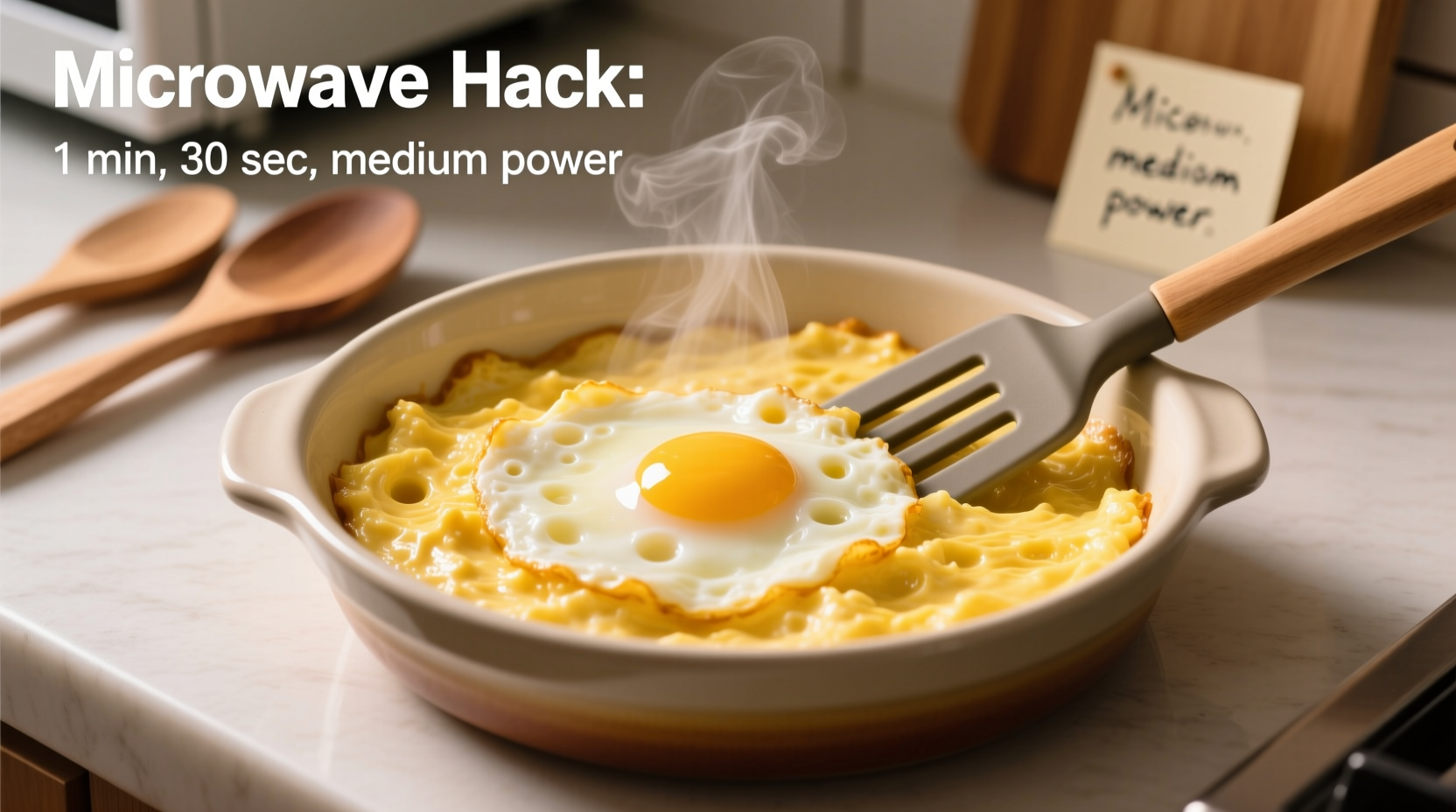
Microwaves heat food by agitating water molecules, which means they cook from the inside out—unlike stovetop methods that rely on external heat transfer. This unique mechanism can lead to overcooking if not managed carefully, especially with delicate proteins like eggs.
Eggs are mostly water and protein. When heated too quickly or unevenly, the proteins tighten excessively, squeezing out moisture and creating a tough, rubbery texture. The key to perfect microwaved scrambled eggs lies in controlling the rate of heating and allowing time for residual heat to finish the job—a principle known as “carryover cooking.”
By using lower power settings, stirring at strategic intervals, and choosing the right container, you can mimic the gentle folding action of a spatula on a low flame. The result? Custard-like eggs with a silken mouthfeel, comparable to diner-style or French-style scrambles.
Step-by-Step Guide: Perfect Microwave Scrambled Eggs
Follow this detailed sequence to make flawless scrambled eggs using only a microwave. This process takes less than five minutes from start to plate.
- Gather ingredients and tools: You’ll need 2 large eggs, 2 tablespoons of milk (or water), a pinch of salt, a microwave-safe bowl (8 oz minimum), a fork, and a small silicone spatula or spoon.
- Crack and whisk: Break the eggs into the bowl. Add milk and salt. Whisk vigorously for 30 seconds until fully blended and slightly frothy. The aeration helps create fluffiness.
- Microwave on medium power: Set your microwave to 50% power (not full power). Heat the mixture for 45 seconds. This slow initial cook prevents edge hardening.
- Stir gently: Remove the bowl (it will be warm but not scalding). Use a fork or spatula to stir the eggs from the edges toward the center, breaking up any set portions.
- Second burst: Return to microwave at 50% power for another 30 seconds. Check consistency—eggs should still look slightly wet in places.
- Final stir and rest: Stir again, then let sit in the microwave for 30–60 seconds. Residual heat will finish cooking without drying them out.
- Serve immediately: Transfer to a plate. Add black pepper, herbs, cheese, or butter if desired.
This method ensures even texture without overcooking. Skipping the resting phase is the most common mistake—it leads to mushy or dry eggs.
Do’s and Don’ts: Microwave Egg Edition
| Do’s | Don’ts |
|---|---|
| Use 50% power for gradual cooking | Never microwave eggs in their shell (risk of explosion) |
| Add dairy or water for moisture | Avoid using high power the entire time |
| Stir halfway through cooking | Don’t skip the resting period after microwaving |
| Cover loosely with a paper towel | Don’t use metal bowls or containers |
| Whisk thoroughly before cooking | Don’t walk away—monitor closely to avoid overflow |
Real-World Example: The College Student’s Breakfast Fix
Jamal, a sophomore at a Midwestern university, lives in a dorm room with no stove access. His mornings are tight—he has an 8:30 a.m. lecture and rarely wakes up before 7:45. For weeks, he survived on cereal and energy bars until a roommate showed him the microwave egg trick.
Using a $3 microwave-safe bowl from the campus store, Jamal now makes scrambled eggs every weekday. He pre-cracks two eggs into the bowl the night before (stored safely in the fridge), adds a splash of almond milk in the morning, whisks, and follows the 45 + 30 second rule. Total time: 2 minutes. He tops them with hot sauce and eats while reviewing flashcards.
“I used to think microwaved eggs were gross,” he said. “But once I learned to stop cooking them on high, it changed everything. They’re actually better than the dining hall’s.”
This scenario reflects a growing trend: more people relying on compact, efficient cooking methods due to space, time, or resource constraints. The microwave scramble is not a compromise—it’s an optimized solution.
Expert Insight: What Chefs Say About Microwave Eggs
While some traditionalists scoff at the idea of microwaving eggs, modern culinary experts acknowledge its potential when done correctly.
“The microwave isn’t the enemy of good food—it’s a tool. With eggs, low and slow wins the race. I teach my students to treat the microwave like a double boiler for delicate dishes.” — Chef Lena Ruiz, Culinary Instructor at Pacific Heights Cooking School
Ruiz emphasizes that precision matters more than equipment. She uses microwaves in her teaching kitchen to demonstrate carryover cooking and thermal control, especially for beginners who struggle with stovetop timing.
“I’ve made scrambled eggs for Michelin-starred guests using a microwave. Texture trumps method. If it’s creamy, seasoned, and served hot, nobody asks how it was cooked.” — Chef Arjun Patel, Executive Chef at Bloom & Vine
Customization and Variations
Once you’ve mastered the base recipe, customization opens up endless possibilities. All additions should be incorporated before the final stir or added after cooking to preserve texture.
- Cheese: Stir in 1 tablespoon of shredded cheddar, feta, or goat cheese after the final microwave cycle. Let residual heat melt it in.
- Vegetables: Sautéed onions, spinach, or diced bell peppers can be mixed in before cooking. Pre-cook watery veggies to avoid diluting the eggs.
- Proteins: Diced ham, cooked bacon, or smoked salmon work well. Add after cooking to maintain moisture.
- Herbs and spices: Chives, dill, paprika, or a dash of cayenne elevate flavor instantly. Fresh herbs are best added at the end.
- Dairy swaps: Cream, half-and-half, or plant-based milks like oat or soy alter richness. Water produces lighter eggs; milk adds creaminess.
For a restaurant-style finish, top with a pat of butter that melts into the warm eggs, adding gloss and depth.
Checklist: Your Microwave Egg Success Plan
Use this checklist each time until the process becomes second nature.
- ☑ Use a microwave-safe bowl with rounded sides
- ☑ Whisk eggs, liquid, and seasonings until fully blended and slightly foamy
- ☑ Set microwave to 50% power (look for “Medium” or “Defrost” setting)
- ☑ Microwave for 45 seconds, then stir gently from edges to center
- ☑ Microwave another 30 seconds at 50% power
- ☑ Stir again and let rest 30–60 seconds
- ☑ Taste and adjust seasoning if needed
- ☑ Add toppings and serve immediately
Frequently Asked Questions
Can I cook more than two eggs at once?
Yes, but with caution. Up to four eggs can be cooked together if you use a larger bowl and extend the timing: 60 seconds first, stir, then 45 seconds, stir, rest. Beyond four eggs, layering causes uneven cooking. It’s better to make multiple batches.
Why do my eggs sometimes explode or overflow?
Over-whisking or using high power creates rapid steam buildup. To prevent this, avoid sealing the bowl completely—use a loose paper towel cover—and never exceed 75% power. Also, ensure the bowl is at least twice the volume of the egg mixture.
Are microwaved eggs less nutritious than stovetop eggs?
No. Microwaving preserves nutrients as well as or better than other methods because of shorter cooking times and less exposure to high heat. Protein quality, vitamin B12, and choline levels remain intact.
Conclusion: Elevate Your Quick Meal Game
Perfect scrambled eggs don’t require a skillet, constant stirring, or gourmet skills. With a microwave, a bowl, and a few simple techniques, you can produce restaurant-quality results in under two minutes. The method is scalable, energy-efficient, and ideal for anyone prioritizing speed without sacrificing taste or texture.
This isn’t just a hack—it’s a redefinition of what fast, smart cooking looks like in modern life. Once you master the rhythm of low power, strategic stirring, and patient resting, you’ll wonder why you ever waited for a burner to heat up.




 浙公网安备
33010002000092号
浙公网安备
33010002000092号 浙B2-20120091-4
Comments
No comments yet. Why don't you start the discussion?