
The magic of the holiday season often lies in the details—especially when it comes to decoration. While many focus on the tree, lights, and ornaments, one frequently overlooked element is gift wrapping. Wrapping paper that clashes with your tree can disrupt an otherwise harmonious aesthetic. Conversely, coordinated wrapping transforms your presents from afterthoughts into intentional design elements that enhance your overall holiday theme.
Thoughtfully matching your gift wrap to your Christmas tree isn’t about perfection—it’s about cohesion. Whether you're working with a traditional red-and-green palette, a minimalist white-and-silver setup, or a bold modern mix, aligning your presents with your tree creates visual harmony and adds a professional touch to your celebration. This guide walks through practical strategies, color theory basics, material choices, and real-life applications to help you master this subtle but impactful detail.
Understand Your Tree’s Color Palette
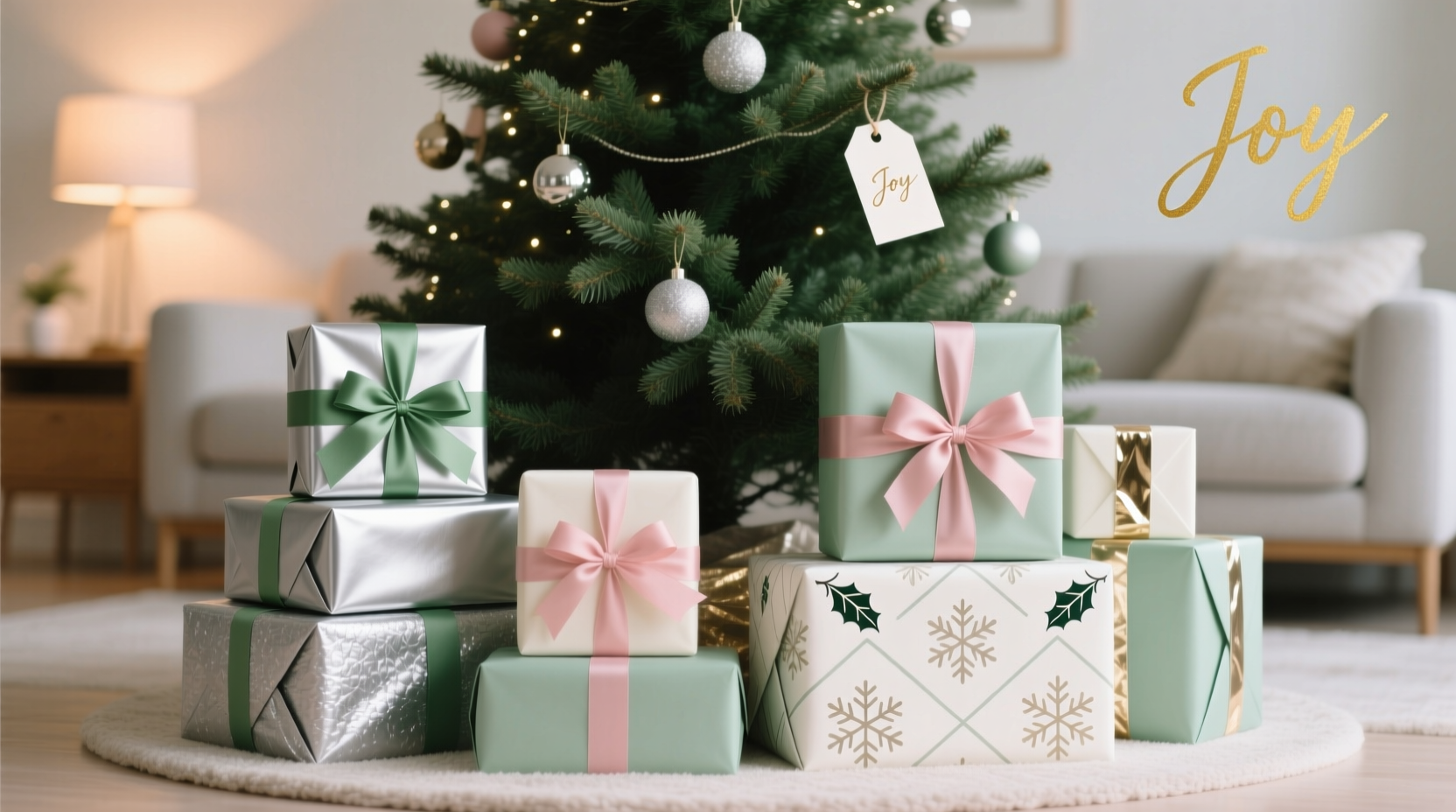
Before selecting any wrapping materials, take a close inventory of your tree’s dominant colors, textures, and finishes. Most trees follow one of three general schemes: traditional, modern, or eclectic. Identifying which category yours falls into will streamline your gift-wrapping decisions.
- Traditional: Red, green, gold, and cream dominate. Often includes velvet ribbons, pinecones, and classic ornaments like glass balls and tinsel.
- Modern: Monochromatic or limited palettes such as all-white, black-and-gold, silver-and-blue, or blush-and-rose gold. Focuses on sleek lines, matte finishes, and metallic accents.
- Eclectic: A curated mix of vintage and contemporary elements—perhaps navy, copper, burgundy, and forest green—with handmade ornaments and mismatched yet complementary patterns.
Once you’ve defined your tree’s theme, extract 2–3 primary colors and one accent shade. These will become your wrapping guidelines. For example, if your tree features emerald green garlands, gold stars, and ivory snowflakes, use emerald, gold, and ivory as your core wrapping palette.
Choose Wrapping Materials That Complement, Not Compete
Matching your gifts to your tree doesn’t mean replicating every ornament. Instead, aim for complementary tones and textures that echo—not mimic—the tree’s mood. Consider not only color but also finish, pattern scale, and material quality.
For instance, glossy red paper might clash with a rustic farmhouse tree featuring burlap bows and matte wood ornaments. In that case, opt for kraft paper with a red twine bow or a textured red linen-finish wrap. The color remains consistent, but the texture supports the overall aesthetic.
| Tree Style | Recommended Wrap Finish | Best Ribbon Types | Avoid |
|---|---|---|---|
| Traditional | Glossy, foil-embossed, or patterned (plaid, holly) | Satin, wired ribbon, velvet | Overly modern metallics or neon hues |
| Modern Minimalist | Matte, solid-color, or geometric prints | Thin metallic wire, silk, or paper ribbon | Busy patterns or cartoonish designs |
| Rustic/Farmhouse | Kraft paper, linen-textured, or hand-stamped | Burlap, jute, twine, or lace | Plastic-heavy wraps or synthetic glitter |
| Eco-Friendly/Neutral | Recycled paper, newspaper, fabric furoshiki | Natural cotton tape, hemp cord | Non-recyclable laminated papers |
Texture plays a crucial role. A satin ribbon reflects light differently than a woven cotton one, which affects how it interacts with your tree’s lighting. If your tree has warm white bulbs, go for ribbons with soft sheen. With cool LED lights, consider crisper finishes that reflect cleanly.
Step-by-Step: Coordinating Wrapping in 5 Practical Steps
Follow this sequence to ensure your gift wrapping enhances rather than distracts from your holiday decor.
- Assess your tree’s dominant colors. List the top three shades visible from across the room. These are what people will notice first.
- Select wrapping paper within that range. You don’t need an exact match—close tones work better than clashing brights. Use analogous colors (next to each other on the color wheel) for a seamless blend.
- Pick one accent material. Choose either ribbon, tags, or embellishments (like dried citrus or cinnamon sticks) to add dimension without overwhelming.
- Test your combo in natural light. Place a wrapped sample box near the tree during daytime. Step back and observe. Does it feel like part of the display?
- Limit variety. Stick to no more than two wrapping styles and three ribbon types across all gifts. Too much variation breaks cohesion, even within a theme.
Real Example: A Coastal Christmas Tree and Its Gifts
Sarah, a designer in Portland, Maine, decorated her living room with a “Coastal Christmas” theme: a blue-green spruce adorned with sea glass ornaments, driftwood stars, and rope garlands. Her initial gift wrap was bright red with Santa prints—a stark contrast that made the presents look out of place.
She revised her approach by switching to kraft paper stamped with subtle seashell motifs. She tied each with navy-and-white striped grosgrain ribbon and added mini wooden anchors as tags. The result? The gifts now looked like natural extensions of the tree, contributing to the nautical narrative instead of interrupting it.
This shift didn’t require expensive materials—just intentionality. By aligning the story (coastal charm) across both tree and presents, Sarah created a unified experience that guests complimented throughout the season.
Expert Insight: The Psychology of Cohesive Design
Design cohesion does more than please the eye—it influences emotion. When elements in a space feel connected, observers experience a sense of calm and order. Dissonance, even in small doses like mismatched wrapping, can create subconscious discomfort.
“Visual harmony signals care and thoughtfulness. When your gifts echo your tree’s palette, you’re not just decorating—you’re telling a story. People respond to that emotionally.” — Lena Torres, Interior Stylist & Holiday Design Consultant
Torres emphasizes that coordination isn’t about rigidity. “You can have fun with patterns as long as they share a common thread—literally and figuratively. If your tree has teal and copper, a geometric teal wrap with copper foil edging bridges the gap beautifully.”
Checklist: Achieving Wrap-to-Tree Harmony
Use this checklist before finalizing your wrapping to ensure alignment with your tree’s design:
- ✅ Identified 2–3 main colors from the tree
- ✅ Chosen wrapping paper in matching or analogous tones
- ✅ Selected ribbon or twine that complements tree textures (e.g., velvet for plush, jute for rustic)
- ✅ Limited the number of different wrap styles to two max
- ✅ Used consistent tag design (color, font, material)
- ✅ Tested a sample gift next to the tree in daylight
- ✅ Reused decorative elements from the tree (e.g., extra picks, mini ornaments) as gift toppers
- ✅ Avoided overly bright or cartoonish designs unless they match the tree’s playful tone
Frequently Asked Questions
Can I mix patterns if my tree has solid ornaments?
Yes, but keep the color palette tight. If your tree uses solid red and green balls, a plaid or tartan wrap in those same shades will feel connected. Avoid introducing new colors—even if they’re “Christmassy.” Stick to the established scheme.
What if I have multiple trees with different themes?
Treat each tree as its own zone. Gifts placed under the formal dining room tree should match that tree’s elegance, while those under the kids’ playroom tree can be brighter and more whimsical. Zone-based wrapping prevents visual chaos and respects each space’s intent.
Is it okay to use white wrapping on a colorful tree?
Absolutely—white acts as a neutral that lets ornaments shine. To tie it in, add ribbon or tags in one of your tree’s accent colors. A white-wrapped gift with a forest green velvet bow becomes part of the ensemble, not a blank space.
Go Beyond Color: Incorporate Theme and Story
Color is just the beginning. The most memorable holiday displays tell a story. Is your tree inspired by Victorian nostalgia, Scandinavian minimalism, or a family travel memory? Let that narrative extend to your gifts.
For example, a vintage-inspired tree with mercury glass and lace might pair beautifully with sepia-toned paper sealed with wax stamps. A ski lodge-themed tree could feature gifts wrapped in buffalo check paper with leather cord and pine sprig accents.
This deeper level of coordination turns your holiday decor into an immersive experience. Guests don’t just see a tree and presents—they feel the atmosphere you’ve crafted.
Conclusion: Elevate Your Holiday Display with Intentional Wrapping
Your Christmas tree is the centerpiece of the season, but the gifts beneath it don’t have to play second fiddle. With thoughtful color matching, attention to texture, and a clear design story, your wrapped presents can enhance—not distract from—the beauty you’ve created.
This year, treat gift wrapping as an extension of your decor, not a last-minute chore. By aligning your paper, ribbon, and details with your tree’s palette, you’ll achieve a polished, intentional look that reflects care and creativity. The result is more than visually pleasing—it’s emotionally resonant.




 浙公网安备
33010002000092号
浙公网安备
33010002000092号 浙B2-20120091-4
Comments
No comments yet. Why don't you start the discussion?