
Entering a phone number might seem simple, but incorrect formatting can lead to failed calls, undelivered messages, or rejection from online forms. In the United States, where communication spans local, national, and global channels, knowing how to format a phone number properly is essential. Whether you're filling out a job application, signing up for a service, or calling a client overseas, precision matters. This guide breaks down every common scenario and provides actionable advice to ensure your numbers are always recognized and accepted.
Understanding the Standard U.S. Phone Number Structure
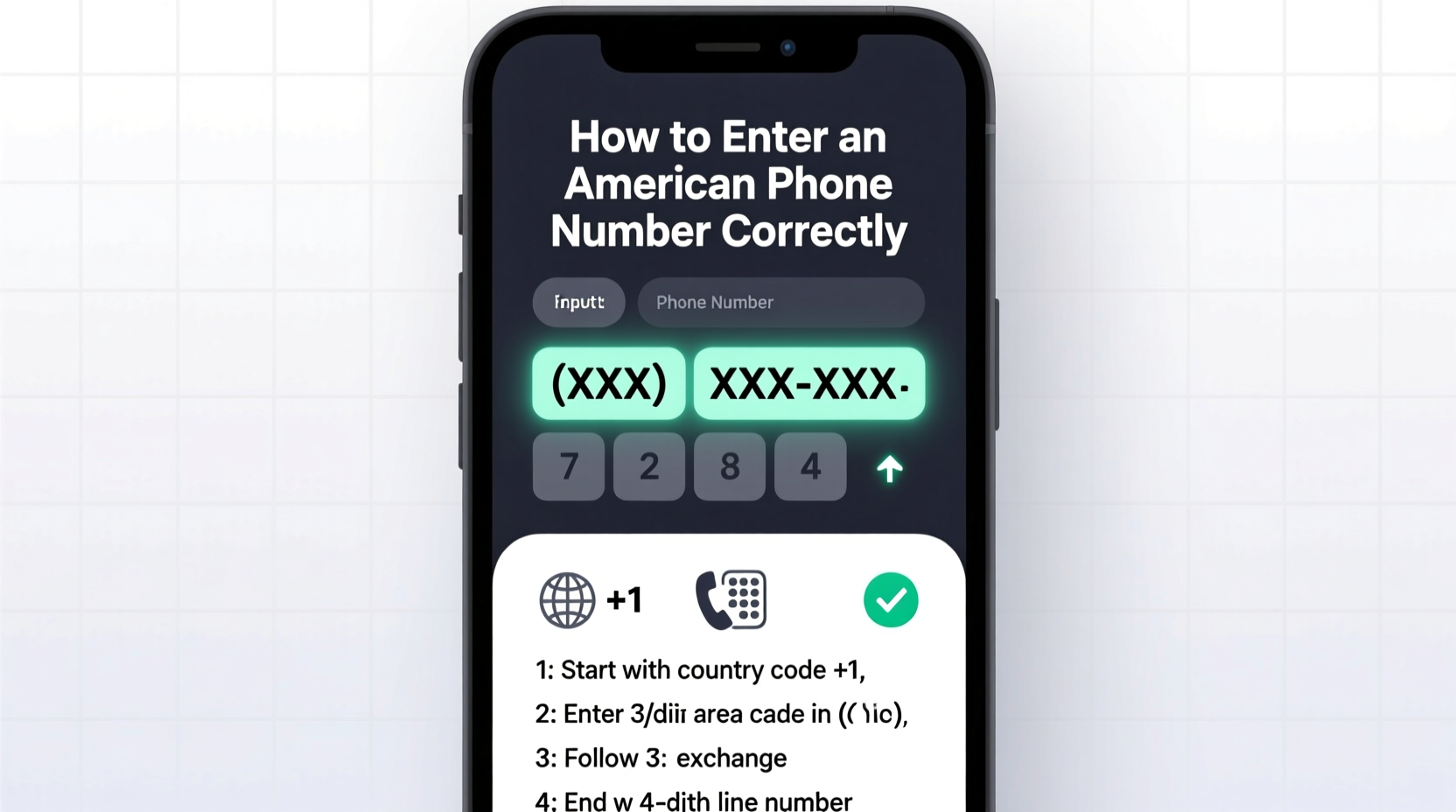
A standard American phone number consists of 10 digits: a 3-digit area code, followed by a 3-digit central office (or exchange) code, and ending with a 4-digit line number. For example: 5558675309. While this raw format works in some systems, most real-world applications require proper separation and labeling.
The North American Numbering Plan (NANP) governs phone numbering across the U.S., Canada, and several Caribbean nations. It allows for consistent routing and recognition of calls. Within this system, formatting helps both humans and machines interpret the number correctly.
Common Formatting Styles and When to Use Them
Different situations call for different formats. The same number can be written in multiple valid ways depending on context. Here’s a breakdown of the most widely accepted styles:
| Format | Example | Best Used For |
|---|---|---|
| (XXX) XXX-XXXX | (212) 555-0198 | Business cards, printed materials, professional correspondence |
| XXX-XXX-XXXX | 212-555-0198 | Websites, forms, internal databases |
| XXX.XXX.XXXX | 212.555.0198 | Technical documentation, spreadsheets |
| +1 XXX XXX XXXX | +1 212 555 0198 | International communication, email signatures |
| 1-XXX-XXX-XXXX | 1-212-555-0198 | Long-distance dialing instructions, customer support guides |
No single format is “correct” in all cases. Instead, choose based on audience and medium. For instance, parentheses are more readable in print, while space-separated digits with a +1 prefix are preferred in global digital contexts.
How to Format Numbers for International Use
If you're contacting someone outside the U.S. or providing your number abroad, including the country code is non-negotiable. The U.S. country code is +1. Always place it at the beginning, without parentheses or dashes unless spacing improves clarity.
When writing for international audiences, follow the E.164 standard—a globally recognized format used in telecommunications and web applications. E.164 requires:
- No spaces, parentheses, or special characters (except the leading +)
- Inclusion of the country code
- Total length not exceeding 15 digits
For example, the New York number 212-555-0198 becomes +12125550198 in E.164 format. This version is ideal for VoIP services like WhatsApp, Zoom, or international SMS platforms.
“Using E.164 formatting ensures maximum compatibility across global telephony systems.” — David Lin, Telecommunications Engineer at Global Connect Networks
Step-by-Step Guide to Entering Numbers in Digital Forms
Online forms often reject phone numbers due to formatting errors. Follow this sequence to maximize success:
- Check the input field label: Does it specify a format? If so, match it exactly (e.g., “(555) 555-5555”).
- Remove all non-numeric characters first: Strip parentheses, hyphens, dots, and spaces.
- Add the country code if required: Look for a dropdown menu with country flags or codes. Select “United States (+1)” and then enter only the 10-digit number.
- Re-enter with formatting if prompted: Some forms auto-format as you type; others require strict adherence to visual examples.
- Test the number: If possible, verify via SMS or automated call.
Many modern websites now use smart input fields that accept various formats and convert them automatically. However, legacy systems—especially government portals or older CRM software—remain rigid.
Real-World Example: Submitting a Job Application
Sarah applied for a remote position at a tech startup based in Austin. She filled out their online form carefully, entering her phone number as “555.867.5309” because that’s how she’d seen it formatted on LinkedIn. Unfortunately, the company’s applicant tracking system only accepted numbers in the format “(555) 555-5555.” Her submission failed silently, and she didn’t receive a confirmation email.
After resubmitting with the correct format—(555) 867-5309—her application went through immediately. A week later, she landed the interview. This small oversight could have cost her the opportunity.
This case illustrates why matching the expected format—even when other versions are technically correct—is crucial in high-stakes scenarios.
Common Mistakes and How to Avoid Them
Even experienced professionals make errors when entering phone numbers. Here are frequent pitfalls and how to prevent them:
| Mistake | Correct Approach |
|---|---|
| Omitting the area code (e.g., 555-0198) | Always include the full 10-digit number |
| Using two-digit area codes (e.g., 12-345-6789) | All U.S. area codes are three digits |
| Adding extra zeros (e.g., 001-212-...) | Use +1, not 001, for U.S. numbers internationally |
| Formatting inconsistently across platforms | Pick one primary format and stick to it in professional settings |
Frequently Asked Questions
Do I need to dial 1 before the area code when calling within the U.S.?
For long-distance calls, yes—dial 1 followed by the 10-digit number. However, many carriers now allow 10-digit local dialing even within the same area code, especially in cities with multiple overlays. To be safe, include the 1 when making calls from landlines or unfamiliar networks.
Can I use dashes instead of dots or spaces in online forms?
Only if the form accepts them. Most backend systems normalize input, but poorly designed forms may reject certain characters. When in doubt, enter only digits and let the system apply formatting.
Why do some U.S. numbers start with +1 and others don’t?
The +1 indicates the country code and is used primarily in international contexts or digital communications. Domestically, it’s often omitted because the network assumes the call originates within the NANP region. Including +1 ensures clarity when communicating globally.
Final Checklist: Ensuring Your Number Is Always Correct
- ✅ Use 10 digits: area code + exchange + line number
- ✅ Include +1 when communicating internationally
- ✅ Match the requested format on forms and applications
- ✅ Avoid spaces or symbols unless explicitly allowed
- ✅ Double-check before submitting important documents
- ✅ Store your own number in multiple formats for easy access
Conclusion
Properly formatting an American phone number isn’t just about aesthetics—it’s about functionality, professionalism, and reliability. From job applications to international calls, a well-formatted number ensures you’re reachable and taken seriously. By understanding regional standards, anticipating system requirements, and avoiding common mistakes, you eliminate unnecessary friction in communication.




 浙公网安备
33010002000092号
浙公网安备
33010002000092号 浙B2-20120091-4
Comments
No comments yet. Why don't you start the discussion?