
Each December, an estimated 35 million real Christmas trees are discarded in the U.S. alone—many ending up in landfills where they decompose anaerobically, releasing methane. Meanwhile, over 50 million artificial trees—made from PVC, steel, and non-recyclable plastics—are used year after year, yet fewer than 1% are ever recycled. A zero waste Christmas tree isn’t a compromise; it’s a deliberate, joyful reimagining of tradition. It’s built not from extraction or disposability—but from what already exists: cardboard boxes from last month’s deliveries, scrap wood from renovation projects, bundled twigs from your backyard pruning, or even old book pages folded into delicate ornaments. This approach eliminates virgin resource use, avoids microplastic shedding, and ensures every component returns safely to soil, shelf, or workshop at season’s end. More than sustainability, it cultivates presence: the time spent cutting, assembling, and decorating becomes part of the ritual—not an afterthought.
Why “Zero Waste” Means More Than Just Recycling
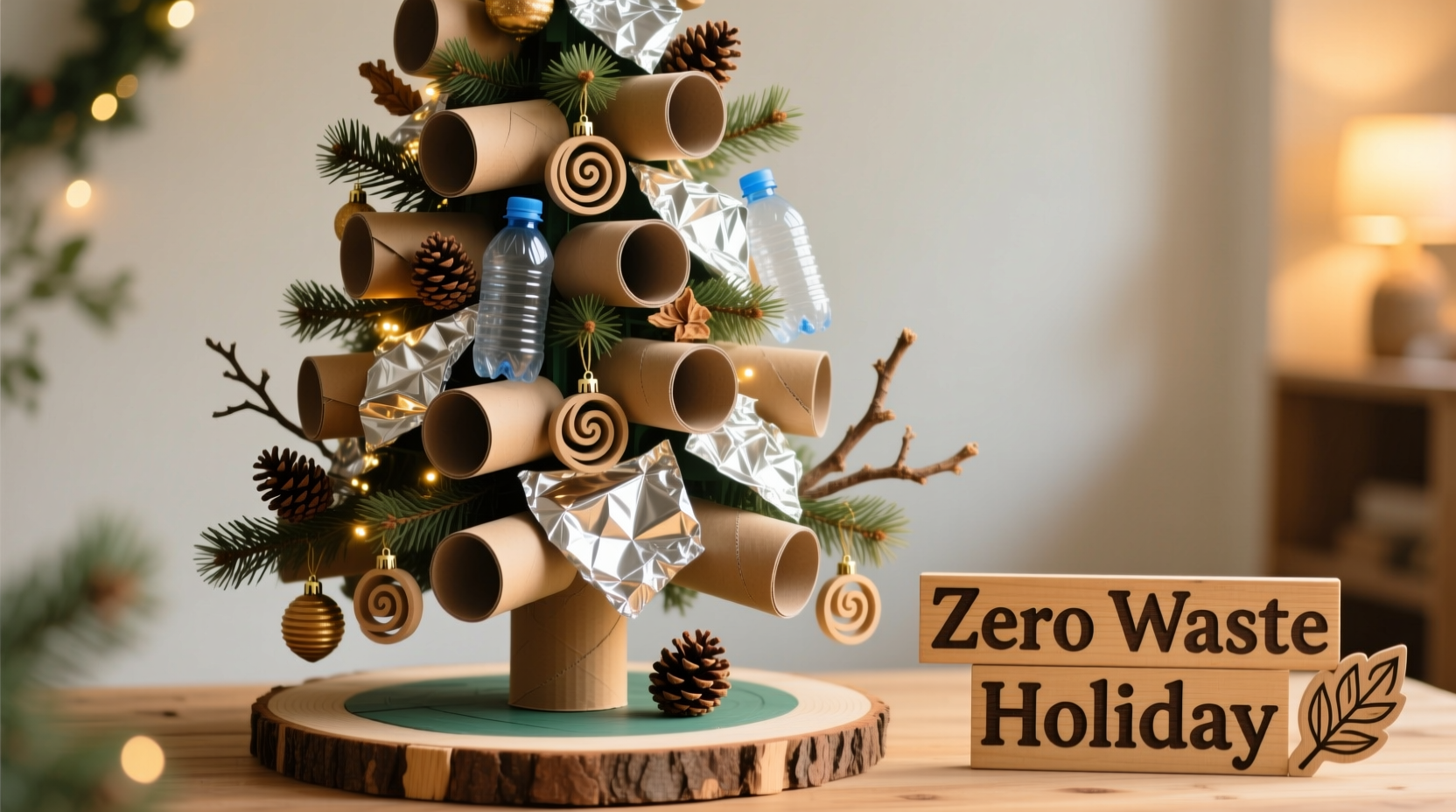
True zero waste goes beyond tossing scraps into a blue bin. It prioritizes prevention, reuse, and closed-loop systems. For a Christmas tree, that means rejecting anything designed for single-season use—even if labeled “biodegradable” or “eco-friendly.” A “compostable” plastic tree stand may require industrial facilities unavailable to most households; a “recyclable” aluminum frame often contains mixed-material joints impossible to separate. Instead, zero waste demands intentionality at every stage: sourcing (only materials you already own or can borrow), construction (mechanical assembly, no adhesives or permanent fasteners), decoration (edible, natural, or reusable elements), and deconstruction (planned disassembly for immediate reuse or safe return to earth).
Material Sourcing: What to Use—and What to Avoid
The foundation of your zero waste tree is intelligent material selection. Prioritize items that are locally available, structurally sound, and chemically inert. Avoid anything treated with flame retardants, pressure-treated lumber (arsenic or copper compounds), laminated particleboard (urea-formaldehyde binders), or synthetic fabrics coated in PFAS “stain-resistant” finishes. These substances leach during decomposition or release toxins when burned—a common disposal method for discarded trees.
| Material Category | Excellent Choices | Avoid | Why |
|---|---|---|---|
| Paper & Cardboard | Uncoated corrugated boxes, newsprint, brown kraft paper, old sheet music | Glossy magazines, foil-lined gift wrap, plastic-laminated packaging | Coatings inhibit composting and introduce microplastics or heavy metals. |
| Wood & Twigs | Fallen branches (maple, birch, willow), untreated pallet wood, bamboo skewers, dried lavender stems | Pressure-treated lumber, painted or stained trim, plywood with formaldehyde glue | Chemicals persist in soil and harm beneficial microbes and earthworms. |
| Metal & Hardware | Uncoated steel washers, galvanized nuts/bolts (for disassembly), copper wire scraps, salvaged coat hangers | Aluminum foil, tin cans with BPA-lined interiors, chrome-plated fixtures | Foil tears easily and offers no structural value; BPA linings contaminate compost. |
| Natural Fibers | Hemp twine, cotton yarn scraps, wool roving, jute rope, dried citrus slices | Polyester ribbon, acrylic pom-poms, nylon netting | Synthetics shed microfibers during handling and persist for centuries in landfills. |
Step-by-Step Construction: Building Your Tree in 7 Logical Stages
This method produces a freestanding, three-tiered conical tree (approx. 5 ft tall) using only mechanical connections—no glue, tape, or staples. All components are fully reversible and reusable next year.
- Design & Scale Planning: Sketch a simple cone on graph paper. Divide height into thirds (base: 24\", middle: 18\", top: 12\"). Mark radii at each level (e.g., 18\", 12\", 6\") to guide ring diameter.
- Cut Structural Rings: From flattened corrugated cardboard, cut three concentric rings using a utility knife and compass made from string + pencil. Reinforce edges with folded strips glued with flour-and-water paste (non-toxic, compostable).
- Build the Central Spine: Select a straight, dry branch (2–2.5\" diameter, 60\" long) or repurpose a broom handle. Sand rough spots. Drill three evenly spaced holes (¼\" diameter) at heights matching ring centers. Insert galvanized carriage bolts—leave heads exposed to anchor rings.
- Assemble Tiers: Slide rings onto spine, securing each with two wing nuts per bolt. Tighten just enough to hold position without crushing cardboard. Adjust angles so outer edges flare outward at 30° for natural conifer silhouette.
- Add Branch Texture: Bundle 8–12 twigs per cluster (12–18\" long). Secure bases with hemp twine, then staple *only* the twine knot—not the twigs—to prevent splitting. Attach clusters to rings: 12 at base, 8 at middle, 4 at top—angled upward and outward.
- Create Trunk & Base: Wrap lower 12\" of spine with overlapping strips of brown paper, secured with twine. Build a stable base from stacked, interlocked cardboard squares (like a stepped pyramid), weighted with river stones or reclaimed bricks hidden beneath burlap.
- Final Reinforcement: Thread copper wire vertically through all tiers at four cardinal points, twisting ends tightly around base stones. This prevents wobbling and allows gentle rotation for even viewing.
Decorating with Integrity: Ornaments That Leave No Trace
Traditional tinsel, plastic baubles, and battery-powered lights contradict zero waste principles—not just in origin, but in end-of-life reality. Instead, embrace decoration as tactile storytelling. Each ornament should serve multiple purposes: beauty, function, and returnability.
- Edible ornaments: Dried apple, pear, and orange slices (baked at 200°F for 2 hours), cinnamon sticks tied with raffia, popcorn strings (unsalted, unbuttered), and whole walnuts in their shells. These scent the room, feed wildlife post-holiday, or compost cleanly.
- Reusable textile ornaments: Felted wool shapes (made from worn sweaters), embroidered linen stars, or fabric-scrapped patchwork balls stuffed with buckwheat hulls (reusable filler, naturally insect-repellent).
- Lighting responsibly: Use LED fairy lights powered by rechargeable batteries (not disposable). Route cords through hollow branches or behind trunk wraps. Remove and store batteries separately for recycling; keep cords coiled in a cloth bag.
- Natural accents: Pinecones collected from local walks (boil 10 minutes to kill pests), moss harvested sustainably from fallen logs (never live trees), and sprigs of rosemary or eucalyptus clipped from your garden.
“Zero waste holiday design isn’t about sacrifice—it’s about deepening connection. When you fold each paper star by hand, or drill each bolt knowing it’ll hold next year’s tree, you’re not just reducing impact. You’re reclaiming time, attention, and agency.” — Dr. Lena Torres, Director of Circular Design Research, Portland State University
Real-World Example: The Thompson Family’s Third-Year Tree
In Portland, Oregon, the Thompson family began their zero waste tree journey in 2021 after learning their neighborhood’s Christmas tree pickup program sent 70% of collected firs to incinerators due to contamination from tinsel and stands. Their first attempt used cardboard rings and willow branches—but collapsed under the weight of handmade felt ornaments. By 2022, they’d refined the spine system using a salvaged oak stair baluster and added copper wire bracing. This year, their third iteration features rings cut from moving boxes saved since January, ornaments made from their children’s outgrown cotton pajamas, and a trunk wrapped in pages from a retired library book on forest ecology. They documented each phase in a shared journal, noting how the tree’s evolving form mirrors their growing confidence in repair and reuse. “It’s not perfect,” says parent Maya Thompson, “but watching our kids identify the walnut ornaments they helped crack, or trace the cardboard ring back to the box that held our solar panel invoice—that’s the magic we didn’t get from a plastic tree.”
Deconstruction & End-of-Life Planning: Closing the Loop
A zero waste tree’s true success is measured not at installation—but at dismantling. Plan this phase before construction begins. Assign roles: one person handles metal hardware recovery, another sorts organic matter, a third documents material origins for next year’s inventory.
What Happens to Each Component After Christmas?
- Cardboard rings: Flatten, remove bolts/washers, and reuse for next year’s tree or as seed-starting trays (cut slits, fill with soil, plant herbs).
- Wood spine & twigs: Chip into mulch for garden paths, bundle for kindling (if untreated), or place in municipal green-waste collection (confirm acceptance of woody biomass).
- Hemp twine & cotton yarn: Compost if unsoiled; otherwise, unravel and rewind for future crafts.
- Edible ornaments: Place on birdfeeders, crumble into compost, or steep in vinegar for herbal cleaning solution.
- Metals (bolts, washers, wire): Store in labeled mason jar for next year—or donate to community tool libraries.
FAQ
Can I use my zero waste tree outdoors?
Yes—with precautions. Avoid rain exposure for cardboard elements; instead, build a sheltered version using reclaimed cedar shingles for rings and grapevine for branches. Elevate the base on bricks to prevent ground moisture absorption. Outdoor trees decompose faster, so plan for 2–3 weeks of display before composting.
Won’t cardboard weaken over time? How do I maintain it?
Corrugated cardboard gains strength when dry and layered. To reinforce longevity: avoid direct contact with floors (use stone or wood base); dust weekly with a dry microfiber cloth (no water); and store flat and stacked with weights over summer. Most families report rings lasting 4–5 seasons with minimal edge wear.
What if I don’t have access to fallen branches or scrap wood?
Visit local arborist services—they often give away prunings for free. Call municipal parks departments about “brush drop-off” sites. Community gardens frequently offer trimmed willow or bamboo. As a last resort, purchase untreated pine 1x2s from a lumberyard (ask for “off-cuts” or “seconds”)—still zero waste if reused annually and never painted or sealed.
Conclusion
Your zero waste Christmas tree is more than décor. It’s a quiet act of resistance against throwaway culture. It’s proof that abundance doesn’t require extraction—and beauty doesn’t demand sacrifice. Every bolt you tighten, every twig you bundle, every slice of apple you dry is a stitch in a different kind of tradition: one rooted in care, continuity, and creative stewardship. You don’t need perfection to begin. Start with one ring. Use the box your tea arrived in. String popcorn with your child. Let the tree evolve, season after season, carrying stories in its grain and folds. The most meaningful ornaments aren’t hung on branches—they’re the choices we make, together, to honor the materials, the makers, and the world we share.




 浙公网安备
33010002000092号
浙公网安备
33010002000092号 浙B2-20120091-4
Comments
No comments yet. Why don't you start the discussion?