
A bedroom should be more than just a place to sleep—it should be a sanctuary. In today’s fast-paced world, the quality of your rest is deeply tied to your environment. A cluttered space can amplify stress, while harsh or inconsistent lighting can disrupt circadian rhythms. By combining intentional decluttering with intelligent lighting control, you can transform your bedroom into a restorative retreat that supports deep relaxation, emotional balance, and uninterrupted sleep.
The goal isn’t perfection, but peace. This means designing a space that feels open, clean, and responsive to your needs—especially as daylight fades and bedtime approaches. With thoughtful choices in furniture, storage, and technology, you can cultivate an atmosphere that invites calm from the moment you step inside.
The Psychology of Calm: Why Environment Matters
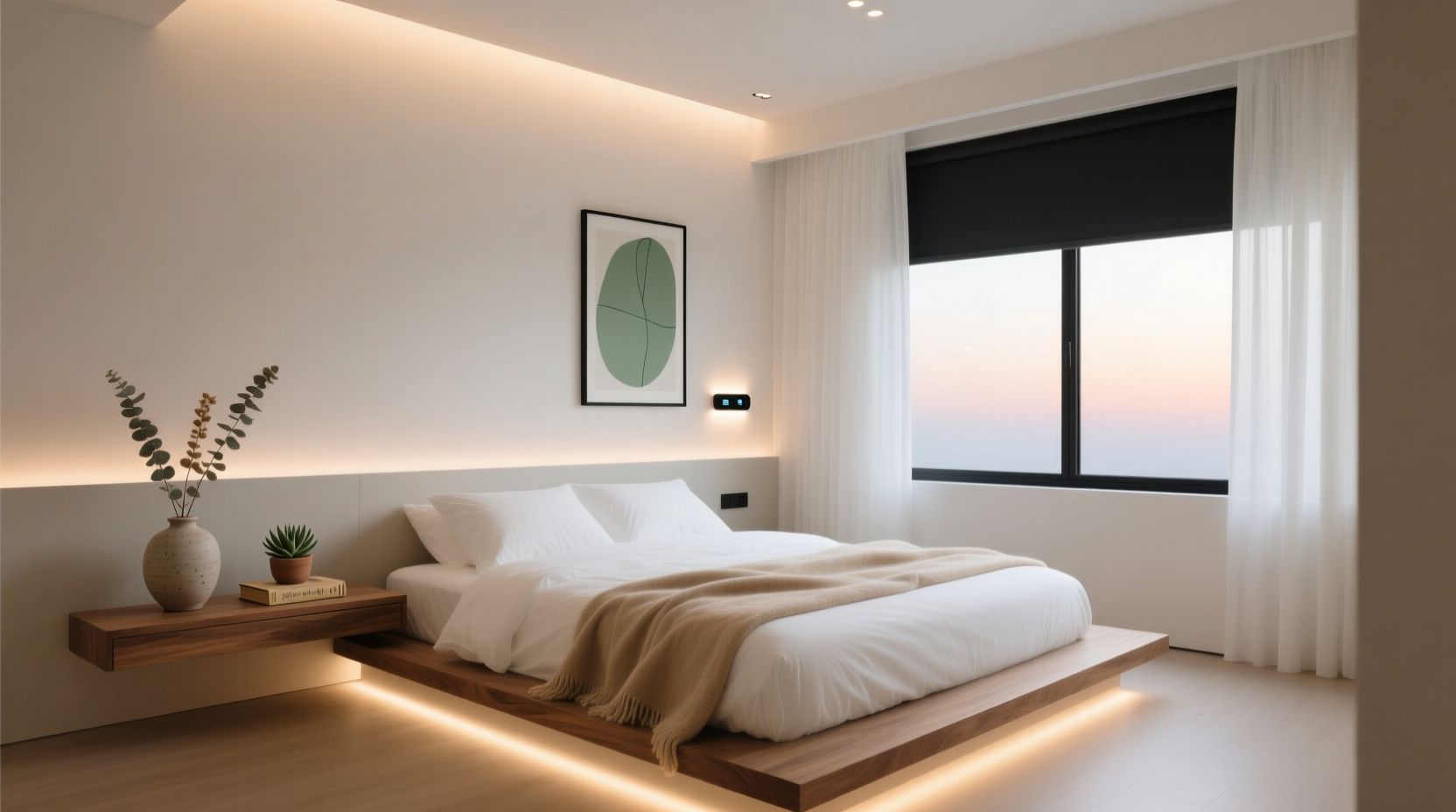
Your surroundings shape your state of mind. Studies in environmental psychology consistently show that visual clutter increases cortisol levels—the body’s primary stress hormone. When surfaces are covered with clothes, electronics, books, or unused items, your brain remains subconsciously alert, scanning for tasks or decisions. This low-grade anxiety makes it harder to unwind and fall asleep.
Lighting plays an equally powerful role. The human body relies on light cues to regulate melatonin production, which governs sleep-wake cycles. Exposure to bright, blue-rich light in the evening delays melatonin release, tricking your brain into thinking it’s still daytime. Conversely, warm, dim light signals that it’s time to slow down.
“Your bedroom environment should communicate safety and stillness. When lighting and organization align with natural rhythms, the nervous system can truly relax.” — Dr. Lena Torres, Sleep Wellness Researcher
Creating a calming bedroom means reducing sensory overload and supporting biological harmony. Smart lighting offers precise control over ambiance, while minimal clutter ensures visual and mental quiet. Together, they form a foundation for restorative rest.
Step-by-Step Guide: Declutter Your Bedroom Mindfully
Minimalism isn’t about emptiness—it’s about intentionality. Begin by removing anything that doesn’t serve a clear purpose or bring comfort. Follow this five-step process to simplify your space without feeling deprived.
- Empty one zone at a time: Start with a nightstand, drawer, or closet shelf. Work in small sections to avoid overwhelm.
- Categorize items: Sort belongings into keep, donate, relocate (items that belong elsewhere), and discard.
- Ask key questions: Have I used this in the past 90 days? Does it support rest or relaxation? Does it spark calm—not just joy?
- Designate homes for essentials: Limit what stays to items used daily or weekly—medication, a book, glasses, journal.
- Install hidden storage: Use under-bed drawers, closed cabinets, or baskets with lids to keep necessities out of sight.
After decluttering, maintain order with a nightly reset: spend five minutes returning items to their designated spots before bed. This ritual reinforces a sense of control and prepares your mind for sleep.
Choosing and Using Smart Lighting for Tranquility
Smart lighting goes beyond convenience—it enables mood-based illumination tailored to your circadian rhythm. Unlike traditional bulbs, smart LEDs allow you to adjust brightness, color temperature, and scheduling remotely via app or voice command.
For a calming bedroom, prioritize fixtures that offer:
- Adjustable color temperature (from 2700K warm white to 5000K daylight)
- Dimmability down to 1% or lower
- Scheduling and automation features
- Integration with voice assistants (e.g., Alexa, Google Assistant)
Strategic placement enhances effect. Consider layering light sources:
| Location | Function | Recommended Setting |
|---|---|---|
| Ceiling fixture | General illumination | Dimmed to 20–30%, warm white (2700K) |
| Nightstands | Task reading light | 300–400 lumens, amber tone, downward focus |
| Behind headboard | Ambient glow | LED strip, soft diffusion, 2200K candlelight mode |
| Floor or corner lamp | Evening wind-down | Low output, warm hue, indirect lighting |
Use automation to reinforce healthy habits. Program your lights to:
- Gradually brighten at sunrise to simulate dawn (ideal for waking naturally)
- Maintain neutral white light (4000K) during morning routines
- Shift to warmer tones after 6 PM
- Dim steadily between 8–10 PM
- Turn off completely by bedtime
“Evening exposure to warm, dim light reduces sleep latency by up to 15 minutes in clinical trials.” — National Sleep Foundation, 2023 Report
Real Example: Transforming a Chaotic Bedroom
Sarah, a 34-year-old graphic designer in Portland, struggled with insomnia and late-night screen use. Her bedroom was filled with unfolded laundry, stacked magazines, and a harsh overhead light she left on until midnight. After reading about circadian design, she decided to make changes.
Over one weekend, she cleared all non-essential items, donated two full bags of clothes, and installed two smart bulbs in her ceiling fixture and bedside lamp. She set a schedule: lights shift to 3000K at 7 PM, dim to 10% by 9:30 PM, and turn off at 10 PM. She added a fabric basket for nighttime charging and moved her work laptop to the living room.
Within two weeks, Sarah reported falling asleep 25 minutes faster and waking less often. “It feels like my room finally respects my need to rest,” she said. “I don’t even want to bring my phone in anymore.”
Essential Checklist: Build Your Calming Bedroom
Follow this actionable checklist to ensure every element supports tranquility:
- ✅ Remove all non-bedroom items (work materials, exercise gear, etc.)
- ✅ Limit decorative objects to three per surface
- ✅ Install at least two smart lighting points (ceiling + bedside)
- ✅ Set automatic color temperature shifts based on time of day
- ✅ Use physical or digital timers to enforce bedtime routines
- ✅ Choose furniture with concealed storage (e.g., bed frame with drawers)
- ✅ Replace bright white bulbs with tunable white or warm-dimmable LEDs
- ✅ Keep cords organized and out of sight with clips or sleeves
- ✅ Add a single plant (e.g., snake plant or peace lily) for air quality and serenity
- ✅ Test your final setup: lie in bed and scan the room—does everything feel peaceful?
Avoid These Common Mistakes
Even well-intentioned setups can backfire if certain pitfalls aren’t addressed. Watch out for these frequent errors:
- Over-automating
- Too many settings or complex routines can become burdensome. Stick to one or two core schedules.
- Ignoring light spill
- Bright LEDs shining directly into the eyes—even at low brightness—can be disruptive. Use shades, diffusers, or indirect mounting.
- Clutter disguised as decor
- Trays full of crystals, candles, or collectibles may look intentional but still contribute to visual noise. Less is more.
- Using cool light at night
- Even brief exposure to blue-rich light suppresses melatonin. Avoid white or daylight modes after dusk.
- Leaving devices visible
- Phones, tablets, and chargers signal activity. Store them in drawers or opaque containers when not in use.
FAQ: Your Questions Answered
Can I achieve this on a budget?
Absolutely. Start with two affordable smart bulbs (brands like Philips Hue or Wyze offer entry-level options under $30). Focus first on the bedside lamp and overhead light. Decluttering costs nothing and often frees up resale value from donated items.
Is total minimalism necessary?
No. The aim is *functional* minimalism—keeping only what you love and use regularly. A few personal touches, like a framed photo or favorite blanket, enhance comfort. The key is consistency in putting things away and avoiding accumulation.
What if I share the bedroom with someone who has different preferences?
Use localized lighting zones. For example, each person can have their own smart nightlight or adjustable reading lamp. Agree on a shared “wind-down” period where both lights transition to warm tones, even if one person stays up later.
Conclusion: Design for Rest, Not Just Sleep
A calming bedroom isn’t created overnight. It evolves through mindful choices—what you let in, what you let go, and how you shape the atmosphere hour by hour. Smart lighting gives you precision control over one of the most influential elements in your environment, while minimal clutter removes the silent stressors that erode peace.
You don’t need a renovation or expensive gadgets to begin. Start small: clear one drawer, install one smart bulb, set one evening routine. Each change compounds, reshaping not just your room, but your relationship with rest.




 浙公网安备
33010002000092号
浙公网安备
33010002000092号 浙B2-20120091-4
Comments
No comments yet. Why don't you start the discussion?