
A bedroom should be more than just a place to sleep—it should be a sanctuary. In today’s fast-paced world, the quality of your rest environment directly impacts mental clarity, emotional stability, and long-term well-being. One of the most effective ways to transform your bedroom into a peaceful retreat is through intentional use of lighting and scent. These two elements work on both conscious and subconscious levels, influencing mood, circadian rhythms, and even stress hormone levels. When combined thoughtfully, they can turn an ordinary sleeping space into a deeply restorative haven.
The key isn’t just about adding dim lights or spraying lavender. It’s about understanding how light temperature, intensity, timing, and fragrance profiles interact with human biology and psychology. This guide explores science-backed strategies and practical design principles to help you cultivate a calming bedroom atmosphere using lighting and scent—without overhauling your entire decor.
The Science Behind Light and Mood
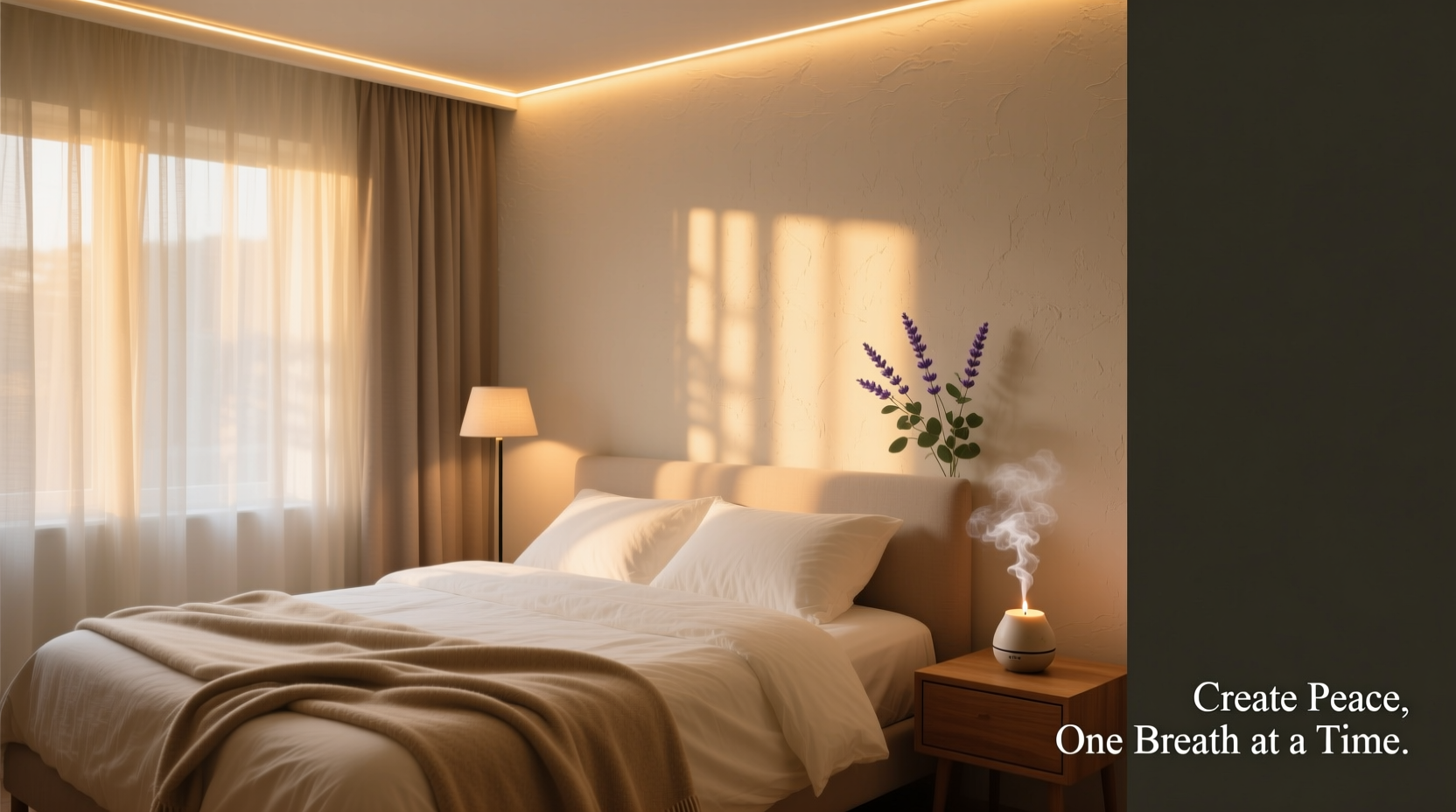
Light plays a critical role in regulating our internal body clock, known as the circadian rhythm. Exposure to bright, blue-rich light during the day boosts alertness and focus, while warm, low-intensity light in the evening signals the brain to produce melatonin—the hormone responsible for sleep.
Harsh overhead lighting or screen glare after sunset disrupts this natural cycle, making it harder to unwind. Studies from the National Sleep Foundation show that exposure to cool white or blue-toned light within 90 minutes of bedtime can delay melatonin onset by up to 30 minutes, reducing overall sleep quality.
To support relaxation, shift toward warmer color temperatures (2700K–3000K) in the evening. These amber and soft yellow tones mimic sunset and firelight, environments humans evolved with. Dimmable fixtures allow dynamic control throughout the night, helping your nervous system transition smoothly from active to restful states.
Layering Your Lighting for Maximum Calm
Effective bedroom lighting isn’t about brightness—it’s about layers. A single ceiling fixture creates flat, institutional lighting that lacks warmth and depth. Instead, build a layered lighting scheme that includes ambient, task, and accent components.
- Ambient lighting: Provides general illumination. Use ceiling-mounted fixtures with dimmers or indirect cove lighting to cast a gentle glow across the room.
- Task lighting: Supports activities like reading or journaling. Wall-mounted swing-arm lamps or adjustable floor lights direct light where needed without flooding the space.
- Accent lighting: Adds visual interest and warmth. Consider LED strip lights behind headboards, under beds, or along baseboards to create a floating effect.
For ultimate relaxation, avoid upward-facing lights that reflect off ceilings unless diffused. Unshielded bulbs cause glare and visual strain, counteracting calm. Instead, opt for shaded or recessed fixtures that diffuse light softly into the environment.
“Good bedroom lighting should feel like a whisper, not a shout. Subtlety is everything when designing for tranquility.” — Lena Torres, Interior Lighting Designer & Author of *Calm Spaces*
Scent Psychology: How Fragrance Influences Rest
The olfactory system has a direct line to the limbic system—the part of the brain that governs emotion, memory, and arousal. Unlike other senses, smell bypasses the thalamus and sends signals straight to areas tied to fear, pleasure, and long-term memories. That’s why a familiar scent can evoke nostalgia or peace almost instantly.
Certain essential oils have been clinically shown to reduce cortisol (the stress hormone), lower heart rate, and improve subjective feelings of relaxation. Lavender remains the most researched, but other scents like sandalwood, chamomile, and bergamot also demonstrate measurable calming effects.
However, not all calming scents work universally. Personal associations matter. For instance, someone who grew up near pine forests may find fir needle oil soothing, while another might associate it with cleaning products and feel irritated. Always test new fragrances in small doses before committing to nightly use.
Choosing the Right Scent Delivery Method
Different diffusion methods impact scent longevity, intensity, and safety. Here’s a comparison of common options:
| Method | Pros | Cons | Best For |
|---|---|---|---|
| Ultrasonic Diffuser | Humidifies air; quiet operation; adjustable mist | Requires water; needs daily cleaning | Daily use with essential oils |
| Nebulizing Diffuser | No water needed; pure aroma; strong output | Louder; uses oil quickly | Short sessions (30–60 min) |
| Reed Diffusers | Passive; no electricity; decorative | Weak scent throw; slow release | Background ambiance |
| Scented Candles | Warm glow; immediate effect | Fire risk; soot emission; inconsistent burn | Occasional use only |
| Spray Mists | Portable; customizable blends | Short-lived; frequent reapplication | Quick refresh between uses |
Step-by-Step Guide to Building Your Calming Routine
Creating a serene bedroom isn't a one-time fix—it's a ritual built over time. Follow this timeline to gradually refine your space using lighting and scent:
- Week 1: Audit Your Current Setup
Walk into your bedroom at night with all lights on. Note which sources feel harsh or glaring. Smell the air—does anything feel artificial or overwhelming? Take photos to track progress. - Week 2: Upgrade Light Temperature
Replace any bulbs emitting light above 3000K with warm-white (2700K) alternatives. Install dimmer switches if possible. Remove or cover blue indicator lights on electronics. - Week 3: Introduce Layered Lighting
Add at least one new source: a dimmable floor lamp, wall sconce, or LED strip. Position task lighting so it doesn’t shine directly into eyes when lying down. - Week 4: Test Calming Scents
Start with a single essential oil like lavender or cedarwood. Use an ultrasonic diffuser for 30 minutes before bed. Keep a journal noting changes in sleep onset or morning alertness. - Week 5: Refine the Combination
Adjust scent duration and lighting levels based on feedback. Try pairing dimmed amber lighting with grounding scents like vetiver or frankincense for deeper relaxation. - Ongoing: Maintain Consistency
Use the same lighting sequence and scent profile nightly to condition your brain for sleep. Avoid rotating too many variables at once.
“The most restorative bedrooms don’t rely on luxury—they rely on consistency. A predictable sensory environment tells your nervous system: ‘You’re safe now.’” — Dr. Naomi Reed, Neurologist & Sleep Researcher
Real-Life Example: Transforming a High-Stress Bedroom
Sarah, a 34-year-old project manager in Chicago, struggled with insomnia despite maintaining good sleep hygiene. Her bedroom had a bright overhead light, a TV mounted on the wall, and air freshener sprays she used weekly. She often lay awake for hours, feeling mentally “wired.”
After consulting a sleep coach, she implemented a lighting and scent overhaul. She removed the TV, installed a dimmable ceiling fixture, added two fabric-shaded side lamps, and placed an LED strip behind her headboard. At night, she set the lights to 20% brightness and used a diffuser with a blend of lavender, marjoram, and sweet orange for 45 minutes before turning off the lights.
Within three weeks, Sarah reported falling asleep 20 minutes faster and waking less frequently. She described the room as “feeling like a cocoon,” noting that the subtle glow and consistent scent helped signal the end of her workday psychologically. The change required minimal spending but yielded significant improvements in her sleep quality and daytime focus.
Common Mistakes to Avoid
Even well-intentioned efforts can backfire if not executed properly. Watch out for these pitfalls:
- Overpowering scents: Strong aromas can trigger headaches or anxiety. Start with 3–5 drops in a diffuser and increase only if needed.
- Mixing conflicting light sources: Having a warm bedside lamp next to a cool-blue phone charger creates visual discord. Aim for tonal harmony.
- Using scented candles overnight: Leaving candles unattended poses a fire hazard. Opt for flameless alternatives like electric wax warmers.
- Ignoring personal triggers: A scent marketed as “calming” may remind you of a stressful event. Trust your own reactions over trends.
- Skipping maintenance: Dirty diffusers disperse mold spores; dusty lampshades reduce light quality. Clean monthly.
Frequently Asked Questions
Can I use smart bulbs to automate my calming routine?
Yes. Smart bulbs like Philips Hue or LIFX allow you to program gradual dimming and color shifts. Set them to transition from 4000K in early evening to 2200K by bedtime. Pair with voice or app controls so you don’t need to get up to adjust settings.
Are essential oils safe for pets?
Not all are. Cats, in particular, lack certain liver enzymes to process compounds in tea tree, citrus, and eucalyptus oils, which can be toxic. If you have pets, consult your veterinarian before diffusing. Alternatively, use pet-safe blends or apply oils to fabric (like a sachet) rather than dispersing them into the air.
How do I know if a scent is truly natural?
Check ingredient labels. True essential oils list botanical names (e.g., *Lavandula angustifolia*). Avoid terms like “fragrance oil,” “parfum,” or “synthetic aroma.” Reputable brands provide GC/MS reports verifying purity. Price is also an indicator—real essential oils cost more due to extraction demands.
Final Checklist: Create Your Calming Bedroom in 7 Steps
- Replace cool-white bulbs with warm-white (2700K–3000K) options.
- Install dimmer switches or use plug-in dimmers for lamps.
- Add at least two additional light sources (e.g., floor lamp + LED strip).
- Choose one calming essential oil (e.g., lavender, chamomile, sandalwood).
- Select a safe diffusion method (ultrasonic or nebulizing preferred).
- Set a nightly routine: dim lights + diffuse scent 60 minutes before bed.
- Keep electronics and artificial fragrances out of the sleep zone.
Conclusion: Make Calm a Daily Practice
A calming bedroom isn’t created overnight, nor is it defined by expensive gadgets or designer decor. It’s shaped by mindful choices—choosing warmth over brightness, subtlety over stimulation, and intention over habit. Lighting and scent are powerful yet accessible tools that, when used wisely, align your environment with your body’s innate rhythms.
Start small. Change one bulb. Try one drop of lavender. Notice how your mind responds. Over time, these micro-adjustments accumulate into a profound shift in how you rest, recover, and recharge. Your bedroom should invite stillness, not demand attention. By mastering the quiet art of ambient design, you give yourself permission to slow down—one breath, one evening, one peaceful moment at a time.




 浙公网安备
33010002000092号
浙公网安备
33010002000092号 浙B2-20120091-4
Comments
No comments yet. Why don't you start the discussion?