
For millions of people, the transition from wakefulness to sleep is anything but smooth. Racing thoughts, physical tension, and unresolved stress often turn the evening hours into a battleground between exhaustion and alertness. When anxiety lingers into the night, it doesn’t just disrupt sleep—it undermines recovery, mental clarity, and emotional resilience the next day. The good news is that you don’t need medication or drastic lifestyle changes to reclaim restful nights. A well-designed bedtime routine can serve as a powerful anchor, signaling your nervous system that it’s safe to let go. By intentionally shaping your pre-sleep hours, you create space for relaxation, reduce cortisol spikes, and reset your circadian rhythm for deeper, more restorative sleep.
The Science Behind Bedtime Routines and Anxiety Reduction
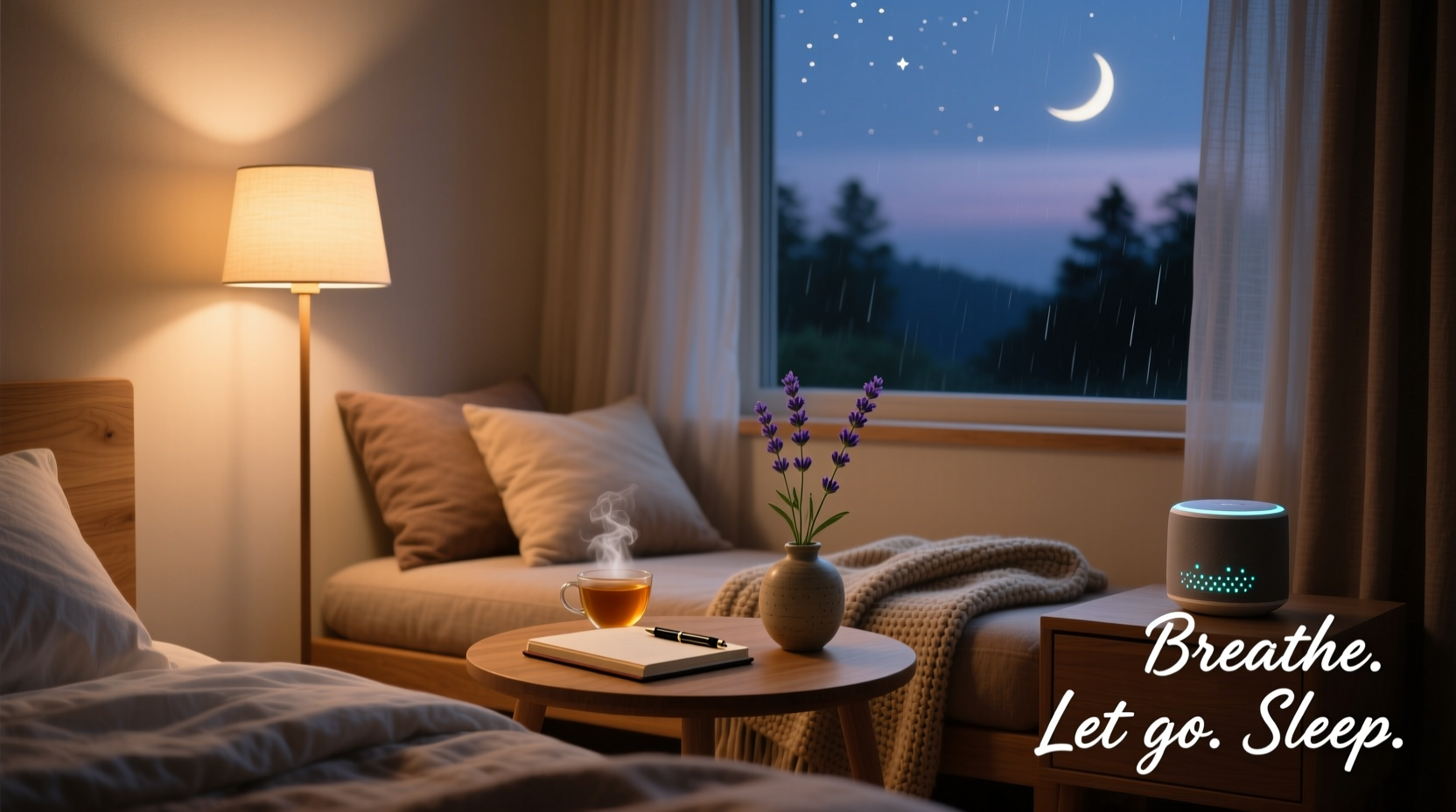
Sleep isn’t merely a passive state; it’s an active biological process regulated by complex interactions between hormones, brain activity, and environmental cues. One of the most influential factors in this process is the circadian rhythm—a 24-hour internal clock driven primarily by light exposure. When this rhythm is disrupted—often due to late-night screen use, irregular schedules, or chronic stress—the body struggles to produce melatonin at the right time, delaying sleep onset.
Anxiety compounds this issue by keeping the sympathetic nervous system engaged. This “fight-or-flight” mode increases heart rate, sharpens focus on threats (real or imagined), and suppresses non-essential functions like digestion and immune response—all counterproductive to winding down. A structured bedtime routine works by activating the parasympathetic nervous system, which promotes rest, digestion, and recovery.
Research published in the *Journal of Clinical Sleep Medicine* shows that consistent pre-sleep rituals improve sleep latency (the time it takes to fall asleep) and increase total sleep duration. More importantly, routines help regulate emotional reactivity. When your brain learns to associate certain activities with safety and disengagement, it begins to release tension automatically—like muscle memory for calmness.
“Sleep hygiene isn’t about perfection—it’s about predictability. The brain thrives on patterns, and a nightly ritual tells it, ‘This is not a time for problem-solving. It’s time to recover.’” — Dr. Lena Patel, Cognitive Behavioral Therapist specializing in sleep disorders
Step-by-Step Guide: Building Your Calming Bedtime Routine
A successful bedtime routine isn’t one-size-fits-all. However, there are universal principles that make any routine effective: consistency, sensory soothing, and cognitive disengagement. Below is a flexible, science-informed framework you can adapt based on your schedule and preferences.
- Set a Fixed Wind-Down Time (60–90 minutes before bed)
Choose a time when you begin transitioning from productivity to restoration. For example, if you aim to sleep by 10:30 PM, start winding down at 9:00 PM. This buffer allows your mind and body to shift gears gradually. - Disconnect from Screens
Blue light from phones, tablets, and TVs suppresses melatonin production. Turn off digital devices at least 60 minutes before bed. If you must use a device, enable night mode and keep usage under 15 minutes. - Engage in Low-Stimulus Activities
Replace high-engagement tasks (answering emails, scrolling social media) with calming ones:- Reading fiction or poetry
- Gentle stretching or yoga
- Listening to ambient music or nature sounds
- Drawing, journaling, or coloring
- Practice Mindfulness or Breathing Exercises
Try the 4-7-8 breathing technique: inhale for 4 seconds, hold for 7, exhale slowly for 8. Repeat for 4 cycles. This practice reduces heart rate and calms the amygdala, the brain’s fear center. - Prepare Your Environment
Optimize your bedroom for sleep:- Keep temperature between 60–67°F (15–19°C)
- Use blackout curtains or an eye mask
- Minimize noise with earplugs or white noise
- Ensure your mattress and pillows support spinal alignment
- Reflect and Release with Journaling
Spend 5–10 minutes writing down:- Three things you’re grateful for
- One worry you’re willing to set aside until morning
- A short affirmation: “I am safe. My body knows how to rest.”
- Go to Bed at the Same Time Every Night
Even on weekends, try to maintain your sleep schedule within a 30-minute window. Consistency strengthens your circadian rhythm and builds sleep pressure naturally.
Do’s and Don’ts of Evening Habits
| Do’s | Don’ts |
|---|---|
| Do drink herbal tea like chamomile or passionflower | Don’t consume caffeine after 2 PM |
| Do take a warm bath or shower 1–2 hours before bed | Don’t engage in intense exercise close to bedtime |
| Do use dim, warm lighting in the evening | Don’t eat heavy meals within 3 hours of sleep |
| Do practice gratitude or positive reflection | Don’t review stressful content (work emails, news) |
| Do keep a notepad by your bed to jot down sudden ideas | Don’t lie in bed ruminating—get up if needed |
Real Example: How Sarah Transformed Her Sleep in Two Weeks
Sarah, a 34-year-old project manager, struggled with nighttime anxiety for years. She would lie awake replaying work conversations, worrying about deadlines, and feeling physically tense. Despite being exhausted, her mind remained hyperactive. After consulting a sleep coach, she implemented a 75-minute bedtime routine:
- 9:00 PM: Shut down computer, put phone on airplane mode
- 9:10 PM: Warm shower followed by moisturizing with lavender-scented lotion
- 9:30 PM: Drink chamomile tea while reading fiction (no e-books)
- 9:50 PM: 5 minutes of diaphragmatic breathing using a guided audio
- 10:00 PM: Journal three gratitudes and one “worry to release”
- 10:10 PM: Lights out, using a weighted blanket for grounding sensation
Within ten days, Sarah noticed she was falling asleep 30 minutes faster. By week three, her average sleep duration increased from 5.5 to 7 hours. More importantly, she reported feeling less reactive during the day. “It’s not magic,” she said. “It’s about teaching your body that it’s okay to stop. The routine became my permission slip to rest.”
Essential Checklist for Your Calming Routine
Use this checklist nightly to reinforce consistency and track progress:
- ✅ Disconnected from screens by [your chosen time]
- ✅ Completed low-stimulation activity (reading, drawing, etc.)
- ✅ Practiced deep breathing or mindfulness (at least 5 minutes)
- ✅ Journaled worries or practiced gratitude
- ✅ Bedroom environment optimized (dark, cool, quiet)
- ✅ In bed by target time (±15 minutes)
- ✅ Used calming scent (lavender, sandalwood, etc.) if desired
Check off each item for seven consecutive nights. At the end of the week, reflect: Did you fall asleep faster? Did you wake less often? Did mornings feel easier? Adjust based on what supports your nervous system best.
Frequently Asked Questions
Can a bedtime routine really reduce anxiety, or is it just about sleep?
It does both. While the primary goal may be better sleep, the act of creating a predictable, soothing sequence directly lowers anxiety. Rituals provide psychological containment—your brain learns that certain cues mean “it’s safe now.” Over time, this reduces baseline stress levels, even during waking hours.
What if I can’t stick to the same time every night?
Consistency matters, but flexibility is possible. Aim for a 60-minute window rather than a rigid clock time. For example, if your usual bedtime is 10:30 PM, going between 10:00 and 11:00 PM still supports rhythm stability. Focus more on the routine itself than perfect timing. Even on late nights, doing a shortened version (e.g., 10 minutes of breathing + journaling) maintains the habit.
Is it okay to have a glass of wine to relax before bed?
While alcohol may make you feel drowsy initially, it disrupts sleep architecture. It suppresses REM sleep—the stage critical for emotional processing—and increases nighttime awakenings. For anxiety relief, non-chemical methods like breathwork or warm baths are more effective and sustainable. If you choose to drink, limit it to one serving and avoid consumption within three hours of bedtime.
Conclusion: Make Rest a Daily Practice
Sleep is not a luxury—it’s a biological necessity. And for those grappling with anxiety, the path to rest begins long before the head hits the pillow. A thoughtful bedtime routine isn’t about adding more tasks to your day; it’s about reclaiming time for yourself, releasing mental clutter, and honoring your body’s need for recovery. The habits you cultivate in the final hour of your day shape the quality of your entire life: your focus, mood, relationships, and resilience all depend on how well you sleep.
You don’t need perfection. You need intention. Start small—choose one element from this guide, like turning off screens earlier or trying 4-7-8 breathing. Build from there. Within weeks, you’ll likely notice subtle shifts: fewer racing thoughts, deeper breaths, a gentler transition into sleep. These aren’t coincidences—they’re the result of your nervous system learning to trust that rest is not only possible but prioritized.




 浙公网安备
33010002000092号
浙公网安备
33010002000092号 浙B2-20120091-4
Comments
No comments yet. Why don't you start the discussion?