
Christmas need not be synonymous with sensory overload. In fact, the most enduring holiday memories—the ones that settle deep in the bones—are rarely built on blinding light shows or overpowering cinnamon bombs. They emerge from quiet corners warmed by amber glow, the soft sigh of pine resin in the air, and the unhurried rhythm of breath syncing with flickering candlelight. A calming Christmas ambiance isn’t about minimalism for its own sake; it’s about intentionality—curating light and scent to support nervous system regulation, deepen presence, and invite genuine connection. This approach honors both the sacred stillness of the season and its quiet joy. It works whether you live alone in a studio apartment or host extended family in a century-old farmhouse. What matters is coherence: light that invites rest, scent that grounds without overwhelming, and space that feels held—not decorated.
The Science Behind Light and Calm: Why Dimmability Matters
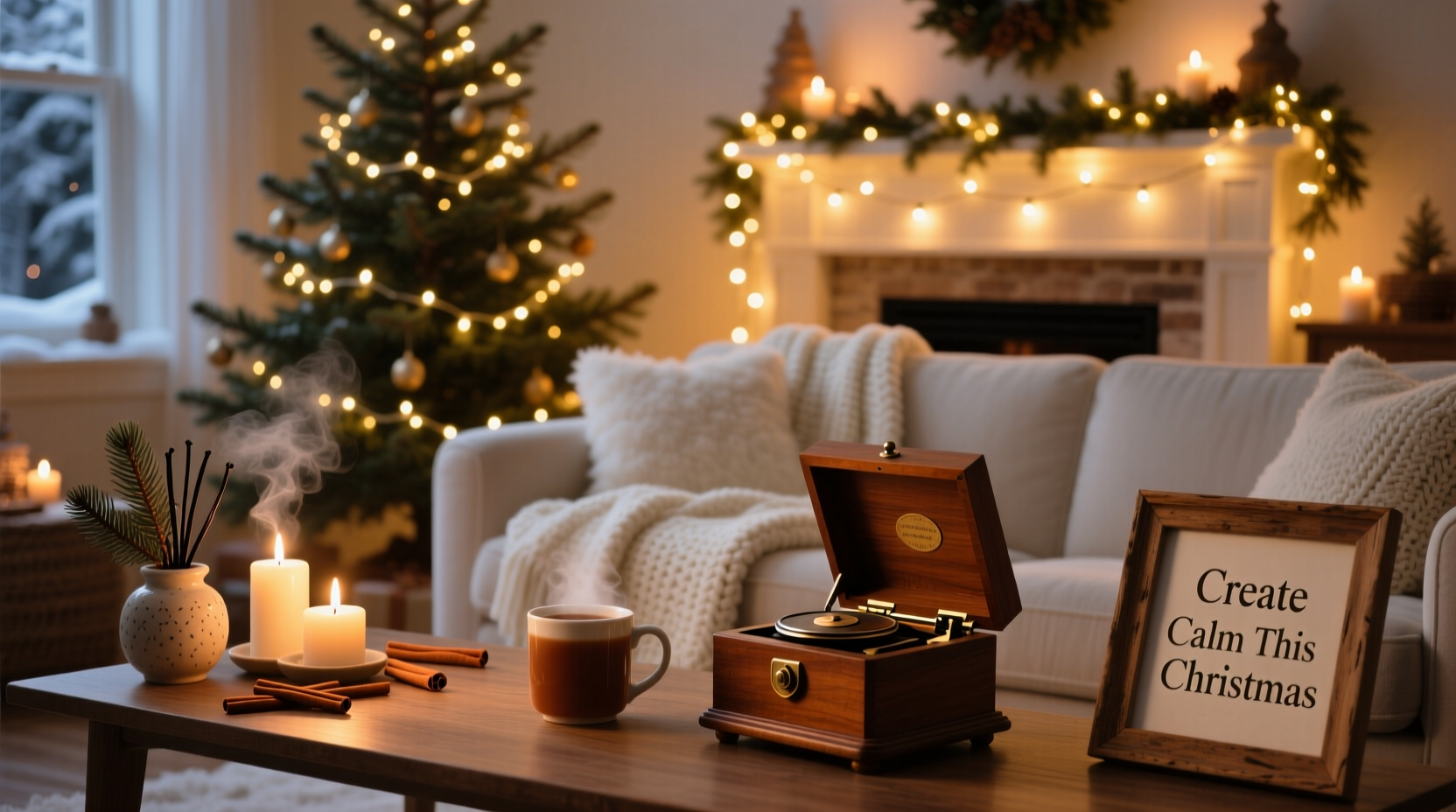
Our circadian rhythms respond powerfully to light intensity, color temperature, and timing. During winter months—especially in northern latitudes—natural daylight is scarce and often flat. Artificial light that mimics midday sun (5000K–6500K, high intensity) can disrupt melatonin production when used in the evening, increasing cortisol and making relaxation elusive. Conversely, warm-toned light (1800K–2700K) at low intensity signals the brain that it’s time to wind down. Dimmable lighting gives us agency over this signal. It allows us to mirror the natural arc of the day: brighter, cooler light during morning preparations and cooking; then a deliberate, gradual transition to softer, warmer, lower-intensity light as dusk falls and gatherings settle in.
Neuroscientist Dr. Sarah Lin, who studies environmental influences on emotional regulation, confirms this effect:
“When ambient light drops below 100 lux and shifts toward 2200K, we see measurable reductions in sympathetic nervous system activity—heart rate variability improves, muscle tension decreases, and subjective reports of ‘feeling safe’ increase significantly. This isn’t just mood lighting; it’s neurobiological scaffolding.” — Dr. Sarah Lin, Director of Environmental Neuroscience Lab, University of Vermont
Fixed-brightness, cool-white LED strings—common in mass-market decor—work against this physiology. They flood rooms with unmodulated, high-contrast light that triggers visual fatigue and subtle alertness. Dimmability, however, transforms lights from mere decoration into functional tools for emotional pacing.
Choosing & Layering Dimmable Lights with Purpose
Effective lighting layering combines three elements: ambient (general room illumination), task (focused activity light), and accent (emotional or decorative emphasis). For a calming Christmas, ambient light should be the foundation—and it must be dimmable.
Start with ambient sources: dimmable floor lamps with fabric shades (linen, wool, or parchment), wall sconces with downward-facing shades, or recessed ceiling fixtures fitted with warm-dimmable LEDs. Avoid bare bulbs or exposed fixtures that cast harsh shadows. Then add accent layers thoughtfully:
- String lights: Choose incandescent or warm-dimmable LED fairy lights (not cool-white or multicolor). Wrap them loosely around mantels, bookshelves, or bedposts—not tightly coiled, which creates glare points. Use a separate dimmer or plug-in dimmer module for full control.
- Candles (real or flameless): Real beeswax or soy candles emit a gentle, naturally flickering 1850K light. Flameless versions with “flicker mode” and warm-dimmable bases are excellent alternatives for safety or allergy concerns. Place in groups of odd numbers (3 or 5) on stable surfaces—never near curtains or tree branches.
- Tree lighting: Skip pre-lit trees with fixed brightness. Instead, use 100–200 warm-dimmable mini lights per foot of tree height. String them evenly from trunk outward, hiding wires beneath branches. Dim the tree 30–45 minutes before bedtime to cue collective wind-down.
Avoid common pitfalls: mixing color temperatures in one zone (e.g., cool-white kitchen pendants + warm tree lights), over-lighting vertical surfaces (which increases glare), and using non-dimmable LEDs on dimmer circuits (causes buzzing, flickering, or premature failure).
Selecting Scents That Soothe—Not Overwhelm
Scent is the only sense directly wired to the limbic system—the brain’s emotional and memory center. But not all “holiday scents” serve calm. Many commercial candles and diffusers rely on synthetic fragrance compounds designed for maximum projection: sharp clove, cloying vanilla, or aggressively sweetened peppermint. These can trigger olfactory fatigue, headache, or even anxiety in sensitive individuals—especially children and those with asthma or migraines.
Calming Christmas scents prioritize natural volatility, botanical authenticity, and low diffusion intensity. Think of them as aromatic whispers—not announcements. Ideal candidates include:
- Fresh-cut balsam fir or white spruce: Rich in alpha-pinene and limonene, these terpenes have demonstrated mild anxiolytic effects in controlled inhalation studies. Their green, slightly sweet, resinous aroma is grounding without heaviness.
- Dry cedarwood (Atlas or Virginia): Warm, woody, and subtly smoky—cedar supports parasympathetic activation and pairs beautifully with fir. Avoid “cedar-scented” synthetics; look for 100% pure essential oil or sustainably harvested wood chips.
- Amber resin (labdanum) or frankincense: Deep, balsamic, and meditative. These resins evoke sacred stillness and slow respiration. Use sparingly—a single drop of labdanum in a diffuser blends well with fir.
- Unroasted coffee beans (in a small bowl): An unexpected but effective choice. The earthy, nutty, low-volatility aroma provides subtle olfactory anchoring without sweetness or spice.
Crucially, avoid alcohol-based sprays, aerosol fresheners, or heavily fragranced potpourri. These disperse volatile organic compounds (VOCs) that degrade indoor air quality and irritate mucous membranes. Prioritize passive diffusion methods instead.
Practical Integration: A Step-by-Step Evening Ritual
Creating calm isn’t a one-time setup—it’s a practiced rhythm. Here’s how to embed dimmable light and intentional scent into your daily holiday routine, beginning two hours before your intended wind-down time:
- 6:00 PM – Initiate the light shift: Lower ambient overhead lights by 40%. Turn on warm floor lamps and wall sconces. Begin stringing or adjusting accent lights—no bright screens or overhead fluorescents.
- 6:30 PM – Introduce scent passively: Place 3–5 fresh balsam clippings in a shallow ceramic dish with 1/4 cup water. Or light one small beeswax candle beside a cedarwood block. Do not ignite multiple candles or run a diffuser continuously.
- 7:00 PM – Dim further and focus: Reduce ambient light to 25% brightness. Turn off task lights no longer needed (e.g., kitchen under-cabinet LEDs). Light 2–3 additional flameless or real candles in living areas. Sit quietly for 90 seconds—observe the quality of light and the subtlety of scent.
- 7:30 PM – Gather and ground: Invite household members to join a low-stimulus activity: sorting ornaments by texture (wood, glass, fabric), writing gratitude notes by candlelight, or listening to instrumental carols at low volume. Keep screens silenced and face-down.
- 8:15 PM – Final dim and release: Dim all lights to 10–15% (just enough to navigate safely). Extinguish or turn off all but one central candle or lamp. Let the room settle into its softest state. Breathe deeply for five cycles—inhale the quiet, exhale the day.
This sequence mirrors the body’s natural pre-sleep transition. It doesn’t eliminate festive energy—it channels it into warmth, slowness, and shared presence.
Real-World Application: The Miller Family’s Shift
The Miller family of Portland, Oregon, spent years battling holiday exhaustion. With two young children, aging parents visiting, and a tradition of elaborate cookie-baking marathons, their home felt like a high-decibel command center from December 1st onward. “We’d light every bulb, blast holiday playlists, and diffuse ‘Winter Spice’ oil all day,” says Maya Miller, a pediatric occupational therapist. “By December 15th, everyone was irritable, the kids had meltdowns at 6 PM, and my father with early-stage dementia grew visibly agitated in the glare.”
In late November, Maya applied the principles outlined here. She replaced all kitchen and living room bulbs with 2200K dimmables and installed tactile dimmers. She swapped synthetic candles for beeswax tapers and began placing fresh Douglas fir boughs—cut locally and misted daily—in ceramic bowls. Most importantly, she instituted a “6:30 Dim” rule: no new guests after 6:30 PM, no screen use in common areas after that time, and mandatory light reduction.
“The change wasn’t dramatic—it was cumulative,” she explains. “Within three days, the children’s bedtime resistance decreased. My father sat longer at the table, tracing the grain of the wooden ornament box we’d brought out. We started baking cookies by candlelight, measuring flour slowly, laughing at spilled sugar. The decorations didn’t change—but the *feeling* of the house did. It became a place we wanted to linger, not escape.”
Do’s and Don’ts: Lighting & Scent Safety and Efficacy
Integrating light and scent requires attention to health, safety, and sustainability. This table summarizes evidence-based best practices:
| Category | Do | Don’t |
|---|---|---|
| Lighting | Use dimmers rated for your bulb type (LED, incandescent, halogen); choose bulbs labeled “dimmable” and “warm white” (2200K–2700K) | Install non-dimmable LEDs on dimmer circuits; use cool-white bulbs (<4000K) after 5 PM |
| Candles | Burn for max 4 hours; trim wicks to 1/4 inch before each use; place on heat-resistant, non-flammable surfaces away from drafts | Leave burning unattended; burn near curtains, paper, or Christmas trees; use paraffin candles with lead-core wicks |
| Scent | Use 100% pure essential oils in ultrasonic diffusers (max 30 min on/60 min off); opt for sustainably harvested botanicals (FSC-certified cedar, wildcrafted fir) | Diffuse synthetic fragrance oils; burn scented wax melts containing phthalates; place strong scent sources in bedrooms or nurseries |
| Air Quality | Open windows for 5–10 min daily (even in cold weather) to refresh air; use houseplants like spider plant or Boston fern to support VOC absorption | Rely solely on air fresheners to mask odors; keep windows sealed for days due to cold |
FAQ: Addressing Common Concerns
Can I use smart dimmers—or do I need traditional switches?
Smart dimmers work well if they’re specifically rated for your bulb type and offer smooth, low-end dimming (many cheap models cut out below 15%). However, physical rotary dimmers provide immediate, intuitive control and eliminate reliance on Wi-Fi or apps—reducing cognitive load during a busy season. For true calm, tactile certainty often outweighs remote convenience.
My partner loves bright, colorful lights—but I need softness. How do we compromise?
Compromise lives in zoning. Designate one “bright zone”—such as the kitchen or entryway—for festive, higher-intensity lighting (still warm-toned, never cool). Then establish clear boundaries: once you step into the living room or dining area after 6 PM, only dimmable warm light is permitted. Use room dividers, rugs, or even a draped shawl over a doorway to visually reinforce the transition. This respects both preferences without diluting the calming effect where it matters most.
Are there scents that actually help with seasonal affective disorder (SAD)?
No scent replaces light therapy for clinical SAD—but certain aromas support complementary physiological states. Bergamot (cold-pressed, not synthetic) has shown mild mood-elevating properties in randomized trials. Paired with 2700K light exposure in the morning, it may enhance circadian entrainment. However, for diagnosed SAD, consult a healthcare provider first. Never substitute fragrance for medical treatment.
Conclusion: Your Home Is Not a Stage—It’s a Sanctuary
A calming Christmas ambiance isn’t achieved by acquiring more—more lights, more scents, more décor. It’s cultivated by releasing what competes with peace: the compulsion to impress, the habit of overstimulation, the belief that festivity requires frenzy. Dimmable lights, when chosen with attention to color temperature and layered with restraint, become instruments of invitation—not illumination. Scents, when selected for botanical integrity and diffused with gentleness, become quiet companions—not announcements. Together, they form an architecture of calm: one that holds space for tired parents, soothes anxious children, welcomes elders with dignity, and allows you—finally—to feel the hush beneath the hurry.
You don’t need to wait for Christmas Eve to begin. Tonight, before bed, try one thing: dim your bedroom lights by half and place a single sprig of fresh fir on your nightstand. Notice the difference in your breath. Notice the weight lifting from your shoulders. That’s not decoration. That’s restoration. That’s the first stitch in a quieter, truer holiday—one luminous, fragrant moment at a time.




 浙公网安备
33010002000092号
浙公网安备
33010002000092号 浙B2-20120091-4
Comments
No comments yet. Why don't you start the discussion?