
The holiday season often brings excitement, noise, and sensory overload. While festive lights are a beloved tradition, their brightness and color variety can sometimes feel overwhelming rather than comforting. A thoughtful approach to Christmas lighting—centered on warm tones and dimmable controls—can transform your space into a peaceful retreat. This isn’t about reducing cheer; it’s about enhancing the emotional quality of your celebrations. By focusing on soft glows, amber hues, and adjustable brightness, you can craft an ambiance that supports relaxation, intimacy, and mindfulness during one of the busiest times of the year.
Why Warm Tones Matter in Holiday Lighting
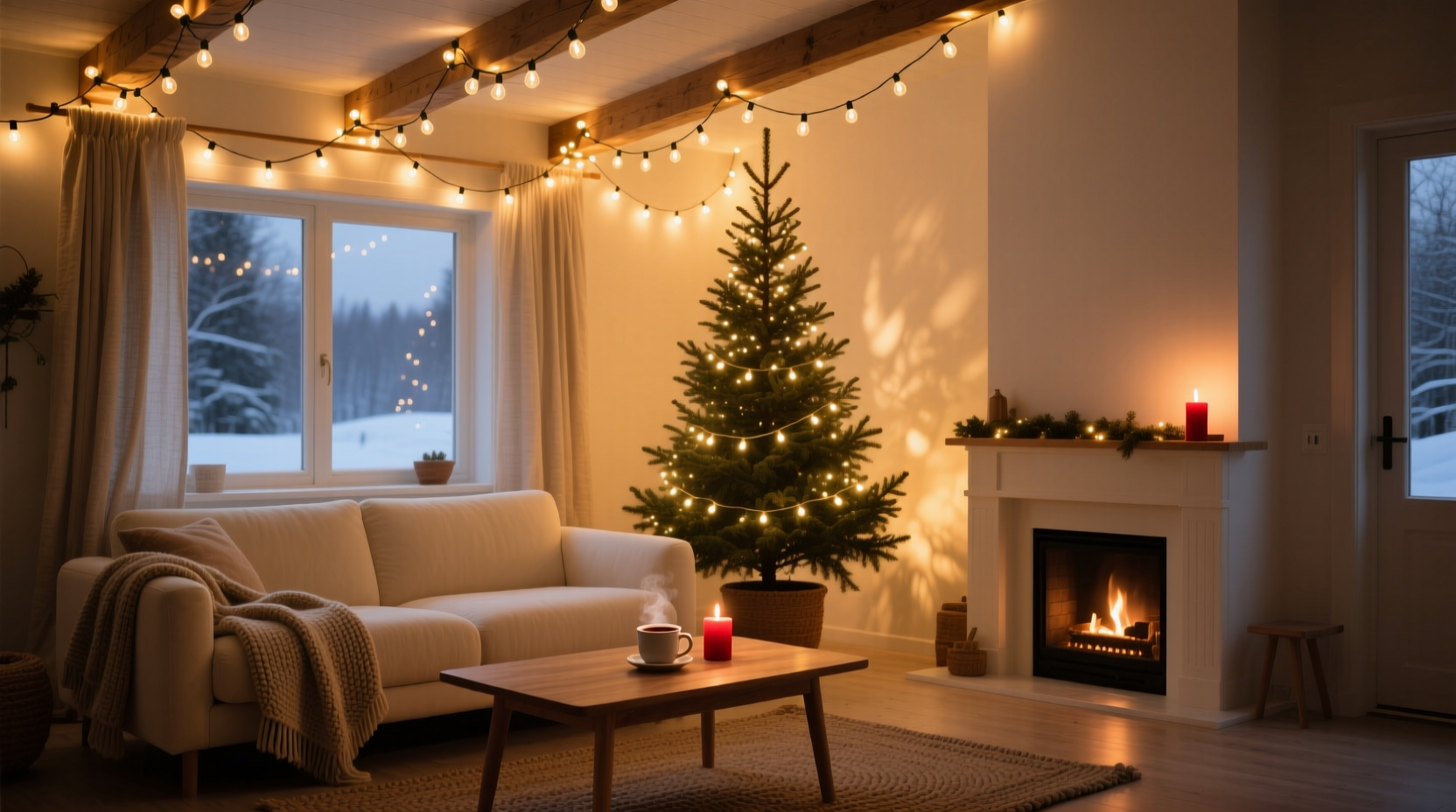
Cold white or multicolored LED strings may sparkle, but they also emit high levels of blue light—the same spectrum known to suppress melatonin and disrupt sleep. In contrast, warm-toned lighting (measured between 2200K and 3000K on the Kelvin scale) mimics candlelight or sunset glow, signaling to the brain that it’s time to wind down. This biological response makes warm lighting ideal for evening gatherings, quiet reflection, or bedtime routines during the holidays.
Warm lighting also enhances the perception of coziness, a concept known in Danish culture as *hygge*. It emphasizes comfort, simplicity, and presence—values that align perfectly with a more intentional holiday experience. When applied to Christmas decor, warm-toned bulbs make wood finishes richer, textiles softer, and skin tones more natural, contributing to a visually harmonious environment.
Choosing the Right Dimming System
Dimmers are essential tools for mood control. They allow you to adjust brightness based on activity—bright enough for meal prep, low enough for movie night. But not all dimmers work with all types of lights, especially LEDs, which dominate modern Christmas lighting.
To avoid flickering or inconsistent performance, match your dimmer switch with compatible LED bulbs. Leading brands like Lutron and Leviton offer trailing-edge (ELV) dimmers designed specifically for low-wattage LED loads. If rewiring isn’t an option, consider plug-in dimmer modules that fit between your lamp cord and wall outlet. These are particularly useful for pre-lit trees or seasonal displays plugged into standard sockets.
“Lighting should serve the moment, not dictate it. With dimmers, you gain control over atmosphere—turning a room from lively to intimate with a single slide.” — Clara Mendez, Interior Lighting Designer
Step-by-Step Guide to Building Your Calming Setup
Creating a soothing lighting scheme doesn’t require professional skills—just intention and planning. Follow this sequence to design a layered, flexible system that supports calm throughout the season.
- Assess your spaces: Identify key areas where people gather or unwind—living room, dining nook, bedroom, entryway. Note existing light sources and outlets.
- Select warm-toned lights only: Choose string lights, candles, and accent lamps rated at 2700K or lower. Avoid RGB or color-changing options unless they include a dedicated warm-white mode.
- Incorporate multiple layers: Combine ambient (overhead), task (reading lamps), and accent (tree or mantle lighting) sources. Aim for even distribution without hotspots.
- Install dimming controls: Replace standard switches with dimmers where possible. Use smart plugs or inline dimmers for portable fixtures.
- Test and refine: After installation, observe how each area feels at different times of day. Adjust placement or brightness until the mood matches your intent.
Recommended Light Types and Placement Strategies
Not all lights contribute equally to a calming effect. The goal is gentle illumination—not spectacle. Here’s how to choose and place different types effectively.
| Light Type | Best Use Case | Brightness Tip |
|---|---|---|
| Fairy string lights (battery or plug-in) | Draping over mantles, headboards, shelves | Use 50-light strands spaced evenly; avoid dense clusters |
| LED candle bulbs (flameless) | Windowsills, table centerpieces, stair railings | Opt for models with realistic flicker—no strobing |
| Pre-lit artificial tree | Living room focal point | Pick trees with built-in dimming or pair with a dimmable plug |
| LED rope lights | Under cabinets, along baseboards, ceiling perimeters | Mount facing upward or into corners to diffuse glare |
| Smart bulbs (e.g., Philips Hue White Ambiance) | Lamps, ceiling fixtures | Set schedules to gradually dim after dinner |
When placing lights, think in terms of indirect glow. Bounce light off walls and ceilings whenever possible. Wrap garlands with embedded micro-lights rather than hanging bare strands across open space. This reduces visual clutter and creates a soft radiance that feels enveloping rather than intrusive.
Avoiding Common Pitfalls
Even well-intentioned setups can backfire if certain mistakes go unnoticed. Awareness helps prevent overstimulation disguised as festivity.
- Overloading circuits: Connecting too many strands in series can trip breakers or damage wiring. Check manufacturer limits—usually no more than three connected sets.
- Mixing color temperatures: Combining warm and cool whites in the same room creates visual tension. Stick to one consistent tone throughout.
- Ignoring timing: Leaving bright lights on late into the night disrupts circadian rhythms. Use timers or smart controls to power down by 10 PM.
- Using strobe or chase effects: Flashing patterns trigger anxiety in some individuals, including those with sensory sensitivities. Disable these modes entirely.
Real-Life Example: A Cozy Urban Apartment Transformation
Sarah, a therapist living in a fourth-floor Brooklyn apartment, wanted her home to reflect the peace she encouraged in her clients. Each December, she found herself drained by the usual barrage of blinking lights and loud decorations in neighboring buildings. Determined to create sanctuary, she redesigned her holiday lighting using only warm tones and dimmers.
She began by replacing her old multicolor tree lights with a new pre-lit model featuring 2700K LEDs and remote dimming. Around the living room perimeter, she installed thin copper wire fairy lights behind crown molding, directing the glow upward toward the ceiling. On the coffee table, she placed three flameless LED candles inside frosted glass holders. Floor and table lamps were fitted with smart bulbs programmed to shift from bright white in the morning to warm white by 6 PM.
The result? Guests consistently commented on how “calm” her space felt. One friend said, “I didn’t realize how stressed I was until I walked in here and exhaled.” Sarah reported better sleep and fewer headaches during the season—proof that subtle changes in lighting can have profound psychological effects.
Checklist: Creating Your Calming Christmas Lighting Plan
Before you begin shopping or installing anything, run through this checklist to ensure every element supports tranquility.
- ☐ Audit current lighting—remove any cool-white or flashing strings
- ☐ Purchase only warm-white (2200K–3000K) LED lights
- ☐ Install dimmer switches or inline dimmers on main circuits
- ☐ Use timers or smart plugs to automate on/off cycles
- ☐ Layer ambient, task, and accent lighting for depth
- ☐ Test all connections and brightness levels before finalizing
- ☐ Create a simple schedule: full brightness until 7 PM, gradual dimming after
Frequently Asked Questions
Can I mix real candles with electric lights for a calming effect?
Yes, but prioritize safety. Real candles add unmatched warmth but require constant supervision. Use them sparingly on stable surfaces away from fabrics. For longer burns, opt for high-quality beeswax or soy candles with cotton wicks—they produce less soot and emit a naturally soft glow. Always extinguish before sleeping.
Are smart lights worth the investment for seasonal use?
If you plan to reuse them beyond Christmas—for reading lights, mood settings, or daily routines—yes. Smart bulbs allow scheduling, dimming, and integration with voice assistants. Even a few strategically placed ones (in lamps or overheads) can anchor your entire lighting strategy. Look for sales in January when holiday inventory clears.
How do I dispose of old Christmas lights responsibly?
Never toss working or broken lights in regular trash. Many communities offer e-waste recycling during the holidays. Retailers like Home Depot and Lowe’s have partnered with organizations such as Weecycle to collect old strands. Alternatively, check Earth911.com for local drop-off points. Recycling prevents copper and plastic waste from entering landfills.
Final Thoughts: Light With Intention
Christmas lighting doesn’t have to be loud to be meaningful. In fact, restraint often amplifies impact. A few well-placed warm strings, gently glowing under a blanket of snowfall-like tinsel, can evoke more wonder than a house covered in synchronized rainbows. By choosing warmth over wattage and control over chaos, you invite stillness into a hectic season.
This year, consider what kind of energy you want your home to hold. Let your lights reflect not just celebration, but care—for your guests, your family, and yourself. With dimmers in hand and a palette of amber and gold, you’re not just decorating. You’re curating calm.




 浙公网安备
33010002000092号
浙公网安备
33010002000092号 浙B2-20120091-4
Comments
No comments yet. Why don't you start the discussion?