
In a shared bedroom, personal space often feels like a luxury. Whether you're splitting a room with a partner, sibling, or roommate, competing needs for storage, style, and comfort can make relaxation difficult. Yet even in the most compact or contested spaces, it's possible to carve out a dedicated zone that promotes peace, mindfulness, and mental recharge. The key isn’t structural changes—it’s strategic design. With thoughtful placement, sensory cues, and intentional decor, you can create a calming corner that supports well-being without requiring permission, permits, or power tools.
Understanding the Purpose of a Calming Corner
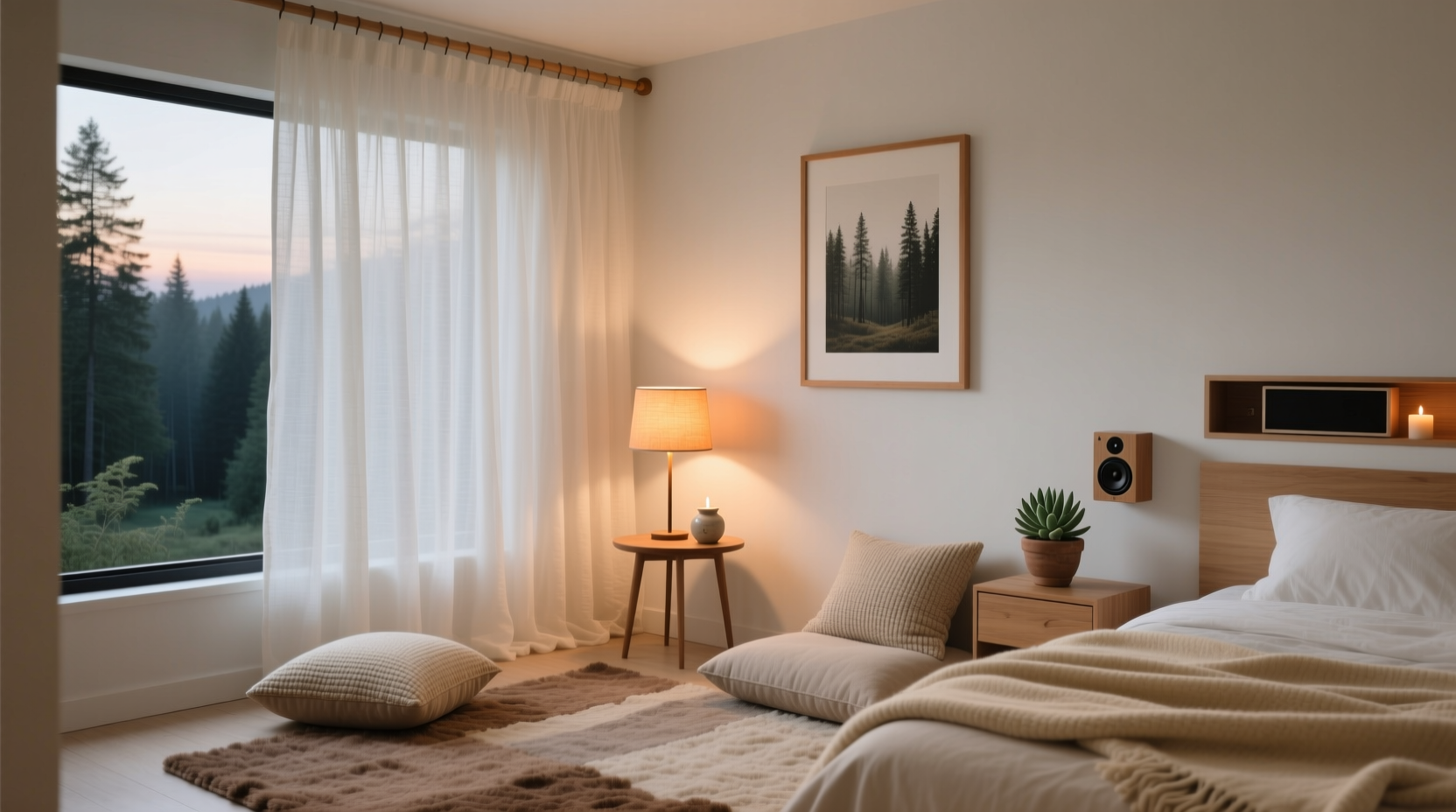
A calming corner is more than just a cozy nook—it’s a psychological sanctuary designed to reduce stress and support emotional regulation. Rooted in principles from environmental psychology, such spaces use visual, auditory, and tactile cues to signal safety and stillness. In a shared bedroom, where privacy is limited and routines may clash, this micro-environment becomes essential for maintaining mental balance.
Unlike full-scale room redesigns, a calming corner focuses on one area—often a corner near a window, beside a bookshelf, or tucked behind a bed—transforming it into a retreat through subtle but deliberate choices. The goal isn’t to dominate the room but to claim a few square feet where you can breathe, reflect, or simply be.
Step-by-Step Guide to Building Your Calming Corner
Creating a peaceful retreat within a shared space requires planning, compromise, and creativity. Follow this six-step process to build a functional and soothing corner without altering the room’s structure.
- Assess Available Space and Usage Patterns
Walk around the room at different times of day. Identify underused areas—a vacant corner, unused wall space, or even a section of floor behind a door. Observe when your roommate uses their side and when the room is quietest. This helps determine the best time to use your corner and where to place it for minimal disruption. - Define Boundaries Visually
Since physical walls aren’t an option, use furniture and decor to suggest separation. A small folding screen, a tall plant in a planter, or a narrow bookshelf placed vertically can act as a soft divider. Even a strategically hung tapestry or curtain from ceiling hooks can add visual privacy without permanent installation. - Select Comfortable Seating
Opt for compact, low-profile seating: a floor cushion, meditation pillow, foldable stool, or a slim armless chair. If floor sitting works for you, consider a memory foam mat with a washable cover. Avoid bulky furniture that encroaches on shared pathways or storage. - Layer Lighting for Ambiance
Harsh overhead lights disrupt calm. Instead, combine ambient and task lighting: a small salt lamp, LED string lights draped over a shelf, or a directional desk lamp with warm-toned bulbs (2700K–3000K). Use a timer plug to automate lighting if you meditate at the same time daily. - Curate Sensory Elements
Introduce items that engage the senses gently: a fabric with a comforting texture (like fleece or linen), a lavender sachet, a mini tabletop fountain, or noise-canceling headphones. These elements help condition your brain to associate the space with tranquility. - Personalize Thoughtfully
Add meaningful but unobtrusive touches: a framed photo, a quote card in a small stand, or a journal on a tray. Keep decor minimal—overcrowding defeats the purpose of calm. Rotate items monthly to keep the space feeling fresh without cluttering.
Do’s and Don’ts: Designing Respectfully in Shared Spaces
Because a shared bedroom involves negotiation, certain choices can either foster harmony or spark tension. This table outlines practical do’s and don’ts to maintain both peace and privacy.
| Do | Don’t |
|---|---|
| Use adhesive hooks or removable putty for hanging lightweight items | Nail shelves or frames into walls without consent |
| Keep noise levels low; use headphones for music or guided meditations | Play audio aloud during your roommate’s sleep or study hours |
| Label your belongings to avoid confusion | Store personal care items or food in shared zones |
| Agree on a “quiet hour” schedule with your roommate | Extend your corner beyond agreed-upon boundaries |
| Use cord organizers to prevent tripping hazards | Run exposed cords across walkways |
Real Example: Maya’s Mindfulness Nook in a College Dorm Room
Maya shares a 12x14-foot dorm room with her roommate, who prefers late-night gaming and bright lighting. Initially, Maya struggled to find time or space to decompress after classes. After discussing boundaries, she transformed the area beneath her lofted bed into a calming corner.
She added a thick yoga mat, a floor pillow, and a fabric pegboard mounted with velcro strips to hold her journal, tea bags, and eye mask. Fairy lights were woven along the bed frame using plastic clips—not nails—and connected to a USB port on her power bank. To signal “do not disturb,” she placed a small “mindful moment in progress” sign on a stand.
The arrangement took less than 20 minutes to set up and dismantle, allowing flexibility. Her roommate appreciated the clear communication and even adopted a similar routine during exam weeks. Within two weeks, both reported improved sleep and reduced tension.
“Even five minutes in a designated calm space can reset your nervous system. It’s not about size—it’s about intention.” — Dr. Lena Patel, Environmental Psychologist and Well-Being Consultant
Essential Checklist for Your Calming Corner
Before finalizing your setup, run through this checklist to ensure functionality, comfort, and respect for shared living.
- ✅ Chosen a low-traffic, accessible location
- ✅ Confirmed lighting sources (natural or artificial)
- ✅ Selected seating that fits your posture needs
- ✅ Added at least one sensory anchor (scent, sound, texture)
- ✅ Discussed boundaries and usage times with roommate
- ✅ Used non-damaging mounting methods for decor
- ✅ Included a small surface for essentials (tea, book, phone)
- ✅ Kept cords secured and out of walkways
- ✅ Limited personal items to a single storage bin or basket
- ✅ Tested the space at different times of day
Frequently Asked Questions
Can I create a calming corner in a very small shared room?
Absolutely. Size isn’t a barrier. Use vertical space—install a floating shelf for books or plants, hang a foldable seat when needed, or repurpose a closet nook. Even a cushion placed in front of an open window can become a mindful breathing spot. The key is consistency in use, not square footage.
What if my roommate doesn’t understand the purpose of the corner?
Open communication is crucial. Explain how the space supports your mental health, not just preference. Offer to collaborate—perhaps they’d like a reading zone or charging station. Framing it as mutual well-being rather than personal territory increases acceptance. You might even invite them to try a short meditation session there together.
How do I maintain the space without adding clutter?
Treat your calming corner like a minimalist capsule. Limit items to seven or fewer core pieces: seating, light, one sensory tool, a drink vessel, a journal, a device charger, and one personal token. Weekly, remove anything that doesn’t serve calm. Store extras in a labeled bin under your bed or in a closet.
Final Thoughts: Small Space, Big Impact
A calming corner in a shared bedroom isn’t about claiming dominance over space—it’s about honoring your need for stillness in a world that rarely pauses. By using portable, respectful, and intentional design choices, you create more than a physical spot; you establish a ritual of self-care that coexists peacefully with others.
No renovation is required. No permission beyond a conversation is needed. What matters is consistency: showing up in that corner, even for five minutes, to breathe, reflect, or simply be present. Over time, this small act builds resilience, reduces friction, and strengthens your sense of agency—even in shared environments.




 浙公网安备
33010002000092号
浙公网安备
33010002000092号 浙B2-20120091-4
Comments
No comments yet. Why don't you start the discussion?