
Working from home doesn’t mean sacrificing personal style or comfort. In fact, the shift to remote work has redefined what we wear daily. Without the need for formal office attire, many people are embracing simplicity, functionality, and intentionality in their clothing choices. A capsule wardrobe—a curated collection of essential, versatile pieces—offers an ideal solution. It reduces decision fatigue, saves money, and supports sustainable fashion habits.
For remote workers especially, building a capsule wardrobe on a tight budget is not only possible but practical. With thoughtful planning, strategic shopping, and smart styling, you can assemble a cohesive closet that transitions seamlessly between video calls, errands, and downtime—all while staying within your financial limits.
Why Remote Workers Need a Capsule Wardrobe
The remote work environment blurs the line between professional and casual wear. You might be presenting to clients one moment and lounging with family the next. This dynamic calls for clothing that balances polish and comfort. A capsule wardrobe streamlines your options by focusing on high-quality, mix-and-match basics that serve multiple purposes.
Unlike traditional wardrobes filled with single-use items, a capsule approach emphasizes longevity and utility. It reduces clutter, eliminates the “I have nothing to wear” dilemma, and aligns with minimalist values. For those on a budget, it prevents impulse buys and encourages mindful consumption—buying less, but better.
“Simplicity isn’t just aesthetic—it’s economic. When every piece works harder, you spend less over time.” — Lena Torres, Sustainable Fashion Consultant
Step-by-Step Guide to Building Your Budget Capsule Wardrobe
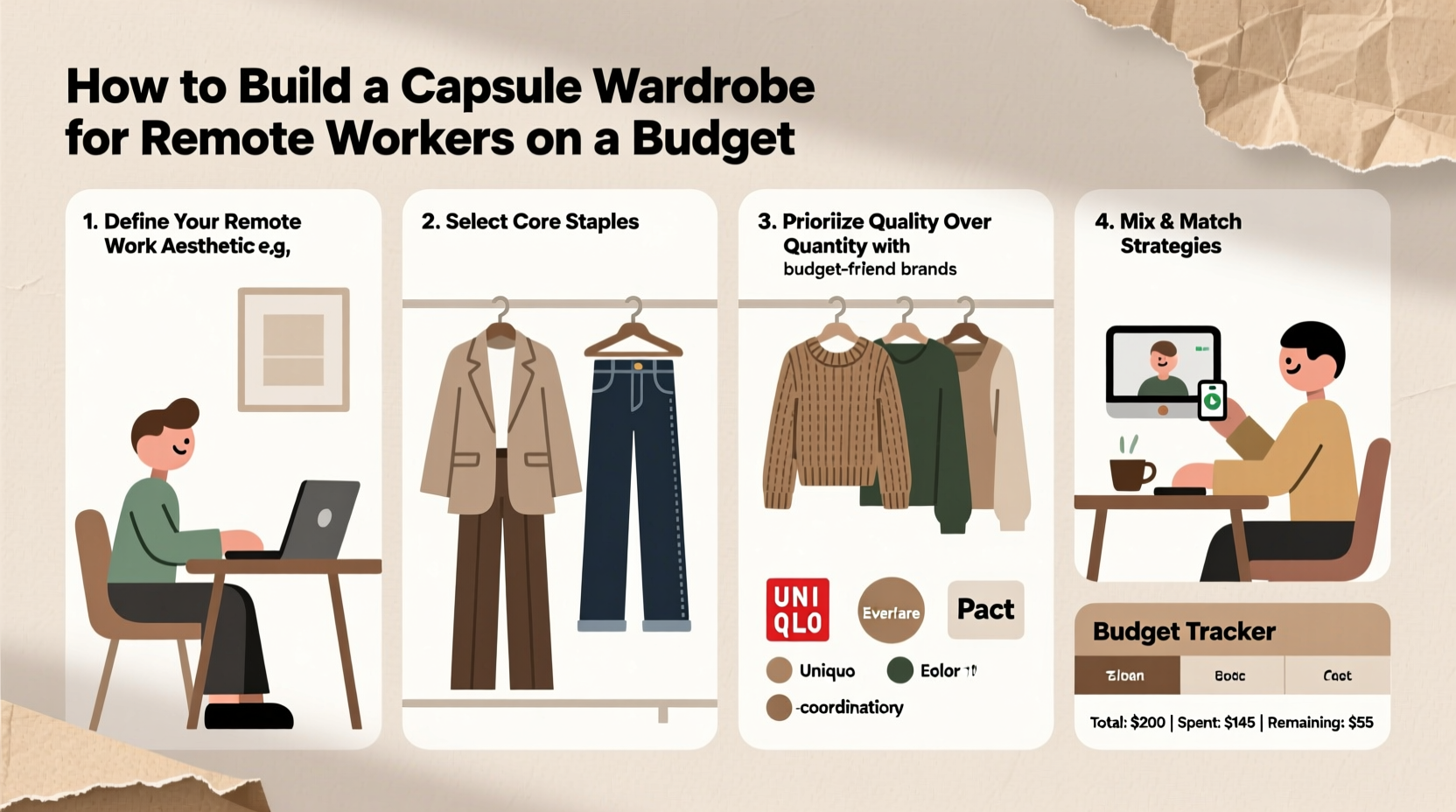
Creating a functional, affordable capsule wardrobe takes more than just buying a few neutral tops. It requires assessment, planning, and patience. Follow this structured process to build a wardrobe that reflects your lifestyle and budget.
- Assess Your Current Closet
Start by pulling out everything you own. Sort items into three categories: keep, donate/sell, and discard. Keep only pieces that fit well, make you feel confident, and align with your remote work needs. Look for garments that are both comfortable and presentable for camera appearances. - Define Your Personal Style & Needs
Remote work demands vary. Some roles require frequent video meetings; others allow full relaxation. Identify your typical day: How often do you appear on camera? Do you run errands midday? Are you sitting at a desk or moving around? Use these insights to determine your ideal balance of polished vs. casual pieces. - Choose a Color Palette
Stick to a cohesive color scheme—typically 3–5 core colors including neutrals like black, navy, gray, beige, or white. Add one or two accent tones if desired (e.g., burgundy, olive green). A unified palette ensures nearly all pieces can be mixed and matched, increasing outfit combinations from fewer items. - Select Core Categories
Focus on foundational garment types suited for remote life:- Top: Blouses, knitwear, button-downs
- Bottom: Trousers, chinos, dark jeans, skirts
- Dresses: Casual sheaths or shirt dresses
- Outerwear: Cardigans, blazers, lightweight jackets
- Footwear: Loafers, flats, clean sneakers
- Set a Realistic Budget
Decide how much you can afford to spend. Break it down per category. For example: $100 for tops, $60 for bottoms, $40 for outerwear. Prioritize investing in well-fitting, durable pieces over trendy, low-quality ones. - Shop Strategically
Wait for sales, use cashback apps, explore secondhand platforms (like Poshmark, ThredUp, or Facebook Marketplace), and consider clothing swaps. Avoid fast fashion unless it's truly necessary and ethically produced. - Assemble & Test
Put together 7–10 complete outfits using your selected pieces. Wear them over a week to test comfort, versatility, and camera readiness. Adjust as needed—swap underperforming items or add missing links (like a neutral blazer).
Essential Pieces for a Remote Worker’s Capsule Wardrobe
A successful capsule wardrobe hinges on selecting items that pull double duty. Below is a sample list of 25–30 total pieces designed for affordability, comfort, and professionalism.
| Category | Item | Quantity | Budget-Friendly Tips |
|---|---|---|---|
| Tops | Neutral crewneck sweaters | 2 | Look for cotton blends; thrift stores often carry quality knits |
| Tops | Button-up shirts (chambray, oxford) | 2 | Sale sections at department stores; unisex styles save cost |
| Tops | Simple tees (black, white, gray) | 3 | Buy multipacks online or during Black Friday deals |
| Bottoms | Dark wash jeans | 1–2 | Stretch denim offers comfort and structure |
| Bottoms | Tailored trousers (black, navy) | 2 | Check discount retailers like TJ Maxx or Marshalls |
| Dresses | Wrap dress or shirt dress | 1 | Versatile for meetings and weekends |
| Outerwear | Structured cardigan or open-front knit | 1 | Adds polish instantly on camera |
| Outerwear | Blazer (navy or gray) | 1 | Rent first via services like Rent the Runway to test fit/style |
| Footwear | Comfortable loafers | 1 pair | Clarks and Ecco often have sales; prioritize cushioned soles |
| Footwear | Clean white sneakers | 1 pair | Pair with jeans or cropped pants for casual days |
| Accessories | Scarf, belt, minimal jewelry | 3–4 items | Elevate simple outfits without extra cost |
This setup totals approximately 25–30 core pieces, enough to generate dozens of unique looks. The key is choosing items that layer well and maintain a consistent silhouette across seasons.
Real Example: Sarah’s $200 Capsule Makeover
Sarah, a freelance graphic designer based in Portland, spent years cycling through cheap, uncomfortable clothes. Her mornings were chaotic—she’d often throw on mismatched outfits before jumping on client calls. After reading about capsule wardrobes, she decided to rebuild her closet on a strict $200 budget.
She began by decluttering, donating over 40 items she hadn’t worn in months. She identified her primary needs: comfort for long sitting hours, presentability for Zoom meetings, and ease for quick grocery runs.
Using her local thrift store and ThredUp, she assembled:
- Two oatmeal-colored knit sweaters ($12 each)
- A tailored black blazer ($18)
- One pair of high-waisted navy trousers ($15)
- Three basic tees in white, gray, and rust ($8 each)
- A striped button-down shirt ($10)
- Dark jeans ($20)
- Black ankle boots ($25)
- A wool blend trench coat found at a consignment shop ($35)
- Minimal gold earrings and a silk scarf ($12 total)
With careful pairing, Sarah now rotates through 15+ distinct outfits. She reports feeling more confident on camera and saving time each morning. Most importantly, she stayed under budget and avoided fast fashion waste.
Budget-Saving Strategies That Work
Building a stylish wardrobe doesn’t require deep pockets. These proven tactics help stretch every dollar:
- Buy Secondhand First: Platforms like Poshmark, eBay, and local consignment shops offer gently used, brand-name clothing at 50–80% off retail.
- Wait for Seasonal Sales: Major discounts occur around Labor Day, Black Friday, and end-of-season clearances. Sign up for newsletters to track deals.
- Repair Instead of Replace: Learn basic mending—sewing a loose button or hemming pants costs nothing and extends garment life.
- Borrow or Swap: Host a clothing swap with friends. You might find a blazer someone else no longer wears.
- Invest in Fabric Quality: Natural fibers like cotton, wool, and linen last longer and drape better than synthetics—even if slightly pricier upfront.
Checklist: Build Your Capsule in 7 Steps
Use this actionable checklist to stay on track:
- ☐ Clear out unworn or ill-fitting clothes
- ☐ Define your remote work dress code (casual, business casual, hybrid)
- ☐ Choose a 4–5 color palette for cohesion
- ☐ List essential clothing categories you actually need
- ☐ Set a total spending limit and allocate funds per category
- ☐ Source items secondhand or on sale; prioritize fit and fabric
- ☐ Create 7-day outfit plan to test versatility
Frequently Asked Questions
Can I include loungewear in my capsule wardrobe?
Yes—but selectively. Loungewear like sweatpants or oversized hoodies may be comfortable, but they rarely transition well to video calls. Instead, opt for elevated basics: joggers in neutral tones, soft turtlenecks, or tailored lounge pants. These maintain comfort while looking intentional on camera.
How many pieces should a capsule wardrobe have?
Most effective capsule wardrobes contain between 25 and 40 items, including tops, bottoms, dresses, outerwear, and shoes. Exclude underwear, sleepwear, workout clothes, and seasonal extremes (e.g., winter coats). The goal is to have enough variety for two weeks without repeating full outfits.
What if my job requires more formal attire occasionally?
If you occasionally attend virtual presentations or hybrid events, include one or two “hero” pieces: a well-fitted blazer, a solid-color dress, or a crisp button-down. These can elevate any base outfit. Consider renting formalwear for rare occasions instead of purchasing.
Final Thoughts: Start Small, Think Long-Term
A capsule wardrobe isn’t about perfection—it’s about progress. You don’t need to overhaul your closet overnight. Begin with what you have, fill gaps mindfully, and let your wardrobe evolve with your lifestyle.
Remote work gives us the freedom to redefine dressing norms. By focusing on value over volume, you gain more than savings—you gain clarity. Each piece earns its place by serving you daily, reducing stress, and reflecting your authentic self.




 浙公网安备
33010002000092号
浙公网安备
33010002000092号 浙B2-20120091-4
Comments
No comments yet. Why don't you start the discussion?