
A capsule wardrobe is more than a minimalist fashion trend—it’s a strategic approach to dressing that prioritizes versatility, sustainability, and financial prudence. By curating just 15 thoughtfully selected clothing items, you can build a complete, seasonally appropriate wardrobe that simplifies daily decisions, reduces overconsumption, and saves money. The key lies not in scarcity, but in intentionality. This guide walks through the process of building a functional, stylish capsule wardrobe on a tight budget, using real-world strategies, practical checklists, and expert insights.
Why 15 Pieces? The Psychology of Simplicity
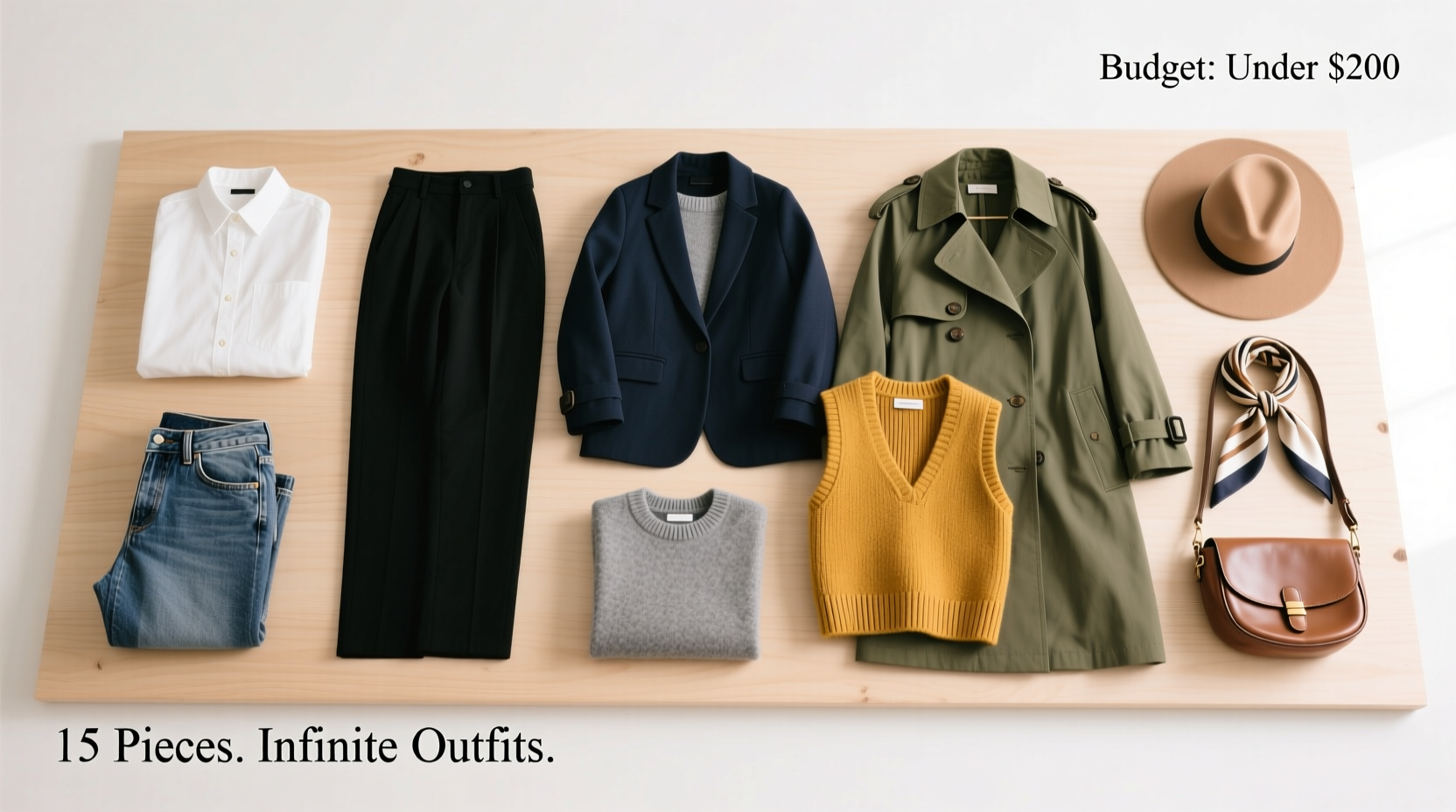
The number 15 isn’t arbitrary. Research in behavioral psychology suggests that decision fatigue sets in when choices exceed seven to ten options. A 15-piece limit forces curation without sacrificing functionality. Each item must earn its place by being wearable in multiple combinations and suitable for various occasions—from work to weekends, errands to evenings out.
Fashion psychologist Dr. Rebecca Jones explains:
“When people reduce their wardrobe size, they report higher confidence and lower stress around dressing. It’s not about having less; it’s about knowing what works.” — Dr. Rebecca Jones, Fashion Psychology Institute
This cognitive clarity translates into real savings. Fewer purchases mean fewer impulse buys. And because each piece is worn more frequently, the cost-per-wear drops dramatically—even if initial prices are slightly higher.
Step-by-Step Guide to Building Your Capsule
Creating a budget-friendly capsule wardrobe in 15 pieces requires planning, patience, and precision. Follow this six-step timeline to assemble your collection within four weeks—without overspending.
- Week 1: Audit & Define (Free)
Clear your closet. Remove everything and assess what you already own. Identify well-fitting, durable, and frequently worn items that align with your lifestyle. Set aside up to five pieces that could be part of your final capsule. - Week 2: Define Your Style & Needs (Free)
Determine your primary activities: office work, remote job, parenting, student life, etc. Choose a cohesive color palette—typically neutrals like black, navy, beige, or gray, with one accent shade. This ensures maximum mix-and-match potential. - Week 3: Plan the Full 15-Piece Breakdown (Budget $100–$150)
Map out exactly which categories you need. Prioritize timeless silhouettes over trends. Use thrift stores, sales, or clothing swaps to source missing items. - Week 4: Shop Strategically (Stick to Budget)
Purchase only what’s missing. Try before you buy. Favor natural fibers (cotton, wool, linen) for durability. Always wash test items first to check shrinkage or fading. - Month 2: Wear & Refine
Test the wardrobe for two weeks. Note any gaps or redundancies. Swap one underperforming piece if needed—but keep the total at 15. - Ongoing: Maintain & Rotate Seasonally
After 3–6 months, reassess. You may rotate in seasonal layers (e.g., swap a blazer for a cardigan), but never exceed the limit.
What Counts as a Piece? Defining the 15
In capsule wardrobes, each major garment counts as one piece. Accessories, underwear, socks, and sleepwear are excluded. Shoes typically count separately unless they’re integral to an outfit (like ankle boots paired with jeans).
Here’s a standard breakdown of the 15 pieces:
| Category | Number of Pieces | Examples |
|---|---|---|
| Top | 5 | T-shirt, blouse, sweater, button-down, tank top |
| Bottom | 3 | Jeans, trousers, skirt |
| Dresses/Jumpsuits | 2 | LBD, shirt dress, casual jumpsuit |
| Outerwear | 2 | Blazer, trench coat or denim jacket |
| Layering | 3 | Cashmere scarf, cardigan, vest |
Note: Dresses often replace both top and bottom, so they’re counted once. Layering pieces enhance outfits without adding full garments.
Budget Shopping Strategies That Work
Building a 15-piece wardrobe doesn’t require luxury brands or full-price retail. With smart sourcing, you can assemble everything for under $200.
- Thrift Stores & Consignment Shops: Look for high-quality fabrics like merino wool, silk blends, or 100% cotton. Tailored blazers and wool coats are often found in excellent condition for $10–$20.
- Garage Sales & Estate Sales: Older generations owned better-made clothes. Silk blouses, leather shoes, and structured bags appear regularly at low prices.
- Online Resale Platforms: Apps like Poshmark, ThredUp, or Depop allow filtering by size, brand, and price. Use filters to search “minimalist,” “workwear,” or “neutral” for capsule-ready items.
- End-of-Season Sales: Buy winter layers in late February, summer pieces in August. Retailers discount quality basics by 60–80%.
- Clothing Swaps: Host or join a local swap event. Trade five items you no longer wear for five new-to-you ones—free and sustainable.
Real Example: Maria’s $147 Capsule Wardrobe
Maria, a 32-year-old administrative assistant in Portland, wanted to simplify her mornings and stop overspending on fast fashion. She committed to building a 15-piece capsule on a $150 budget.
She started with three pieces she already owned: dark wash jeans, a black turtleneck, and a navy blazer. Over two weekends, she visited thrift stores and scored:
- White button-down shirt – $8
- Gray wool skirt – $12
- Beige trench coat – $20
- Striped Breton top – $6
- Black midi dress – $15
- Cream cardigan – $10
- Denim shirt – $7
- Two silk scarves (used as tops) – $5 each
- Structured black handbag – $25
- Loafers (lightly used) – $14
Total spent: $147. With these 15 pieces, Maria created over 40 unique outfits. She reported saving nearly two hours per week on outfit decisions and stopped making unplanned clothing purchases for six months.
Checklist: Build Your Capsule in 15 Steps
Follow this actionable checklist to stay on track:
- Empty your closet completely.
- Keep only items that fit well and make you feel confident.
- Select up to 5 existing pieces for your capsule.
- Define your lifestyle needs (office, casual, hybrid).
- Choose a neutral color palette with one accent color.
- List the 15 pieces you need based on the category table.
- Identify gaps in your current wardrobe.
- Set a total budget ($100–$200 recommended).
- Visit 2–3 thrift stores or browse resale sites.
- Try on every potential item with something you own.
- Purchase only what fulfills a missing role.
- Wash and press all new additions.
- Arrange your 15 pieces visibly (on a rack or shelf).
- Wear the full set for 10 days, rotating combinations.
- Replace only one item if necessary—never exceed 15.
Common Mistakes to Avoid
Even with good intentions, pitfalls can derail a capsule wardrobe. Here’s what not to do:
| Mistake | Why It Fails | Better Approach |
|---|---|---|
| Choosing trendy over timeless | Fads date quickly; pieces won’t last a season | Pick classic cuts: straight-leg pants, crewneck sweaters, pencil skirts |
| Ignoring fabric quality | Thin polyester pills; cheap denim fades | Opt for cotton, wool, linen, TENCEL™—they age gracefully |
| Overvaluing \"potential\" wear | “I’ll wear it when I lose weight” rarely happens | Only include pieces that fit and flatter now |
| Forgetting layering needs | One sweater can’t handle cold office + warm commute | Include a cardigan, scarf, or vest for adaptability |
FAQ: Common Questions About 15-Piece Capsules
Can I really live with only 15 clothes?
Yes—if they’re well-chosen. The average person wears 20% of their wardrobe 80% of the time. A 15-piece capsule focuses on that 20%, eliminating the clutter. You’ll wear each piece weekly, keeping your look fresh through creative combinations.
What about seasonal changes?
You can rotate seasonally while keeping the 15-piece rule. For example, swap a linen shirt for a thermal top in winter, or trade a trench coat for a puffer jacket. Store off-season items out of sight to maintain focus.
Do shoes and accessories count?
No, not in most capsule frameworks. However, limit yourself to 3–4 versatile pairs of shoes (e.g., loafers, ankle boots, sneakers, sandals) and 2–3 bags. Accessories should complement, not complicate, your system.
Final Thoughts: Less Really Is More
A 15-piece capsule wardrobe isn’t a constraint—it’s a liberation. It frees you from decision fatigue, reduces laundry loads, and eliminates the guilt of unworn clothes gathering dust. More importantly, it shifts your relationship with fashion from consumption to curation.
You don’t need a closet full of options to feel stylish. You need a few perfect pieces that work together, reflect your personality, and serve your life. And you can build that foundation on a budget, one thoughtful purchase at a time.




 浙公网安备
33010002000092号
浙公网安备
33010002000092号 浙B2-20120091-4
Comments
No comments yet. Why don't you start the discussion?