
A capsule wardrobe is often praised for its simplicity: a curated collection of essential clothing items that mix and match effortlessly. But too many people end up with a minimalist closet that feels repetitive, dull, or disconnected from their true style. The goal isn’t just minimalism—it’s versatility with personality. A well-designed capsule should reflect who you are, adapt to your lifestyle, and still allow room for self-expression across seasons, occasions, and moods.
The key lies in intentionality. Diversity in a capsule wardrobe doesn’t mean owning more pieces; it means selecting fewer, smarter ones that offer real variation when combined. This approach saves time, reduces decision fatigue, and elevates your daily style—without cluttering your closet.
Define Your Style Identity First
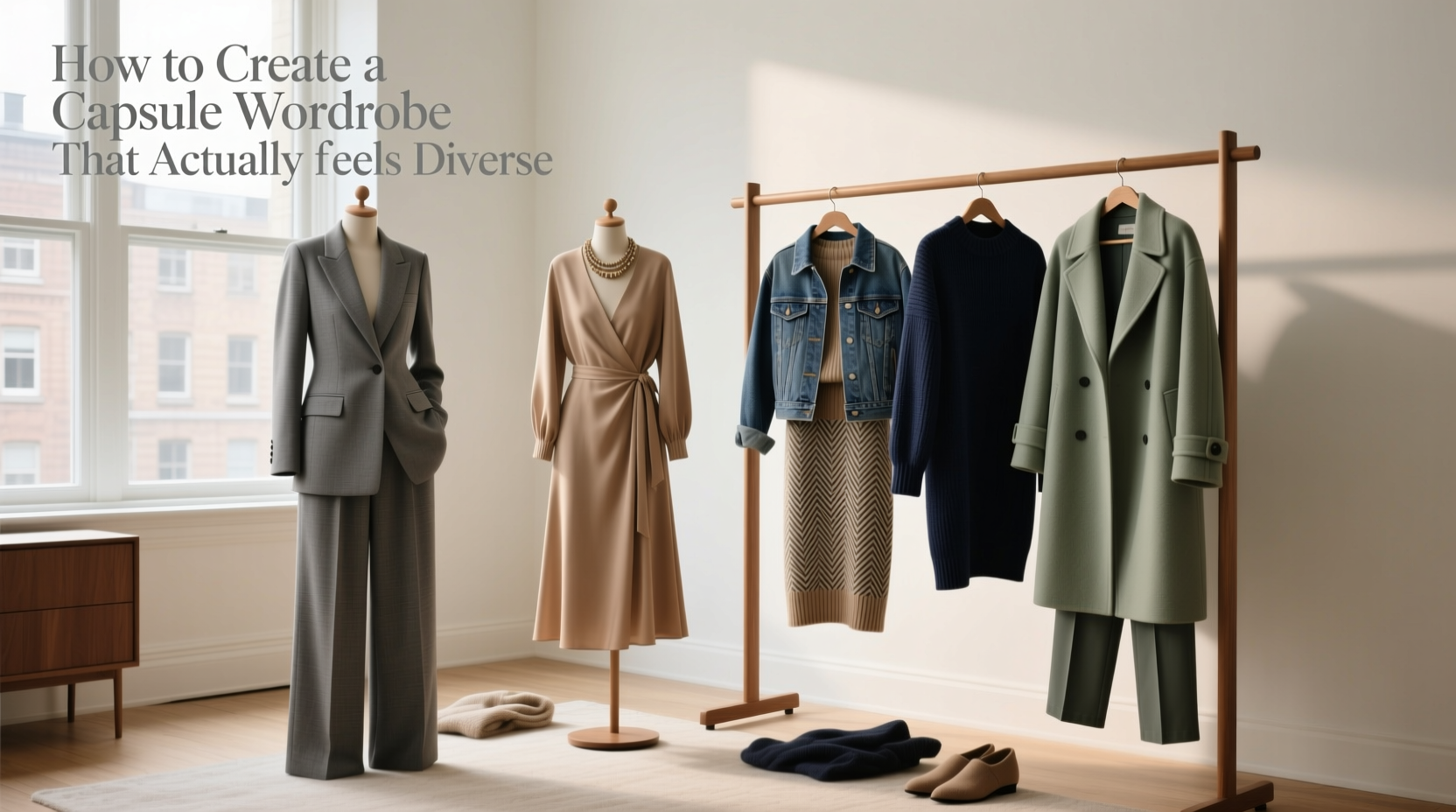
Before choosing any garment, clarify what “diverse” means to you. For some, diversity means blending casual and formal wear. For others, it’s about incorporating cultural influences, color palettes, or silhouettes that reflect different aspects of their identity. Without this foundation, even the most thoughtfully assembled capsule can feel generic.
Start by auditing your current wardrobe. Pull out 10–15 items you love wearing—the ones that make you feel confident and authentic. Ask yourself:
- What do these pieces have in common? (Color? Fabric? Fit?)
- When do I typically wear them? (Work, weekends, evenings?)
- How do they make me feel? (Powerful, relaxed, creative?)
This exercise reveals patterns in your preferences. You might discover you gravitate toward earth tones with structured tailoring during workdays but lean into flowy, colorful fabrics on weekends. Acknowledging these nuances allows you to build a capsule that accommodates multiple versions of yourself—not just one flattened aesthetic.
“Diversity in fashion isn’t just about representation—it’s about giving people the tools to express complexity.” — Dr. Naomi Reed, Cultural Stylist & Author
Build Around a Flexible Foundation
A diverse capsule starts with a cohesive base—typically neutral colors like beige, navy, charcoal, or black—that act as anchors. These foundational pieces should be high-quality, timeless, and comfortable enough to wear frequently.
But neutrality doesn’t mean monotony. Choose base items with subtle texture or cut details: a wool-blend blazer with slight shoulder padding, wide-leg trousers with a matte finish, or a crewneck sweater with a ribbed weave. These quiet distinctions add depth without disrupting compatibility.
From there, layer in diversity through strategic contrast. Think of your capsule like a jazz ensemble: the rhythm section stays steady, while soloists bring improvisation. In clothing terms, this means introducing variety via:
- Color accents: One or two bold hues (like rust, emerald, or cobalt) used across multiple pieces.
- Patterned elements: A checked shirt, striped tee, or floral scarf that ties back to your core palette.
- Varying proportions: Pairing an oversized coat with slim pants, or a fitted turtleneck under a billowy midi dress.
The trick is ensuring every non-neutral item can pair with at least three others in your capsule. If your only red piece is a bright satin blouse that clashes with everything except one skirt, it limits rather than enhances diversity.
Do’s and Don’ts of Capsule Layering
| Do | Don't |
|---|---|
| Use accessories (scarves, bags, shoes) to shift the tone of an outfit | Rely solely on clothing color to create variety |
| Invest in transitional outerwear (e.g., trench coat, denim jacket) | Choose statement coats that only work in extreme weather |
| Mix fabric weights seasonally (cotton-linen blends in summer, merino in winter) | Stick rigidly to one fabric type year-round |
| Include one “personality piece” per category (e.g., patterned trousers) | Add novelty items that can’t be restyled easily |
Create Outfit Formulas, Not Rules
Rigidity kills diversity. Instead of prescribing exact outfits, develop flexible formulas that guide combinations. These are repeatable templates that maintain cohesion while allowing variation.
For example:
- Formula 1: Tailored top + textured bottom + neutral shoe = polished look
- Formula 2: Relaxed knit + straight-leg jeans + ankle boot = effortless weekend
- Formula 3: Slip dress + oversized blazer + loafers = elevated evening
Within each formula, rotate components. Swap the tailored top for a silk cami or button-up. Change the textured bottom from corduroys to pleated wool pants. These micro-shifts keep outfits feeling fresh without requiring new purchases.
Mini Case Study: Maria’s Work-to-Weekend Capsule
Maria, a graphic designer in Portland, wanted a capsule that worked for hybrid office days, client presentations, and casual outings. Her initial attempt—a monochrome lineup of black, gray, and white—left her feeling robotic.
She revised her approach by defining three identities she wanted to express: Professional, Creative, and Relaxed. She kept a neutral base (black trousers, gray blazer, white shirts) but added:
- A burnt orange turtleneck (Creative)
- Olive green utility jacket (Relaxed)
- Striped boat shoes and gold jewelry (Personality accents)
By pairing her blazer with the orange turtleneck and jeans for presentations, or swapping it for the utility jacket on casual Fridays, she created distinct vibes using mostly the same pieces. Her capsule grew more diverse not by adding volume, but by increasing expressive range.
Seasonal Rotation Without Starting Over
Many people abandon their capsules when seasons change, replacing entire sections instead of adapting. True diversity includes longevity—your wardrobe should evolve, not reset.
Follow this seasonal integration process:
- Assess climate needs: Identify functional shifts (layering, moisture-wicking, sun protection).
- Pull transitional staples: Items like trench coats, cotton button-downs, or mid-weight knits bridge seasons.
- Add 3–5 seasonal highlights: One bold color, one texture (e.g., corduroy), one silhouette (e.g., midi skirt).
- Store mindfully: Keep off-season items visible (clear bins, labeled shelves) so you remember what you own.
- Recombine after rotation: Revisit old combinations with new context—your winter boots might now pair perfectly with spring dresses.
This method prevents the “new season, new me” mentality that leads to overbuying. It also encourages deeper engagement with your existing clothes, revealing unexpected pairings.
Expert Insight on Long-Term Wardrobe Health
“A diverse capsule isn’t built in a month. It’s refined over years. The most stylish women I know edit ruthlessly but keep things that spark joy—even if they’re ‘impractical.’ That’s where authenticity lives.” — Lena Cho, Sustainable Stylist & Consultant
Your Capsule Diversity Checklist
Use this checklist to evaluate and enhance your capsule’s expressive range:
- ✅ I have at least three distinct outfit styles (e.g., professional, creative, relaxed)
- ✅ At least 80% of my pieces can be worn in multiple combinations
- ✅ I’ve included 1–2 colors beyond neutrals that reflect my personality
- ✅ I own at least one “fun” piece that breaks the mold (e.g., printed pants, metallic bag)
- ✅ My footwear varies in formality and comfort level
- ✅ Accessories (jewelry, scarves, belts) help transform the same outfit
- ✅ I feel excited to wear my clothes—not just resigned to them
If you miss more than two items, consider targeted additions. But remember: diversity isn’t achieved by buying more. It’s achieved by thinking differently about what you already have—and how you use it.
Frequently Asked Questions
Can a capsule wardrobe include trends?
Yes—but selectively. Incorporate trends through low-commitment items like accessories, tops, or shoes. A single trendy piece (e.g., square-toe boots, puff sleeves) can refresh your entire capsule without derailing its cohesion. Just ensure it aligns with your overall aesthetic and can be styled multiple ways.
What if my job requires different dress codes?
Design sub-themes within your capsule. Divide your core pieces into categories like “Corporate,” “Casual Friday,” and “Remote Days.” Use shared elements (a signature blazer, favorite watch) to maintain continuity. This creates diversity across contexts while keeping your wardrobe unified.
How many pieces should a diverse capsule have?
There’s no magic number. Most effective capsules range from 30–50 total items (including shoes and outerwear), but the quality of coordination matters more than quantity. Focus on maximizing combinations, not minimizing count. A 40-piece capsule with poor mixing potential will feel smaller than a 30-piece one with high versatility.
Conclusion: Build a Wardrobe That Reflects Your Whole Self
A truly diverse capsule wardrobe doesn’t strip away personality in the name of simplicity. It distills it. It gives you freedom through structure, expression through limitation, and confidence through consistency.
You don’t need dozens of clothes to feel varied. You need a few well-chosen pieces that speak to different parts of your life. When your wardrobe supports your professional ambitions, creative impulses, and personal joys equally, getting dressed becomes less of a chore and more of a conversation—with yourself, and with the world.




 浙公网安备
33010002000092号
浙公网安备
33010002000092号 浙B2-20120091-4
Comments
No comments yet. Why don't you start the discussion?