
A capsule wardrobe doesn’t have to mean minimalism in shades of sand, oat, and gray. While the traditional idea of a capsule wardrobe emphasizes simplicity, versatility, and neutral tones, it can easily fall into the trap of looking dull or uninspired. The truth is, a well-designed capsule wardrobe should reflect your personal style—not erase it. With thoughtful planning, strategic color choices, and intentional layering, you can build a compact, functional closet that feels vibrant, expressive, and exciting every time you open it.
The goal isn’t just to reduce clutter or own fewer clothes—it’s to wear what you love more often, mix pieces effortlessly, and feel confident without overthinking. This guide will show you how to design a capsule wardrobe that defies monotony, embraces color and texture, and still delivers all the practical benefits of a streamlined closet.
Reimagining the Capsule Wardrobe: Beyond Neutrals
The modern capsule wardrobe emerged from the 1970s concept popularized by London boutique owner Susie Faux and later adopted by designers like Donna Karan. It was built on the idea of owning a small collection of interchangeable essentials—typically in neutral colors—that could be mixed and matched for multiple occasions.
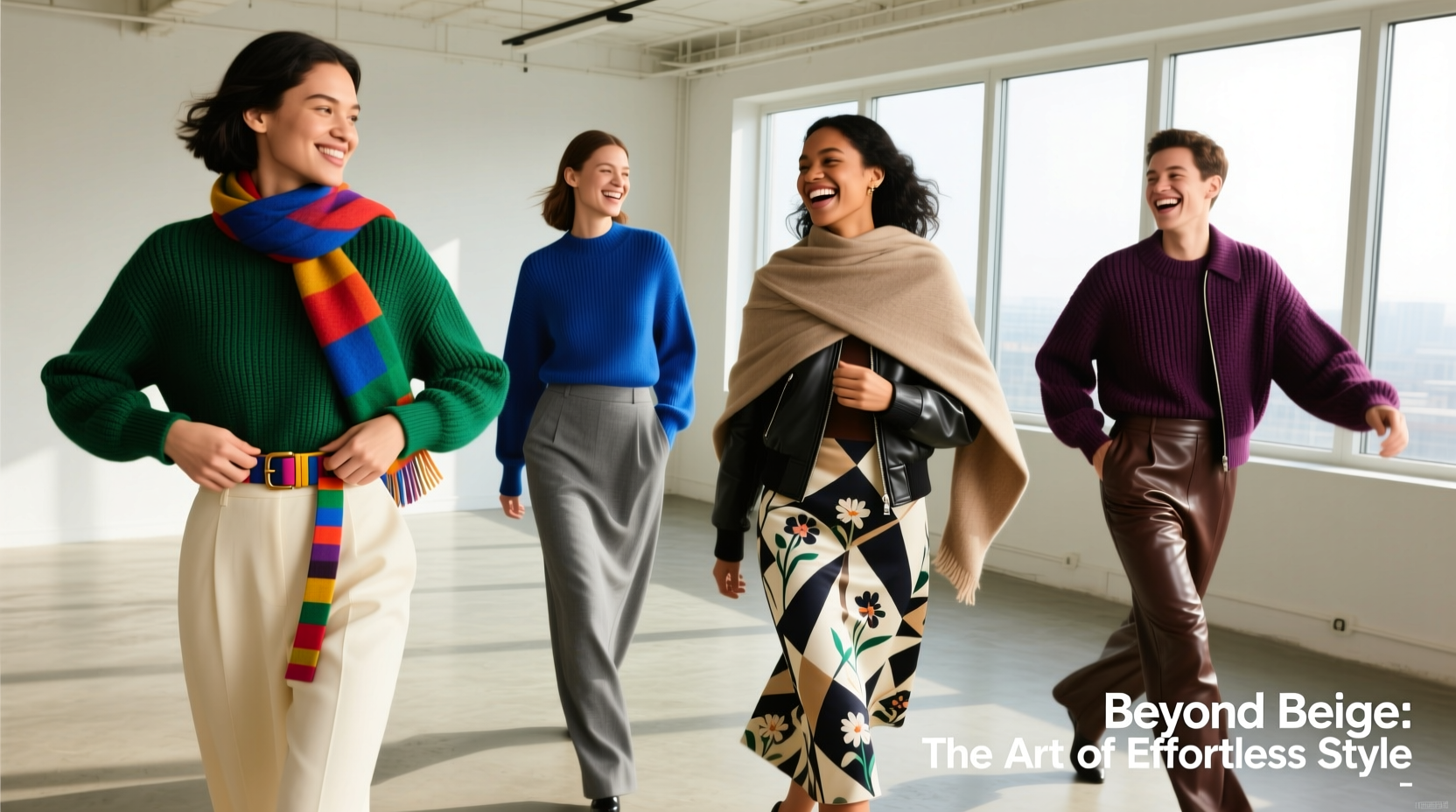
While this approach works for some, many people find that limiting their palette to beige, black, navy, and white drains the joy out of dressing. A capsule wardrobe should enhance self-expression, not suppress it. The key is balance: maintain cohesion through a consistent theme, silhouette, or color family while allowing room for boldness, pattern, and individuality.
“Your wardrobe should tell your story. If everything looks the same, it’s not reflecting who you are.” — Maya Chen, Sustainable Style Consultant
A non-boring capsule wardrobe uses a curated color story that includes both neutrals and statement hues. Instead of defaulting to beige, consider deep jewel tones, earthy terracottas, rich olives, or even playful pops of cobalt or rust. These colors can coexist harmoniously when anchored by shared undertones or textures.
Step-by-Step Guide to Building a Vibrant Capsule
Creating a dynamic capsule wardrobe takes more than just picking pretty clothes. It requires intentionality, editing, and a clear vision. Follow these steps to build a collection that’s both functional and full of life.
- Define Your Personal Style: Before selecting any items, reflect on what makes you feel confident and energized. Are you drawn to structured tailoring, flowy silhouettes, retro prints, or modern minimalism? Gather inspiration from Pinterest, Instagram, or fashion magazines, but filter it through your lifestyle and body type.
- Assess Your Lifestyle Needs: List your most common daily activities—work, errands, social events, exercise. Your wardrobe should support these realities. A teacher might need durable, washable separates; a creative professional may lean into expressive layers and unique textures.
- Select a Color Palette with Personality: Pick 4–6 colors that work together. Include 1–2 neutrals (not necessarily beige), 2–3 mid-tones (like burgundy, mustard, or teal), and 1 statement shade (emerald, coral, or electric blue). Use a color wheel to ensure harmony.
- Choose Core Silhouettes: Decide on 3–5 foundational shapes—e.g., a tailored blazer, wide-leg pants, a-line midi dress, cropped knit, trench coat. These become your anchors. Build around them with variation in color and fabric, not structure.
- Edit Ruthlessly: Pull every item you’re considering into one place. Try each piece on. Ask: Does it fit? Does it align with my color story? Can I style it at least three ways? If not, set it aside.
- Fill Gaps Strategically: Identify missing elements—perhaps a colorful blazer or printed blouse—and invest in high-quality versions. Prioritize natural fabrics like cotton, linen, wool, or TENCEL™ for better drape and longevity.
- Test the Mix: Create 7–10 complete outfits using only your capsule pieces. If you struggle to make cohesive combinations, adjust your palette or add transitional layers like scarves or vests.
How to Add Interest Without Sacrificing Cohesion
The secret to avoiding a bland capsule lies in controlled contrast. You don’t need 50 tops—just a few that offer variety in texture, pattern, and proportion. Here’s how to keep things visually engaging:
- Incorporate Pattern Thoughtfully: One or two patterned pieces—a striped shirt, floral skirt, or geometric scarf—can elevate an entire wardrobe. Ensure the colors in the print pull from your chosen palette.
- Play with Texture: Combine smooth silk with nubby knits, crisp cotton with soft velvet. Textural contrast adds depth even in monochrome outfits.
- Use Accessories as Color Carriers: Instead of overwhelming your base layers with brights, let accessories do the talking. A cobalt bag, rust-colored belt, or emerald earrings can transform a neutral outfit.
- Vary Proportions: Pair loose-fitting trousers with a fitted turtleneck, or a voluminous coat with slim jeans. Dynamic silhouettes keep looks fresh and fashion-forward.
- Seasonal Swaps with Flair: Rotate in seasonal items that align with your color scheme. In winter, introduce a plum sweater or forest-green coat. In summer, swap in a lemon-yellow dress or turquoise sandals.
Checklist: Building a Non-Boring Capsule Wardrobe
Use this checklist to stay on track as you curate your collection:
- ✅ Identified my core personal style (e.g., modern classic, bohemian minimalist, edgy tailored)
- ✅ Listed my top 5 daily lifestyle needs
- ✅ Selected a 4–6 color palette with at least one bold hue
- ✅ Chosen 3–5 foundational silhouettes
- ✅ Edited out ill-fitting or off-theme pieces
- ✅ Included at least one patterned or textured standout item
- ✅ Added accessories that reinforce my color story
- ✅ Tested at least 7 complete outfit combinations
- ✅ Stored off-season items out of sight but labeled for easy rotation
- ✅ Scheduled a quarterly review to refresh or adjust
Real Example: From Beige to Bold – Lena’s Transformation
Lena, a 34-year-old project manager, had spent years building what she thought was a “sophisticated” capsule wardrobe—mostly beige trousers, gray sweaters, and black blazers. She prided herself on being low-maintenance, but admitted she dreaded getting dressed. “I felt invisible,” she said. “Everything looked the same, and I kept buying more neutrals to ‘fix’ it.”
After working with a stylist, Lena redefined her capsule around deep terracotta, olive green, and cream, with accents of burnt orange and navy. She replaced generic knits with a cable-knit camel cardigan, added a rust-colored wrap dress, and invested in a structured olive blazer. She kept her black trousers but paired them with a striped silk blouse in terracotta and cream.
The result? Her coworkers started complimenting her style. “I wear fewer pieces now, but I feel more seen,” Lena said. “And I actually enjoy opening my closet.”
Do’s and Don’ts: Avoiding Common Capsule Mistakes
| Do | Don’t |
|---|---|
| Choose colors that flatter your skin tone and align with your lifestyle | Default to beige because it’s “safe” or “classic” |
| Include 1–2 fun or unexpected pieces (e.g., a sequined top, printed pants) | Fill your capsule with only basics |
| Use accessories to introduce color and personality | Rely solely on clothing for expression—neglecting shoes, bags, jewelry |
| Limit patterns to 1–2 items that share colors with your palette | Add multiple clashing prints that don’t coordinate |
| Rotate seasonally while maintaining color continuity | Completely overhaul your palette every season |
Frequently Asked Questions
Can a capsule wardrobe include bright colors?
Absolutely. Bright colors can be central to a capsule wardrobe as long as they’re part of a cohesive palette. For example, a capsule built around navy, white, and coral can include vibrant coral dresses, tops, or accessories. The key is repetition—using the same bold color across multiple pieces creates unity.
How many items should a non-boring capsule have?
Most capsules range from 30–50 pieces, including clothing, outerwear, and shoes (excluding undergarments and workout wear). The exact number depends on your climate and lifestyle. The goal isn’t minimalism at all costs, but thoughtful curation. Even with bold choices, every item should serve a purpose and mix well.
What if my workplace requires neutral clothing?
You can still inject personality within constraints. Opt for rich neutrals like chocolate brown, deep plum, or charcoal instead of beige. Add interest through texture (tweed, corduroy, silk), subtle patterns (houndstooth, pinstripes), or colorful accessories like ties, scarves, or loafers. A maroon blouse under a gray suit instantly elevates a professional look.
Conclusion: Make Your Capsule Work for You
A capsule wardrobe should simplify your life, not limit your self-expression. By moving beyond beige and embracing color, texture, and intentionality, you can create a closet that’s both efficient and exhilarating. The most sustainable wardrobe isn’t just the smallest one—it’s the one you love wearing every day.
Start small. Redefine your color story. Edit with purpose. Celebrate your uniqueness. When your clothes reflect who you are—not who you think you should be—you won’t just look better. You’ll feel more like yourself.




 浙公网安备
33010002000092号
浙公网安备
33010002000092号 浙B2-20120091-4
Comments
No comments yet. Why don't you start the discussion?