
A well-curated capsule wardrobe simplifies daily dressing, reduces decision fatigue, and promotes sustainable fashion. The concept, originally developed by London boutique owner Susie Faux in the 1970s and later popularized by designer Donna Karan, centers on owning fewer, higher-quality garments that work together seamlessly across seasons. While many capsule wardrobes are designed for a single season, creating one that functions year-round is both ambitious and achievable—with careful planning. By selecting just 10 versatile, timeless pieces, you can build a functional, stylish closet that adapts to temperature shifts, social occasions, and personal needs throughout the year.
The Philosophy Behind a Year-Round Capsule Wardrobe
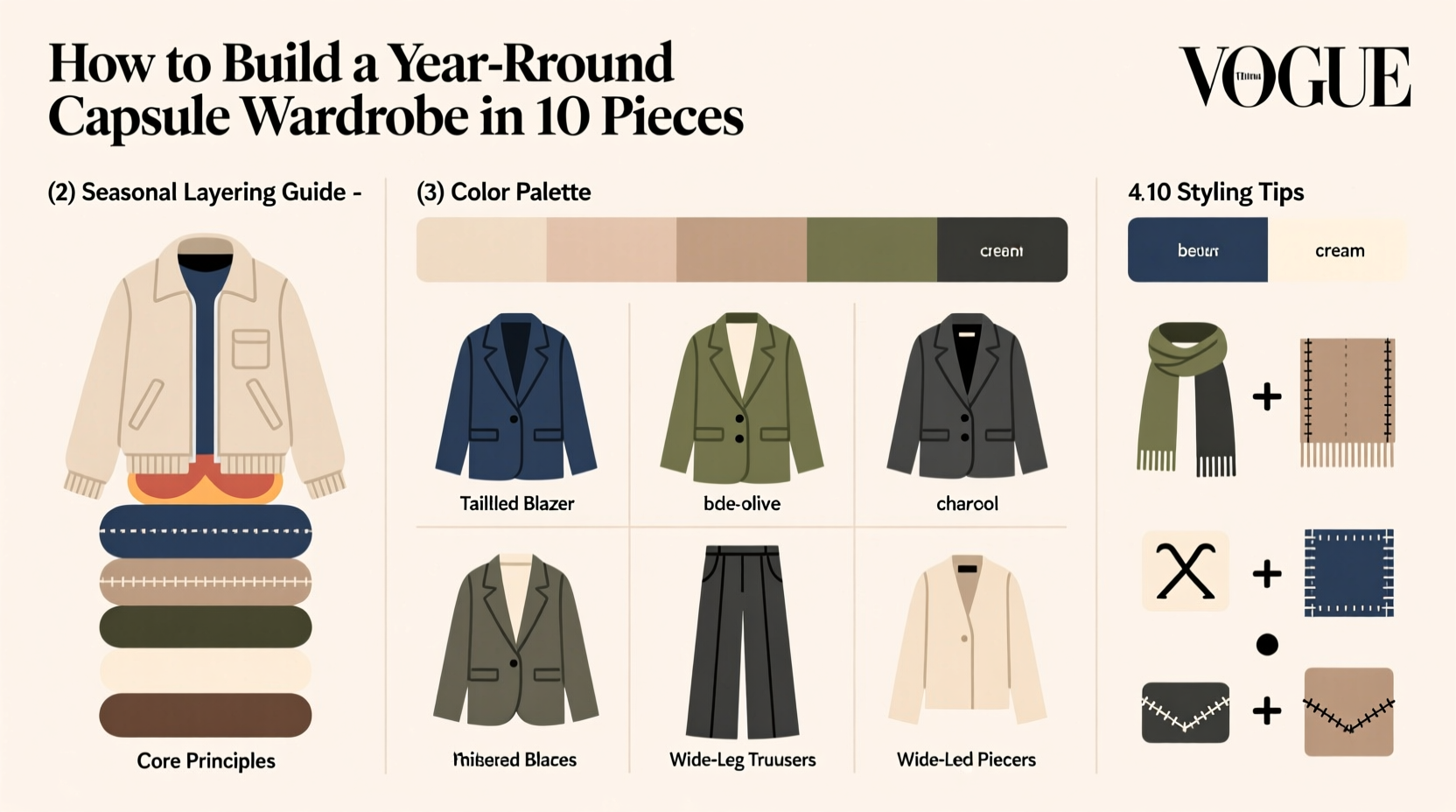
A true year-round capsule wardrobe isn’t about sacrificing comfort or appropriateness for seasonal extremes. Instead, it’s about strategic selection: choosing items that layer efficiently, transition between climates, and maintain aesthetic cohesion. This approach demands more intentionality than seasonal capsules, but the payoff is significant—less clutter, reduced consumption, and greater confidence in your daily outfit choices.
The foundation lies in understanding your climate, lifestyle, and personal style. A capsule that works in San Diego may not suit Minneapolis winters, so adaptability doesn’t mean universality. The goal is to identify core garments that serve multiple roles through layering, accessorizing, and smart coordination.
“Simplicity is the ultimate sophistication.” — Leonardo da Vinci
In fashion, this means eliminating excess while amplifying function. A minimalist wardrobe isn’t about deprivation—it’s about precision.
Step-by-Step Guide to Building Your 10-Piece Capsule
Creating a functional year-round capsule requires a structured process. Follow these steps to ensure your 10 pieces deliver maximum utility:
- Assess Your Lifestyle and Climate: Track your weekly activities—work, exercise, social events, travel—and note average temperatures across all seasons. This informs fabric weight, formality, and layering needs.
- Define Your Color Palette: Choose a cohesive palette of 3–4 neutral base colors (e.g., navy, charcoal, cream) with one accent (like burgundy or olive). This ensures every piece mixes and matches effortlessly.
- Select Core Silhouettes: Prioritize classic cuts over trends. Straight-leg trousers, A-line skirts, tailored blazers, and crewneck sweaters have enduring appeal and fit.
- Invest in Quality Over Quantity: With only 10 pieces, each must be durable, well-fitted, and made from natural or high-performance fabrics like merino wool, organic cotton, or TENCEL™.
- Test for Versatility: Before finalizing, simulate at least 15 different outfits using only your selected items. If combinations feel limited, reconsider one or two pieces.
The 10 Essential Pieces for a Year-Round Capsule
The following list balances coverage, layering potential, and adaptability. These are not generic suggestions—they are specific garment types chosen for their transformative capacity when combined.
| Item | Function | Seasonal Adaptability | Styling Tips |
|---|---|---|---|
| Tailored Wool Blazer | Structure, warmth, polish | Worn open in summer; layered over sweaters in winter | Pairs with jeans for casual wear or trousers for professional settings |
| Merino Wool Crewneck Sweater | Base layer or standalone top | Breathable enough for cool spring days; warm in deep winter | Layer under blazer or wear with skirt for a refined look |
| Mid-Length Trench Coat | Weather protection, transitional outerwear | Ideal for rain in spring/fall; light insulation in mild winters | Belted for shape; worn over dresses or separates |
| Dark Wash Straight-Leg Jeans | Casual staple with formal potential | Suitable year-round with appropriate layers | Roll cuffs in summer; wear with boots and tights in winter |
| Navy Chinos or Trousers | Smart-casual alternative to jeans | Lighter weight for summer; heavier fabric for winter | Pair with sweater for office wear or sneakers for weekends |
| Neutral Sheath Dress | Single-piece outfit solution | Worn alone in summer; layered with tights and cardigan in winter | Add a belt for definition; throw on a jacket for evening |
| White Button-Down Shirt | Layering base, standalone top | Versatile across all seasons | Tuck in for formality; knot at waist for casual flair |
| Black Knee-High Boots | Footwear anchor | Worn with socks in winter; barefoot in fall/spring | Goes with dresses, skirts, jeans—ideal for transitions |
| Comfortable Loafers or Oxfords | Polished footwear for moderate weather | Suitable for dry seasons; avoid heavy rain | Pair with cropped pants or dresses for clean lines |
| Wrap Cardigan (Mid-Weight) | Adaptable layer for warmth and style | Worn over tees in summer; under coat in winter | Choose one in a blend like wool-cotton for breathability |
Why These 10 Work Together
This combination creates over 30 distinct outfit combinations without adding accessories. The color scheme (navy, black, white, gray, denim blue) ensures visual harmony. Natural fibers provide breathability in heat and insulation in cold. Each piece serves at least two roles—jeans go from errands to dinner; the trench doubles as raincoat and lightweight jacket.
Real Example: Sarah’s Urban Capsule
Sarah lives in Portland, Oregon—a city with damp springs, mild summers, rainy falls, and chilly, wet winters. As a freelance designer, she works from home three days a week and meets clients twice weekly. Her lifestyle demands comfort, creativity, and occasional polish.
She built her 10-piece capsule around navy, charcoal, and cream. Her blazer is unlined for breathability. Her merino sweater is lightweight but warm. She wears her trench almost daily from October to May. In summer, she swaps boots for loafers and adds a linen scarf (a non-core accessory).
One morning in January, she pairs jeans with the button-down, layered under the sweater and blazer, finishing with boots. In July, she wears the dress with sandals (outside the capsule) and a sun hat. The same pieces reappear in different configurations, proving that thoughtful curation beats quantity.
After six months, Sarah reported spending 40% less time choosing outfits and 60% less on clothing. More importantly, she felt more confident and put-together every day.
Do’s and Don’ts of Year-Round Capsule Wardrobes
| Do | Don’t |
|---|---|
| Choose natural, breathable fabrics with moisture-wicking properties | Select trendy silhouettes that may feel outdated in six months |
| Ensure every piece coordinates with at least four others | Include items that only work for one season or occasion |
| Use accessories (scarves, belts, jewelry) to refresh looks | Overload on accessories—limit to 5 key additions |
| Dry clean only when necessary; air out between wears | Machine-wash delicate wools or structured blazers |
| Re-evaluate your capsule every 6 months | Stick rigidly to the original 10 if lifestyle changes occur |
“A capsule wardrobe isn’t static. It evolves with you—but only after thoughtful reflection.” — Maya Lin, Sustainable Style Consultant
Frequently Asked Questions
Can a 10-piece wardrobe really work in extreme climates?
Yes, but with caveats. In very cold regions (e.g., Chicago winters), you may need to expand slightly to include a heavy winter coat or thermal base layers—though these can be considered \"outer essentials\" outside the core 10. Similarly, in tropical climates, lightweight linens and moisture-resistant fabrics become critical. The 10-piece framework remains valid, but material choices and layering strategies must adapt.
What about underwear, sleepwear, and workout clothes?
The 10-piece rule applies only to visible, interchangeable clothing—not foundational or activity-specific garments. Underwear, pajamas, gym wear, and loungewear are separate categories. The capsule focuses on what you wear in public or during shared time.
How do I handle special occasions like weddings or job interviews?
Use strategic accessorizing. A silk scarf, statement earring, or elegant clutch can elevate a capsule outfit for formal events. For rare occasions, consider borrowing or renting attire instead of owning seldom-used pieces. The capsule handles 90% of your needs; the remaining 10% don’t require permanent space.
Final Checklist: Launch Your Capsule Successfully
- ✅ Audit your current wardrobe: Remove anything that doesn’t align with your color scheme or fits poorly.
- ✅ Identify gaps: Determine which of the 10 essential pieces you already own.
- ✅ Invest in missing items gradually: Prioritize the blazer, jeans, and sweater first—they form the core.
- ✅ Test combinations: Wear at least five different outfits before declaring the capsule complete.
- ✅ Define accessory limits: Choose 3–5 complementary accessories to extend versatility.
- ✅ Schedule seasonal reviews: Every six months, assess wear patterns and make one or two adjustments.
Conclusion: Less Isn’t Lack—It’s Liberation
A 10-piece year-round capsule wardrobe isn’t a constraint—it’s a tool for freedom. Freedom from indecision, from overcrowded closets, from the pressure to constantly consume. When every garment earns its place, getting dressed becomes effortless, even joyful. You stop asking, “What should I wear?” and start knowing, “I have exactly what I need.”
Start small. Begin with your five most versatile items. Build slowly. Refine relentlessly. The goal isn’t perfection—it’s progress toward intentionality. In a world of endless choice, the power lies in choosing less, choosing well, and wearing it all with confidence.




 浙公网安备
33010002000092号
浙公网安备
33010002000092号 浙B2-20120091-4
Comments
No comments yet. Why don't you start the discussion?